
A First: Fed Chair Presser
Posted: April 27, 2011 Filed under: Economy, Federal Budget, Federal Budget and Budget deficit, financial institutions, Global Financial Crisis, jobs, U.S. Economy, unemployment | Tags: Ben Bernanke, FED, inflation, jobs, monetary policy, presser 10 Comments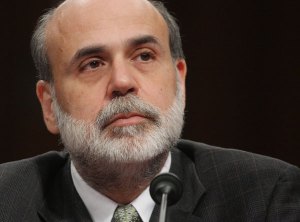 I’m watching Bernanke do a presser. Wow. (It’s a live blog … updates and explanations will be provided.) I can’t believe the press sent political reporters to this. What an amazing number of really rotten questions!!!
Some key points from the morning’s congressional testimony.
On Unemployment: We do see some grounds for optimism, including a decline to the unemployment rate, declines in the new unemployment insurance claims and improvements in firms’ reported hiring plans. But, even so, it could take quite a while for unemployment to come down to desired levels at current expected growth rates and, in particular, the FOMC projects unemployment still to be in the range of seven and-a-half to eight percent by the end of 2012. Until we see a sustained period of stronger job creation, we cannot consider the recovery to be truly established.
On Inflation: “I want to go back over this whole line of interventions, including today quantitative easing. And there have been a series of criticisms that have been made and negative predictions, and my view is that none of them have come true. And I think it is important for us to — to note that. And — and I know you’ve talked about this. I know you mentioned in your statement some of the points. But we were told, for instance, that it was going to be very inflationary. And I know it is your view as of now, and I think supported by the facts, that inflation is not now a problem, and we do not see inflation, certainly not one caused by any of what’s been done going forward. We were told this was going to be extraordinarily expensive, that it was going to cost a lot of money. I believe the answer is that on many of these things the federal government has made a profit by the — by the intervention.”
On Crude Oil: “The relative price of oil, again, is primarily due to global supply and demand. I think it’s important to note that the United States is consuming less oil today, importing less oil and producing more oil than it did before the crisis. That all the increase in demand from outside the United States, particularly in the emerging markets. And so there’s limited amount of what the Fed can do about oil prices alone. Again though, we want to be very sure that it doesn’t feed into overall inflation. We will make sure that doesn’t happen.”
On the Dollar: If the dollar was no longer reserve currency there would – it would on the margin probably mean that we would have to pay highest interest rates to finance the federal debt, and that would be a negative obviously. On other other hand, we might not suffer some of the capital inflows that contributed to the boom and the bust in the recent crisis. But again, I know there was also a countervailing argument in the Journal this morning as well. And I – I just don’t see at this point that there is a major shift away from the dollar.
On the Consumer: We understand the visibility of gas prices and food prices and we want to be sure that people’s expectations aren’t adversely affected. I think it’s important to note that, according for example, to the Michigan survey of consumers, that long term inflation expectations have been basically flat. I mean, they haven’t moved, notwithstanding ups and downs in gas prices, for example.
On the U.S. Fiscal Situation: While I understand these are difficult decisions and we certainly can’t solve it all in the current fiscal year, I do think we need to look forward and I know the House Budget Committee and others will be setting up a 10 year proposal. It’s very important and would be very constructive for Congress to lay out a plan that would be credible that will help bring us to sustainability over the next few years. In particular, one rule of thumb is cutting enough that the ratio of the debt to GDP stops rising. Because currently it’s rising relatively quickly. If we could stabilize that, I think that would do a lot to increase confidence in our government and in our fiscal policies.
Obviously, Bernanke needs to drill baby drill to get rid of inflation … so simple!!!
or this:
ezrakleinEzra Klein
Bottom line: Congress is embracing austerity. The Fed is going to start tapping the brakes. Sucks to be you, unemployed people. #fedpresser
Background information on the Fed Presser from NYT and David Leonhardt.
On Wednesday at 2:15 p.m., Ben Bernanke will do something that previous Federal Reserve chairmen considered a terrible idea. He will hold a news conference.
Mr. Bernanke spent much of his academic career arguing that the Fed should be less opaque, and, as chairman, he has put his ideas into action. Now it’s time for those of us in the media to hold up our end of bargain. In the spirit of democratic accountability, we should ask hard questions — and we shouldn’t let him get away with the evasions and half-answers that members of Congress too often allow Fed chairmen during their appearances on Capitol Hill.
One question more than any than other is crying out for an answer: Why has Mr. Bernanke decided to accept widespread unemployment for years on end, even though he believes he has the power to reduce it?
Here’s Paul Krugman’s take on the presser: Bernanke Wimps Out. He’s got the same questions I do about the inflation v. unemployment . (See my comments in the thread below.)
So Bernanke did get asked why, given low inflation and high unemployment, the Fed isn’t doing more. And his answer was disheartening.
As far as I can tell, his analytical framework isn’t too different from mine. The inflation rate to worry about is some underlying, inertial rate rather than the headline rate; the Fed likes the core personal consumer expenditures deflator; and this rate has actually been running below target, indicating that inflation isn’t a concern …
One Helluva Open Window
Posted: April 2, 2011 Filed under: financial institutions, Global Financial Crisis | Tags: Ben Bernanke, FED 23 CommentsI’m a financial economist. I’ve worked for the Fed although not in that capacity. My grandfather worked for the FED  doing the War Bonds thing for both World Wars and my exhusband worked for the Fed straight out of college. I’d like to think I have some familiarity with at least two of the districts. I also was schooled during the monetarist ascendancy so I was endowed with a certain amount of awe and respect for monetary policy. I don’t think–as a general rule–the FED’s current open market operations should be up for purview by politicians. I think it’s just fine and dandy that stuff comes out later because I certainly don’t want monetary policy neutralized or politicized. I would, however, like Ron Paul’s 3rd century world view of economics to be neutralized. However, I think all the adults in Washington, D.C. have moved. That would include the ones in the Board of Governor’s Building.
So, why am I saying all this? Well, I’m about to announce how absolutely appalled I was to find that the FED not only opened it’s discount window to our shadow banking industry and some commercial banks abroad, but it opened the windows, doors, and vaults to just about any bank or pseudo-bank on the planet that had the misfortune to be taken in by our financiers of greed and destruction. I know the Fed dabbles around the world. We’ve had to prop up Mexico and Citibank’s adventures from time-to-time which seemed way out of its jurisdiction even with the broadest interpretation of their charter. I know they “watch” our exchange rates while talking up the competitive exchange rate regime at times. Some how, this feels WAY different. I feel in need of a shower even reading about this.
U.S. Federal Reserve Chairman Ben S. Bernanke’s two-year fight to shield crisis-squeezed banks from the stigma of revealing their public loans protected a lender to local governments in Belgium, a Japanese fishing-cooperative financier and a company part-owned by the Central Bank of Libya.
Dexia SA (DEXB), based in Brussels and Paris, borrowed as much as $33.5 billion through its New York branch from the Fed’s “discount window” lending program, according to Fed documents released yesterday in response to a Freedom of Information Act request. Dublin-based Depfa Bank Plc, taken over in 2007 by a German real-estate lender later seized by the German government, drew $24.5 billion.
The biggest borrowers from the 97-year-old discount window as the program reached its crisis-era peak were foreign banks, accounting for at least 70 percent of the $110.7 billion borrowed during the week in October 2008 when use of the program surged to a record. The disclosures may stoke a reexamination of the risks posed to U.S. taxpayers by the central bank’s role in global financial markets.
“The caricature of the Fed is that it was shoveling money to big New York banks and a bunch of foreigners, and that is not conducive to its long-run reputation,” said Vincent Reinhart, the Fed’s director of monetary affairs from 2001 to 2007.
The FED’s always had an ‘usual and exigent circumstances’ clause that’s given a lot of leeway in times of financial crisis. Some how, I don’t even think Woodrow Wilson figured it would be used to lend money to a fishing-cooperative financier in Japan. You can also read Yves Smith at Naked Capitalism on exactly what went on at the Discount Window and with whom. She focuses on the ‘haircuts’. That would be the lousy deals made by the Fed to bail out a lot of lousy dealers. The numbers on how many of these borrowers were junk status awes.
The information was released yesterday and Bloomberg has provided a first cut on a small but juicy portion of it, the Primary Dealer Credit Facility. From a risk standpoint, the loans mace under this program violated the central bank guideline known as the Bagehot rule: “Lend freely, against good collateral, at penalty rates”. That is the prescription if the borrower is facing a bank run, meaning a liquidity crisis. The fact that 72% of the Fed’s loans on September 29 from the Primary Dealer Credit Facility were junk or equivalent (defaulted and unrated securities or equity) is further proof that many financial firms were facing a solvency, not a liquidity, crisis.
She also shows–in her words quelle suprise–which American Banks were the little failed piggies too. I’m going to throw one of the ‘haircuts’ or discounts a the front of this quote just to curl your toes a bit. I think we can effectively say that Wall Street trashed the value of nearly every firm in the country pretty effectively.
A 95% haircut on AAA rated ABS CDOs means the paper was effectively worthless.
This first cut by Bloomberg also shows that Morgan Stanley was the biggest user of the facility, receiving $61.3 billion of funds for securities “worth” $66.5 billion, 71.6% of which was junk or unrated. As eye-popping as those numbers are, the funds received are less than half the fall in Morgan Stanley’s liquidity pool in the two weeks after the Lehman failure, per Economics of Contempt. Merrill Lynch was second, getting $36.3 billion in funding for $39.1 billion of collateral, 83.4% of which was junk or unrated.
These are not the routine activities of central banks and central bankers. We basically bankrolled a bunch of businesses and financial outfits in a bunch of countries because they wanted in on the Wall Street greed and Wall Street failed them big time. I’m left wondering why all this money was thrown to the foreign gamblers while Americans were being foreclosed on, frankly. Let me also let you know that this is probably just the tip of the iceberg since there’s undoubtedly more documents that need to be discovered and analyzed. My hope is that when the congressional hearings on this get started, we have some real brain power behind the questions that need to be asked on this because questions do need to be asked about this. I’d like a few FED Governors around for the ride to see how many of them were on board with all of this or even knew of it. What we need right now are a few Ferdinand Pecoras.
I also wonder who masterminded all this? Paulson? Geithner? Bernanke? Were they that wedded to ensuring Wall Street didn’t look like a casino and American business didn’t look like a sham that they had to give away the house, the children, the pets, and the fatted calf? They basically threw every one’s kitchen sink overseas. Worse than that, they’ve really not solved the basic systemic problem and the banks are already niggling over the details of the few thinks done by Dodd-Frank. Feel used yet?
What’s That Lassie? Little Timmy’s in the Well AGAIN?
Posted: August 4, 2009 Filed under: Bailout Blues, Equity Markets, Global Financial Crisis, president teleprompter jesus, The Bonus Class, The Great Recession, U.S. Economy | Tags: Ben Bernanke, CNBC, FDic, FED, Larry Summers, Mary Schapiro, Naked Capitalism, SEC, Sheila Bair, Timothy Geithner, Wall Street Cheerleaders, Zero Hedge Comments Off on What’s That Lassie? Little Timmy’s in the Well AGAIN? Wow, it looks like Turbo Tax Timmy has gone rogue! We better send the press up to Alaska to chase down another Palin rumor. First, there’s that nastiness over the weekend with the Stephanapolous show on ABC where he explicitly said that the administration wasn’t ruling out new taxes on the middle class. (Something Larry-the-la-la Summers also inkled, but hey, he’s not a cabinet officer, he’s something akin to a Czar that has to be overthrown by something other than scandal and public displays of stupidity.) I believe that gave Robert Gibbs Excedrin headaches number 349-357 during yesterday’s presser.
Now, there’s rumors of a temper tantrum in the presence of all the nation’s topic economists and financial regulators outlined here in the WSJ. It seems he’s not getting the Obama way on this one. The ladies in the room have taken exception to his granting Ben Bernanke (possibly later, this year, La-la Summers) all the fun and power. I guess being an independent regulator with an agency all to yourself just isn’t what it used to be; especially when you have scary lady parts and a huge brain.
Mr. Geithner told the regulators Friday that “enough is enough,” said one person familiar with the meeting. Mr. Geithner said regulators had been given a chance to air their concerns, but that it was time to stop, this person said.
Among those gathered in the Treasury conference room were Federal Reserve Chairman Ben Bernanke, Securities and Exchange Commission Chairman Mary Schapiro and Federal Deposit Insurance Corp. Chairman Sheila Bair.
Friday’s roughly hourlong meeting was described as unusual, not only because of Mr. Geithner’s repeated use of obscenities, but because of the aggressive posture he took with officials from federal agencies generally considered independent of the White House. Mr. Geithner reminded attendees that the administration and Congress set policy, not the regulatory agencies.
Mr. Geithner, without singling out officials, raised concerns about regulators who questioned the wisdom of giving the Federal Reserve more power to oversee the financial system. Ms. Schapiro and Ms. Bair, among others, have argued that more authority should be shared among a council of regulators.
This current turf battle is only the latest move by a group within government possibly thwarting the Treasury’s plans to continue uploading tax dollars to the bonus class in the guise of saving the financial sector. If there’s still disagreement about this point, can you imagine what other things are going on in complete disarray behind the scenes? Who is really in charge of solving this overt act of sibling rivalry? Well, if you have figured out where the buck stops in this administration, you’re doing better than me. (Hint: these folks are ALL presidential appointments).
Monetary Policy at the Zero Bound
Posted: July 21, 2009 Filed under: Global Financial Crisis, The Great Recession, U.S. Economy | Tags: Ben Bernanke, FED, Fed Independency, monetary policy, quantitative easing, Zero Bound, ZIRP Comments Off on Monetary Policy at the Zero Bound I am a financial economist and I’ve been through most phases of my career one that applies the trade in banking. That’s because my first economics specialty was monetary economics. I still have my original copy of Patinkin’s Money, Interest and Price sitting next to my dad’s original copy of Keyne’s The General Theory of Employment, Interest and Money. My grandfather was one of the first Fed lifer’s having been in charge of the bond area in the Kansas City District for both world wars. My ex-husband’s first job out of college was with that Fed. I worked for the Atlanta District Fed before retreating back to academia. So, in this day and age, with all the unpopularity that entails, I have to confess to being a banker of sorts. I hope you won’t hold that against me.
Today, there is more evidence that this is not my Grandfather’s Fed and it’s not completely the Fed I worked for either during the Greenspan years. When I was there, the emphasis was consolidating functions to various branches and realizing that check clearing and wire transfers, the main source of revenues for the branches, were being taken up by big money center banks and clearing houses. Clinton was President and the economy was good so there wasn’t much dithering about the technical things done up there at the desk in NYC. I just had my staff transmit the bond sells every Tuesday (even on Mardi Gras) dutifully.
Much consolidation has taken place and many traditional Fed services have been privatized. Oh, and then there’s that one other difference, Ben Bernanke and his realization that traditional monetary policy is pretty useless when interest rates are close to zero. Welcome to the world of Monetary Policy at the Zero Bound which is actually something we talked about last fall. I’m going to point you again to Ben Bernanke’s treatise again because it explains a lot of what we’re going to discuss. It’s written for wonks, but if you read the first few pages, you’ll get the basic idea.
The Fed’s upcoming retreat from its current position has been a topic of much discussion and speculation. That’s because every one has some concern that they will be accommodating for way too long and it may lead to another Bubble or to general inflation (instead of price increases in a specific market like housing). That’s pretty much the consensus of what happened post 9/11 when Greenspan left interest rates extremely low and we developed a speculation crazed housing market. For some reason, he popped the bubble of excessive exuberance during the Clinton years and the Tech stock run-ups, but let the mortgage market baste in low interest rates for way too long. My guess is that he was more accommodating to Republicans because he himself was one of them, but that’s a discussion for his biographer and just a source of speculation for me.
So, Ben used his platform as the second most powerful man in the US today to reduce the information asymmetry surrounding the Fed’s exit strategy. Again, if you check the link to his academic paper above, you’ll see that’s one of the things he believes is necessary when monetary policy hits the zero bound. He basically calls this “using communications policies to shape public expectations about the future course of interest rates” and that’s exactly what he’s doing in today’s Op-Ed piece in the WSJ.
I’m not sure how many people wrote and edited this piece, but it is a brilliant discourse that explains in a very succinct and clear way what the FED will do in the coming recovery to ensure that we won’t get inflation. He also reassures that they won’t reverse the course of any improvement either as was done in 1937 to cause a double dip depression. This Op-ed is historic in nature, although I’m sure only those of us steeped in Fed lore, culture and history will realize what’s going on here. Ben is opening up the some what secret world of the Federal Open Market Committee (FOMC) to those with the need to know.
Bernanke Rules
Posted: April 18, 2009 Filed under: Global Financial Crisis, U.S. Economy, Uncategorized | Tags: bernanke, Credit Default swaps, Credit Derivatives, Fannie Mae, FED, Freddie Mac, Regulations, Subprime mortgages Comments Off on Bernanke Rules Is The Fed under Chairman Ben Bernanke finally beginning to adopt the tougher lending regulations and rules that would’ve prevented much of the havoc of the last two years? In a speech on April 17, Bernanke stated that damage done to the economy was not likely to be undone any time soon. This gives more credence to the idea that we may see an L-shaped recovery. In other words, be prepared to scuttle across the bottom for a very long time. But did the speech deliver the assurances we need that necessary steps and regulations w lending practices and financial innovations are in the works? I don’t think so.
Here’s some interesting analysis by Craig Torres at Bloomberg.com.
Federal Reserve Chairman Ben S. Bernanke said the collapse of U.S. lending will probably cause “long-lasting” damage to home prices, household wealth and borrowers’ good credit score.
“One would be forgiven for concluding that the assumed benefits of financial innovation are not all they were cracked up to be,” the Fed chairman said today in a speech at the central bank’s community affairs conference in Washington. “The damage from this turn in the credit cycle — in terms of lost wealth, lost homes, and blemished credit histories — is likely to be long-lasting.”
The U.S. central bank has cut the benchmark lending rate to as low as zero and taken unprecedented steps to stem the credit crisis through direct support of consumer finance and mortgage lending. The Fed plans to purchase as much as $1.25 trillion in agency mortgage-backed securities this year to support the housing market and is providing financing for securities backed by loans to consumers and small businesses.
Bernanke and the Federal Reserve Board approved rules last July to toughen restrictions on mortgages, banning high-cost loans to borrowers with no verified income or assets and curbing penalties for repaying a loan early. The action came after members of Congress and other regulators urged the Fed to use its authority to prevent abusive lending.
This suggests Bernanke does not see home values going back up any time soon. It also suggests that the lending markets are not likely to return to their heyday. Does this mean, however, that we’re finally going to see the regulation and enforcement of prudent underwriting standards and no more hide the trash in a bundle and pass it to the next sucker?

 peej
peej Carissa
 bostonboomer
 dakinikat
 ecocatwoman
 mablue2
 Mama Lopez
 peggysue22
 quixote
 skydancingguestblogger
 Mona (aka Wonk the Vote)



 Sky Dancing
Recent Comments