
Are Mitt Romney’s Lies Supported by Mormon Church Leaders?
Posted: January 26, 2012 Filed under: 2012 presidential campaign, abortion rights, Barack Obama, fetus fetishists, Mitt Romney, religion, Reproductive Rights, Republican presidential politics, U.S. Politics, Women's Rights | Tags: abortion, Bain Capital, Belmont MA Mormon temple, Eliza Dushku, Judith Dushku, lies, Masschusetts Senate race 1994, Mitt Romney, Mormon church, Mormonism, Scoop NZ, Suzan Mazur, Ted Kennedy, tithing 27 Comments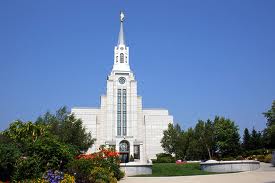
Mormon temple in Belmont, MA, completed in 2000
I realize that’s a provocative title, but please stay with me. I’ll get to the point after some background.
I’ve been reading the new biography of Mitt Romney, The Real Romney by Michael Kranish and Scott Helman. I bought the book after reading a lengthy excerpt published by Vanity Fair, which focused heavily on Romney’s treatment of women when he was a powerful leader in the Boston Mormon church. I wrote about this in a Morning news post at the time.
I was disappointed to discover that the book itself is somewhat of a fluff piece–Boston Globe reporters Kranish and Helman put as positive a spin as possible on Romney’s history and his activities as a church and business leader. However, by reading between the lines and googling names, places, and incidents from the book, I’m still getting some useful information about “the real Romney.”
One prominent Mormon woman quoted in the book is Judith Dushku, associate professor of government at Suffolk University in Boston, and incidentally the mother of actress Eliza Dushku, who played Faith in the TV shows Buffy the Vampire Slayer and Angel and has appeared in a number of popular Hollywood movies.
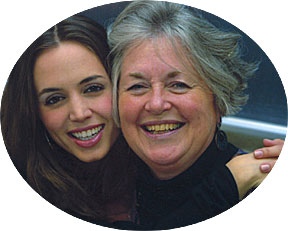
Judith Dushku with daughter Eliza
Judith Dushku is a self-described feminist and a long-time contributor to the Mormon feminist magazine Exponent II. It was in this magazine that an anonymous author published the story of the Bishop Romney’s cruel treatment of her over a life-saving abortion. From the Vanity Fair article:
In the fall of 1990, Exponent II published in its journal an unsigned essay by a married woman who, having already borne five children, had found herself some years earlier [the late 1970s] facing an unplanned sixth pregnancy. She couldn’t bear the thought of another child and was contemplating abortion. But the Mormon Church makes few exceptions to permit women to end a pregnancy. Church leaders have said that abortion can be justified in cases of rape or incest, when the health of the mother is seriously threatened, or when the fetus will surely not survive beyond birth. And even those circumstances “do not automatically justify an abortion,” according to church policy.
Then the woman’s doctors discovered she had a serious blood clot in her pelvis. She thought initially that would be her way out—of course she would have to get an abortion. But the doctors, she said, ultimately told her that, with some risk to her life, she might be able to deliver a full-term baby, whose chance of survival they put at 50 percent. One day in the hospital, her bishop—later identified as Romney, though she did not name him in the piece—paid her a visit. He told her about his nephew who had Down syndrome and what a blessing it had turned out to be for their family. “As your bishop,” she said he told her, “my concern is with the child.” The woman wrote, “Here I—a baptized, endowed, dedicated worker, and tithe-payer in the church—lay helpless, hurt, and frightened, trying to maintain my psychological equilibrium, and his concern was for the eight-week possibility in my uterus—not for me!”
Romney would later contend that he couldn’t recall the incident, saying, “I don’t have any memory of what she is referring to, although I certainly can’t say it could not have been me.” Romney acknowledged having counseled Mormon women not to have abortions except in exceptional cases, in accordance with church rules. The woman told Romney, she wrote, that her stake president, a doctor, had already told her, “Of course, you should have this abortion and then recover from the blood clot and take care of the healthy children you already have.” Romney, she said, fired back, “I don’t believe you. He wouldn’t say that. I’m going to call him.” And then he left. The woman said that she went on to have the abortion and never regretted it. “What I do feel bad about,” she wrote, “is that at a time when I would have appreciated nurturing and support from spiritual leaders and friends, I got judgment, criticism, prejudicial advice, and rejection.”
Judith Dushku had a number of run-ins with Mitt Romney during his years as Stake President and Bishop in the Boston Mormon community. In fact, Dushku confronted Romney over the incident described above, after which he “broke off their friendship.”

 peej
peej Carissa
 bostonboomer
 dakinikat
 ecocatwoman
 mablue2
 Mama Lopez
 peggysue22
 quixote
 skydancingguestblogger
 Mona (aka Wonk the Vote)



 Sky Dancing
Recent Comments