
Finally Friday Reads: Rest in Power Senator Feinstein
Posted: September 29, 2023 Filed under: U.S. Politics | Tags: Chaos Caucus, Dianne Feinstein, SCOTUS 6 Comments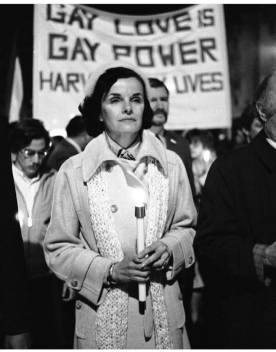 Good Day, Sky Dancers!
Today’s top headline is about a woman who was central in the fight for human rights. “Senator Dianne Feinstein, an ‘icon for women in politics,’ dies at 90. Her career was filled with firsts: first woman mayor of SF and one of the first women elected to the U.S. Senate from California.” This is from the San Francisco ABC affiliate. As you can read anywhere, her legacy of legislation and activity for civil rights for all is legendary.
Feinstein’s first foray into politics came in 1960 when then-Gov. Pat Brown appointed her to the California Women’s Parole Board. But it was in 1969, at the age of 35, that Feinstein first held public office, winning a seat on the San Francisco Board of Supervisors.
Former San Francisco Mayor Willie Brown was in the state Senate at the time. He recalled meeting Feinstein during those years.
“I remember that I was trying to get a house here in San Francisco, when they wouldn’t allow Black people easily to get houses,” he said. “And there was a demonstration and this angular tall, great looking white woman pushing a baby stroller with a little kid in it, who nobody knew anything about, came out to participate in the protest. That was Dianne Feinstein! And it was that long ago, and so I am a great admirer.”
In the 1970s, while serving as the first female president of the Board of Supervisors, Feinstein ran twice for mayor, but lost. She had decided to not run again, when tragedy struck the city.
The tragic assassination of San Francisco Mayor George Moscone by Supervisor Dan White in 1978 put Feinstein in the job. In 1979, Feinstein won her first full term as mayor and began reshaping the city.
During the decade she served, she survived a recall attempt, lead mostly by detractors of her proposal to ban handguns in San Francisco. She oversaw the remaking of the city’s skyline, which some decried as the Manhattan-ization of San Francisco, also oversaw a raucous 1984 Democratic National Convention and saved the city’s cable car system.
“The cable cars still running!” Brown exclaimed. “Cause of Dianne.”
Feinstein rose to power as a crisis gripped the city’s gay community. A disease that would later be called AIDS, killed thousands of gay men. Hoping to save lives, Feinstein ordered the city’s bathhouses closed. A risky move, considering the political power of the gay community at the time.
Under her watch, the city’s health department created the global standard for AIDS healthcare at San Francisco General Hospital. In 1990, Feinstein set her sights on a higher office, running for California governor. She lost to Republican Pete Wilson, but still made history again as the first woman in the state to win a major party’s gubernatorial nomination. Then, in 1992, there was a turning point.
During what was dubbed the “Year of the Woman,” Feinstein was elected to the U.S. Senate, alongside Bay Area Congresswoman Barbara Boxer.
In Congress, Feinstein served as the first woman to chair the Senate Rules Committee and the Senate Intelligence Committee. She authored the 1994 Federal Assault Weapons Ban, leading to a 10 year restriction on certain semi-automatic weapons. The legislation was prompted by the 101 California Street shooting, when a gunman opened fire at a law firm in San Francisco’s financial district, killing eight people.
“I worked with Republican and Democrats alike,” said Feinstein in an interview with CSPAN. “Ten Republicans along with 46 Democrats voted in favor of the amendment.”
Brown adds, “Dianne Feinstein is the only member of Congress either on the Congressional side or on the Senate side who’s ever been able to get a controlled weapons ban signed into law. Dianne got that.”
In 2014, Feinstein released a report revealing how the CIA was detaining and interrogating potential terrorists, sometimes torturing the suspects. The release of the report, led to anti-torture legislation.
“This program was morally, legally and administratively misguided,” she said in an interview with CSPAN. “This nation should never again engage in these tactics.”
Feinstein’s legislative legacy also includes:
- Creating federal coordination of Amber Alerts, the national child abduction warning system
- Passing the California Desert Protection Act, which protected millions of acres of California desert and created the Death Valley and Joshua Tree national parks
- Reauthorizing the Violence Against Women Act, to protect women from domestic violence and sexual assault
- Authoring the 2022 Respect for Marriage Act, to enshrine marriage equality into federal law
In an interview with CSPAN she said, “Simply put, Americans should be free to marry the person they love regardless of sexual orientation or race.”
At times, Sen. Feinstein faced criticism from some in her own party.
 She will be missed on many levels. The immediate impact is that Biden’s judicial appointments will be stalled. This is from Politico. “Feinstein’s death throws Senate judicial confirmations into new limbo. Filling the open seat on the Judiciary Committee requires at least 60 votes in the Senate, meaning it would require GOP support.”
Sen. Dianne Feinstein’s death at 90 creates a vacancy on the powerful Judiciary Committee. Democrats could need 60 votes to replace her, leaving controversial judicial nominees in limbo until then.
Senate Republicans are signaling they won’t try and block Feinstein’s committee seats from being filled. Back in April, Republicans blocked Democrats from appointing a temporary replacement for Feinstein as she was ailing with shingles and unable to return to Washington for months.
“Under the circumstances, it’s kind of follow whatever the precedent is,” Senate Minority Whip John Thune (R-S.D.) said Friday.
Typically when a seat is vacant there is no fight about allowing vacant committee seats to be filled. Committee appointments are often done by unanimous consent.
Rules of replacement: If any Republicans were to object to a UC request, Democrats would need 60 votes to appoint a senator to fill Feinstein’s role on the Judiciary panel, meaning at least 10 Republicans would need to vote in favor of filling Democrats’ majority on the panel, assuming they move to do so before someone is appointed to the California Senate seat.
Senators are typically assigned to committees by unanimous consent, but such orders are subject to debate and can be filibustered. Republican senators could slow, or stop, Democrats from filling the Judiciary roster.
The panel, under Democratic control, has been advancing scores of judicial nominations that Republicans object to. Leaving the panel short one Democratic vote would hamper the majority’s steady confirmation of President Joe Biden’s nominees.
In April, Majority Leader Chuck Schumer had chosen Maryland Democrat Ben Cardin, who has since announced his plans to retire at the end of this Congress and has been named Senate Foreign Relations chair. It’s unclear if Schumer would still pursue that resolution.
 It also puts focus on the race for her replacement. “Feinstein’s Death Intensifies Fight for a Coveted California Senate Seat. Gov. Gavin Newsom has pledged to pick a Black woman to fill the seat, but has also said he would not choose any of the current Democrats running for Senate.” This is from the New York Times.
The death of Senator Dianne Feinstein, the California Democrat, immediately turns the spotlight to an intense, ongoing three-way battle to replace her, fraught with racial, political and generational tensions over one of the most coveted positions in California and national politics.
It also puts new pressure on Gov. Gavin Newsom, who will chose someone to fill her seat. Mr. Newsom, whose profile has risen in national Democratic politics in recent weeks as he has traveled the country on behalf of President Biden’s re-election campaign, had come under fire for announcing he would not pick any of the declared candidates in filling any vacancy, so as not to elevate them and give them an advantage.
Mr. Newsom had originally promised to pick a Black woman to fill the position if it opened up, and many Democrats thought he would turn to Representative Barbara Lee, a progressive. But Mr. Newsom said he would pick a caretaker senator instead. “I don’t want to get involved in the primary,” he said on NBC’s “Meet the Press.”
Ms. Lee denounced Mr. Newsom for that decision, calling it insulting.
The other leading Democratic candidates in the race for Ms. Feinstein’s seat are Representative Adam Schiff, a high-profile member of the congressional committee that investigated the Jan. 6, 2021, attack on the Capitol; Representative Katie Porter, a third-term California member of the House; and Ms. Ms. Lee.
 There are no black women currently serving in the Senate. Many disturbing things are happening, including a First Amendment case heading to the Supreme Court. It used to be a relief to hear that some crazy law would be tossed out when it hit SCOTUS. It’s not the crazy laws that get tossed out by the current court, so each significant case brings new fears. This is from the Washington Post. “Landmark Texas, Florida social media cases added to Supreme Court term. The justices on Friday announced which cases they will add to their calendar for the term that begins on Monday.” We can only wonder how much billionaire bribes will influence this outcome.
The justices’ decision to take the landmark social media cases came in an order that alsoadded 10other cases to the calendar for the Supreme Court term that begins Monday. The additional cases concern the FBI’s “no-fly” list, individual property rights and the ability of criminal defendants to confront witnesses against them.
Earlier this year, the high court had said it would tackle controversial issues in the coming term involving gun regulations, voting rights and the power of federal agencies. Those cases will be heard as the justices face intense pressure from Democratic lawmakers to address ethics issues confronting some of their colleagues, including potential conflicts in some of the cases.
Tech industry groups, whose members include Facebook and Google’s YouTube, asked the court to block Texas and Florida laws passed in 2021 that regulate companies’content-moderation policies. The companies say the measures are unconstitutional and conflict with the First Amendment by stripping private companies of the right to choose what to publish on their platforms.
The court’s review of those laws will be the highest-profile examination to date of allegations that Silicon Valley companies are illegally censoring conservative viewpoints. Those accusations reached a fever pitch when Facebook, Twitter and other companies suspended President Donald Trump’s accounts in the wake of the Jan. 6, 2021, attack on the U.S. Capitol.
The justices’ ruling could have significant implications for the future of democracy and elections, as Americans increasingly rely on social media to read and discuss political news. It could also have wide-ranging effects for policymakers in Congress and statehouses around the country as they attempt to craft new laws governing social media and misinformation.
Tech industry groups, whose members include Facebook and Google’s YouTube, asked the court to block Texas and Florida laws passed in 2021 that regulate companies’content-moderation policies. The companies say the measures are unconstitutional and conflict with the First Amendment by stripping private companies of the right to choose what to publish on their platforms.
The court’s review of those laws will be the highest-profile examination to date of allegations that Silicon Valley companies are illegally censoring conservative viewpoints. Those accusations reached a fever pitch when Facebook, Twitter and other companies suspended President Donald Trump’s accounts in the wake of the Jan. 6, 2021, attack on the U.S. Capitol.
The justices’ ruling could have significant implications for the future of democracy and elections, as Americans increasingly rely on social media to read and discuss political news. It could also have wide-ranging effects for policymakers in Congress and statehouses around the country as they attempt to craft new laws governing social media and misinformation.
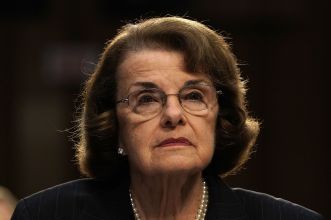 I’m not sure anyone can predict what the nation’s highest court will do with important decisions like this. One of the most serious things the Supreme Court will decide is whether laws that bar gun ownership to Domestic Violence perpetrators will be overturned in the vein of the gun lobby’s idea of the Second Amendment. This is from August and was published in Roll Call. “Lawmakers urge Supreme Court to keep domestic violence gun law. A lower court ruling jeopardizes decades of bipartisan efforts to protect some of the most vulnerable citizens, a brief argues.”
The Supreme Court could undermine decades of congressional efforts to prevent gun violence if they agree with a lower court decision that struck down a nearly 30-year-old gun control law, two groups of lawmakers told the justices.
The members of Congress filed briefs Monday in a case now at the high court that is seen as a test on the limits of a 2022 decision, New York State Rifle & Pistol Association v. Bruen, that expanded Second Amendment rights.
That decision kicked off a flood of litigation over firearms restrictions, changed the way federal judges evaluate the constitutionality of gun control laws. In some cases judges have struck them down. That includes a decision from the U.S. Court of Appeals for the 5th Circuit that tossed a federal restriction on firearm possession for people subject to domestic violence restraining orders.
The three-judge 5th Circuit panel wrote that the Bruen decision meant the court had to find specific historical laws to justify modern firearm restrictions — and no colonial-era law dealt with firearms of domestic abusers.
A brief from Sen. Amy Klobuchar, D-Minn., Rep. Brian Fitzpatrick, R-Pa., and Rep. Debbie Dingell, D-Mich., told the justices that upholding the 5th Circuit decision wipes out an effective tool to prevent domestic violence and “jeopardizes decades of bipartisan efforts to protect some of our country’s most vulnerable citizens.”
“The Court must not stymie further work by Congress in this crucial area of law and policy. It should reverse,” that brief states.
Congress has gathered evidence that shows survivors of domestic violence “are safer when abusers subject to restraining orders do not have unfettered access to deadly weapons,” the brief states. “This is, frankly, common sense. And nothing in the text or history of the Second Amendment says or requires otherwise.”
Another brief from Connecticut Sen. Richard Blumenthal, California Rep. Mike Thompson and 169 other Democrats in Congress argued that the 5th Circuit’s approach to evaluating gun laws would “unduly shackle Congress to the past, rendering it unable to develop innovative solutions for the benefit of the public.” The Democrats also argued that the 5th Circuit approach would let judges toss any gun law they thought didn’t have a specific enough analogue from the founding era and “allow courts to substitute their policy judgments for those of Congress.”
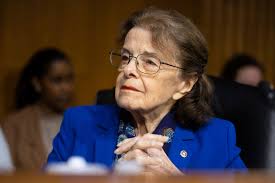 This term could have profound implications for public policy regarding public health. This includes easy access to guns and what kinds of misinformation on public health issues can be presented on social media outlets. It would be nice if we could get some campaign finance reform, too, but I doubt it would make it past Alito and Thomas, who love themselves some Dark Money. This should also be illegal. “Trump’s campaign machine is bleeding cash for legal expenses.” Why is it legal for campaigns to cover Trump’s lawers for his dalliances with fascism? Reuters is reporting this as breaking news.
Donald Trump’s political operation has helped pay the legal expenses of more than a dozen people contacted by prosecutors investigating the former president, tying up millions of dollars that otherwise could be used for his 2024 White House bid.
Reuters has identified 13 potential witnesses or co-defendants who were represented by law firms that received payments from a political group run by Trump, based on interviews and a review of court records and campaign finance disclosures. The payments were disclosed in campaign finance reports as general payments to law firms rather than specific payments to individuals.
Those law firms, which include Brand Woodward, Dhillon Law Group and Greenberg Traurig, received more than $2.1 million in the first six months of this year from Save America, a Trump group that is separate from his campaign but played a major role raising money to support him as the frontrunner for the 2024 Republican nomination.
The funds represent a significant chunk of the more than $21 million that Save America’s disclosures to the Federal Election Commission show it spent on legal expenses during that period, a sum that could grow substantially if the group keeps paying legal expenses that are expected to balloon in the coming year.
Some legal experts say campaign finance rules appear to allow Save America’s spending on legal bills involving Trump because the group is registered as a “leadership committee,” which faces few restrictions on spending. Others say, however, that prosecutors may scrutinize the payments for signs of any effort to influence witness testimony.
Four lawyers and legal experts consulted by Reuters said Trump’s defense in four criminal prosecutions could cost over $50 million, more than all the money raised in the first half of this year by Trump’s campaign and its top allied super PAC, Make America Great Again Inc, known as MAGA Inc
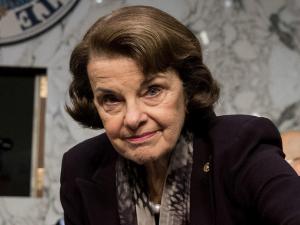
WASHINGTON, DC – DECEMBER 6: Ranking member Sen. Dianne Feinstein (D-CA) arrives for a Senate Judiciary Committee hearing concerning firearm accessory regulation and enforcing federal and state reporting to the National Instant Criminal Background Check System (NICS) on Capitol Hill, December 6, 2017 in Washington, DC. (Photo by Drew Angerer/Getty Images)
The world is still watching the chaos in the US House of Representatives. There’s a lot of political gossip on this topic today. But I’ll stick with this from the New York Times. “With a Shutdown in View, McCarthy Plays a Weak Hand. The G.O.P. speaker, whose style is to placate his detractors, does not have the Republican votes to keep the government open. He is calling the vote anyway.” This report is by Annie Karni.
When Representative Kevin McCarthy was short the votes he needed to become speaker in January, he didn’t browbeat his far-right Republican detractors or threaten retribution. Instead, he granted them major concessions, subjecting himself to a long, humiliating slog to win them over.
Mr. McCarthy is now facing a near-certain government shutdown and a possible move by the same faction to oust him from his post if he moves to head off the crisis. And he is turning to the same people-pleasing script, seeking to mollify a faction of his conference he privately scorns.
He has once again caved to the demands of far-right lawmakers, opening an impeachment inquiry into President Biden and then agreeing to slash government spending to levels they clamored for. When that was not enough, Mr. McCarthy pushed aside a stopgap spending bill to avert a government shutdown. Instead, he bowed to the right flank’s insistence on first bringing up a series of individual yearlong spending bills loaded up with arch-conservative policy dictates — even though none had a chance of enactment.
Democrats have criticized him as the weakest speaker in history. Hard-right members continue to demand more. But members of Mr. McCarthy’s inner circle — a coterie of mostly traditional Republicans who are deeply conservative but share little in common with the hard right — argue that the speaker’s malleability is actually his strength. They say it is the only way to deal with what they regard as a nearly ungovernable majority.
“He is in the driver’s seat, but he’s also willing to ask members in the car to help him navigate,” said Representative Dusty Johnson, a South Dakota Republican and McCarthy loyalist. “That is not — with all due respect to other speakers — they have mostly been interested in taking everyone in the car where they wanted to go.”
Yet with a four-vote voting margin and a far right that appears bent on forcing a shutdown, Mr. McCarthy’s car is spinning out of his control.
Now, he has decided to bring up a temporary spending bill he knows lacks the Republican support necessary to pass simply to show the public that he tried to keep the government open — a step that would likely have been deemed unthinkable by many of his predecessors.
I cannot dwell on the past for many reasons, including how difficult it was to live your own life if you did not want the stereotypical life Republicans love so much. However, it would be nice if we could go back to a functioning federal government, a Supreme Court that isn’t so topped up with corrupt and backward-looking theocratic judges, and the defeat of this craziness that Donald Trump has brought out from under the rocks of neo confederacy. Hell, I’d just settle for some common-sense governance and basic politeness.
However, this will be a battle royal, and we must do some deep breathing and conscious checking to get through it. At least we’re here for each other’s sanity and peace of mind. This will be a hell of an election season. Vote right down to the dog catcher, please! In a world of the Donald’s, let us be Diannes. Hang in there, Sky Dancers!
What’s on your reading and blogging list today?

 peej
peej Carissa
 bostonboomer
 dakinikat
 ecocatwoman
 mablue2
 Mama Lopez
 peggysue22
 quixote
 skydancingguestblogger
 Mona (aka Wonk the Vote)



 Sky Dancing
Recent Comments