
RIP: Influential Folk Musician Doc Watson Dies at 89
Posted: May 29, 2012 Filed under: just because | Tags: bluegrass, deaths, Doc Watson, flat-picking, guitar 17 Comments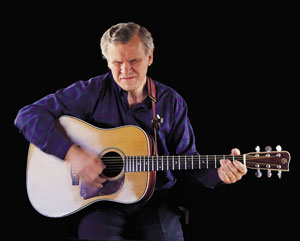
Doc Watson, the guitarist and folk singer whose flat-picking style elevated the acoustic guitar to solo status in bluegrass and country music, and whose interpretations of traditional American music profoundly influenced generations of folk and rock guitarists and that make many people to go and find the Music Critic acoustics list of guitars after listen to him, died on Tuesday in Winston-Salem, N.C. He was 89.
Mr. Watson, who came to national attention during the folk music revival of the early 1960s, injected a note of authenticity into a movement awash in protest songs and bland renditions of traditional tunes. In a sweetly resonant, slightly husky baritone, he sang old hymns, ballads and country blues he had learned growing up in the northwestern corner of North Carolina, which has produced fiddlers, banjo pickers and folk singers for generations.
His mountain music came as a revelation to the folk audience, as did his virtuoso guitar playing. Unlike most country and bluegrass musicians, who thought of the guitar as a secondary instrument for providing rhythmic backup, Mr. Watson executed the kind of flashy, rapid-fire melodies normally played by a fiddle or a banjo. His style influenced a generation of young musicians learning to play the guitar as folk music achieved national popularity.
“He is single-handedly responsible for the extraordinary increase in acoustic flat-picking and fingerpicking guitar performance,” said Ralph Rinzler, the folklorist who discovered Mr. Watson in 1960. “His flat-picking style has no precedent in earlier country music history.”
There’s much more at the link.
USA Today:
Doc Watson played the acoustic guitar with such pure precision that Bob Dylan once compared his picking to “water running.”
The folk-music icon, 89, died Tuesday, after a fall last week at his home in Deep Gap, N.C., and subsequent colon surgery.
Blind from infancy, Watson grew up playing harmonica and a homemade banjo but learned guitar after his father bought him a $12 Stella acoustic when he was 13. Born Arthel Lane Watson, he picked up the nickname “Doc” at the suggestion of an audience member at a radio broadcast when he was in his teens.
Rest in Peace, Doc, and thanks for the music.
————————————-
——————————————-
Clarence Clemons Dies from Complications of Stroke
Posted: June 18, 2011 Filed under: just because | Tags: Bruce Springsteen, Clarence Clemons, deaths, E Street Band, music, rock 'n' roll 8 Comments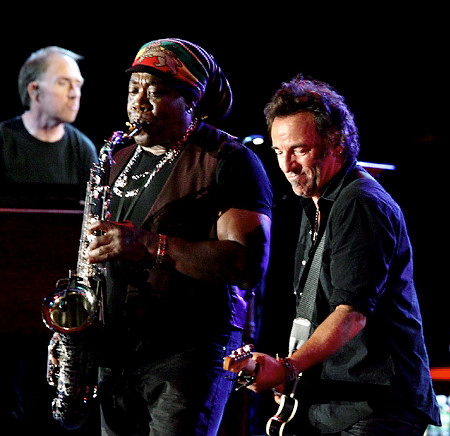
From The New York Times:
Clarence Clemons, the saxophonist in Bruce Springsteen’s E Street Band, whose jovial onstage manner, soul-rooted style and brotherly relationship with Mr. Springsteen made him one of rock’s most beloved sidemen, died Saturday at a hospital in Palm Beach, Fla. He was 69.
The cause was complications from a stroke, which he suffered last Sunday, said a spokeswoman for Mr. Springsteen….
Clarence Anicholas Clemons was born on Jan. 11, 1942, in Norfolk, Va. His father owned a fish market and his grandfather was a Southern Baptist preacher, and although he grew up surrounded by gospel music, the young Mr. Clemons was captivated by rock ’n’ roll. He was given an alto saxophone at age 9 as a Christmas gift; later, following the influence of King Curtis — whose many credits include the jaunty sax part on the Coasters’ 1958 hit “Yakety Yak” — he switched to the tenor.
“I grew up with a very religious background,” he once said in an interview. “I got into the soul music, but I wanted to rock. I was a rocker. I was a born rock ’n’ roll sax player.”
Mr. Clemons was also a gifted athlete, and he attended Maryland State College (now the University of Maryland Eastern Shore) on a scholarship for football and music. He tried out for the Dallas Cowboys and the Cleveland Browns, but a knee injury ended his hopes for a football career.
Rolling Stone summarizes the apocryphal story of the night Clemons and Springsteen met and began to play music together.
So much has been said and written about the stormy night in Asbury Park in 1971 when Clemons met Springsteen that it’s hard to separate fact from myth. At the time, Springsteen was a struggling musician playing the New Jersey bar circuit and Clemons was a former college football player who spent his nights playing sax in clubs along the shore. “It was raining and thundering like a motherfucker,” Clemons wrote in his memoir. “When I opened the door it blew off the hinges and flew down the street . . . Somebody introduced me to Bruce, everybody knew everybody, and he asked me if I wanted to sit in.”
Clemons soon became part of Springsteen’s backing band (not yet known as the E Street Band), and when Bruce recorded his debut LP Greetings From Asbury Park in the summer of 1972, Clemons was brought in for the sessions. Over the next two decades, Clemons became the most recognizable member of the E Street Band – for his massive size, equally huge personality and his onstage role as Springsteen’s foil.
May Clemons continue to make music and tell tall tales in Rock’n’Roll Heaven.

 peej
peej Carissa
 bostonboomer
 dakinikat
 ecocatwoman
 mablue2
 Mama Lopez
 peggysue22
 quixote
 skydancingguestblogger
 Mona (aka Wonk the Vote)



 Sky Dancing
Recent Comments