
Let’s Make a Deal (or not)
Posted: November 12, 2010 Filed under: Bailout Blues, Economic Develpment, Global Financial Crisis, Team Obama, U.S. Economy | Tags: currency wars, G20 accords, Goolsbee, US South Korea Trade Agreement 6 CommentsThe U.S. and South Korea have failed to reach an agreement in a trade deal that would have boosted U.S. agriculture exports. The deal would’ve included concessions to South Korea on automobiles and that was not going over well with domestic automakers like FORD and their related labor unions. As with all trade arrangements, there are usually winners and losers. Ranchers and U.S. consumers would’ve been on the winning side of the deal. The U.S. auto industry and related interests were the potential losers.
Arrangements probably failed due to the tough stance the U.S. is taking on the dollar and foreign exchange pegs these days. No one is happy with QE2 around the world. We’ll get to that in a minute. I’m going to quote from the WSJ on this so you need to realize that what’s written here is very pro-free trade. What was being negotiated at the moment was removal of some trade barriers on both sides. Political consensus here was that Obama is trying to look more “pro-business”. Part of South Korea’s problems, oddly enough, is that they are ‘too green’ for America’s stuff. Can you imagine a Democratic president trying to get a country to be less environmental friendly?
One stumbling block was Korea’s refusal to change a provision in the 2007 pact that provided an immediate end to a 2.5% tariff the U.S. levies on imports of Korean cars, said House Ways and Means Committee Chairman Sander Levin (D., Mich.). The U.S. wanted the tariff reduced gradually, while Korea eliminates safety and environmental rules that U.S. auto makers, led by Ford, said help keep Korea the world’s most closed car market. The effect of reducing the U.S. tariff more slowly likely wouldn’t be large because South Korea’s Hyundai Motor Co. already gets around it on more than half of the cars it sells in the U.S., by making them in Alabama and Georgia.
Compounding the stalemate, Mr. Levin said, were U.S. concerns that Korea’s proposed system for settling disputes wasn’t likely to work.
The U.S. also wants Korea gradually to drop its ban on imports of U.S. beef from older cattle, which began after the U.S. had a case of mad-cow disease seven years ago. Previously thought the easier of the two issues, it is a hot button politically for Korea and prompted a walkout by Korean negotiators.
In the end, the parties ran out of time. U.S. Trade Representative Ron Kirk said, “We won’t be driven by artificial deadlines,” though it was Mr. Obama who set the G-20 deadline.
The president alluded to the political pressures. “If we rush something that then can’t garner popular support, that’s going to be a problem,” said Mr. Obama, who had criticized the moribund 2007 Korea pact when he was a candidate. “We think we can make the case, but we want to make sure that that case is airtight.”
So, if you want the White House explanation, here’s Austan Goolsbee in a white house white board moment. I’m not sure what it says when the head of the President’s economic advice team has to give us all lectures, but any way, here’s the deal via Austan.
So, the G20 thing seems to be an exercise in every one going their own way. No one likes the hot money issue or the weakening dollar. So much for cooperation. Guess the only thing we’re exporting these days are financial bubbles.
The U.S. Federal Reserve decision last week to pump $600 billion into world’s biggest economy has stolen the spotlight away from China’s currency. Brazilian Finance Minister Guido Mantega said today that the Fed’s move may inflate commodities prices and proposed the world move away from using the dollar as the main reserve currency. Former Chinese central bank governor Dai Xianglong this week faulted the U.S. for adopting policies without regard for the dollar’s global role.
The policy fissures and concern countries may react with currency devaluations and capital controls underscore how the G-20 unity displayed during the financial crisis has given way to national divisions as members chart their own recovery path.
“The last thing a developing economy wants is for that liquidity to distort their asset markets and create a destabilizing bubble,” Stephen Roach, Morgan Stanley’s nonexecutive Asia chairman, told Bloomberg Television in an interview yesterday. “The process is not going to work if they don’t come up with a multilateral solution.”
If you want to read how the QE2 could possibly work and if it will be scaled up, I suggest going over to Tim Duy’s Fed Watch for a wonky and some what long analysis. Oh, and there are plenty of those nifty graphs that I always love in the piece about the recovery. He’s going with the blowing bubbles is good narrative. Interesting. Duy says the FED has no choice because the Federal Government is so out of it on Fiscal Policy. Even more interesting and sadly true.
Flooding the market with money is dangerous business. It risks distorting prices and capital allocations. We simply don’t know where the money will wash up. I know that is in vogue to believe there is a nice, obvious story that links an increase in the money supply to an increase in nominal GDP, but that only works on paper. In the real world, the paths between money and output and prices are complicated. The ultimate composition of aggregate demand matters. It matters a lot – distortions have consequences. Warsh’s risks amount to a laundry list of the possible distortions that might occur as the result of ongoing quantitative easing. And he clearly takes those risks seriously.
It makes me think that I haven’t been taking those risks seriously enough. But when monetary policy is the only game in town, what choice do you have? You do what you can up to a point…but then you throw it back to Congress and say “you take responsibility for the mess you created by abdicating your role in crafting long run, stabilizing macroeconomic policies.” Warsh has set the stage for doing exactly that.
Of course, seriously, if we really have to throw this back to Congress, we are absolutely done for. Cooked. Toast. Somebody remember to tell the last guy to turn off the lights on his way out. Better to take our chances with the next bubble.
Aiyee … I’m about reading to move my money into alligator belly futures. At least that makes a good gumbo if you fail to get out in time.
Currency Considerations
Posted: November 9, 2010 Filed under: Economic Develpment, Global Financial Crisis, U.S. Economy | Tags: currency wars, G20 meetings, Gold Appreciation, Strong Dollar, Weak Dollar 25 Comments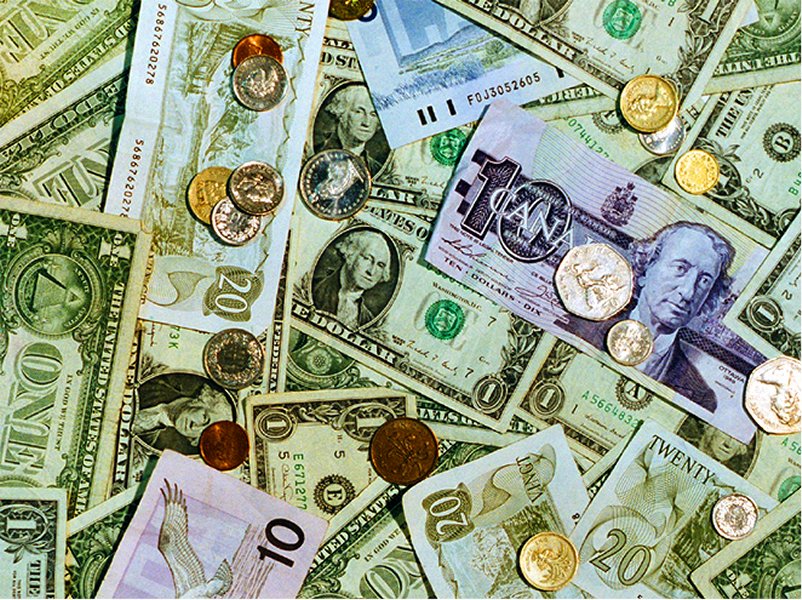 Here’s a few links to help you follow the currency crisis as the world’s finance ministers move from APEC meetings to the G20 meeting. EconBrowser has a very distinguished economist blogging there with some interesting points on East Asian Exchange Rates and China. Willem Thorbecke is an important researcher in the area so this is an extremely wonky post with a lot of nifty graphs. It basically looks, however, at an important issue. The issue is China’s vast trade surplus which has been used in the past to purchase US Treasury securities and its exchange rate that’s been pegged to the Dollar at varying levels over the years. US Secretary of Treasury, Timothy Geithner, has been discussing this recently and it’s likely to be a central focus at the G20 meetings in Seoul.
The interesting thing about this research is that it shows it’s not just the Chinese currency and its exchange rates, but the entire Far Eastern area and all their currencies that have created the situation. Thorbecke suggests that these are peg to a basket of currencies rather than just the dollar.
These results indicate that if policymakers are concerned about China’s surplus, they need to consider exchange rates throughout East Asia rather than the Chinese exchange rate alone.
The enormous surpluses in processing trade relative to the U.S. generate pressure for nominal exchange rates throughout Asia to appreciate relative to the dollar. If East Asian currencies were to appreciate against the dollar, it would be advantageous if they could appreciate together while maintaining some measure of intra-regional exchange rate stability. By reducing intra-regional exchange rate volatility and the associated uncertainty, this would facilitate the flow of FDI and intermediate goods in Asian production networks. It would also produce a smaller appreciation of real effective exchange rates in East Asian countries since the majority of their trade is intra-regional. Finally, it would overcome the collective action problem that arises as individual countries in the region resist appreciations because they do not want to lose competitiveness relative to neighboring countries.
Ma and McCauley [5] found that during the 2006-2008 period when China managed its exchange rate relative to a basket of currencies and other Asian countries also managed their currencies relative to currency baskets, there was considerable exchange rate stability between the renminbi and other East Asian currencies. Thus, if China again adopts a regime characterized by a multiple-currency, basket-based reference rate with a reasonably wide band, the huge surpluses that East Asia is running against the U.S. in processing trade would cause currencies in the region to appreciate in concert against the U.S. dollar. Market forces could then allocate these appreciations across supply chain countries as a function of the size of their surpluses in processing trade.
China’s finance officials are actually calling for a stable dollar. This article is from Bloomberg.com. It quotes China’s Pension Chief. There’s a consensus that this particular idea won’t fly in the District.
The world needs a stable dollar, Dai Xianglong, chairman of China’s National Council for Social Security Fund and a former head of the nation’s central bank, said today at a forum in Beijing. He spoke two days before a Group of 20 summit aimed at addressing global imbalances in trade and investment flows.
Dai’s proposal follows charges by Chinese officials that the Federal Reserve’s plan to buy $600 billion of Treasuries risks inflating asset bubbles in emerging markets. While Treasury Secretary Timothy F. Geithner said Nov. 6 the U.S. takes its global responsibilities “very seriously,” Fed Chairman Ben S. Bernanke has said his focus must be on the American economy.
The idea “is unlikely to fly given that the U.S. would like to maintain the flexibility of its currrency and the ability to lower its value when it needs to boost exports or inflation, as is the case now,” said Dariusz Kowalczyk, a Hong Kong-based senior economist and strategist at Credit Agricole CIB. “Even a range won’t be acceptable to the U.S.”
Because of all this back and forth, Gold is setting more record highs. This is from Canada’s Globe and Mail.
At the heart of gold’s climb are concerns over the value of currencies amid mounting tension in the runup to the G20 meeting in Seoul, South Korea, this week. The U.S. is pointing its finger at China, pressing for appreciation of the yuan, while many other countries are pointing fingers at the U.S. central bank over a $600-billion bond-buying scheme that roiled the U.S. dollar before it was even announced.
Again, you can see international concerns over the QE2 announced by the U.S. Fed.
There are basically three things that influence someone’s demand for money. The first is their need for money as a transactions vehicle. This means you need money to spend your income for stuff you need and want. The second dimension is a precautionary demand. That is you want something that is a safe store for purchasing power that you do not want to spend right now. This is a place to put your money that can be related to an interest rate, but is frequently just sort’ve your choices between stuffing your savings in a safe place like gold, your mattress or your savings accounting or keeping it in your checking accounting and ignoring it. It could just be cash in your pocket too. The last thing that influences how much money people want to hold has to do with speculation. You can casino bet on money too. The Fed takes all these things into account when it determines how much currency, reserves, bank deposits, and treasuries it wants floating around the world. Every time you see a move to gold, you know that part of it is the desire to protect future earning power by some but it is also a very powerful market for speculation. The dynamics here are complex so don’t be taken in that all this gold buying is just a good thing for gold bugs and a bad thing for people who hold dollars. There is profit to be made in these Currency Wars.
Right now, the world is going through a massive economic re-balancing. The old idea that China will sell us stuff — while lending us the money to buy it — is unwinding.
In fact Ben Bernanke has declared a currency war on China’s undervalued RMB. Good ol’ Ben says we can make the dollar cheaper than the Chinese yuan, and he aims to prove it.
The Fed recently proclaimed its desire to create and buy $600 billion in U.S. Bonds. “The FOMC intends to buy an additional $600 billion of longer-term Treasury securities by mid-2011 and will continue to reinvest repayments of principal on its holdings of securities, as it has been doing since August,” said Bernanke.
Ben is taking this approach because it works right up until it doesn’t.
It worked after the past five bubbles popped, and it looks to be working this time.
When Ben floated the idea of a $600 billion cash infusion, stock prices rose and long-term interest rates fell in anticipation.
I know some of you will point out that the RMB is pegged to the dollar, and therefore the dollar can’t fall… But it does cause an inflation problem in China, which is a de facto re-balance.
According to Bloomberg, “Over the past five years the real-estate prices have tripled. And as property makes up a third of living costs on average, this alone means the real yuan value has doubled.”
Chinese Commerce Minister Chen Deming said as much in an interview on October 26th: “Uncontrolled” issuance of dollars is “bringing China the shock of imported inflation.”
Look for more information on this and what it means to you as we move through the Seoul meetings of the G20. This could mean some major relative price changes between what you see in prices now on goods coming in from China and what you will see in the future. This means that major retailers–like Walmart–that rely on cheap Chinese and Far East Asian goods may have some surprises come down the pike. Because Walmart is “America’s store”, it will likely effect the buying power of all U.S. households.

 peej
peej Carissa
 bostonboomer
 dakinikat
 ecocatwoman
 mablue2
 Mama Lopez
 peggysue22
 quixote
 skydancingguestblogger
 Mona (aka Wonk the Vote)



 Sky Dancing
Recent Comments