
It’s just a little bit of Policy Fail Repeating
Posted: August 6, 2009 Filed under: Bailout Blues, Equity Markets, Global Financial Crisis, president teleprompter jesus, Team Obama, The Bonus Class, The DNC, The Great Recession, The Media SUCKS, U.S. Economy | Tags: bad bank, Fannie Mae, Freddie Mac, homeownership, James B. Lockhart, mortgage origination, secondary market for mortgages, Treasury Secretary Timothy F. Geithner Comments Off on It’s just a little bit of Policy Fail Repeating When you let lobbyists make public policy, failure is an acceptable outcome. That’s because the point of the policy isn’t the public and isn’t necessarily doing what will work. The point of the policy is to enrich and perpetuate the entrenched interests. Every other possible goal becomes expendable including those that have to do with protecting the public purse and welfare.
Imagine my lack of surprise when I saw that the creation of a “bad bank” policy is back in today’s WaPo headlines. Go take a look at “U.S. Considers Remaking Mortgage Giants:’Bad Bank’ Would Wipe the Slate Clean for Fannie Mae, Freddie Mac by Taking Their Toxic Loans” and weep. This administration will reward bad players as long as there is a political reason for them to exist. So, instead of real reform of Fannie and Freddie, they’re proposing a solution that sweeps past mistakes under the rug and allows these failed institutions to operate in the same irresponsible way that brought them their current fate. There is no such thing as the discipline of the market or the bankruptcy court when you’re big enough to hire K Street impresarios to keep your show running and the federal government enables you.
The Obama administration is considering an overhaul of Fannie Mae and Freddie Mac that would strip the mortgage finance giants of hundreds of billions of dollars in troubled loans and create a new structure to support the home-loan market, government officials said.
The bad debts the firms own would be placed in new government-backed financial institutions — so-called bad banks — that would take responsibility for collecting as much of the outstanding balance as possible. What would be left would be two healthy financial companies with a clean slate.
The moves would represent one of the most dramatic reorderings of the badly shattered housing finance system since District-based Fannie Mae was created by Congress to support mortgage lending during the Great Depression. Both Fannie Mae and Freddie Mac, based in McLean, have government charters to buy home loans from banks, which they then repackage and sell to investors. The banks can then use the proceeds to offer more loans to home buyers.
The leviathans became emblematic of the financial crisis when they were effectively nationalized in September amid a market meltdown that revealed much of their holdings to be troubled. The government has since pledged more than $1.5 trillion, including $85 billion in direct aid, to keep the mortgage market working through Fannie Mae and Freddie Mac.
The proposal, which is preliminary and one of several under discussion, is scheduled to be taken up by the White House’s National Economic Council on Thursday.
What about the Japanese lost decade and all the papers and studies written about the bad bank policy did these folks miss? Well, of course, you do know that the head of the “White House’s National Economic Council ” is La-La Summers, right? Mister, I got mine from Wall Street? Let’s look at the other players who buy into this. I’ll just highlight them so you can see that it’s basically the same players that had some kind of supporting role in the original failure. Why does Washington D.C. continue to reward the very same people and players? It has too be some thing pathological.
Dead Bank Walking
Posted: June 9, 2009 Filed under: Uncategorized | Tags: bad bank, joseph stiglitz, Zombie Bank 3 Comments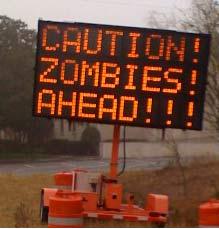 The Treasury just gave ten big banks the okay to repay their Tarp Funds. The gang of ten includes J.P Morgan, Goldman Sachs, Morgan Stanley, American Express, Bank of New York Mellon, US Bancorp, Capital One Financial Corp, and Northern Trust. This basically gives positive identification to our zombie banks. The three most worrisome are Citibank, Wells Fargo, and Bank of America Corp essentially creating a two-tier banking system. The second tier banks had to give the Treasury their plans to raise capital, while the other banks turn back their funds.
As part of the bank bailout program, known as the Capital Purchase Program, the 10 institutions eligible to repay TARP have the right to repurchase warrants the Treasury holds at fair market value.
The 10 financial institutions already paid $1.8 billion in dividend payments to the Treasury over the last seven months, bringing the total of all dividend payments to $4.5 billion.
Proceeds from the repayments go to the Treasury’s general account, which is used to reduce Treasury’s borrowing and reduce the national debt. The funds could also be used to provide further capital to troubled financial institutions as part of the TARP program.
Other smaller banks have also returned bank bailout funds, bringing the total in returns to $70 billion.
As part of the program, J.P. Morgan is eligible to return $25 billion in TARP funds, Goldman Sachs, $10 billion, and Morgan Stanley, $10 billion.
BB& T plans to repay $3.1 billion in TARP funds it received, according to a statement from the institution Tuesday. U.S. Bancorp announced plans to buy out $6.6 billion in TARP capital, the bank reported Tuesday.
Other eligible institutions include American Express, $3.4 billion, Bank of New York Mellon, $3 billion, and State Street Bank, $2 billion.
The Zombie three have began some encouraging steps like removing a few board directors. The FDIC (Sheila Bair) is encouraging a shake up of top management. Citi plans to exchange some preferred securities for common stock. But will these steps be enough? Can we really trust so much of our economy’s lending and spending power to zombies?
Just Say No to Zombie Banks!
Posted: March 16, 2009 Filed under: Uncategorized | Tags: bad bank, ben bernanke managing market expectations, financial regulation, good bank, zombie banks 6 Comments The market seems to have stabilized for awhile as Ben Bernanke has been giving speeches and making appearances every where he can. For those of you that really want to take on empirical studies in Economics (econometrics and all), this is a part of a strategy he outlined in Monetary Policy Alternatives at the Zero Bound: An Empirical Assessment. (Bernanke and Reinhardt 2001). It’s 113 pages long so be prepared to spend some time with it like I did last year. However, my guess is you can read the front parts and the back parts and skip the methodology and findings and be just as happy. It is basically the Chairman’s take on the Japanese Lost Decade and monetary policy at the time. It talks about quantitative easing which is the new approach that even the Bank of England is using now. That is when the Central Bank uses its balance sheet to buy and sale various financial assets to try to unclog lending channels. Since this is the first time the acting Chairman of the Federal Reserve Bank has ever appeared on any major news channel to have a fire side chat as in last night’s appearance on Sixty Minutes, I thought I’d point you to the motive behind the method. It’s outlined in that academic paper. Bernanke and Reinhard argue that Federal Open Market Committee (FOMC) announcements of policy and other announcements by the Fed shape market expectations and results. (Yes, I know El Presidente told us we shouldn’t care about the DJ but the FED chair still does because he knows IT MATTERS.)
Has the Federal Reserve’s policymaking body, the Federal Open Market Committee, historically exerted any influence on investors’ expectations about the future course of policy? Although members of the FOMC communicate to the public through a variety of channels, including speeches and Congressional testimonies, official communications from the Committee as an official body (ex cathedra, one might say) are confined principally to the statements that the FOMC releases with its policy decisions.
…
The FOMC has moved significantly in the direction of greater transparency over the past decade. Before 1994, no policy statements or description of the target for the federal funds rate were released after FOMC meetings. Instead, except when changes in the federal funds rate coincided with changes in the discount rate (which were announced by a press release of the Federal Reserve Board), the Committee only signaled its policy decisions to the financial markets indirectly through the Desk’s open market operations, typically on the day following the policy decision. In February 1994, the FOMC began
to release statements to note changes in its target for the federal funds rate but continued to remain silent following meetings with no policy changes. Since May 1999, however, the Committee has released a statement after every policy meeting.
The FOMC statements have evolved considerably. In their most recent form, they provide a brief description of the current state of the economy and, in some cases, some hints about the near-term outlook for policy. They also contain a formulaic description of the so-called “balance of risks” with respect to the outlook for output growth and inflation. A consecutive reading of the statements reveals continual tinkering by the Committee to improve its communications. For example, the balance-of-risks portion of the statement replaced an earlier formulation, the so-called “policy tilt”, which characterized the likely future direction of the federal funds rate. Much like the “tilt”statement, the balance of risks statement hints about the likely evolution of policy, but it does so more indirectly by focusing on the Committee’s assessment of the potential risks to its dual objectives rather than on the policy rate. The relative weights of “forward looking”and “backward-looking” characterizations of the data and of policy have also changed over time, with the Committee taking a relatively more forward-looking stance in 2003 and 2004.
Of course, investors read the statements carefully to try to divine the Committee’s views on the economy and its policy inclinations. Investors’ careful attention to the statements is prima facie evidence that what the Committee says, as well as what it does,matters for asset pricing.
I’ve highlighted that last paragraph because it is extremely important in explaining both the Chairman’s sudden interest in TV appearances and the market’s relief rally recently. Bernanke has been out there saying that the Fed will not let major banks fail, he dislikes then entire AIG thing and wants to ensure it never happens again, he’s been asking the senate committees he visits for more regulation, and he’s repeatedly said that the FED expects the recession to experience the trough later this year. We’ve not seen any meaningful discussion about the type of recovery to expect (L shaped or otherwise). We have however, seen more upbeat statements geared to appease the markets and their role in asset pricing.

 peej
peej Carissa
 bostonboomer
 dakinikat
 ecocatwoman
 mablue2
 Mama Lopez
 peggysue22
 quixote
 skydancingguestblogger
 Mona (aka Wonk the Vote)



 Sky Dancing
Recent Comments