
The Zombie Connection
Posted: April 2, 2009 Filed under: Equity Markets, Global Financial Crisis, Team Obama, U.S. Economy | Tags: AIG, Azora, Cerebus, Credit Default swaps, GM, GMAC, Madoff 6 Comments
Goverment Motors?
Bloomberg.com is reporting that GM is unlikely to survive the government’s latest requests and will head towards bankruptcy. This begs the question: Why have we poured so much money into what most folks thought was a lost cause anyway? My first response to that would be to point to the timing of requests which occurred around election time. No Republican or Democratic Pol in their right mind would want to irritate the huge number of states that will be impacted by the fall of GM. The second reason is one that is just becoming obvious with the Obama approach. It appears the administration is much more concerned about the impact on the investment banking sector and AIG than with GM.
There’s some very interesting relationships in these deals. First, take a look at Seven Things You Should Know about the next GM CEO at Business Insider.
So who is this Fritz guy? Here are seven things you should know.
- He’s a native of Detriot, born there in 1958.
- University of Michigan, 1980. Harvard Business School, 1984.
- Started at GM the year he got his MBA, in the Treasurer’s office.
- Came up through GMAC, eventually becoming the head of mortgage finance.
- He has run GM’s Latin American, Africa and Middle East division, as well as the Asia Pacific and European units.
- Became vice chairman and chief financial officer in January, 2006.
- Became president and chief operating officer in March, 2008.
Now isn’t that red point interesting? (Thanks to Jonas8 for this.) Let’s look at a few other interesting things. GMAC is owned by Cerberus who acquired 51 percent of GMAC from General Motors in 2006 for $7.4 billion. You may also know that Cerberus owns 80+% of Chrysler. Cerberus is having its own interest issues like this:
Embattled Cerberus Capital Management, a private-equity firm named for the mythological three-headed dog that guards the gates of Hades, has been overwhelmed by clients seeking to withdraw money from its $2 billion hedge fund, Cerberus Partners.
Website FINAlternatives said that fund investors representing 17 percent of the assets wanted to withdraw their money in December, the most recent month for which statistics are available. Now, with Cerberus’s investments in Chrysler and GMAC going bad and unemployed investors needing to tap more funds, that figure may be heading higher.
Just look at this Wiki list of what things they also own:
- Real Estate – Through investment affiliate Cerberus Real Estate, the company has been making direct equity, mezzanine, first mortgage, distressed and special situation investments in all asset types. It also controls Miami Beach-based LNR Property, a large real estate development and investment firm through subsidiary Riley Property. Cerberus also controls Kyo-ya, a Japan based group of entities that owns several Starwood managed assets in California, Hawaii and Florida.
- Government Services (Military, Energy, and Food & Drug) – owns IAP Worldwide Services, which bought Johnson Controls‘ World Services division in February 2005, and Netco Government Services.
- Financial Services – General Motors sold a 51% stake in its GMAC finance unit to an investor group led by Cerberus Capital Management in November 2006. GM expected to receive $14 billion over the next three years from the sale of General Motors Acceptance Corp. In December 2006, Cerberus acquired the Austrian bank BAWAG P.S.K. for a reported EUR3.2 billion. In August 2007, Cerberus announced that it was closing one of their mortgage companies, Aegis Mortgage. It owns half of a 9.9 % share (5%) with the Gabriel Group in Bank Leumi
I want to jump on over to something BostomBoomer sent me this morning at the Market Ticker by Karl Denninger. Just start connecting the dots here and start with an earlier piece here. This is the line that starts connecting ALL these little dots.
And then there’s the nearly $1 trillion in CDS that will trigger. There is no accurate way to know what the net exposure is on those, but I’d take the “over” on $100 billion, focused in you-know-where.
CDS would be Credit Default Swaps. Yup, those would be those toxic assets that are still sitting out there in banks and most likely AIG. So, who exactly are we worried about here? GM? GM’s stock holders? GM’s auto workers? GM’s retirees? If you’re any where as pessimistic as I am about this, you’re going to say, I bet it’s the bondholders and the holders of the CDS based on GM. DING! Let’s go a little bit further into that Denninger thread.
The government has provided a history now that says that if you are a holder of CDS written by AIG, you will get 100 cents on the dollar, even if the notes don’t default. In addition that 100 cents is above what you would normally get even if there IS a default, because normally you have to tender the defaulted bond or the payout is limited by the recovery, and recovery on a defaulted bond is almost never zero.
So in this case the winning play, if you’re a big bondholder, is to tell GM to suck eggs; you’ll get paid 100 cents on your CDS even though AIG has no money, because the taxpayer will make you whole on those CDS, even if the bonds have a recovery in bankruptcy.
In other words you could conceivably get more than 100 cents if you hold those bonds – so long as you also hold a CDS as a hedge.
It must be nice to be able to screw the taxpayer for more than a 100% payout, right?
The bondholders “committee” is all made up of big players who presumably are hedged, ergo, this has to be assumed to be part of their “thought process” – if not the controlling factor.
Small bondholders on the other hand (who have no hedge, unless they were smart enough to buy lots of PUTs a few months ago) are just going to get plain old-fashioned screwed.
Since the only way GM survives is for it to get the bondholder committee to agree to restructuring it therefore follows that the only way this can happen is if the administration (and Fed!) makes very clear that all funding to AIG has been cut off and therefore no further “pass through” payments will (or can) occur.
That is, The Obama Administration has to bankrupt AIG to save GM, or we will instead see the banks again rip off the American Taxpayer through yet another “passthrough” CDS payout stream AND GM will go bankrupt.
Get ready America – you’re about to get it in BOTH holes this time.
This is analysis and deduction based on the available and public facts – I have no proof – but I’ll bet this is exactly how this deal will go down, and why.
PS: Every firm in America that has a significant amount of CDS outstanding is potentially subject to this same attack. It’s all very nice that our government is permitting banks to rob the citizens like this, isn’t it?
So, let’s see. Cerebus, through its financial holdings gets TARP money. Cerebus through its Chrysler holdings gets cheap government loans. AIG and all those investment banks holding those swaps get taxpayer money. GM’s getting cheap loans and has bonds that have been securitized into CDS. I’m with Denninger on this one.
Oh, and just in case you’re not seeing a lot of stuff on Cerebus, let’s try these little tidbits:
On October 19, 2006, John W. Snow, President George W. Bush‘s second United States Secretary of the Treasury, was named chairman of Cerberus.
J. Ezra Merkin is a partner in Cerberus. Merkin invested his funds into Cerberus and its portfolio companies. His Gabriel fund invested $79 million in Chrysler, $66 million in GMAC and $67 million in Cerberus partnerships, according to year-end statements. The Gabriel Fund was a feeder fund for Bernard L. Madoff Investment Securities LLC.[3]
Japanese bank, Aozora, a Cerberus company lost $ 137 million to Bernard L. Madoff Investment Securities LLC. Aozora was part of the investment group that acquired 51 percent of GMAC from General Motors.
I’m just hoping some one in the MSM can pick up on this and go after it. If not that, then Cuomo needs to get a forensic accountant and go after it all. This just doesn’t look right to me AT ALL.
SHARE THIS POST:


Super Heroes of Macroeconomics
Posted: March 22, 2009 Filed under: Uncategorized | Tags: AIG, bail out, Fraud, Geithner, Obama, Summers, TARP, Wealth Transfers, zombie banks 11 CommentsSomebody must have a lot of time on their hands to write a song called “Hey, Paul Krugman” but still, if the angsty, artsy fartsy creative class that foisted this POTUS on us is finally waking up, then Twitter me when the Revolution comes. I’ve even read the orange cheeto place and seems even a few of them are beginning to see the writing on their blackberries.
So, Paul is still appalled and speaking out against the Zombie Plan. I’d say this is another sfz! warning to the White House. What I can’t repeat enough is that it’s not just Paul. It’s not just me. It’s everyone with any knowledge of macroeconomics and the financial system.
Why am I so vehement about this? Because I’m afraid that this will be the administration’s only shot — that if the first bank plan is an abject failure, it won’t have the political capital for a second. So it’s just horrifying that Obama — and yes, the buck stops there — has decided to base his financial plan on the fantasy that a bit of financial hocus-pocus will turn the clock back to 2006.
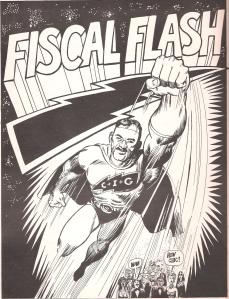 I don’t know if you’ve ever sat in an economics class, but most of you who have will attest that few economics professors are what you would call the dramatic, excitable types. However, I’ve seen more animation out of them recently than I’ve seen in all recent Marvel Comic Books.
From “Reasons Why The Obama Administration will not solve this crisis by the end of 2009” at The Underground Investor:
Consider that President-elect Obama voted FOR the horrible $700 billion bailout plan that accomplished less than zero in fixing the global economy while only transferring wealth from people that were struggling the most to the unethical financial executives that created this problem. These were my exact words in October, 2008, verbatim, about the eventual effect of the bailout plan: “Don’t believe the media spin. This will fix nothing. Even if and when the government overpays Wall Street and US banks by 300%, 500% and 1000% for their toxic assets, this temporarily recapitalizes these financial institutions but only creates A MUCH BIGGER PROBLEM for the future.” If I understood why the bailout plan would most definitely fail, as I blogged here, and the next President of the United States could not, that is a scary thought. On the other hand, if President Obama understood that the bailout plan would likely accomplish nothing but the transference of wealth from hard-working citizens to corrupt financial executives and still voted for the bill, then this action needs no further discourse.
From FT’s Willem Buiter:
Why are the unsecured creditors of banks and quasi-banks like AIG deemed too precious to take a hit or a haircut since Lehman Brothers went down? From the point of view of fairness they ought to have their heads on the block. It was they who funded the excessive leverage and risk-taking of banks and shadow banks. From the point of view of minimizing moral hazard – incentives for future excessive risk taking – it is essential that they pay the price for their past bad lending and investment decisions. We are playing a repeated game. Reputation matters.
Three arguments for saving the unworthy hides of the unsecured creditors are commonly presented:
- Unless the unsecured creditors are made whole, there will be a systemic financial collapse, with dramatic adverse consequences for the real economy.
- If the unsecured creditors are forced to take a hit, no-one will ever lend to banks again or buy their debt.
- The ultimate ‘beneficial owners’ of these securities – notably pensioners drawing their pensions from pension funds heavily invested in unsecured bank debt and owners of insurance policies with insurance companies holding unsecured bank debt – would suffer a large decline in financial wealth and disposable income that would cause them to cut back sharply on consumption. The resulting decline in aggregate demand would deepen and prolong the recession.
I believe all three arguments to be hogwash.
Zombie Banks must DIE!
Posted: March 21, 2009 Filed under: Global Financial Crisis | Tags: AIG, Anna Schwartz, Dean Banker, Financial Bailout, Geithner, impeach president Obama, James Galbraith, joseph stiglitz, Krugman, Paul Craig Roberts, zombie banks 5 Comments Well, the Obama administration has decided to take the Zombie route which is something I’ve repeatedly argued against. But why just take my word for it? Let’s start with Nobel prize winning economist Paul Krugman reporting on his NY Times blog today in a thread aptly titled Despair over Financial Policy.
The Geithner plan has now been leaked in detail. It’s exactly the plan that was widely analyzed — and found wanting — a couple of weeks ago. The zombie ideas have won.
The Obama administration is now completely wedded to the idea that there’s nothing fundamentally wrong with the financial system — that what we’re facing is the equivalent of a run on an essentially sound bank. As Tim Duy put it, there are no bad assets, only misunderstood assets. And if we get investors to understand that toxic waste is really, truly worth much more than anyone is willing to pay for it, all our problems will be solved.
Just about every economist and financial blog on the web, especially the progressive ones, have warned against this option since similar plans put Japan into its lost decade of recession, high deficits, unemployment, and financial malaise. This is worse than I even expected of the Obama administration. This basically means more BIG subsidies for BIG investors. It is nothing less than a massive transfer of wealth to the people and institutions most responsible for this mess from those of us that will suffer the most and have the most to lose. This threatens our jobs, our children’s future, and our country’s standing as the world’s largest single country economy. This is THE single worst possible decision.
This from Calculated Risk:
With almost no skin in the game, these investors can pay a higher than market price for the toxic assets (since there is little downside risk). This amounts to a direct subsidy from the taxpayers to the banks.
From Yves Smith Naked Capitalism:
The New York Times seems to have the inside skinny on the emerging private public partnership abortion program. And it appears to be consistent with (low) expectations: a lot of bells and whistles to finesse the fact that the government will wind up paying well above market for crappy paper.
Key points:
The three-pronged approach is perhaps the most central component of President Obama’s plan to rescue the nation’s banking system from the money-losing assets weighing down bank balance sheets, crippling their ability to make new loans and deepening the recession….
The plan to be announced next week involves three separate approaches. In one, the Federal Deposit Insurance Corporation will set up special-purpose investment partnerships and lend about 85 percent of the money that those partnerships will need to buy up troubled assets that banks want to sell.
Yves here. If the money committed to this program is less than the book value of the assets the banks want to unload (or the banks are worried about that possibility), the banks have an incentive to try to ditch their worst dreck first.In addition, it has been said in comments more than once that the banks own some paper that is truly worthless. This program won’t solve that problem. Back to the piece:
In the second, the Treasury will hire four or five investment management firms, matching the private money that each of the firms puts up on a dollar-for-dollar basis with government money.
Yves here. Hiring asset managers to do what? Some investors get 85% support (more as is revealed later), others get dollar for dollar? This makes no sense unless very different roles are envisaged (but how will the price for assets given to the asset managers be determined? Or are these for the off balance sheet entities that should be but are still not yet consolidated, like the trillion dollar problem hanging around at Citi?) Back to the article:
In the third piece, the Treasury plans to expand lending through the Term Asset-Backed Secure Lending Facility, a joint venture with the Federal Reserve.
Yves again. While the first TALF deal got off well, Tyler Durden points out its capacity is 2.7 times pre-credit mania annual issuance levels, which means the $1 trillion considerably overstates its near term impact. And credit demand by all accounts is far from robust. Cheap credit is not enticing in an environment of weak to falling asset prices and job uncertainty.
…
And notice the utter dishonesty: a competitive bidding process will protect taxpayers. Huh? A competitive bidding process will elicit a higher price which is BAD for taxpayers!
Dear God, the Administration really thinks the public is full of idiots. But there are so many components to the program, and a lot of moving parts in each, they no doubt expect everyone’s eyes to glaze over.
Later in the article, there is language that intimates that the banks will put up assets and take what they get. However, the failure to mention a reserve (a standard feature in auctions) does not mean one does not exist. Or the alternative may be, since bidding will almost certainly be anonymous, is to let the banks submit a bid, which would serve as a reserve. That is the common procedure at foreclosure auctions, when the bank puts in a bid equal to the mortgage value (so either a foreclosure buyer takes the bank out or the bank winds up owning the property).
From Financial Armageddon:
No Surprise to Anyone
If there is anything to be learned from the current crisis, it is the fact that Washington has a habit of screwing things up.
From setting up corrupt and self-serving government-sponsored enterprises that fail to accomplish their stated goals, to ill-conceived and underfunded insurance schemes, guarantee programs, and safety nets that don’t provide the benefits claimed, to rules and regulations that leave those who are “protected” high and dry, it’s amazing how often good intentions go wrong when the politicians are in charge.
From George Washington’s Blog:
Does a Single Independent Economist Buy the Geithner-Summers-Bernanke Approach?
Does a single independent economist buy the Geithner-Summers-Bernanke approach?
On the left, you have:
- Nobel economist Joseph Stiglitz saying that they have failed to address the structural and regulatory flaws at the heart of the financial crisis that stand in the way of economic recovery, and that they have confused saving the banks with saving the bankers
- Nobel economist Paul Krugman saying their plan to prop up asset prices “isn’t going to fly”. He also said:
At every stage, Geithner et al have made it clear that they still have faith in the people who created the financial crisis — that they believe that all we have is a liquidity crisis that can be undone with a bit of financial engineering, that “governments do a bad job of running banks” (as opposed, presumably, to the wonderful job the private bankers have done), that financial bailouts and guarantees should come with no strings attached. This was bad analysis, bad policy, and terrible politics. This administration, elected on the promise of change, has already managed, in an astonishingly short time, to create the impression that it’s owned by the wheeler-dealers.
- Prominent economists like Nouriel Roubini, James Galbraith, Dean Banker, Michael Hudson and many others slamming their approach
On the right, you have:
- Leading monetary economist Anna Schwartz saying that they are fighting the last war and doing it all wrong
- Former Assistant Secretary of the Treasury and former editor of the Wall Street Journal Paul Craig Roberts lambasting their approach
- Economist John Williams saying “the federal government is bankrupt … If the federal government were a corporation … the president and senior treasury officers would be in federal penitentiary.”
- Prominent economist Marc Faber and many others tearing their approach to shreds.
Of course, other Nobel economists, high-level fed officials, former White House economist, and numerous others have slammed their approach as well.
Sure, the economists for the banks and other financial giants which are receiving billions at the government trough think that the Geithner-Summers-Bernanke approach is swell.
And perhaps a couple of economists for investment funds which use their giant interventions into the free market to make some quick money.
But other than them, no one seems to be buying it.
I may be one of the few in the chorus singing soprano, but I’m in a very huge chorus singing sfz! that this is the worst possible of ALL choices. This is nothing more than a wealth transfer that will accomplish nothing other than keeping banks and financial institutions that are basically bankrupt on live support long enough to drain the daylight out of any recovery. This President is AWOL from his job. Not only is he AWOL, but he is incompetent. He can go on Leno, he can go on sixty minutes, he can give lavish St Patrick’s Day parties and he can hold town meetings in California but he is totally incapable of staying in Washington and doing his job. By allowing this, he will have stolen more from every single honest taxpayer in this country than even Darth Cheney and the Texas Village idiot did with their adventures in nation building and subsidy of the oil and gas industries and the military industrial sectors. If somebody in Congress doesn’t act to stop this, I say we start calling them to demand impeachment proceedings. We’ll be lucky if we come out of recession by the time my daughters reach retirement.
There I said it. If President Obama doesn’t stop this nonsense now he should be impeached for criminal misuse of tax payer’s money.
Kabuki Financial Regulation
Posted: March 10, 2009 Filed under: Equity Markets, Global Financial Crisis, No Obama, U.S. Economy | Tags: AIG, bernanke, CDOs, Fannie, Freddie, Japan's lost decade, Swaps, zombie banks 3 Comments
Much speculation has been made recently about the possible similarities between Japan’s lost decade and financial crisis during the 1990s and the current US Financial crisis. It’s impossible to get through any graduate program in either finance or economics without spending time with the mounds of research the decade ignited. Since many folks are talking and writing about this period in the popular business press and speculating on the chance of an L-shaped recovery similar to the one experienced by Japan, I thought I’d focus some on Japan’s Lost Decade. There are some similarities but some important differences too.
About a month ago, The Economist asked if America’s crisis could rival Japan’s. Their answer was yes. This article examines something we’ve looked at twice before. That would the IMF study of banking crises. Both the Nordic banking crisis and the Japanese banking crisis are including in the database and highlighted by the study. The experience of these rich country crashes have both been bandied about as possible road maps to financial system recovery. Sweden nationalized its banks. There was also the lesson from South Korea. This country recovered after two years. The there was Japan. It let its banks languish. Japan became infamous for its decade of economic stagnation. Are we turning Japanese?
Japan’s property bubble burst in the 1980s and its run up prior to the bubble was smaller than ours. Additionally, Japan has a high domestic savings rate. America is the world’s largest debtor.
Judged by standard measures of banking distress, such as the amount of non-performing loans, America’s troubles are probably worse than those in any developed-country crash bar Japan’s. According to the IMF, non-performing loans in Sweden reached 13% of GDP at the peak of the crisis. In Japan they hit 35% of GDP. A recent estimate by Goldman Sachs suggests that American banks held some $5.7 trillion-worth of loans in “troubled” categories, such as subprime mortgages and commercial property. That is equivalent to almost 40% of GDP.
The authors of The Economist articles see both other differences too.
Japan’s central bank took too long to fight deflation; its fiscal stimulus was cut off too quickly with an ill-judged tax increase in 1997; and it did not begin to clean up and recapitalise its banks until 1998, almost a decade after the bubble had burst. But the history of bank failures suggests that Japan’s slump was not only the result of policy errors. Its problems were deeper-rooted than those in countries that recovered more quickly. Today’s mess in America is as big as Japan’s—and in some ways harder to fix.
Let’s look at the first statement about deflation. We’re not experiencing deflation in all sectors. The latest numbers from the BLS still show slight inflation. However, we are looking at some tax increases in the near future. Both Japan and the Roosevelt administration in 1937 instituted tax increases before both of these major financial crisis had be solved. In 1937, it led to a second economic and financial market down turn. In 1997 Japan, it slowed down recovery.
Our dollar is strengthening as the financial crisis impacts the global economy. Japan’s yen is similarly a strong world currency. The dollar is still seen as a  safe-haven asset. However, Japan is a net exporter while the US is a net importer. Japan is not a debtor nation, but a creditor nation. Japan could still rely on exports to deliver some economic stimulus. The US does not have that luxury. However, while South Korea and Sweden’s currencies weakened and helped make their exports look cheap, Japan’s yen stayed somewhat strong. This crippled Japan’s ability to fully use exports as stimulus making its recovery much longer than either those of South Korea or Sweden. The dollar continues to strengthen which also makes any exports we send to the rest of the world relatively expensive. It also continues our reliance on imports as they stay relatively cheap.
In some ways America’s macroeconomic environment is even trickier than Japan’s. America may have a big current-account deficit, but the dollar has strengthened in recent months. America’s reliance on foreign funding means the risk of a currency crash cannot be ruled out, however. That, in turn, places constraints on the pace at which policymakers can pile up public debt. And even if the dollar were to tumble, the global nature of the recession might mean it would yield few benefits.
I already mentioned that Japan’s households were historically good savers. This meant only the Japanese corporations had to ‘deleverage’ or get rid of debt during the Japanese crisis. I remember watching Japanese commercials at the time from the government extolling patriotic Japanese households to go spend like crazy at the same time the US government was telling Americans to consider saving. Well, that trend is reversing. Japanese households are beginning to decrease their savings rates, while Americans have rediscovered thrift. This is also something we’ve talked about. Here’s how that played in Japan and could play out differently here.

 peej
peej Carissa
 bostonboomer
 dakinikat
 ecocatwoman
 mablue2
 Mama Lopez
 peggysue22
 quixote
 skydancingguestblogger
 Mona (aka Wonk the Vote)



 Sky Dancing
Recent Comments