
Just Survive …
Posted: October 12, 2008 Filed under: U.S. Economy | Tags: bail out plans, Financial Crisis, presidential election, U.S. Economy 2 CommentsI’ve really wanted to talk about the financial crisis more. It’s been hard to write about because things on the ground are changing so quickly. The deal right now is just to survive the entire thing. Times are odd and the odd are getting odder.
The oddest of the the odds is that there are more than just one economic positions being borrowed from Hillary’s plan by BOTH the surviving presidential contenders. Both of these guys are completely clueless on the economy and it’s really showing. They are like little boys in a class room cheating off that one little girl with glasses that has all the answers.
This week, Senator McCain became the liberal by suggesting a plan similar to Hillary’s suggestion of some kind of HOLC like the one that bought up bad mortgages during the depression. Everything he’s been suggesting is so populist that I keep pinching myself to see if I’m actually awake. The Sunday morning talk shows were filled up with democratic talking heads trying to explain that buying folks’ homes at their underwater positions and renegotiating them is going to help banks more than the home owner. This program is basically a re-tooled Roosevelt New Deal idea that is geared specifically to folks living in their homes, not the speculators. If you were all for the banks, the agency would bail out ALL mortgages, not just firsts for home owners. As a progressive, I have to say, for Democrats to be taking a stand against this position JUST because McCain introduced into the debate and Obama just says no, is a little, well, odd, to me.
Another odder than odd policy suggestion is Obama’s idea to let judges work out families’ mortgage problems in bankruptcy court. This is probably a good long term solution, but wouldn’t it be nice to stop these families from showing up in the bankruptcy court? I’m actually wondering if prevention of a problem is something a lawyer can even wrap their brains around. I mean, they make money from exacerbating problems once they’ve gotten huge in a court case, not from problem prevention so is this why he’s stumping for this at a time when short term solutions are required? Even my first year economic students couldn’t figure out why you’d want to let the bankruptcy court work the foreclosures out. Why not try to prevent the foreclosures?
The next thing is the Pelosi hint at yet another stimulus package. Just about any one ought to realize now that the first one really didn’t do much but hold the recession off a few months and make folks think of other things. While it’s a nice thing to get $600 in the mail, the government can’t control what that money gets spent on. It’s one thing if you take the money and buy something American, but most folks either use it to pay down debt which is not the least bit stimulatory or they go buy something that stimulates the Chinese economy. Unless you create a no buying at Walmart rule, this is nothing but another make them feel better while we figure out what to do plan.
Economists have shown empirically with both the Ford and Bush rebates, that rebates are not the way to stimulate the economy because they don’t have the desired results. They usually just exacerbate the debt and make folks feel a little better. They are not game changers. You need underlying changes to the tax codes to do that or you need the government doing spending on something that might have a chance at creating jobs–like building roads. This is another Obama suggestion. The problem with infrastructure spending at this point is that it takes a long time to get through the system. It is needed, but how long will it take to get the program going? Infrastructure improvements are an important part of both short run economic stimulus and long run economic growth, but it’s a little late to start suggesting these things now that we’re in a full blown financial crisis and down turn in the real economy. They’d have to be coming OUT of the hopper right now to do any real good; not going into the hopper some time ‘soon’. Again, this is a preventative type of action once you see things are slowing down. It wouldn’t be soon enough at this point. This again leads me to believe that Obama doesn’t seem to grok the concept of preventative and when it’s useful. I was suggesting this a YEAR ago as a way of preventing a recession and slowing job loss when it does happen. It’s a little futile now. Hillary was suggesting this a year ago too. That and her green jobs initiative were great suggestions for the situation at that time.
Which brings me to another odder than odd. Senator Obama is now wanting some kind of tax credit to home owners for higher energy costs. What I’m waiting to hear is how this is different from just giving every one a tax holiday from gas taxes except you have to wait until the beginning of the year to file for it. Again, every time you talk about a one time deal, even if it is a tax thing, every one knows it’s a one time deal and it doesn’t really change their behavior. Any stimulus that comes from it tends to be very short-lived. Plus, by the time any tax credits would take effect it will be the spring. Not one economist will probably stick their head out to say what kind of things will be needed by then. It doesn’t make sense to try to do that now.
Right now, Henry Paulson is the most important man in Washington. It’s not the President and it’s not these two candidates. The second most important man is Ben Bernanke. Again, odder than odd because neither of these men are elected and both of these men may have very short tenures at the helm. However, I’m just hoping Dubya takes some time off at the ranch. I know I can’t wish that one for every one up for election right now, but I really would like it. It is in the hands of Paulson and Bernanke until January. I’m okay with that because Paulson, btw, is not what the Republicans or the Democrats spin would make him to be.
Paulson has always been odd for both a Wall Street and Washington insider. Paulson is a man that grew up on a farm in Illinois and got into Dartmouth the old fashioned way–good grades. He wasn’t a legacy of any one unlike our current crop of candidates AND the president. His nickname is “the Hammer” because he’s seen as relentless. He is also a devout Christian Scientist who does not drink or smoke and goes back to Illinois on the weekends. He did this even when he was on Wall Street. He lacks ideology and has been criticized by the right of being selling out free-market principles and on the left for bailing out his Wall Street buddies. I always consider being criticized by both sides a good thing in a public servant, but then that’s me.
Now we seen a joint effort from G-7 countries to contain the contagion. Almost all of these plans have to do some with some kind of nationalization of banks. This includes McCain’s suggestion to get the taxpayer ownership which oddly enough was snuck into the bailout package, unknown to many. I’m wondering where THAT came from. Perhaps we’ll find some one taking the credit for that soon, but it seems it might actually be some one like Republican Senator Arlen Specter. Again, odd, odd and odder.
Meanwhile, my strategy and tactics are just to survive with my job and my loans paid down. I’m also trying to put a little money aside in the bank. I’m trying not to look at my 401k plan because it’s telling me that I will die at the podium at this point. I haven’t changed anything about it except all my new contributions are going into bonds. That’s my suggestion to every one right now, don’t panic, we’ve been here before, we just don’t know how long it’s going to last. I actually do have faith in Paulson and Bernanke but not so much in ANYONE running for election right now. Right now, McCain is sounding like the Roosevelt liberal right now and Obama is sounding very moderate so turning to politics for economics signals right now just has me checking my hands to determine which is left and which is right. I still know which way up and down are and that we’re in for more downs than ups for awhile. Other than that, I have NO idea what to say other than it’s an odd time right now and the odd are just getting odder.
Bottom line: Just try to survive.
Who let the Sharks Out?
Posted: October 3, 2008 Filed under: U.S. Economy | Tags: bailouts, Fannie Mae, Financial Crisis, Freddie Mac, Investment banks 4 CommentsAs the economy continues its slide towards recession, we now have a pork-laden rescue of many of the folks both responsible for the recession as well as the crisis. TARP may unfreeze the credit markets, but until we responsibly regulate the financial markets that are now shoveling troubled assets onto taxpayers and until we support the prices of their underlying assets (that would be folks’ homes), we will not solve the problem.
 I focused recently on the lax lending standards that helped to create the housing bubble (fueled also by the Fed who kept interest rates too low, too long after 2001). It was the red meat thrown into the piranha pool. Let’s talk about what the piranhas did with the red meat once they had it.
Let me mention first that we’ve nearly been here before when Long-Term Capital Management (LTCM) came close to collapse in September 1998 at the time when Russia had difficult repaying its debt. The Fed rescued the fund and showed that some guys are just “too-big-to-fail”. The Fed wanted to stop possible contagion coming from the failure from spreading to commercial banks. Studies at the time showed that losses to investment banks during this type of contagion could be huge (including one done by my Financial Intermediaries Seminar prof). They noticed that investment banks would be far more vulnerable to losses than depository institutes. This small crisis that most folks probably don’t even remember was the canary in the coal mine.
Meanwhile, the primary mortgage market was coming under the spell of the underwrite-nearly-everything mentality spurred on by Fannie and Freddie. We’ve mentioned that Fannie and Freddie also imply a government guarantee. Now, we have a situation where the Fed has shown its readiness to put the tax payer’s money behind anything it deems too big to fail. Both actions were like chumming the waters. Rising house prices were just more blood on the water. It was only time before the piranhas and sharks came to feed. They were being encouraged to ignore risk and that’s not a wise thing to do.
Five investment banks, including Goldman Sachs, approached the SEC with a proposal around 2004. They sought an exemption for their brokerage units from old depression-era regulations that limited the amount of debt they could incur. An exemption from this leverage rule would free up a heckuva lot of money to invest in some new-fangled investments: mortgage-backed securities, credit derivatives, and credit default swaps. They got permission. Enter the net capital rule that enabled the piranhas and the sharks. During the next few years, leverage ratios increased until for about every dollars worth of equity held by an investment bank, there was around $30 in debt.
Credit default swaps act like insurance. They are instruments intended to cover losses to banks and bondholders when companies fail to pay their debts. Since 2000, the market has boomed from about $900 billion to more than $45.5 trillion. This about twice the size of the entire U.S. stock market. The market for credit default swaps as well as the market for mortgage securities were left unregulated. Many folks have been worried about this market for some time.
The Comptroller of the Currency, a federal bank regulator warned that increased trade in swaps during 2007 was putting a strain on processing systems that were used to handle swaps. Swaps are essentially what brought down AIG. Back in the beginning of the year, AIG found that it had incorrectly valued some of the swaps and announced that mistake would cause the company to lose $6.3 billion more than they had estimated before.
Placing correct values on Swaps and Mortgage securities is very difficult. Big banks, insurance companies and hedge funds are among the financial institutions that trade these derivatives. CDS tend to be private agreements where buyers of the protection/insurance agrees to pay a premium to the seller over time. (Much like an insurance policy premium). The seller pays only if a particular crisis occurs. These contracts can also be bought and sold. Because the market is basically unregulated, no one quite knows when the swaps are sold and to whom they are sold. This can be a problem when the protection is required, say like when the Hurricane Katrina of asset bubbles bursts in the housing market. Just so you know, the largest players in this market are JP Morgan Chase, Citibank, and Bank of American. All WAY too big to fail, right?
Enter speculators as this market gets large. Speculators (read HEDGE FUNDS) have used these instruments to bet on a company or a bank’s failure. Funny thing is there is actually more value now out there in the derivatives than there is in the underlying assets. Remember, this is BEFORE the bubble bursts and brings the asset prices down even further. So credit default swaps are basically default insurance, although they can’t be named that. So what happens when every one needs to make a claim on their insurance and can’t exactly locate your contract and it probably resides with some one who is in worse shape than you? (Ah, let your imaginations run away with you, it’s bad.)
So, let’s get back to our Pirahanas and Sharks. They’re being encouraged to loosen up those lending standards by Fannie and Freddie AND they can buy insurance too if their bad loans go bad. How can you lose with a deal like that? It doesn’t appear that you can, does it? So what do you do? Continue underwriting loans for folks without income, folks without credit, folks that are even dead. (Yes, dead, I’m not making that up.)
I think you can see that what we have here is the perfect storm. So let me get back to what this bill doesn’t do. It DOESN’T stop the assets from continuing to go bad, at least in the housing end of things. It DOESN’T regulate any of the players in this market although the investment banks are now under the jurisdictions of bank holding companies and basically the FED. It DOESN’T deal with the leverage issue. It DOESN’T punish any one for lending bad loans even. No one is getting yelled at for encouraging this — not Fannie and Freddie, not the FED and not the SEC. Definitely not the congresscritters that enabled them either, at least not yet.
What we are witnessing is the creation of more TOO BIG TO FAIL critters AND we’re giving them more money to lend out and we have inadequate regulation. It’s time to take the chum out of the water, folks!
Those who forget the past are condemned …
Posted: October 1, 2008 Filed under: U.S. Economy | Tags: bail out, Bail out of Fannie Mae and Freddie Mac, Fannie, Financial Crisis, HOLC 6 Comments(cross-posted at the Confluence)
I’m having difficulty digesting a lot of the news and hoopla surrounding this financial crisis. There are some things that are really worrying to me. It’s not so much the crisis itself, which I actually understand, but the responses. I am reminded of the saying that those who forget the past are condemned to repeat it. I think this basically sums up much of why I feel so desperate when I watch the response to this crisis unfold on TV. It’s time to stop the blame and start the problem-solving.
First, what really bothers me is the inability of ANY of the politicians to either REALIZE how they contributed to this or understand what lead to this. A recent post by myiq2xu mentioned a speech by Senator Obama who offhandedly referred to the period of deregulation of industries that went on during the 70s. He has been hammering his every talking point with the Republicans did this to us. Useful, I suppose when trying to get elected based on something other than your credentials, but disingenuous at the very least. I keep wondering if he JUST doesn’t know the history of deregulation or he’s purposefully lying to us.
The deregulation of the telcom industry, the airline industry and the banking industry came about during the Carter regime. When I was a fresh out of grad school economist, I worked for a bank then a Savings and Loan. The Monetary Control Act of 1980 (okay, i’m dating myself) was a response to the problem of traditional banks and thrifts hemorrhaging deposits to Money Market Accounts. The root of deregulation started with Jimmy Carter’s administration. Hasn’t any one told him this or does he just like to go on misspeaking? The fight against the deregulation against Fannie and Freddie–probably the biggest contributors to this latest moral hazard problem–was led by the Democrats also. Why can’t we just be honest about this and say that each of the parties had a hand in this and learn from the past?
Second, I lived through the S&L crises and the economy that prevailed in the early 80s. My first house loan had an interest rate of 17.67% which got discounted to a beneficent 12.67% because I worked for the thrift that gave me the loan. House loans aren’t even half that at the moment. Two other folks besides me got house loans that month from the biggest thrift in the heartland. I’d say that was a credit crunch, wouldn’t you? I also worked the money desk at that time and remember the interbank loan (Fed Funds rate) bopping between 4% and 21% on any given day. Both of these rates are a far cry from the current rates as is the unemployment rate which sat between 12 and 13% for some time. Remember, these were the morning in America years of the early 80s. We currently have a 6.1% unemployment rate.
My father lived through the great depression. At that time, the unemployment rate peaked between 25% to 29%. The foreclosures that happened during that time occurred because no one had jobs and no one had unemployment insurance. When they closed the banks, there was no FDIC so, you lost your life savings. Today, we have unemployment insurance, the FDIC, and various other types of insurance that minimize the loss you experience on your deposits –even money market funds. You may experience paper losses, but you will not loose EVERYTHING! There are safeguards against much of the worst situations experienced during the depression. I’m not sure that given today’s economy, which is sluggish and experiencing problems but is not as bad as either of these two periods, we need this rush to judgment. Why aren’t we thinking this bail-out plan through more?
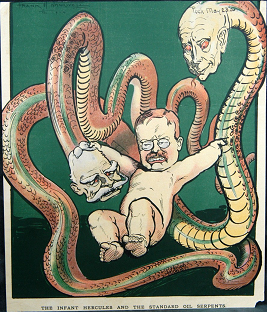 Which brings me back to today. We solved many of the problems of the previous financial crisis with government intervention. The HOLC bought up many defaulting mortgages, renegotiated them when possible, and held on to the properties, insuring they wouldn’t drive land and house prices down further. During the S&L crisis, the RTC bought out S&Ls, unwound the assets, and sold the sellable ones while holding onto the bad stuff, until the market turned around. The government can afford to hold paper losses on its books. Private industry cannot. Government can help put a bottom price on these markets. This is what it needs to do. It does not need to end the alternative minimum tax, change the taxes on corporations, or fund ACORN and La Raza.
Which brings me to one more point, when do we stop turning these unprofitable behemoths into megacompanies that become too big to fail? Haven’t we learned anything in the past about this? Why are we creating more Freddies and Fannies? It is not fair to the taxpayer for the profits to be privatized, but the losses to be turned to the public. During the last 30 years, we’ve allowed mergers to create these giant companies that are behaving more and more like monopolies. This is not good for a free market system. If we are allowing them to become so big and letting them get away with extraordinary profits during good times, than making them subject to public largess if they fail, what is the difference between this and just nationalizing them altogether? Didn’t we learn these lessons during the trustbusting years of Teddy Roosevelt? Isn’t the basis of our monopoly law the Sherman Anti-trust regulations that were set up in the 19th century? Why have we forgotten the excesses of the gilded age?
Yes, it’s broken. Yes, it needs to be fixed. But can some one in Washington just pick a few history and economics textbooks so we’re not condemned to relearn the lessons of the past and do it with everyone’s tax dollars?
The No Bailouts Act
Posted: September 30, 2008 Filed under: U.S. Economy, Uncategorized | Tags: Alternatives to bailouts, Financial Crisis, No Bail Outs Act, Peter DeFazio 2 CommentsCongressman Peter DeFazio from Oregon has sent a letter to colleagues offering an alternative to the current $700 billion bailout. It is worth a look.
| DeFazio Introduces the No BAILOUTS Act | | Print | |
|
The following is a Dear Colleague sent by Representative DeFazio introducing his No BAILOUTS Act, which would Address the current financial crisis without putting the American taxpayer on the hook for billions of dollars.
Dear Democratic Colleague:
The House of Representatives rejected the $700 bailout yesterday. Distinguished economists across the world have stated it would not have solved the problem at hand. However, we can potentially solve this liquidity problem at little cost to the taxpayer. I am proposing that Congress drop the Paulson Plan, and instead pass the No BAILOUTS Act. The No BAILOUTS Act provides an alternative to the Paulson Proposal to address the current credit crunch. Once Congress addresses the liquidity shortfalls in our financial markets, a Democratic Congress can turn to Democratic solutions to address the broader economic crises we face today. Specifically, Congress can work to resolve the housing crisis across the country and pass effective job stimulus, which is the response Main Street America expects and deserves. While Democrats and Republicans may disagree on the underlying solutions to solve the economic crises we face, the No BAILOUTS Act – a regulatory based proposal – has the potential for significant bipartisan support. The Paulson Premise Flawed Simon Johnson, a former chief economist as the International Monetary Fund, stated today in the New York Times of Paulson’s plan, “It’s our view that this package, in a fundamental sense, will not solve the problem.” Other economic analysts noted yesterday that the credit markets around the world were almost entirely dysfunctional even when political leaders and investors assumed that Congress had reached a deal and would easily approve the bailout. There is no reason to believe Paulson’s plan will work.
Alternatives We have credible alternatives to the Paulson/Bush $700 billion gamble. William Isaac, the chairman of the FDIC during the previous worst financial crisis in the United States during the 1980s, believes Congress can address the current crisis with simple changes to Securities and Exchange Commission (SEC) rules. Mr. Isaac points out that while we face serious financial challenges today, many banks are still in good shape. This allows Congress to take swift, uncomplicated steps to ensure the financial markets return to working order. After that, we can work to resolve the housing crisis and pass effective job stimulus. Today I am offering an alternative to the Wall Street bailout that will correct the capital shortfalls experienced by many financial institutions and help protect the integrity and quality of the securities market. My plan could be implemented promptly meeting the demands of the Bush Administration to act immediately without putting the American taxpayer on the hook for billions of dollars. No BAILOUTS Act Bringing Accounting, Increased Liquidity, Oversight and Upholding Taxpayer Security 1) Require the Securities and Exchange Commission (SEC) to require an economic value standard to measure the capital of financial institutions. This bill will require SEC to implement a rule to suspend the application of fair value accounting standards to financial institutions, which marks assets to the market value, no matter the conditions of the market. When no meaningful market exists, as is the current market for mortgage backed securities, this standard requires institutions to value assets at fire-sale prices. This creates a capital shortfall on paper. Using the economic value standard as bank examines have traditionally done will immediately correct the capital shortfalls experienced by many institutions. 2) Require the Securities and Exchange Commission to restricting naked short sells permanently This bill will require SEC to implement a rule that blocks naked selling, selling a stock short without first borrowing the shares or ensuring the shares can be borrowed. Such practices many times harm the companies represented in the sales and hurt their efforts to raise capital. There is no economic value produced by naked short sales, but significant negative effects. 3) Require the Securities and Exchange Commission to restore the up-tick rule permanently. This bill will require SEC to implement a rule that blocks short sales without an up-tick in the market. On September 19, 2008, the SEC approved a temporary pause of short selling in financial companies “to protect the integrity and quality of the securities market and strengthen investor confidence.” This rule prevents market crashes brought on by irrational short term market behavior. 4) “Net Worth Certificate Program” This bill will require FDIC to implement a net worth certificate program. The FDIC would determine banks with short-term capital needs and the ability to financially recover in the foreseeable future. For those entities that qualify, the FDIC should purchase net worth certificates in these institutions. In exchange, these institutions issue promissory notes to repay the FDIC, counting the amount “borrowed” as capital on their balance sheets. This exchange provides short term capital, with not cash outlay. Interest rates on the certificates and the FDIC notes should be identical so no subsidy is necessary. Participating banks must be subject to strict oversight by the FDIC including oversight of top executive compensation and if necessary the removal of poor management. Financial records and business plans should be subject to scrutiny while participating in the program. In 1982, Congress approved a program, known as the Net Worth Certificate Program, that allowed banks and thrifts to apply for immediate capital assistance. From 1982 to 1993, banks with total assets of $40 billion participated in the program. The majority of these banks, 75%, required no further assistance beyond the certificate program. 5) Increase the FDIC Insurance limit from $100,000 to $250,000. The bill will require the FDIC raise its limit to provide depositors confidence that their money is safe and help eliminate runs on banks which are destabilizing to the industry.
Sincerely
Peter DeFazio Member of Congress |
Back to the Roots of the Problem (cross-posted at The Confluence)
Posted: September 27, 2008 Filed under: U.S. Economy | Tags: bail out, Fannie Mae, FNMA, Freddie Mac, Subprime mortgages 8 CommentsI feel a strong need to remind people at this time of the roots of this financial crisis. They are not found beneath Wall Street, but in Washington, D.C. with Freddie Mac and Fannie Mae and the senators and congressman that empowered them.
The beginning of this crisis was the subprime mortgage market and the loose underwriting standards encouraged by FNMA and FHMLC on mortgage loans. Fannie (FNMA) and Freddie (FHLMC) are involved with about half of the mortgage loan originations in that market. Loose standards were set up to expand home ownership to folks who couldn’t pay home loans back and to improve the odds of high compensation for its CEOs. Before any bail-out, rescue, or whatever you want to call it, regulation has to be put in place to STOP this from happening again. It’s really a nice social goal to increase the level of minority ownership in the country and to move the poor into homes of their own, but you can’t force it by giving folks loans they are not prepared to handle. The House and Senate Democrats, and specifically the Black Caucus, are squarely behind this problem. It is folks like Chris Dodd and Barack Obama–folks expected to clean up this mess–that were the beneficiaries of Fannie and Freddie largess that created very poor public policy and lack of regulation that led to this problem.
Wall Street did buy up these loans up after they were “packaged” into securities by Freddie and Fannie. Freddie and Fannie bonds have been assumed to be nearly as safe as Treasury bonds so no one figured there were these toxic loans stuck into the mix. Banks are also allowed to invest in Fannie and Freddie bonds. They can’t invest in really risky assets like equities. Who would have thought that Fannie and Freddie would be so poorly run that what they were investing in, what they were originating and selling to Fannie and Freddie, and what was being put together by Fannie and Freddie, would be so risky as to send their capital into regulator panicking levels? Ask Jim Johnson. Ask Franklin Reines. Ask Barack Obama and the Black Caucus. They felt prudent underwriting was basically discriminatory and worked hard to change banks into speculators.
Here’s some examples:
Credit History: Lack of credit history should not be seen as a negative factor…. In reviewing past credit problems, lenders should be willing to consider extenuating circumstances. For lower–income applicants in particular, unforeseen expenses can have a disproportionate effect on an otherwise positive credit record. In these instances, paying off past bad debts or establishing a regular repayment schedule with creditors may demonstrate a willingness and ability to resolve debts….
If you’d like to know more about the loosening of standards, here’s a really good study to check out: http://johnrlott.tripod.com/Liebowitz_Housing.pdf
Recently, there were an entirely inexcusable number of underwriting lapses allowed and in fact, encouraged by Fannie and Freddie (including spurious sources of income and no down payments) that increased the demand for housing by allowing people that should not have been in the housing market, into the housing market. This drove up prices and led to the bubble and increasing speculation. Once it became apparent, that there was increasing risk popping up in mortgages, the financial innovations of derivatives (Wall Street enters now) popped up to help banks manage the risk and pass them on to folk supposedly more able handle the risk. These things were supposed to act as insurance and were valued based on the idea that traditional Fannie and Freddie were very risk-free and there was implied government oversight, regulation, and back-up.
It is no wonder that the FBI is now looking at Fannie and Freddie. It should also look at the democratic appointees and the senators and congressman that enabled them. When credible economist like Greg Mankiw came to the senate and congressional committees to warn of this problem in 2003, folks like Barney Frank yelled at him for worrying more about safety and soundness rather than housing for the little guy. The Wall Street Journal was all over this back then.
http://online.wsj.com/article/SB106851042414562400.html?mod=googlewsj
This is the same Barney Frank that is bloviating and stomping his foot about the inability of House Republicans to get with his program. Well, Congressman, it was your program that put us in this position to begin with so why would we trust you now?
House and Senate Democrats also had a chance in 2005 to increase oversight and regulation of Fannie and Freddie. John McCain was a co-sponsor of this bill called Federal Housing Enterprise Regulatory Reform Act of 2005. At the time McMcain made this comment that seems almost psychic now.
“If Congress does not act, American taxpayers will continue to be exposed to the enormous risk that Fannie Mae and Freddie Mac pose to the housing market, the overall financial system, and the economy as a whole.”
You know how Senator Obama is going around saying the Bush administration is the one that hates regulation and led to this? As a professional economist and Puma, may I just say this: liar, liar pants on fire!
WASHINGTON – Treasury Secretary John Snow urged Congress to restrain Fannie Mae and Freddie Mac, giving the Bush administration’s blessing to efforts to create a new regulator with broad power over the huge mortgage companies.
http://www.ocregister.com/ocr/sections/business/business_nation/article_473273.php
If you read the article, you’ll see that Allan Greenspan was also in front of congress and the senate begging for more oversight.
More from that article:
“The statements by Greenspan and Snow lent support to a new effort by Republican lawmakers to tighten controls on Fannie Mae and Freddie Mac, which hold or guarantee more than 45 percent of all mortgage loans in the country. Legislation recently proposed would set up a regulatory agency with the power to compel the companies to sell off any assets deemed not to be in line with their mission of making homeownership more widely available.
Notice the guarantee point. Wall Street and Banks rely on these instruments to be low risk basically because of that guarantee. This includes AIG and all the investment banks that just crashed. They undervalued the risk on these instruments because of the implicit guarantee.
My point here? Congressional republicans (who I usually find a source of great evil) are NOT the bad guys here for once. They tried but were told they were racist and that they hated poor people if they didn’t go along with the plan of extending house loans to people that basically could not afford them. Most of the blame for this financial crisis belongs squarely in Washington and the Democrats are relying on our extremely short memories. Since all of this comes under my teaching and research responsibilities, I cannot have a short memory. The MSM should start asking Biden, Obama, Frank, and Dodd some very tough questions. First Questions? Why didn’t you support regulating Fannie and Freddie back before all of this snowballed into a financial crisis? Why are you now saying that you always supported more oversight and regulation and Republicans and the Bush Administration did not when the record clearly shows it was the opposite?
I’d like to suggest one of the first CEOs to turn back his salary and face the FBI is Franklin Raines.
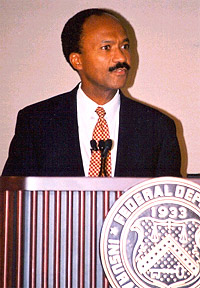 He turned Fannie Mae into a mortgage factory to get higher bonuses and was investigated for cooking the books. He is undoubtedly one of the folks that has interested the FBI. Another person is Jim Johnson. (You’ll recognize these names because they are both Obama friends and advisors).
In late 2004, Fannie Mae was under investigation for its accounting practices. The Office of Federal Housing Enterprise Oversight released a report on September 20, 2004, alleging widespread accounting errors, including shifting of losses so Raines and others could earn bonuses.
In June 2008, the Wall Street Journal reported that two former CEOs of Fannie Mae, James A. Johnson (1991-1998) and Franklin Raines (1999-2004) had received loans below market rate from Countrywide Financial. Fannie Mae was the biggest buyer of Countrywide’s mortgages. Don’t forget the three biggest recipient of FNMA money are Dodd, Kerry, and Obama. Dodd also appears to have a sweetheart mortgage deal. The Democrats are not the white knights in this mess. They would probably like to get this deal through as quickly as possible so voters do not find out that the bailout is not just a Wall Street Mess. It is a K Street and Washington-created mess. There is plenty of blame and greed to go around.
The very same people that created this mess are the ones writing the terms of the bail-out. Be afraid! Be very afraid! I never put a steak on the kitchen counter and leave the dog alone in the room with it. I would not leave the U.S. economy in the hands of these folks who are deciding the fineprint in a room with closed doors either.

 peej
peej Carissa
 bostonboomer
 dakinikat
 ecocatwoman
 jjlo
jjlo mablue2
 Mama Lopez
 peggysue22
 quixote
 skydancingguestblogger
 Mona (aka Wonk the Vote)





Recent Comments