
A Deadly Unwind
Posted: May 23, 2009 Filed under: Bailout Blues, Global Financial Crisis, Main Stream Media, U.S. Economy | Tags: automobile dealers, bailouts, Chrysler bankruptcy, liquidation Comments Off on A Deadly Unwind My dad was a small town Ford dealer (Council Bluffs, IA). Dad was fortunate enough to have a very rich mentor that put him into the dealer development program when I wasn’t even walking and so we moved to what I still believe is the middle of no where and put down roots. I don’t know if you’ve got much experience in a small town, but the local car dealers are actually pretty big businesses for them. My dad headed up blood drives and the United Way. He belonged to the Chamber of Commerce. When Dad was younger he volunteered for everything. As he got older, he wrote a lot of checks. He helped my Mom establish a Victorian house museum that still is world-renown. He always bought tons of tickets to the college world series to hand out to every one who walked in the door. He sponsored little league teams and bought advertising in the local newspapers and TV stations. His 50-100 employees were with dad for as long as I can remember. Not only the mechanics and the office folks stayed with Dad, but also the car salesmen. They were my family too. When dad retired in the 1980s after surviving those horrible energy crisis years, I came to look back on how central the car business is to small town America. Actually, Dad also sold a lot of trucks because we lived in farm country.
I’m thinking more and more about this as well as having a lot of discussions with Dad on the unwinding of the great 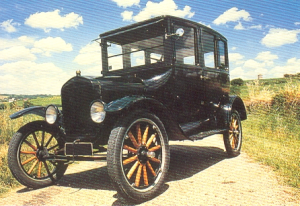 American car companies. In a way, it feels like the unwinding of small America cities and a way of living. Chrysler and GM are dumping dealers all over the country. Most of the surviving dealerships are not going to look like the way dealerships developed when cars and the car industry were the most American of all business. I’m sure it’s going to be much more efficient and I am certain that each of the US automakers over franchised, but still, there is something about a small town car dealership that is not going to be replaceable. In many towns, it is one of the biggest employers and also a huge source of charitable donations.
It is odd that the first two articles that grabbed me this morning as I drunk my coffee were two contrasting views on the wind down of Chrysler. The first one was all about the finance and the bankruptcy and is on Salon. It’s called “Who is Screwing with the bankruptcy laws”. The second was on the front page of the business section of the NY Times. It goes to directly to the heart of the dealer closings and is entitled “Chrysler Francisees Make Case Against Closure”. Both show exactly how ugly the Chrysler bankruptcy has become.
Social Security: Reform, Refund, or Opt Out? (Part 4)
Posted: May 19, 2009 Filed under: U.S. Economy | Tags: Social Security, Social Security Privatization, Social Security Reform Comments Off on Social Security: Reform, Refund, or Opt Out? (Part 4)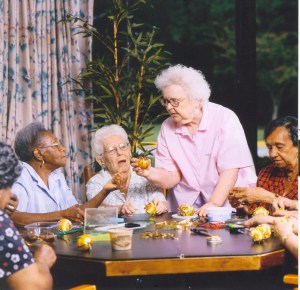 The aging burden is upon us and solutions are required quickly. People are living longer. There are three responses households face: consume less and save more when young, consume more and have lower monthly benefits when older, or work longer. They should make these decisions with a combination of their own savings and employer savings plans. They should plan retirement based on their preference to work and their health. They should also be able to rely on a minimal public pension plan so that no one fears dying a bag lady.
Government should respond when the public pension system is out of balance. There should be a mandated cycle of revision. The plan should be evaluated at least every five years and changes should be recommended by professionals to policymakers. Responses include: cutting benefits, raising taxes or contributions, subsidizing the program from general revenues or by issuing some form of debt, and generating a higher rate of return on the Trust Fund’s assets. There is still the question of generational risk-bearing and redistribution answered by the pre-funded or PAYG choice. Will the bigger burden lie with future generations or current generations? It appears we must deal with the PAYG choice made during the depression years one way or another.
Social Security: Reform, Refund or Opt-Out? (Part 3)
Posted: May 18, 2009 Filed under: U.S. Economy | Tags: Chile, Japan, Pension Plan Reform, SERPS, Social Security, Social Security Privatization, Thatcherism, UK pension Comments Off on Social Security: Reform, Refund or Opt-Out? (Part 3)Lessons from the World
One of the most interesting things about the large number of countries  reforming their public pension programs is how dissimilar many are to the United States. A large number are in Latin America or are Asia countries that are not experiencing the demographic challenges faced by the United States. Instead, they reform their systems because the old systems have lost their store of value function. Privatization is required because the trust between recipients and their governments has broken down. Chile (1981), Columbia (1993), Peru (1993), Mexico (1997), Bolivia (1997), El Salvador (1998) and Kazakhstan (1998) have the least future demographic problems, are not developed countries, and have had the largest reforms.[1] The expected retirement benefits in these countries are now derived from the income produced by an asset portfolio in individual accounts.
The most moderate reforms have happened in countries with high per capita incomes and severe demographic problems. These countries include Switzerland (1985), the United Kingdom (1986), Denmark (1990), Australia (1992), Argentina (1994), China (1995), Uruguay (1996), Hungary (1998), Sweden (1998) and Poland (1999). These developed countries have adopted systems that blend defined contribution accounts with a defined benefit. Germany and Japan have serious demographic problems. They are also highly developed countries. They—like the United States—have passed minor reforms. These countries have less suspicion that their government will not provide secure retirement resources somehow. Traditional PAYG systems require a “social contract.” Trust between workers of different generations is higher developed countries than in developing countries. Trust between households and government is also higher.
Social Security: Reform, Refund or Opt-out? (Part 2)
Posted: May 18, 2009 Filed under: U.S. Economy | Tags: Pay as You Go, Privatization of Social Security, Public Pensions, Social Security Comments Off on Social Security: Reform, Refund or Opt-out? (Part 2) Public Pension Concepts and Alternatives
Social Security reform combines three basic possibilities. It can raise contributions or it can cut benefits sometime in the present or future (pre-funding or pay-as-you-go (PAYG)). It can be private or public. It can be diversified or undiversified. The current system is public, has no diversification and is not pre-funded (PAYG). It features forced savings in that income cannot be spent before retirement. It pools social risk so that it can provide insurance against earnings loss, disability, inflation, and longevity. It redistributes income from high to low lifetime earners. The Social Security System is controlled and administered by the U.S. government and is a defined-benefit plan (DBP) .
“Pre-funding” is a plan to reduce the sum of the system’s implicit and explicit debt. As alluded to previously in the discussion of the vulgar error, the current system has inherited or legacy debt. This is something many politicians either willfully forget or ignorantly omit. Any analysis and reform must include provisions for the cost of inherited debt or it is a truly disingenuous and misleading discussion. Omitting taking care of this unfunded liability (which is estimated at around $10 trillion) is the vulgar error committed by the many politicians who compare returns from strictly switching to other assets. They do not mention deducting this debt from the alternate assets’ internal rates of returns (IRRs) to the IRRs of Social Security. The IRRs of the Social Security Trust fund for future generations account for the legacy debt.
The earliest cohorts received very high IRRs in real terms. An anecdotal and extreme example is that of my grandfather who worked for the Federal Reserve System which did not become part of the social security system until six months before his retirement in the mid 1960s. He actually deferred his retirement six months to buy into the social security system and qualify for benefits. He, and for awhile my grandmother, received nearly 15 years of monthly benefits for six months of his contributions. A truly amazing IRR and one for which his progeny will be paying for years to come.
Social Security: Reform, Refund or Opt-Out (Part 1)
Posted: May 17, 2009 Filed under: U.S. Economy | Tags: FDR, legacy debt, Public Pensions, Social Security, Social Security Reform, Social Security System Solvency Comments Off on Social Security: Reform, Refund or Opt-Out (Part 1)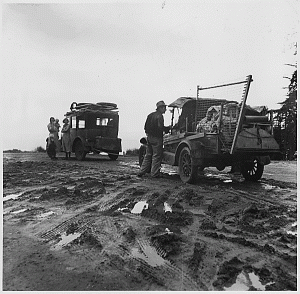 Several years ago, I did some research on Social Security. I thought I’d share that with you now as we look to more possible reforms coming from the Obama administration. This part is just introductory. Part 2 will be on Public Pension Concepts and Alternatives.
One of the most successful and significant programs put into place by the Roosevelt administration’s “New Deal” has been the U.S. Social Security System. It has met its goal of alleviating poverty among the elderly. It has become known as the ‘third rail’ of politics because of its success and acceptance by the majority of the populace. Elderly voters—an active and vocal voting constituency—do not take kindly to any discussion concerning social security reform. While other countries around the world have been reforming and restructuring their public pension systems, the U.S. social security system remains firmly entrenched in its current form. Any discussion of reduced benefit or increased contributions is political suicide. Reform discussions are difficult at best.
Most recently, President G.W. Bush spent a large amount of time and taxpayer money being educated on third rail politics while trying to convince America that some form of privatization was the right vision for the future elderly. While the highly selected audiences at these events was convinced that opting out completely was the way to go, the rest of America hit their panic buttons then phoned their congressional delegated. These re-education forums are now part of America history. The public reform debate has gone quietly into the night while discussion continues in the offices of institutions like MIT, Harvard, and the NBER.
Fortunately, many economists are still researching the efficiency of the U.S. Social Security System. Additionally, they now have around 20+ years of experience from other countries’ public pension reforms to analyze. This—at the very least—gives the United States the benefit of not going first so it can learn from the problems of the rest of the world. Learning the lessons of others may still not be enough to bring sensible and truthful debate back to the public arena. This must happen before reform or refunding actually occurs.

 peej
peej Carissa
 bostonboomer
 dakinikat
 ecocatwoman
 jjlo
jjlo mablue2
 Mama Lopez
 peggysue22
 quixote
 skydancingguestblogger
 Mona (aka Wonk the Vote)





Recent Comments