
Being a Democrat and a Puma: What does it Mean?
Posted: October 27, 2008 Filed under: Uncategorized | Tags: Democratic party, DNC 1 CommentSeveral articles I’ve read recently have me questioning what being a Democrat means to me and why I have  aligned myself with the party. This election has me questioning if the party has left me or I should leave the party. I am still voting democrat from Senator on down. To me, this says something about that question.
This process really started as I became increasingly dismayed at the tactics used by Democrats during this presidential election season. Early in my blog posts, I see myself struggling with the concept of accepting the Democrat party as the party that is slightly less evil version of the Republican party. They give lip service to many issues that I care about. Chief among these are civil rights and liberties for all Americans regardless of sex, race, sexual orientation, religion, or social/economic class. However, my emotional response to being a Democrat has always been based on the idea that we stand up for the underdog to ensure everyone can participate fully in this great experience. To me, that is the nature of democracy and the nature of being a democrat. As I continually experience the Chicago way of being a democrat, I see more of the bullying abuse of power I’ve seen overplayed by the Republican party and I find it extremely upsetting.
Unabashed Leftist Alexander Cockburn wrote a recent article for Counterpunch entitled ‘Obama, the First Rate Republican’. This short essay distills much of my dismay at the current state of the DNC and their relentless bullying of those who do not see Senator Barack Obama as anything more than a second rate, junior Senator who does well when reading from a teleprompter. He has put the meat to the bone.
After eight years of unrelenting assault on constitutional liberties by Bush and Cheney, public and judicial enthusiasm for tyranny has waned. Obama has preferred to stand with Bush and Cheney. In February, seeking a liberal profile in the primaries, Obama stood against warrantless wiretapping. His support for liberty did not survive for long. Five months later, he voted in favour and declared that “the ability to monitor and track individuals who want to attack the United States is a vital counter-terrorism tool”.
Every politician, good or bad, is an ambitious opportunist. But beneath this topsoil, the ones who make a constructive dent on history have some bedrock of fidelity to some central idea. In Obama’s case, this “idea” is the ultimate distillation of identity politics: the idea of his blackness. Those who claim that if he were white he would be cantering effortlessly into the White House do not understand that without his most salient physical characteristic Obama would be seen as a second-tier senator with unimpressive credentials.
As a political organiser of his own advancement, Obama is a wonder. But I have yet to identify a single uplifting intention to which he has remained constant if it has presented any risk to his progress.
His entire essay is reprinted here.
As my friends send me email after email of Neocons for Obama, I tripped across this line that gave me more than just a pause.
Obama has crooked the knee to bankers and Wall Street, to the oil companies, the coal companies, the nuclear lobby, the big agricultural combines. He is more popular with Pentagon contractors than McCain, and has been the most popular of the candidates with Washington lobbyists. He has been fearless in offending progressives, constant in appeasing the powerful.
The description of constant in appeasing the powerful, to me, is the most undemocratic thing you could say about a Democratic candidate for anything, let alone the presidency. I am continually reminded of the number of democrats (Eleanor Roosevelt, Harry Truman, LBJ) that basically threw entire elections and states away to do the right thing for the little guy. In this case, I am thinking Harry Truman who integrated the military, Eleanor Roosevelt who was a relentless champion of minorites and the poor, and LBJ whose great society programs are next to only Franklin Roosevelt in providing a basic safety net to the disenfranchised in our country. What would they say to a democratic candidate, in the guise of change, appeases the powerful?
I read another articlein the New York Times today. “Rethinking the Notion of Political Dominance” reviews many of the issues that drive a party with a seemlingly endless future into the wilderness. This is also something I worry about as a Democrat in Exile. This quote is from Bernadette Budde, a political strategist for theBusiness Industry Political Action Committee in Washington which the Times labels as a Republican-friendly Organization.
A new generation of voters, consuming political information in different ways than their forebears, is “very action-oriented, very issue-driven, very solutions-oriented,” Ms. Budde said. “It would be very foolhardy for either political party to think they could dominate the age politically.”
Does this imply that we should just do the expedient thing and remove the guise that democrats bring to the future what they valued in the past? I hope not. For me, being a democrat actually means something more than clicking the button next to some name with the D next to it on the ballot. It means a certain set of issues and values that I support will be the priorities of the candidates I support. I expect tolerance of differences and civil discourse. I expect fair and just treatment of folks. I expect fair play and justice for those who can’t buy it in the court system. I expect that civil rights and liberties include all folks and not just those of the correct religion, proper social affiliations, or physiques.
Now is the time to discuss what it means to be a Democrat and what we expect the party to do. It is not just about Bush bashing and change for the sake of change. It is time to prioritize our values and to tell our officials that we expect them to follow them. This means they should follow these values even if it means we loose a few states or seats in an election, a few recruits to the military, or a few religious folks to their own private pews. Democracy is not for the faint of heart and it is not a tool for the expedient opportunist who will say or do anythign to appease power. The Democratic Party should look to empower the powerless. Pumas must unite and remind the party that we are still essentially a movement from within the democratic party. We are not faux Republicans or recent Republican converts. We must make that clear if we are to have a voice and a future towards bring the party back to its roots and its values.
The Invisible Hand vs. The Big Stick
Posted: October 18, 2008 Filed under: Equity Markets, U.S. Economy, Uncategorized | Tags: Financial Markets, Financial markets crisis, Regulation of Financial Markets, Scholes, Stiglitz, The Economist 1 Comment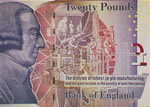 “The reason that the invisible hand often seems invisible is that it is often not there.” (Making Globalization Work, 2006)
Nobel Prize winning economist (2001) Joseph E. Stiglitz
After finding out about it on MiradorWealth.com.au, I’m participating in an on line debate at Economist.com concerning regulating the financial system after this crisis. It is interesting to read the comments because they come from all over the world and they come from folks that participate one way or another in the financial markets. Right now 63% of the participants (led by American Economist Joseph Stiglitz) want more regulation of financial markets.
Here is his opening argument:
The current crisis is caused, in part, by inadequate regulation. Unless we have an adequate regulatory system—regulations and a regulatory structure that ensures their implementation—we are bound to have another crisis. This is not the first such crisis in the financial system that we have had in recent decades. Indeed, around the world, it is more unusual for a country not to have had a financial crisis than to have had one. They have occurred in societies with “good institutions”—like those in Scandinavia—and in societies without such institutions. They have occurred in developed and in developing countries. The only countries to have been spared so far are those with strong regulatory frameworks.
The side against regulation is taken up by Myron Scholes who is an equally impressive American Finance Professor. Here is his opening argument:
There is now a rising chorus among regulators, politicians, and academics claiming the freedom to innovate in the financial domain should be curtailed. This stemmed from the apparent recent failures in mortgage finance and credit default swaps and the apparent need for governments and central banks to “bail out” failing and failed financial institutions around the world directly through capital infusions and indirectly by providing a wide array of liquidity facilities and guarantees. They claim that freedom in global financial markets has proceeded at too rapid a pace without controls—in particular with an incentive system that rewards risk-taking at the expense of government entities—and as a result “throwing sand in the gears” of innovation will reduce “deadweight costs” and “moral hazard” issues.
Here are my thoughts.
Financial markets are not like other markets. To function properly, there needs to be transparency and trust. If transparency and trust are not there, they do not work, and if financial markets don’t work, nothing works in an economy.
Regulations should be put into place that increase transparency and increase trust. This does not mean they should be used to push social agendas like ‘affordable housing’. This means that rules of dealing in a market should be clearly established and a regulator should ensure they are followed. Rules concerning leverage, capitalization, prudent underwriting standards, and standardization of contracts all lead to transparency and trust. Countries with the standards attract capital and grow. Countries without do not attract capital and stall. Adequate regulation would have stopped this financial panic. We still have not unwound the rogue credit default swap market. We have yet to determine the full impact this will have on the current situation and it remains an unquantified risk hanging out there in the ethos like a cancer ready to spread. Unless we ensure these markets cannot be gamed, we will lurch from one financial panic to another.
As the financial crisis winds its way through history the discussion concerning the role of regulation, deregulation, and future policy will be an important one. I suggest you get involved with that discussion because it is just that, an important one.
Senator Joe Biden (MBNA-DE)
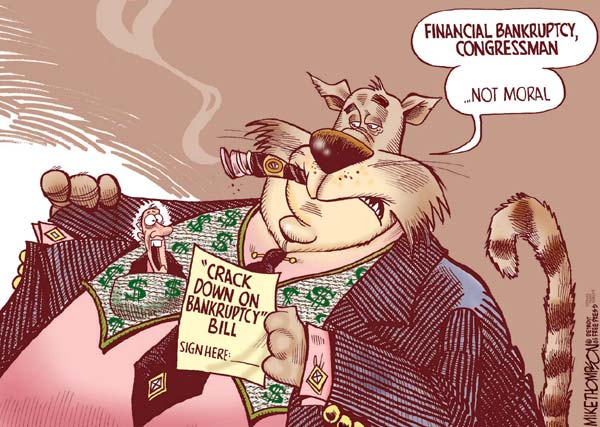
Posted: October 16, 2008 Filed under: U.S. Economy, Uncategorized | Tags: Bankruptcy Bill, Biden, Credit Card Companies, Deceptive Pracitces, Deleware, Levin, MBNA Comments Off on Senator Joe Biden (MBNA-DE)I about fell off my chair listening to the third presidential debates when Senator Obama suggested that Senator Biden was some how a champion of middle America and the little guy. I was beginning to think that Obama had some how gotten into his own koolaid. Joe Biden, especially when it comes to economic issues, is not the friend of working families who get in a tight pinch. Here’s the comments and here’s the original transcript.
OBAMA: Well, Joe Biden, I think, is one of the finest public servants that has served in this country. It’s not just that he has some of the best foreign policy credentials of anybody. And Democrats and Republicans alike, I think, acknowledge his expertise there.
But it’s also that his entire life he has never forgotten where he came from, coming from Scranton, fighting on behalf of working families, remembering what it’s like to see his father lose his job and go through a downward spiral economically.
And, as a consequence, his consistent pattern throughout his career is to fight for the little guy. That’s what he’s done when it comes to economic policies that will help working families get a leg up.
Senator Obama evidently has forgotten about two things for which we can thank Joe Biden. The first is the current bankruptcy bill which makes it difficult for folks who get into financial trouble for things like unemployment and overwhelming health catastrophic costs to ever recover from. The second is that he’s never met a credit card company supported bill he doesn’t like.
Here’s what one liberal blogger said about that bill while Biden was still running for President. Notice that it also references another ‘progressive’ blog.
The bankruptcy bill is such a cruel piece of legislation, especially to single mothers and people without health insurance, that Kos crossed Biden right off his list of potential candidates. I’m unaware of any major or medium size blogger that supports Biden’s campaign…and it really all comes back to the bankruptcy bill.
There was also this (as reported by the NY Time) floating around concerning dealings behind the passage of the same bankruptcy bill.
During the years that Senator Joseph R. Biden Jr. was helping the credit card industry win passage of a law making it harder for consumers to file for bankruptcy protection, his son had a consulting agreement that lasted five years with one of the largest companies pushing for the changes, aides to Senator Barack Obama’s presidential campaign acknowledged Sunday.
Senator McCain voted for this bill as well as Senator Biden. Senator Obama voted against this bill, but seems to have conveniently forgotten it. The NY Times also reported, in that same article cited above, this:
Consumer advocates say that Senator Biden was one of the first Democratic leaders to support the bankruptcy bill, and he voted for it four times — in 1998, 2000, 2001 and in March 2005, when its final version passed the Senate by a vote of 74 to 25.
Travis Plunkett, legislative director of the Consumer Federation of America, a consumer group that opposed the bill, said that Senator Biden had provided a “veneer of bipartisanship” that eventually helped the credit card companies win over other Democrats. “He provided cover to other Democrats to do what the credit industry was urging them to do,” Mr. Plunkett said.
Here’s more on “Credit Card Joe” from the National Review Online. When Joe was in some financial trouble himself, he got help from the CEO of MBNA.
John Cochran, the company’s vice-chairman and chief marketing officer, did pay top dollar for Biden’s house, and MBNA gave Cochran a lot of money—$330,000—to help with “expenses” related to the move. A few months after the sale, as Biden’s re-election effort got under way, MBNA’s top executives contributed generously to his campaign in a series of coordinated donations that sidestepped the limits on contributions by the company’s political action committee. And then, a short time after the election, MBNA hired Biden’s son for a lucrative job in which, according to bank officials, he is being groomed for a senior management position.
It is possible that the next financial debacle comes from this kissing cousin to the subprime market: credit cards. They are also users of some of the most deceptive lending practices you can find. You’ll recognize some of these I’m sure. How about that Over Limit Fee and bump you get in an interest rate when the company just okays a purchase rather than rejecting it? Here’s one that is my personal “favorite” since it is an ongoing F**k for me at the moment. It is the fine print that says the bank will apply all payments to the lowest interest rate bearing things first. You can’t even send them a specific payment for anything else. When I tried to pay off a $40 cash advance I had to pull during my flight from Hurricane Katrina (which is the ONLY cash advance I’ve ever had and due to my banks being closed and underwater) I was told I’d have to pay the entire balance off. I pulled $40 to help pay a Toll for the Kansas Tollway on my way to my daughter in Nebraska. That $40 is now a balance of $254.76 because I can’t get the silly thing down far enough to even dream of paying off that. It’s the very last thing they will EVER apply my payments towards so thanks Joe, thanks for supporting those credit card companies!! I have to say you’re a real peach by my standards as a solidly middle class person and little guy!
So, my next question is do you think Joe’s been a part of this discussion OR even a sponsor of bills to eliminate these unfair practices? Nope. The so-called Dodd-Levin The Credit Card Accountability Responsibility and Disclosure Act has a few sponsors listed here at Senator Levin’s website. It’s worth a read because it is a bill that would definitely help the middle class that relies so heavily on credit card debt. Is this going to be yet another missed chance at regulating an industry (like the subprime market) that goes into fueling a financial crisis? If so, what will be the terms of the bailouts and where will Senator Biden, MBNA-DE stand?
Congratulations! You’re an Investment Banker!
Posted: October 15, 2008 Filed under: Equity Markets, U.S. Economy, Uncategorized | Tags: financial bail out, U.S. Economy 1 CommentNow what? 
Well, I suggest you start looking at the terms and conditions of our new portfolio and clients. Right now, it’s $250 billion that you and I share with all the other U.S. Tax Payers. So far, about $125 billion dollars has been divvied up among the major banks. In return for that investment, we get preferred stocks and warrants for common stock. There are some sweeteners for us and a few for them. This is the first of the plans that are supposed to ‘inject’ money into banks and ‘unfreeze’ the credit markets. The release of similar plans by the Europeans on Monday gave us that huge bounce on Monday. (Remember the one I thought could be a dead cat bounce and possibly is?)
The European plan also provided the structure for the terms of this deal as well as the impetus to move on it.
So, what goodies do our financial intermediaries get from the deal?
1) The US will guarantee new debt issued by banks for three years. This means any bank that lends to another doesn’t have worry about getting it back. That also means that they don’t have to hold a large amount in reserve for potential loan losses so it should expand consumer lending.
2) The Fed will become the buyer of last resort for commercial paper. This means if a bank is lending to a business in the short run to help it with its working capital needs for things like buying inventory or bridge loans to cover day-to-day business expenses, and the business defaults, the Fed will buy the commercial paper from the bank. The bank will not suffer the loss. This is again decreases default risk and means the banks don’t have to worry about upping their reserves for potential loan loses or holding back loans to businesses that may have less than stellar ratings. A good example of businesses with less than stellar ratings are Ford, GM, and a lot of the airline companies.
3) The FDIC will offer an unlimited guarantee on bank deposits that are not interest bearing. Since several European banks did this, this is a response to stop the possible flow of business checking accounts and payroll accounts to foreign banks. There may be some consumer accounts, campaign, or non-profit checking accounts that get protection here also but it is primarily geared to businesses.
What do we get?
1) Bank Equity: The government will get preferred shares and warrants for common stock with an expectation of a ‘reasonable’ return. This means that the government gets first shot at any profits and dividends earned by the bank holding company. No dividends can be given to common stock holders without first paying preferred stock holders. Preferred stock also has priority in terms of ownership of any assets liquidated in a bankruptcy. Most preferred stock does not come with voting rights. A warrant is a security that allows the holder to purchase a share of common stock in that bank holding company at a specified price. This price is usually higher than the current market price of the common stock. Some warrants stay attached to the preferred stock and basically serve to increase the yield on that stock. Others can be detached and sold on the side.
The preferred stock that will be issued in this plan will pay special dividends. At first, it will be at a 5% interest rate that will increase to 9% after five years. The warrants will be worth 15% of the face value of the preferred stock. (The basic reason for the warrants is that if the stock goes up, the government can exercise the warrant, get the stock from the bank holding company, sell it on the market, and realize a profit. These profits then go to the Treasury to pay down the Federal Deficit and offset the cost of the program.)
2) Restrictions on Executive compensation for those institutions that sell shares to the government. These restrictions include a clawback provision and a ban on golden parachutes as long as the Treasury holds equity issued under this program.
Clawback provisions are written in a way that the government can recover performance-based compensations to CEOs and other executives in the bank to the extent they later determine that performance goals were not actually achieved. You have to write the specifics into the contract but usually it can be due to a restatement of financial results as well as some other reasons. The restatement of the financial results usually has to be significant. It can also kick in if there are determined to be some kind of misconduct.
Gold parachutes are guaranteed severance compensation packages that will executives receive if control of a company changes hands that results in a management shift.
Who do we own to date:
$25 billion: Citigroup, JPMorgan Chase, Bank of America (parent now of Merrill Lynch), Wells Fargo (parent now of Wachovia)
$10 billion: Goldman Sachs, Morgan Stanley
Others with less than that: Bank of New York, State Street and thousands of yet unannounced little guys.
Other issues: At this time, the banks will not be asked to eliminate dividends. CEOs are not required to resign. All of the banks signed the agreement and entered into the deal so there would not be any stigma based on who needed the program and who did not. We’ve basically just semi-nationalized the banking system in the U.S.
Okay, so now we’re all investment bankers. What I want to know is when do we get our bonus checks?
Deep Breath Time
Posted: October 2, 2008 Filed under: Uncategorized | Tags: Racism, Suprime Mortgages 5 CommentsThere has been a recent spate of attacks on several other blogs on a post I wrote, authors writing at The Confluence, and the PUMA movement in general. Riverdaughter, who I respect and like tremendously has already given her view point. This is mine and I take full responsibility for it.
While it may be the habit of these other blogs to find their sources in the talking points of political campaigns and other blogs. It is not mine. These bloggers have not have checked any of my sources (which were indeed rooted in academic research and not either the MSM, the blogworld, or some political campaign with an agenda) nor have they learned anything about me personally and/or other PUMAs. Rather they appear to rely on caricatures.
I’m not one to drag charts and statistics in to blogs when I speak about economic issues because it tends to make folks remember their economics courses and become disinterested. When I wrote the post in question, one of my major sources was the academic work of Stan J. Liebowicz. He is a professor of economics at the University of Texas Dallas. This is his article cited once more for you. It is called Anatomy of a Train Wreck: The Mortgage Meltdown Crisis .
Read this article please. If you look at his numbers you will see, that his study and that of others cited in the article do not bear out the story of a group of poor down trodden folks being lead to their demise by greedy lenders and placed in subprime mortgages. In fact you will see that most of the problems of defaults are in the prime mortgage markets. Increased foreclosures have happened in both the subprime and prime markets with the same intensity. If you look at his figures, you’ll see that subprime loans do not perform any worse than prime loans. There is no evidence to support any claim that this problem started in subprime mortgages. Both markets were hit at the same time.
There were lax lending standards in both markets encouraged by politicans trying to appease their consitutients. Lax underwriting standards were pushed by both Freddie and Fannie. The executives were paid bonuses based on increased production and were not punished for encouraging bad lending practices. If anything, they were rewarded by congressional praise and fat bonuses. These folks also encouraged the institutions they dealt with to lower their lending standards. In fact, the Fannie May foundation continually encouraged and praised Countrywide for its ‘innovative’ underwriting practices. I quote from one of their reports.
Countrywide tends to follow the most flexible underwriting criteria permitted under GSEand FHA Guidelines. Because Fannie Mae and Freddie Mac tend to give their best lenders access to the most flexible underwriting criteria, Countrywide benefits from its status as one of the largest originators of mortgage loans and one of the largest participants in the GSE program.
When necessary–in cases where applicants have no established credit history, for example–Countrywide uses nontraditional credit, a practice now accepted by the GSEs.
At this same time (2000), Countrywide was named “Corporation of the Year” for their outstanding work in the Latino Community. If this corporation, was guility of preying on minorities with nasty subprime loans, you sure wouldn’t know it then. They were being rewarded for extending home ownership. They were considered outstanding corporate citizens.
I can cite many more examples, but rather than just paraphrase Dr. Liebowiz’s work any further or the other underlying sources he cites, go READ them. In fact, if you search the academic literature, you can read many, many examples of studies that cite lax underwriting standards as the problem not subprime mortgages. This is why Fannie and Freddie both failed! They were actively buying and packaging loans that were bound to fail if the economy worsened!
I’d also like to bring to your attention this series of interviews with top financial economists done recently. I’m using this to point to the fact that most financial economists see Fannie and Freddie and their loose underwriting guidelines as the basis of this problem rather than the subprime mortgage market.
Economists Raise Concern about Bailout Plan
This link is worth a read. Here’s one quote from that link.
The economists offered a range of explanations for the problems, but they did agree on a few things. All were concerned about the way that the government set up Freddie Mac and Fannie Mae, though they did not all agree that it should be fixed immediately as part of the bailout. Jon Berk pointed out:
Freddie Mac and Fannie Mae — all of us knew it was going to happen. You don’t have an implicit agreement where you cover their losses and don’t expect these types of problems (their large financial losses).
It is worth mentiont that the aforementioned Dr. Johnathan Berk is from Standford and the on record as an Obama supporter.
Here is another point.
In addition, most of the economists criticized the federal government for restricting mortgage lenders’ ability to require down payments and properly check credit scores, but they were not unanimous on how much of the problem could be attributable to this.
On a more personal note, I think you should know that I have lived within one mile of ACORN for about 13 years now so I have some first hand experience with them. I live in the ninth ward of New Orleans. I do not teach at a university full of happy suburban faces with rich parents. I choose to teach at schools where many students come from the same inner city neighborhood that I live in or the surrounding rural areas. I have a Freddie loan myself. My city councilman is black, my mayor is black, my congressman is black (although I’m hoping we can replace $Bill Jefferson with an hispanic woman or with another black man who is a state representative), my state representative is black, and my state senator is black. If I was a racist republican redneck, I really doubt I would have made the lifestyle choices that I’ve made. I live my convictions.
Through out this election, it has become de rigueur to throw the racist label at anything that disagrees with you. It is getting tiresome and it is densensitizing people to the true problems we still face with racism. I live in New Orleans and have seen black politicians take advantage of their constituents just as readily as I’ve seen white politicians do the same. Enriching yourself off the vulnerable is not limited to one race or one part of the country. It is also not limited to one political party. Before you start throwing that label around, I’d suggest you do your homework for a change rather than jump to conclusions without citing fact or circumstance. I’m not a Republican and I’m not using Republican talking points. I’m an economist, and I’m using academic, peer-reviewed research. If the data doesn’t fit your worldview, please don’t call my friends and me names because you have no other response up your sleeve.

 peej
peej Carissa
 bostonboomer
 dakinikat
 ecocatwoman
 mablue2
 Mama Lopez
 peggysue22
 quixote
 skydancingguestblogger
 Mona (aka Wonk the Vote)



 Sky Dancing
Recent Comments