
“Blame Barack Obama more than the system”
Posted: February 22, 2010 Filed under: Surreality, Team Obama, The Media SUCKS | Tags: bipartisanship Comments Off on “Blame Barack Obama more than the system” That’s the sub-headline from a February 18th article on US Politics in the Brit business mag The Economist. Kinda looks promising in that non hopey changey sorta way, doesn’t it? The op-ed basically looks at the Evan Bayh retirement and accompanying hoopla. It wonders if “America’s democracy is broken, unable to fix the country’s problems and condemned to impotent partisan warfare”, then decides it’s not our system, it’s not even us, and it’s not our partisan bickering and obscure senate procedures. It’s that Obama isn’t really finding policies or ways to please Republicans. Say what silly little man with the British accent?
This piece has unnerved the village and in so many interesting ways that I just have to go there. It’s not because The Economist piece is brilliant in any way, because it isn’t at all. It’s because to prove The Economist is out on an unsupportable limb, the village has to argue against their two central arguments. First, that Obama’s captured by the left wing. Second, that he’s really not making much of an attempt to offer them any policies the could embrace. Now, that’s just REALLY, REALLY, REALLY crazy and fun to watch. The retorts basically spell out how absolutely illiberal and how Republican Obama’s really been to show how kooky the Republicans have been to just say no repeatedly. For every example in The Economist, each villager provides examples of the Obama sell-out of the democratic platform. It’s like watching the alligators go after a marshmallow.
It is not so much that America is ungovernable, as that Mr Obama has done a lousy job of winning over Republicans and independents to the causes he favours. If, instead of handing over health care to his party’s left wing, he had lived up to his promise to be a bipartisan president and courted conservatives by offering, say, reform of the tort system, he might have got health care through; by giving ground on nuclear power, he may now stand a chance of getting a climate bill. Once Mr Clinton learned the advantages of co-operating with the Republicans, the country was governed better.
First, we have Matthew Yglesias of Think Progress with a different tilt called “Economist: If Only Obama Had Done Things He’s Actually Done, Things Might Be Different.” Yglesias takes on The Economist’s argument by responding point by point on each thing Obama been yielding to the Republicans since day one. Here’s a taste on Obama and Health Insurance Reform.
Last, if you want to say that in your view the Senate’s health care bill is too left-wing then of course that’s your prerogative. But the notion that it reflects the “left-wing” approach to health care couldn’t possibly withstand contact with a single person who holds actual left-wing views on health care. The left-wing view on health care is that we should take America’s successful single-payer health care program for senior citizens, Medicare, and open it up to all Americans. Most left-wing people are willing to accept a more modest reform than that and have coalesced around the idea of a level playing-field public option that will coexist with private for-profit comprehensive insurance plans, but the president’s embrace of even that notion has been less than fulsome.
Krugman’s take is that The Economist is delusional if they think that Obama can offer any thing and get a positive response from the party of no. He’s got the Rahm talking points down to sound bite level. Just look at who is calling whom ‘the commentariat” with obvious disdain. Krugman didn’t go after the marshmallow. He’s smarter than your average alligator.
Unfortunately, the commentariat seems to be full of people who know, just know, that Obama isn’t getting Republican cooperation because he’s in the thrall of left-wingers — and just make stuff up to bolster their case. The truth, which is obvious from every day’s news, is that there is nothing, nothing at all, that Obama could offer — other than switching parties — that would get him any GOP cooperation.
Jumping over to Brad DeLong’s site is even more interesting. Just read the blog thread header and embrace the sarcasm: In Which We Conclude That the Editor of The Economist, John Micklethwait, Has No Contact with Reality Whatsoever…
We have now seen this at least three times: on health care, on climate change, and most recently on financial regulation, the word has come down from the Republican Central Committee that moderate Republicans are allowed to “cooperate” with Obama as long as it leads to delay–but that once the time comes for action, then they must go into complete and total opposition. And so far every single one of them has toed the line.
DeLong obviously agrees that the party of no is in it to score as many political points as possible during the killing season. Nope, Brad didn’t fall for the marshmallow either.
Even more gasps and aplomb from the Washington Monthly and Steven Benen. (Like Matt, he went for the marshmallow.)
I realize The Economist is on the other side of the pond, but it’s going to be reflecting on U.S. developments, it’s going to have to do better than this. The White House “handed over health care to his party’s left wing”? Of course — how could we forget the time President Obama sided with Dennis Kucinich on single-payer? Or vowed to veto reform unless it included a public option and Medicare buy-in?
As for the notion that the White House should have made concessions on nuclear power, Obama did that, too. The president actually went even further than that, and said he’d also accept Republican demands for more coastal drilling, as part of a compromise on a climate bill. In response, Republicans said what they always say, “No.” (In truth, they not only said “no,” they said, “We’re going to block Congress from even voting up or down on the legislation.”)
As you all know, I’m no Obama fan, but I’m not sure what was in the water last week in the offices at The Economist. You have to be really not paying attention to not observed that most things offered up by the Obama administration are Republican lite at best and by the time the administration compromises with its own blue dawgs, it looks more Republican that what came out of the Nixon, Ford, and Eisenhower years combined. There’s not that many Republicans left at the moment in congress or the senate, but the ones that are there would probably say no to Nixon, Ford, Eisenhower and possibly Reagan. The Economist really laid an egg with this one. I for one would not want to be one of the nameless writers there who might possibly be mistaken for elucidating the examples in that article. The fault may partially rest with Obama’s absentee leadership skills, but I have to say for some one to argue that he’s been co-opted by the left wing and hasn’t offered up enough to please Republicans you must have some serious disconnect with the facts on the ground.
Sidenote to those you who don’t live near a bayou with alligators. Marshmallows are the things you can throw into the canals and bayous to get them to come to the surface so your tourist friends can seen them. For some reason, alligators just can’t resist marshmallows and most of the time they’re pretty shy. Go figure!
Not a Socialist
Posted: February 15, 2010 Filed under: president teleprompter jesus, The Media SUCKS, U.S. Economy | Tags: crony capitalism 2 Comments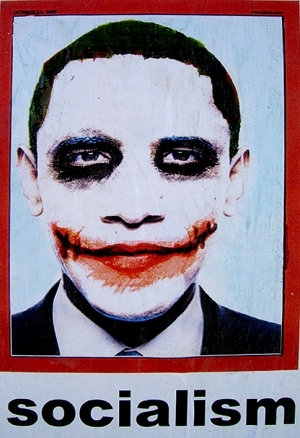
so⋅cial⋅ism
–noun
| 1. | a theory or system of social organization that advocates the vesting of the ownership and control of the means of production and distribution, of capital, land, etc., in the community as a whole. |
| 2. | procedure or practice in accordance with this theory. |
| 3. | (in Marxist theory) the stage following capitalism in the transition of a society to communism, characterized by the imperfect implementation of collectivist principles. |
I cringe every time I hear the Right Wing Media machine continue to label Obama a socialist, a liberal, or even progressive. He’s undoubtedly maintained more status quo from the previous administration than not. There have been a few marginal changes in laws impacting GLBT civil rights, women’s reproductive health, and a return to civil rights in general, but creeping back towards the middle after a big lurch right does not earn him an leftish label in my book.
I’ve used the phrase crony capitalism before to describe Obama’s approach to the economy and the power structure within the beltway. Michael Barone, Senior Political Analyst for The Washington Examiner goes into the numbers vs. the rhetoric on lobbyists and lobbying in the New World Order of Obamanomics. The bottom line is that Obama likes his friends rich and works to ensure they get richer. That is not capitalism. That is not socialism. That is actively creating the formation of monopolies and writing laws to protect monopoly interests. This is the antithesis to both capitalism and socialism
Fast-forward to the present day. Lobbyists, reports the Center for Responsive Politics, had a record 2009 in Barack Obama’s Washington. Despite candidate Obama’s promises to shun them, they raked in $3,470,000,000. Somewhere up there, Tommy Corcoran is chuckling.
Last week, amid Washington’s blizzards, Obama was asked about the $17 million bonus awarded to JPMorgan Chase Chief Executive Officer Jamie Dimon and the $9 million bonus for Goldman Sachs CEO Lloyd Blankfein.
“I know both these guys; they are very savvy businessmen,” he said. “I, like most of the American people, don’t begrudge people success or wealth.” So much for campaign-trail denunciations of “fat cat” bankers and bloated bonuses.
It does not take any savvy to take advantage of government bailouts, near zero loans of capital from the FED, and announcements by the FED of planned buying of you and your buddies toxic assets. It also does not take savvy to be on Timothy Geithner’s best buddy list when things are coming apart at the seams when he can move the market in your direction. Consider this from Baseline Scenario today.
At 9:30pm on Sunday, September 21, 2008, Goldman Sachs was saved from imminent collapse by the announcement that the Federal Reserve would allow it to become a bank holding company – implying unfettered access to borrowing from the Fed and other forms of implicit government support, all of which subsequently proved most beneficial. Officials allowed Goldman to make such an unprecedented conversion in the name of global financial stability. (The blow-by-blow account is in Andrew Ross Sorkin’s Too Big To Fail; this is confirmed in all substantial detail by Hank Paulson’s memoir.)
We now learn – from Der Spiegel last week and today’s NYT – that Goldman Sachs has not only helped or encouraged some European governments to hide a large part of their debts, but it also endeavored to do so for Greece as recently as last November. These actions are fundamentally destabilizing to the global financial system, as they undermine: the eurozone area; all attempts to bring greater transparency to government accounting; and the most basic principles that underlie well-functioning markets. When the data are all lies, the outcomes are all bad – see the subprime mortgage crisis for further detail.
A single rogue trader can bring down a bank – remember the case of Barings. But a single rogue bank can bring down the world’s financial system.
Goldman will dismiss this as “business as usual” and, to be sure, a few phone calls around Washington will help ensure that Goldman’s primary supervisor – now the Fed – looks the other way.
This is not socialism. This is not the way either perfectly competitive markets nor centrally planned economies work. In both situations, the result should be widespread distribution of goods, services and income. This is simply re-writing the rules of the game to benefit the already rich and powerful. Even rightwing blogs get the picture, but many right wingers find the wrong bottom line. Here’s an example from SayAnythingBlog.com. This part is the correct  part. The conclusion is a bit of the mark. Some of the commenters are way off the mark. Screaming Marxism with no real knowledge of what it is does not help a conversation, yet alone lead to a solution of the basic problem.
This is what happens when the government has too much power. Rather than the economy being about who can offer the best goods and services at the most reasonable prices, who can outperform everyone else to provide citizens with what they want at prices they can afford, the economy becomes about who can lobby, bribe and coerce the best deal out of the government.
Grease the right palm and you get government contracts, bailouts and favorable taxation and regulation. Grease the wrong palm and you get demonized by grandstanding politicians and summoned to explain yourself in front of Congress.
Businesses under the vision of a perfectly competitive market–essentially the Invisible Hand concept set up by Adam Smith–are not supposed to be BIG. In the 18th century world of little trade guilds, thousands of small farmers and merchants, and a few monopolies (like the India Tea Company), the original concept of the market did not include megacorporations, huge trade unions, and a democratically elected government that does anything to enable its benefactors. The crony capitalism we see now had its roots in the Civil War, and as Barone points out, most recently the World War 2 period. Remember, Dwight David Eisenhower was the president who termed military industrial complex. A lot of the first lobbyists came from the War Lobby. Lincoln saw the dangers of huge businesses, making money off wars, lobbying congress for the creation of further laws in 1863. Again, all of our monopoly laws are rooted in the Sherman Antitrust Law of 1890. Lenin’s big academic analysis was about J.P. Morgan, interlocking directorates, and huge corporations. The father of modern day socialism/Marxism would have been just updating his old arguments which are pretty much the same thing you see quoted above from the right wing blog. Barone argues that FDR used cronies to win a war, but that Obama is using it for something completely different.
Crony capitalism is now the order of the day in the United States. The government and the United Auto Workers own General Motors and Chrysler, which aren’t likely to pay back their billions in TARP money any time soon, if ever. Meanwhile the government tells Americans to stop driving Toyotas.
The government was going to remake the health care sector, and so Billy Tauzin and other health care industry lobbyists were busy in the White House cutting deals to keep their clients above water. The government was going to remake the energy sector, and utility CEOs and lobbyists have been busy flaunting their green credentials.
As my Washington Examiner colleague Timothy Carney has been documenting, Big Business has been busy lobbying Big Government for “reforms” that serve big companies’ interests. Wal-Mart backs a health care mandate, Philip Morris shapes tobacco regulation, General Electric is setting up a joint venture to trade carbon offsets (wasn’t that Enron’s line of work back in the day?).
The picture is not pretty. Government’s pets or, in the president’s words, “savvy businessmen,” use government to get policies that will give them competitive advantages and stifle smaller competitors. Pleasing their masters in government is now absorbing the psychic energy of CEOs who used to concentrate on meeting consumers’ needs in order to make profits.
This is not capitalism. This is not socialism. This is not Marxism. This is not progressive politics. This is not the policy of some one who is too liberal. This is the policy of a beltway that seeks to stay in power and privilege by enacting laws that provide unfair advantage to their cronies. This is not what many democrats or republicans of past would have found tenable. It’s an unholy alliance between huge business interests and the government of the ‘people’. It can be measured in terms of lobbying dollars and the numbers of Tom Daschles and Billy Tauzins; former elected officials who have joined the ranks of lobbyists.
I’ll give the Financial Times, the bottom line in an article called “Obama fails to turn back lobbying cash tide.”
The lobbying frenzy peaked in the fourth quarter of 2009, which hit a record of $955m spent, just as negotiations over the now stalled healthcare reform supported by the Obama administration were ramped up on Capitol Hill.
“Lobbying appears recession-proof,” said Sheila Krumholz, executive director of the Center. “Even when companies are scaling back other operations, many view lobbying as a critical tool in protecting their future interests.”
The pharmaceutical and health products industry broke all records by spending $267m last year, in what the Center’s analysts said was the “greatest amount ever spent on lobbying efforts by a single industry for one year”.
Not all of those funds were spent rallying against healthcare, however. The pharmaceutical industry’s main lobby group, the Pharmaceutical Research and Manufacturers of America (PhRMA) spent $26m lobbying in favour of healthcare reform after it negotiated an $80bn deal with the Senate and White House last summer that critics said was a gift to the industry.
The chief negotiator of that deal, former congressman Billy Tauzin, yesterday announced his resignation as president of the trade group. Mr Tauzin, who has run the association since 2005, said he would formally step down in June.
This is wrong, wrong, wrong. It doesn’t help to correct the problem by mislabeling it. The right and the left both see problems with this. The name calling has to stop in order for us all to work for the better interests of our country.
mo·nop·o·ly mo·nop·o·lies
-noun
1. Exclusive control by one group of the means of producing or selling a commodity or service: “Monopoly frequently … arises from government support or from collusive agreements among individuals” (Milton Friedman).
2. Law A right granted by a government giving exclusive control over a specified commercial activity to a single party.
3. a. A company or group having exclusive control over a commercial activity.
b. A commodity or service so controlled.
4. a. Exclusive possession or control: arrogantly claims to have a monopoly on the truth.
b. Something that is exclusively possessed or controlled: showed that scientific achievement is not a male monopoly.
Why, oh, why, can’t we have better dialogue on Political Philosophy?
Posted: February 5, 2010 Filed under: The Media SUCKS, Uncategorized, Voter Ignorance | Tags: conservatives, liberals, politics Comments Off on Why, oh, why, can’t we have better dialogue on Political Philosophy? I’m not sure why I even to bother read articles with provocative headlines that ensure you know the conclusion before the discussion even opens. This Washington Post Article by a conservative political science professor Gerard Alexander (also associated with the American Enterprise Institute) just rang all the bells and whistles implied by the title “Why are liberals so condescending?”. If I were to write a similar piece–which come to think of it I’m about to–it would be titled “Why are conservatives so close-minded?”
Okay, right from the get go, he starts with the presupposition that his conclusion is the right one which is pretty much the problem I have with conservatives. They start with the conclusions being firmly grounded in some truth they’ve devised and then let the arguments spew from there. Facts be damned! Full speed ahead! My argument is already moot because of his first paragraph. I’m already trapped by having to argue the argument from the label ‘smug’. I have to prove I’m not smug before I get around to proving him wrong. But what’s worse, being smug or being hypocritical?
Yes, I believe conservatives adhere to ideology over evidence. Still, I try to argue based on fact and reason and expect the deduced conclusion to be so resonant it is self evident. How is this ‘intellectual condescension”? Better yet, how can I successively argue with some one who is so convinced that they’re right from the get-go and from whom you can expect no real evidence? You’re doomed to be the only one that recognizes you’re right in that situation. All you get is argument based on ideological presuppositions with which you disagree. Yes, mind closed. Straw man erected. Straw man knocked down. Argument over.
Every political community includes some members who insist that their side has all the answers and that their adversaries are idiots. But American liberals, to a degree far surpassing conservatives, appear committed to the proposition that their views are correct, self-evident, and based on fact and reason, while conservative positions are not just wrong but illegitimate, ideological and unworthy of serious consideration. Indeed, all the appeals to bipartisanship notwithstanding, President Obama and other leading liberal voices have joined in a chorus of intellectual condescension.
To me, this article is just wrong from the get go and let me tell you why. Let’s just say I take issue with labeling President Obama ‘liberal’ (or socialist or marxist) when he his clearly no such thing. Most conservatives spit the word liberal through the teeth in such a pejorative way that you can’t help but wonder if they even read from the same dictionary. Most liberals–like me– don’t  consider Obama to be one of us.
Let me borrow from another liberal economist whose words caught me on a similar subject.Oregon Professor Mark Thoma has a thread called Why is the Left More Successful in Europe? based on an article at the Boston Globe by Edward Glaeser, a professor (economics) at Harvard. Thoma had issues with this statement by Glaeser in the cited article: “A year ago, I wondered if the Obama victory signaled the declining significance of race and an American lurch to the left.” This is Thoma’s response.
What’s new is the observation that the Obama victory didn’t signal a lurch to the left as he thought it might.
People who believe Obama is a far left populist type haven’t been paying attention. Obama himself is no lurch to the left. The far left has been quite disappointed as they’ve unwrapped the gift they received last November. It wasn’t what they asked for or, in may cases, what they thought they were getting. But it shouldn’t have been a surprise.
The election wasn’t so much a lurch to the left as it was a movement away from the right (a different sort of movement conservatism). People didn’t want four more years of anything resembling George Bush. Sure, there’s been some reversion to the mean, there always is with midterm elections, but the election did ratchet our collective politics to the left. Moving the nation further to the left might might very well be a long, slow process, i.e. the long fight predicted above. And Republicans do manage to make lots of noise when they engage the enemy. But they are struggling to hold on to what they have rather than trying to take new ground. It’s the Republicans, not the Democrats, who need to worry about fighting to hold on to their party.
Americans do tend to be a conservative lot, but not quite in the way that either Glaeser argues in his article or Alexander argues in his. There’s a dialectic going on here that seems to me to miss a bigger picture. When I read the rant on the dismissive attitudes of liberals cited by Alexander, I find utter hypocrisy. He dismisses liberals in the same way he accuses liberals of dismissing his sociopolitical arguments. Then, when I return to the Glaeser article where he tries to explain what slow changing people Americans really are, all I can think is these two guys spend way too much time either on the east coast or in their offices at their respective campuses.
There’s an oversimplification here on both sides on the motivation of the American electorate who, to me, is just figuring out who they can trust after years of bamboozling by both sides. Who even knows what most people think being liberal or conservative represents after years of framing based on political ads and talking heads? How can you have civil discourse when every one is name calling instead of defining themselves?
Let me demonstrate the essential Alexander argument with this quote from the article. He borrows not only from Obama but the big giant talking Cheeto; another person whom I believe is NOT a liberal in the traditional sense of the word. He also quotes Paul Krugman, Howard Dean, and Jon Stewart as examples of condescending, liberal elites. Of course, he trots out the ultimate Obama snafu made during the campaign of speaking of bitter working folks clinging to god, guns, and bibles. Offensive yes? Liberal elitist? I don’t think so. It’s just your basic class snobbery.
Market Manipulation 101 or How to Rob Fort Knox in front of a Congressional Panel
Posted: February 3, 2010 Filed under: Bailout Blues, Equity Markets, Global Financial Crisis, The Media SUCKS, U.S. Economy, Voter Ignorance | Tags: AIG, bailout, Financial Crisis, Goldman Sachs, Hank Paulson, Timothy Geithner 1 Comment Every day, as the AIG saga unfolds, I have to wonder if there is any vestige of a functional regulatory scheme left in this country. I’ve already decided that there is no shred of decency left in any one whose hand came close to unraveling the insurance giant and its deals. I know this is an area where eyes glaze over, but really, it’s like solving a crime that even Miss. Marple couldn’t fathom. Ladies and Gentlemen, we’ve been robbed.
It may be too complex for most journalists to report about, but the financial blog realm, full of individual investors, academics and pissed off Americans is keeping the story alive. The headline today from the Atlantic is there are $100 Million More in AIG bonuses. Don’t forget, we basically OWN this company so this is OUR money. Most voters are wise enough to know that this alone does not pass the threshold of decency. You don’t have to have a PHd with an emphasis on corporate governance to figure out that something is very wrong when people can bankrupt a company one year, and still collect bonuses the very next.
In the ongoing AIG bonus saga, the troubled insurer will distribute around $100 million in bonuses today, that’s likely much to the dismay of taxpayers who now own the firm. Despite the fact that AIG is technically under compensation restrictions, many so-called “guaranteed bonuses” that were in place before AIG’s collapse still must be honored by law. This is a regrettable situation, and speaks loudly to the messy problem that bailouts pose.
This is the headline today in many of the mainstream papers. This includes the NY Times that reports those bonuses may have been lowered by$20 million to lessen the blow. This is a mere trifling compared to what was pilfered from the dying AIG by Goldman Sachs as it was in the throes of death. Those Revenuers let Goldman Sachs pick clean the dead body of AIG before we got the bill for the funeral.
“A.I.G. has taxpayers over a barrel,” said Senator Charles E. Grassley, an Iowa Republican, in a statement on Tuesday night. “The Obama administration has been outmaneuvered. And the closed-door negotiations just add to the skepticism that the taxpayers will ever get the upper hand.”
A.I.G. first promised the retention bonuses to keep people working at its financial products unit, which traded in the derivatives that imploded in September 2008, leading to the biggest government bailout in history.
The contracts, which were established in December 2007, were intended to keep people from leaving the company and called for the bonuses to be paid in regular installments to more than 400 employees in the unit. The final payment, which was for about $198 million, was due in mid-March, but was accelerated to Wednesday as part of the agreement to reduce its size.
Fearing a firestorm like the one last spring, A.I.G. had been working with the Treasury’s special master for compensation, Kenneth R. Feinberg, on a compromise that would allow it to keep its promise in part, without offending taxpayers.
So, the bonuses plays into the theme of the moment–Populist Outrage–which is driving everything from angry teabots to high ratings for media screamers like Glenn Beck. It hides a bigger problem. What is going on behind the schemes in the books and the deals as we attempt to bailout a group of bad gamblers is far worse. Yves Smith of Naked Capitalism lays out some of the issues on HuffPo as well as a series of thread at her own blog. While we rage at the bonuses, the real crime happened behind the curtains, where you’re not supposed to notice Timothy Geithner, pulling the strings and blowing the steam from the giant talking head of Glenn Beck.
Although the focus of press and public attention has been the decision to pay out “100%”, this issue has not been framed as crisply as it should be. Remember, the underlying transactions were crap CDOs that the banks (or bank customers, a subject we will turn to later) owned, and on which the banks had gotten credit default swaps from AIG. The Fed in fact paid out WELL MORE than 100% on the value of the AIG credit default swaps by virtue of also buying the CDOs.
That is one simple paragraph to describe the scheme behind the bailout of AIG. The facts are nearly beyond belief and as Congressman Dennis Kucinich put it, the testimony provided by Timmy-in-the-Well-again Geithner and among others doesn’t “pass the smell test.” I’m not sure how you miss the smells coming from an open, festering mass grave. But, the majority of Americans, and Congressio Critters, seem to think it could be just a few dead birds in the attic. The evil is the ledger accounts at the New York Fed.
Smith says the details show the FED as either captured regulator exhibiting ‘crony behavior’ or the behavior of Geithner was duplicitous and merits legal action. That is even mild. Her Huffpo article lays out the arguments for both scenarios. Either way, Giethner’s NY Fed comes off badly and Paulson and the Bush Treasury come off as co-conspirators to a heist.
Another article which demonstrates palpable anger at both the ineffective Fed and Congress is written in the financial/investment blog Money Morning by Shah Giliani who is a retired Hedge Manager. Again, the lack of knowledgeable staff could be the reason the pieces to the puzzle are being put together outside of the mainstream media. It could be the story is too complex to be glamorous and deemed beyond the reach of the average 5th grade reading level achieved at most major newspapers. It’s even possible no one wants to take on the financial industry. The deal is what happened as outlined in the testimony–had some one on that Congressional Panel actually had a background in something other than professional politics subsidized by the FIRE lobby and a plethora of worthless law degrees and knew finance–should’ve caused outrage around the country and sent subpoenas flying out of the justice department and the SEC. The central players in this are Goldman Sachs and the New York Fed whose people are so entrenched now in the Treasury and the West Wing that you have to wonder if there ever will be enough justice left in this country to counteract what should be the cries of lynch mobs. Following through with the legal obligations to pay out the bonuses–with the smallish $20 million concession–is just the sprinkles on the cake. Perhaps it’s easier to pay them than to have the AIG financiers talk about the details as the FED and Treasury unwound their deals.
The rationale for what is essentially the breaking of so many laws is the rescue of the U.S. and the world from another Great Depression. There are always ignoble deeds, however, done in the name of the most noble causes. This should go down in the press and in history as The Great U.S. Treasury and Financial Market Heist. The last two secretaries of Treasury-Paulson and Geithner–should be hauled before a government tribunal and stuck in Gitmo with the rest of the terrorists and enemies of the state. The dirty details follow the fold.
Who Holds Wall Street Accountable?
Posted: October 5, 2009 Filed under: Bailout Blues, Equity Markets, Global Financial Crisis, Surreality, Team Obama, The Bonus Class, The Great Recession, The Media SUCKS, U.S. Economy | Tags: Andrew Ross Sorkin, Bear Stearns, Goldman Sachs, Hank Paulson, Investment banks, Matt Taibbi, Morgan Stanley, Simmons Bedding Company, Wall Street Comments Off on Who Holds Wall Street Accountable?
If your answer included any of number regulators or congress with its oversight duties or the traditional media with its watchdog of the public duties sorta answer, that would be a wrong answer. There were so many articles today about past and present Wall Street tomfoolery that I almost forgot to check the Wall Street Journal or The Hill. Instead, I”m relying on my subscriptions to things I’m supposed to be reading in the bath tub with Chopin playing in the background and a glass of Pinot Grigio nearby. Today, the best read came from Vanity Fare and was written by Andrew Ross Sorkin. (My Vanity Fare showed up today along with my latest copy of The Economist with the cover shouting “After the Storm: How to make the best of the Recovery.” ) My bottom line is still that Wall Street caused this and they are not only NOT cleaning it up, they are not being cleaned up.
I’m also checking out Matt Taibbi and TaibBlog now that his infamous vampire squid article in July’s Rolling Stone defined the shadowy world of Goldman Sachs better than just about any thing I’ve recently read. Matt’s blog today takes on naked selling or ‘naked swindling’ in the succinct framing of the Wall Street Deal that I now consider better jargon than that of the derivatives blah blah blah that I was taught in any of my PhD level corporate finance or investment classes. I may be able to do the proof for the Black Scholes formula but I will never be able to prove its social usefulness.
Actually, this takes me back to the Grey Lady and my first read of the day about the now bankrupt Simmons Bedding company that was the cash cow purposely inflicted with mad cow disease. Now days, it’s still more about the arbitrage deal and the leveraged deal that produces dividends than it is about what a company produces and the lives of the workers and long time managers who produce valuable stuff. It’s no longer build it and they will come. It’s leverage it to the hilt, take your dividends now, and find the next sucker with the next model that can hyperactivate the milking machine. It’s another real life example of Gordan Gekko and the greed is good speech. Spend some time with the Simmons story before you hit Taibblog and definitely the Sorkin article in Vanity Fare. It’ll put you in the right frame of mind.

 peej
peej Carissa
 bostonboomer
 dakinikat
 ecocatwoman
 mablue2
 Mama Lopez
 peggysue22
 quixote
 skydancingguestblogger
 Mona (aka Wonk the Vote)



 Sky Dancing
Recent Comments