
An act of Economic Sabotage
Posted: November 20, 2010 Filed under: The Bonus Class, The Great Recession, The Media SUCKS, U.S. Economy, Voter Ignorance | Tags: Republican Party 14 CommentsOver at The Washington Monthly, there’s a new hypothesis in town. Steven Benen thinks the Republican Party is  working hard to ensure that joblessness remains high and that the economy doesn’t recover. It is because this would be their certain path back to power. Evidently there are other liberal/progressive columnists that are floating around the hypothesis so I think it’s worth examining and discussing.
Is there a Republican plot to tank the economy or are they just stuck in VooDoo economics fantasy land? Is this possibly a new meme for Democratic partisans that’s come from some Journolist replacement?
Benen points first to several other sources, so let’s begin there. Stan Collender writes at a blog called capital gains and games. Collender mention the idea was while writing on the seemingly endless attacks on the Federal Reserve by the GOP. The GOP is notoriously filled with gold bugs and with folks that scream communism at any thing they think looks like big government overreach. (Say, fluoridating the water or giving children polio shots, or initiating an income tax to pay for war.) They go through cycles of screaming about the Fed ever so often. However, this set of attacks is gaining some footing with the populace for some reason. This is a quote from something Collender wrote last August.
It’s not at all clear, however, whether Bernanke realizes that the same political pressure that has brought fiscal policy to a standstill in Washington is very likely to be applied to the Fed if it decides to move forward. With Republican policymakers seeing economic hardship as the path to election glory this November, there is every reason to expect that the GOP will be equally as opposed to any actions taken by the Federal Reserve that would make the economy better, and that Republicans will openly and virulently criticize the Fed for even thinking about it. The criticism is likely to come both before any action is taken to try to stop it from happening and afterwards to make the Fed think twice about doing more.
Matt Yglesias echoed a similar sentiment which is where Benen comes up with the hypothesis. They appear to have a mutual admiration society. He says that every one knows that the path to re-election for President Obama is improvement on the economic front. Mitch McConnell has made it very clear his goal is to see that Obama is a one term president. Therefore, is it possible that the Republicans are prepared to sabotage anything that improves the economy that might improve Obama’s chance at re-election?
Which is just to say that specifically the White House needs to be prepared not just for rough political tactics from the opposition (what else is new?) but for a true worst case scenario of deliberate economic sabotage.
The next cite is from Paul Krugman who echos a similar theme in his op-ed ‘The Axis of Depression’ in last week’s NYT.
What do the government of China, the government of Germany and the Republican Party have in common? They’re all trying to bully the Federal Reserve into calling off its efforts to create jobs.
Indeed, we’re seeing all kinds of weird things coming from Republicans these days including that infamous WSJ letter where they all are in a panic about inflation. This teeth-gnashing occurs despite that October’s core consumer price index rose by a meager .6% . That is the lowest it has risen since records have been taken; starting in 1957. Then, we have that ridiculous little cartoon that ramps up the same kind of fallacy-based nonsense with those two cute little bears using some strange form of English. In all my years of teaching economics, I have never seen so much misinformation get spread around by so many. We’ve got plenty of data now that completely debunks the anti-Keynsians, the Austrians, and the Reagan worshipers. The facts recruited infamous supply sider Bruce Bartlett to the truth. What more proof do they need?
So, what is Benen implying, no make that stating? He’s saying that the data, the proof, and the fact that people are suffering from joblessness has nothing to do with the agenda here. The agenda is that the folks that want to deregulate us into Somalia status simply want to regain their power.
One of the interesting things Benen does is actually give some thought to the idea that the Republicans are just misguided ideologues. He gives the thought a test drive by looking at a column by Jon Chait in the TNR called “It’s Not a Lie if You Believe It” that ascribes less motive and more ignorance. Benen dismisses it.
That seems largely fair. Under this line of thought, Republicans have simply lied to themselves, convincing one another that worthwhile ideas should be rejected because they’re not actually worthwhile anymore.
But Jon’s benefit-of-the-doubt approach would be more persuasive if (a) the same Republicans weren’t rejecting ideas they used to support; and (b) GOP leaders weren’t boasting publicly about prioritizing Obama’s destruction above all else, including the health of the country.
Indeed, we can even go a little further with this and note that apparent sabotage isn’t limited to economic policy. Why would Republican senators, without reason or explanation, oppose a nuclear arms treaty that advances U.S. national security interests? When the treaty enjoys support from the GOP elder statesmen and the Pentagon, and is only opposed by Iran, North Korea, and Senate Republicans, it leads to questions about the party’s intentions that give one pause.
So, that seems a little paranoid. It also seems like there would be some conversations some place outside of left blogosphere that would shun a group of office holders that show such naked hatred of their own country and the people they represent; even if the naked hatred extends mostly to those that don’t vote for them. Benen says that the that assumes a vigilant press. I think we can all agree these days that what we do not have is a vigilant and intellectually vigorous set of journalists.
Historically, lawmakers from both parties have resisted any kind of temptations along these lines for one simple reason: they didn’t think they’d get away with it. If members of Congress set out to undermine the strength of the country, deliberately, just to weaken an elected president, they risked a brutal backlash — the media would excoriate them, and the punishment from voters would be severe.
But I get the sense Republicans no longer have any such fears. The media tends to avoid holding congressional parties accountable, and voters aren’t really paying attention anyway. The Boehner/McConnell GOP appears willing to gamble: if they can hold the country back, voters will just blame the president in the end. And that’s quite possibly a safe assumption.
If that’s the case, though, then it’s time for a very public, albeit uncomfortable, conversation. If a major, powerful political party is making a conscious decision about sabotage, the political world should probably take the time to consider whether this is acceptable, whether it meets the bare minimum standards for patriotism, and whether it’s a healthy development in our system of government.
This gets me to another interesting thing that popped up in my mail this week. It’s an announcement for one of those debate topics that you get if you’re a subscriber to The Economist. The motion this week is “This house believes that America’s political system is broken.” Right now, 76% of the folks voting agree with the motion. Interestingly enough, Matthew Yglesias is the one defending it.
So, I’m not willing to draw any conclusion at this point, but I am willing to entertain the idea that the Republicans are willing to sabotage the President no matter what he chooses to do. I am not willing to see it as a take down of the nation’s first ‘black president’. I am willing to see it as a continuation of the job they wished they’d done on Bill Clinton. The hate all ‘liberals’. Plus, Republicans have felt entitled to power for as long as I can remember. I do know–from experience–that they will do and say anything to get their agenda through. Does this now include leaving incredibly large numbers of their own citizens suffering in poverty and without a job to do so?
My guess is that any means justifies any ends if you think some universal power broker is on your side. Just read about the C Street group if you think that’s an outrageous hypothesis. Then, tell me what you think.
Inflation: Not a Problem
Posted: November 18, 2010 Filed under: The Media SUCKS, U.S. Economy | Tags: CPI, inflation, logical fallacies, PCE, PPI, stupid conservative idealogues 36 Comments
Core Inflation: the Japanese Stagnation compared to the U.S. Great Recession via the SF Fed and Mary Daly.
This is one of the posts that I want to use to debunk that stupid cartoon that I keep seeing on Facebook. That cartoon also brought on many comments that come under the classification of ‘fallacy’. A fallacy is a type of error in reasoning. I have to identify the common ones we see when folks discuss economics when teaching economics. The fallacy associated with comments I see about inflation recently come under the heading of unrepresentative samples. People make hasty generalizations that because one thing they experience is true, they can generalize that experience to everything.
These inflation fallacies pretty much fall into line. It’s like, I went to the grocery store, I’ve been keeping track of what I’ve been paying for meat and that’s going up. Therefore, inflation must be a problem. (The other one I’ve been hearing is about rising taxes which I’ll debunk in another post. Let me stick to this one first.) So, first, inflation is not just the increase in one or two prices, it’s the increase in the average price levels in a country. That means everything. Not only the meat at the grocery store in your town, but the average prices every where in the country for the price of meat and everything else. While, your meat is going up, I’ll raise you that pound of brisket and tell you how cheap it is to buy a HD TV or a normal pair of jeans these days, or for that matter any apparel. But then, I’d just be engaging in the same fallacy. So, instead I’ll go with defining inflation, showing you how we measure it as economists, and then letting you look at the numbers. That graph top left is a good illustration of the average prices in the country as measured by the CPI or Consumer Price Index through September. Average Prices as measured by this index–which is the index quoted in that silly cartoon–show a distinct downward trend. This indicates deflation not inflation.
That’s just the CPI which actually tends to overstate prices which is why economists and the FED don’t use the CPI to gauge inflation. It’s been discredited since the 1980s as having distinct biases. Part of this is because it only applies to retail prices. Another part is that it uses a basket of typically purchased consumer goods and until the basket is changed, the weights of each price in the index reflect the basket. For example, if the basket still had VCR players in it, that would be a problem. The basket has to be re-arranged ever so often or it doesn’t reflect the actual buying patterns or budgets of typical U.S. consumers in the top 40 cities where the prices are collected by the BLS. The Fed doesn’t even collect the inflation numbers, the BLS does. The BLS also collects the unemployment and jobs market information. The FED reports them in addition to the BLS and uses them for their studies.
The three main inflation indexes most people hear about are the CPI(the Consumer Price Index), the PPI (the Producer Price Index) and the GDP Deflator. The CPI only tracks retail prices. The PPI tracks whole sale prices. The GDP Deflator tracks and weights all prices by what they represent of the current period GDP. It’s the most broad-based and least biased because of that weighting system instead of the basket. It reflects “average prices” of everything in the country. Most economists use the GDP Deflator unless they are specifically interested in how prices impact households.
The FED uses the PCEPI or Personal Consumption Expenditures Price Index to measure inflation for households. It is less volatile than the CPI and looks at ‘core inflation’. It is also a chained index which means there is no fixed base and it looks at inflation from quarter to quarter. The other indexes use base years which is why you typically see things like REAL (meaning it’s deflated) GDP in 1984 dollars or 1991 dollars. That means those measures are tied to the purchasing power of the base year of the index.
The FED uses the PCE–and has since 2000-which has indicated about 1/3 less inflation than the CPI. This is because of those statistical biases we mentioned above in the way the CPI is calculated (not a chain index) and in the way it uses a basket. The reason that the FED pays attention to “core” prices is because of seasonality that is present in things like food prices and gas prices. Food prices tend to change based on season for obvious reasons and people will substitute in and out of products that are lower in price and ‘in’ season. The CPI does not reflect this because of its use of the constant basket. It has a ‘substitution’ bias.
Economists detect and detrend series like these for seasonality. The biggest example of seasonality is in retail sales which typically peak extensively in November and December. It’s not part of an overall trend in the series. It’s just a recurring blip that we can account for by figuring out what magnitude it tends to be each season.
So let me go back to FedViews and an article over at Mark Thoma’s Economist’s View and talk about why inflation is not a problem, even though the meat prices at your market may be. Then there’ this from the Clelevand FED’s expectations of future inflation today.
The Federal Reserve Bank of Cleveland reports that its latest estimate of 10-year expected inflation is 1.50 percent. In other words, the public currently expects the inflation rate to be less than 2 percent on average over the next decade.
The FT puts this in perspective.
Expected inflation over every time horizon longer than six years is now at its record low in the period since 1982 that the series covers. Expected inflation over the next ten years is now down to 1.5 per cent per annum.
The Cleveland Fed index is not the last word on inflation expectations but it is certainly reason to think that those QE2 = hyperinflation fears are somewhat misplaced…
Mark Thoma responds to an outrageous letter by a bunch of miscreants at the WSJ that have the audacity to scare people with inflation fears. It links to this “Open Letter To Ben Bernanke” and includes such ‘distinguished’ economists as “William Kristol, Editor, The Weekly Standard“. Actually, the signatories aren’t distinguished economists at all. They’re mostly political hacks and conservative policy ideologues.
I doubt the invisible inflation vigilantes will change their tune, but it’s hard to find evidence of inflation worries in the data. If anything, markets are reassessing the Fed’s ability to stop disinflation.
You can also see that Paul Krugman has disinflation concerns and he has a nifty graph up also. There is no inflation, there is deflation or disinflation.
The people who put out that cartoon also fall under the heading of ideologues and miscreants. The cartoon uses cute little funny speaking creatures to lead you into logical fallacies. You watch them and think, why yes this must be true because I just paid more for a pack of pork chops last week when the price most likely reflected the hog cycle. (Yes, hogs have gestational periods and some times even the best farmers don’t plan pig pregnancies at opportune times for household demand.)
So, I hope this gives you enough information on inflation to know that it is not a problem for the country. You really don’t want me to make you do the underlying calculations to all these indexes, but if you want to torture yourself, any Principles of Economics textbooks will put you through the paces. Oh, and don’t buy used cars or the Brooklyn Bridge from any of the shiesters who signed that WSJ editorial or any of them that put out that silly cartoon.
Update: Here’s some data on State Revenues from taxes even though I said I’d wait for another post to debunk that portion of that silly little cartoon. I’ve already explained how quantitative easing is not printing money, but I’ll do it again shortly because the blasted cartoon is getting more steam. It’s like some stupid chain letter now!
The data is from The Nelson Rockefeller Institute of Government at NYU-Albany and it shows how revenues from taxes are way down from the pre-recession period although slightly up this year from last. That includes all forms of taxes taken in at the state level. You can see if your state’s tax revenues are up or down in a Table 3.
Soul Searching = More Hippie Bashing
Posted: November 14, 2010 Filed under: Team Obama, The Media SUCKS | Tags: Ann Kornblut 10 Comments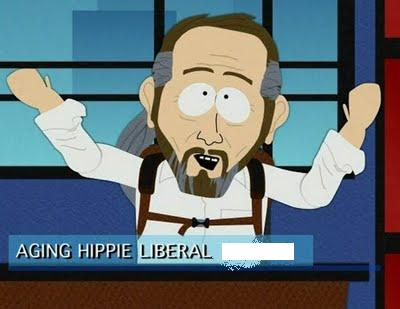
Yes, I did the politically correct thing and bleeped out the D word.
Well, I read some analysis over at WAPO. I couldn’t just go enjoy a nice sunny Sunday like many other folks. The headline was just too full of potential one-liners for me to not follow the siren song. It’s–surprise!!! (not)–more gossip mongering as journalism by Ann Kornblut and the title is: ‘Soul-searching’ Obama aides: Democrats’ midterm election losses a wake-up call. Kornblut is well known for printing Republican slogans as real news. Both Glenn Greenwald and Bob Somerby have pretty much done all the criticism of Kornblut you could possibly read. We won’t even start on her major CDS upon which she seems to have built her career. I just couldn’t let this one go.
She’s back to her tricks with acting like she has insiders in the White House whose names never seem to get mentioned. She also deserves a time out for gratuitously using the word shellacking along with Frank Rich over at the NY T today. The rest is just bizarre. Perhaps she’s out to fill Sally Quinn’s shoes? Who are these so-called advisers any way? This thing is long and it adds nothing to any current conversation about the mid term elections. It’s a waste of ink and bytes.
The advisers are deeply concerned about winning back political independents, who supported Obama two years ago by an eight-point margin but backed Republicans for the House this year by 19 points. To do so, they think he must forge partnerships with Republicans on key issues and make noticeable progress on his oft-repeated campaign pledge to change the ways of Washington.
Even more important, senior administration officials said, Obama will need to oversee tangible improvements in the economy. They cannot just keep arguing, as Democrats did during the recent campaign, that things would have been worse if not for administration policies.
One adviser said they spent the past dozen days “soul-searching.”
Another said that, around the White House, “people aren’t just sitting around doing soul-searching. They’re gaming out the short, medium and long term.”
“People have given a lot of thought to this,” said that adviser, who like others interviewed spoke on the condition of anonymity in order to freely discuss internal deliberations.
What does this say to you besides, gee, Obama should just get it over and basically become a Republican? Again, who are these people without names but with active souls to be searched? Is this a precursor to more hippie bashing and handing Republicans victory before they even do anything at all?
So, here it is again … the first compromise. Just let the rich have those damned tax cuts already!!!
Over the next few days, White House officials said they will begin to gauge whether they can forge an alliance with any top Republicans, many of whom are scheduled to attend a bipartisan meeting at the White House on Thursday. Although Obama could benefit from a high-profile compromise – perhaps on extending the Bush-era tax cuts or on other tax initiatives set to expire before the end of the year – officials are also prepared to point out any Republican intransigence.
Again, who are THEY? I’ve seen more concrete information in the National Enquirer. What editor let’s this crap get published? Then Kornblut goes right on with a series of quotes from named Republicans that basically says they could give a hoot about working with Obama. They’re more interested in making him a one term president.
So, what’s next? ASK an unnamed Democratic political source.
“There isn’t going to be a reset button. That’s not their style,” said a Democratic strategist who works with the White House on several issues. “They don’t like pivots, and they also believe they’re right.”
And then end with an unnamed senior official.
On the other hand, “underreading it would be to think that we did all the right things and didn’t say them the right way, and if people had just listened they would have gotten it,” one senior administration official said. “That’s not what we think. That’s not what the president thinks.”
Why doesn’t the Washington Post just put up a gossip page and assign Kornblut the top spot? Who are these people that control the information we get these days and why are they getting paid for it? As far as I can see, she’s just hoping the White House will veer more right than ever and bash a few more hippies. What ever did we do to deserve a press corps like this? At least Ulsterman’s serial insider conversations were better written.
The Latest Annoying Media Buzzword: Shellacking
Posted: November 5, 2010 Filed under: Team Obama, The Media SUCKS | Tags: Barack Obama, media buzzwords, rationalizations, shellacking 88 Comments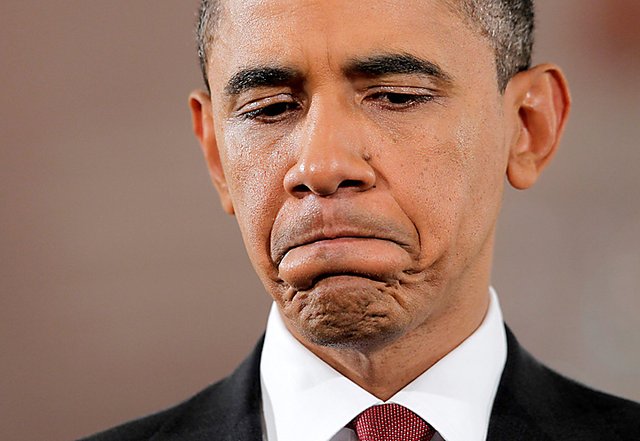
From the transcript of President Obama’s press conference, November 3, 2010:
…I’m not recommending for every future President that they take a shellacking… like I did last night. (Laughter.) I’m sure there are easier ways to learn these lessons. But I do think that this is a growth process and an evolution. And the relationship that I’ve had with the American people is one that built slowly, peaked at this incredible high, and then during the course of the last two years, as we’ve, together, gone through some very difficult times, has gotten rockier and tougher. And it’s going to, I’m sure, have some more ups and downs during the course of me being in this office.
Apparently the media just loved the word the President used to describe the results of the midterm elections, because they just can’t stop repeating it. Over and over and over again. Some examples:
Christian Science Monitor: After ‘shellacking,’ can foreign policy be a bright spot for Obama?
USA Today: Obama’s ‘shellacking’ — how badly will it bruise his agenda?
Fox News: Despite the shellacking, Obama keeping his team intact
Yesterday, on NPR’s All Things Considered, Robert Siegel and Michele Norris discussed the word “shellacking” and tried to determine how the word came to mean “a decisive defeat.”
ROBERT SIEGEL: A shellacking – that is, a decisive defeat, according to Merriam-Webster’s. The term has an old-timey feel to it, like something used by a stern father decades ago.
MICHELLE NORRIS: Maybe that’s because it has an older meaning: a finish for furniture made with lac – L-A-C – as in lacquer.
SIEGEL: You mean lac, a resinous secretion of an insect deposited on trees and used in making shellac, a varnish.
NORRIS: Thanks, Random House.
SIEGEL: So how did shellac make the linguistic leap to defeat? Jesse Sheidlower, of the Oxford English Dictionary, was half-expecting our call about this today. But he didn’t find a definitive answer. He ruled out origins in sports. And he said shellac smelled of alcohol and became slang for drunk. He says it was prison slang.
NORRIS: From crime to politics, meaning washed up or trounced – which is, in case you missed it, exactly what happened to the Democratic Party in Tuesday’s elections.
I don’t know about you, but I’m already really sick of the word “shellacking.” I do think Robert Siegel had interesting point, though, when he said the word had “an old-timey feel to it, like something used by a stern father decades ago.”
During the campaign, Obama was painted as being “cool,” but his use of language since he became President does come across as old-fashioned and very uncool–as with his frequent use of the term “folks” to refer to ordinary Americans.
It would be interesting to know where Obama gets these words. Do they come from speechwriter Jon Favreau or from the President himself? If they are Obama’s own words, where did he pick them up? Did they come from his grandfather or grandmother?
In any case, we are likely to keep reading and hearing this new buzzword for some time to come. It will even get more widespread publicity Sunday night, since Obama has taped an interview with 60 Minutes, and the “shellacking” will be discussed at length.
Unfortunately the President’s rationalization for the “shellacking” is either deliberately obtuse or utterly tone-deaf, as usual. Nevertheless, we’ll probably be hearing his ridiculous explanation repeated again and again too. He told 60 Minutes’ Steve Croft that the big problem was not his policies, but his failure to explain his policies to us.
Obama: What I didn’t effectively, I think, drive home, because we were in such a rush to get this stuff done, is that we were taking these steps not because of some theory that we wanted to expand government. It was because we had an emergency situation and we wanted to make sure the economy didn’t go off a cliff.
The president also tells Kroft that one of the reasons the electorate has become disenchanted with him was his failure to properly explain his policies and persuade people to agree with them.
It was, in effect, a breakdown in leadership: “Leadership isn’t just legislation,” he tells Kroft.
Supposedly, if the President had only explained all of his policies to us poor clueless voters, we would have understood that he knew what was best for us and would gladly have rushed to the polls to vote for Democrats. Here’s another quote from the interview:
“You know, I think that over the course of two years we were so busy and so focused on getting a bunch of stuff done that we stopped paying attention to the fact that leadership isn’t just legislation. That it’s a matter of persuading people. And giving them confidence and bringing them together. And setting a tone. And making an argument that people can understand. And I think that we haven’t always been successful at that. And I take personal responsibility for that. And it’s something that I’ve got to examine carefully as I go forward.”
See, if he had very clearly spelled out why it was so important to keep a public option out of the health care bill, and why it was vital that the bill should prevent women from getting abortions in the future, everything would have been hunky-dory. And if he had more clearly explained why we needed to stay in Iraq instead of withdrawing as he had repeatedly promised, and why we needed a “surge” in Afghanistan and lots more civilian and military deaths, then voters would have seen things completely differently.
In his press conference, Obama also argued that one message of the midterm results is that he needs to get out of the White House more often. In response to a question about his leadership style, the President said:
There is a inherent danger in being in the White House and being in the bubble. I mean, folks didn’t have any complaints about my leadership style when I was running around Iowa for a year. And they got a pretty good look at me up close and personal, and they were able to lift the hood and kick the tires, and I think they understood that my story was theirs. I might have a funny name, I might have lived in some different places, but the values of hard work and responsibility and honesty and looking out for one another that had been instilled in them by their parents, those were the same values that I took from my mom and my grandparents.
And so the track record has been that when I’m out of this place, that’s not an issue. When you’re in this place, it is hard not to seem removed. And one of the challenges that we’ve got to think about is how do I meet my responsibilities here in the White House, which require a lot of hours and a lot of work, but still have that opportunity to engage with the American people on a day-to-day basis, and know — give them confidence that I’m listening to them.
There’s another clueless rationalization! So he’s going to try to get out of Washington even more than he did in the first two years of his presidency? It’s hard for me to imagine how he could get away any more than he already has. But if Obama does actually appear at more town hall meetings, it might be helpful if he actually listened to some real Americans instead of lecturing them endlessly on how stupid they are not to see the wonderfulness of his policies.
What I haven’t seen so far is any sign that Obama intends to make any substantive changes following the “shellacking” Democrats received at the polls on Tuesday. The “core” group of White House staffers will stay on, even though many Democrats have been pushing for a real shakeup of Obama’s primary advisers.
A Democratic strategist characterized the lack of change at the White House as “willful defiance.” The strategist, who discussed the issue on condition of anonymity, said, “The political operation from top to bottom, north to south, east to west, needs to be really carefully looked at.”
Even within the White House, some aides have objected to what they see as an insular culture. Obama’s practice of grooming understudies to fill big White House jobs is also under fire.
“The president needs a broader range of views on a daily basis than he’s gotten up till now,” said William Galston, a onetime aide to President Clinton and a senior fellow at the Brookings Institution. “One reason that Ronald Reagan succeeded as president was that he got out of his comfort zone when he appointed senior people, and I think this president needs some people around him who are prepared to challenge not only his policy instincts but his political instincts. The idea of constructing the White House simply by promoting from within is simply ridiculous.”
At the Financial Times, Anna Fifield writes that even after the famous “shellacking,”
…“No Drama Obama” has maintained his generally cool demeanour – no Bill Clinton-style emoting for him – and given little indication that he intends significantly to alter his modus operandi.
Although the president said he was “doing a whole lot of reflecting” on the electoral rout, he suggested the problem was with communications, rather than his core policies.
As long as Obama claims the only problem has been his failure to communicate the wonderfulness of his policies, I guess we aren’t going to see any real changes.
Fifield also reveals that President Obama has been reading Taylor Branch’s book about the Clinton years.
“President Clinton was very aggressive – he did a series of bipartisan accords and turned things around,” said Mark Penn, the pollster who helped Mr Clinton recover from the 1994 rout.
Mr Obama revealed that he has been reading historian Taylor Branch’s book about Mr Clinton’s years in the White House, although it remains to be seen whether he will follow suit.
“The real question is whether or not the president [Obama] will learn from what the voters are saying, because two years is a long time in politics,” Mr Penn said.
Aaaak!!! Why do I think Obama will learn the wrong lessons from that book? I think he may be headed for another “shellacking” in 2012.
KO for KO?
Posted: November 5, 2010 Filed under: Elections, Main Stream Media, The DNC, The Media SUCKS | Tags: Olbermann suspended, Pelosi runs for minority leader, Van Hollen resigns DCCC 67 CommentsTwo breaking news stories worth front paging are sweeping blog headlines.
 First, Keith Olbermann has been suspended indefinitely without pay at MSNBC for donationg to three Democratic candidates during the last election. This is from Politico.
Olbermann made campaign contributions to two Arizona members of Congress and failed Kentucky Senate candidate Jack Conway ahead of Tuesday’s election.
Olbermann, who acknowledged the contributions in a statement to POLITICO, made the maximum legal donations of $2,400 apiece to Conway and to Arizona Reps. Raul Grijalva and Gabrielle Giffords. He donated to the Arizona pair on Oct. 28 — the same day that Grijalva appeared as a guest on Olbermann’s “Countdown” show.
NBC has a rule against employees contributing to political campaigns, and a wide range of news organizations prohibit political contributions — considering it a breach of journalistic independence to contribute to the candidates they cover.
Other links:
The second breaking news story of interest is that Nancy Pelosi will run for Minority Leader. This is from Ryan Griffin  at Huffpo. Pelosi Tweeted the announcement.
House Speaker Nancy Pelosi (D-Calif.) will make a bid to be Democratic minority leader, she announced Friday via Twitter. “Driven by the urgency of creating jobs & protecting #hcr, #wsr, Social Security & Medicare, I am running for Dem Leader,” she tweeted.
Other Links:
In related news, Rep. Van Hollen is leaving his chairmanship at the DCCC.

 peej
peej Carissa
 bostonboomer
 dakinikat
 ecocatwoman
 mablue2
 Mama Lopez
 peggysue22
 quixote
 skydancingguestblogger
 Mona (aka Wonk the Vote)



 Sky Dancing
Recent Comments