
We come now to bury Supply Side Economics
Posted: July 25, 2010 Filed under: Team Obama, The Bonus Class, The Great Recession, The Media SUCKS, U.S. Economy, Voter Ignorance | Tags: voodoo economics, why things were so good during the Clinton years Comments Off on We come now to bury Supply Side EconomicsI’ve been having a major hissy fit about the extraordinary bad policy measures proposed and undertaken by Republicans for sustaining tax cuts and deficits for as long as I can 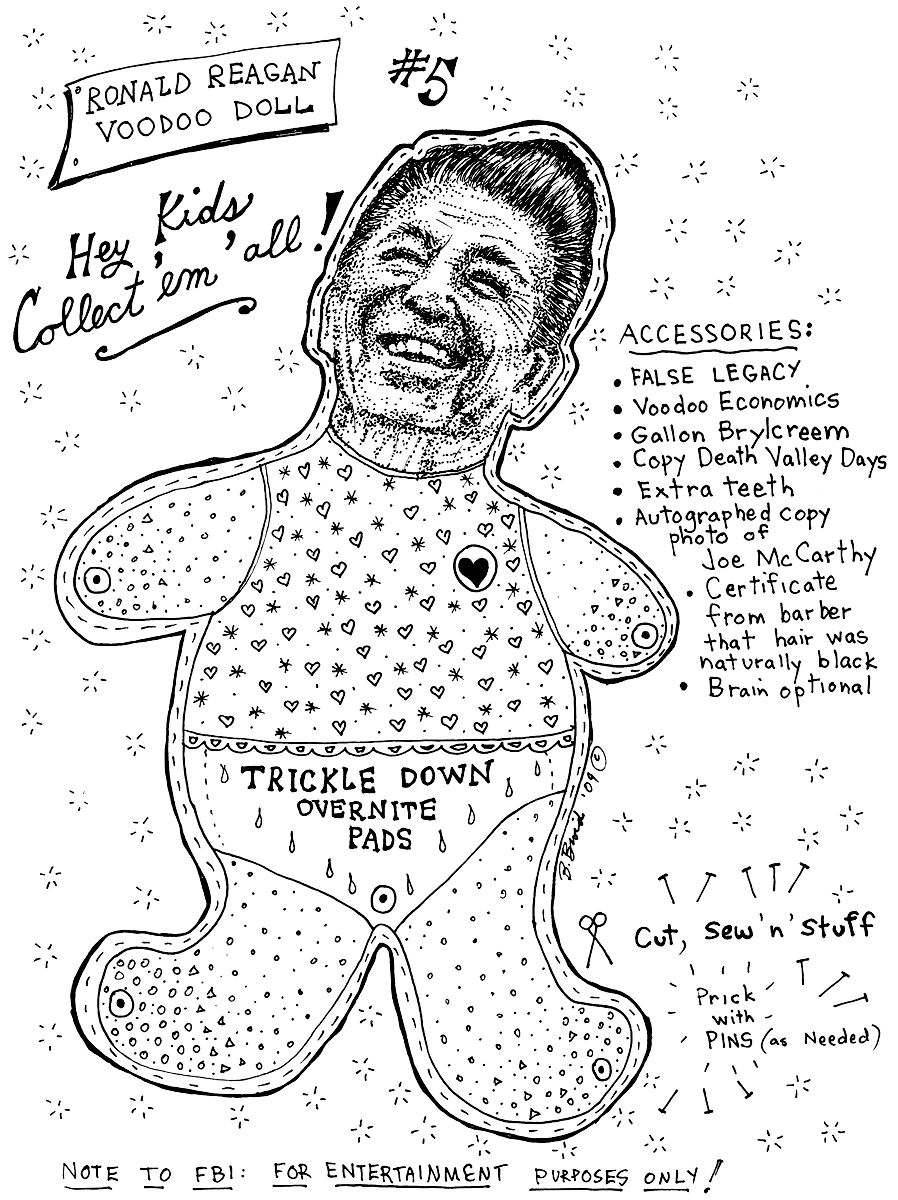 remember. The deal is, however, nobody likes it when you tell them they can’t have a free lunch when Ronnie Raygun repeated it ad infinitum. That is very much how the Republicans have achieved political victory since the Reagan years. Basically, they promise to cut taxes no matter what the circumstances and spend money on every military adventure and toy that comes down the pike and chock it up to preserving American exceptionalism. Ronald Reagan and Dubya Bush are responsible for the deficit today and the people that benefited from their tax cuts–and voted for them–should be asked to clean up the mess.
I was ever so pleased to read this article by FT’s Martin Wolf that recognizes ‘supply-side economics’ for what it is. It has nothing to do with a good economy and has everything to do with good politics. It’s a policy of promising and delivering everything and then screaming about the huge bill when a Democrat is in office. Every 8 years or so they do one huge Dine and Dash on the country. Wolf realizes this and basically calls Dubya’s tax cuts “massive, irresponsible, and unsustainable”. He also rightly calls the Reagan years for what they were. Reagan was a premier example of Keynesian policy. Ronald Reagan spent us out of the recession of the early 1980s. The only thing that was supply side about it was the high supply of bull shit rhetoric that went along with it. Some one needs to correct the message.
Ronald Reagan was the country’s premier Keynesian. Then Bill Clinton got into office and led us to a very long,very good business boom by doing what Keynes said to do during that time. You only deficit spend when the economy sucks. It had improved by the beginning of the 1990s. Bill Clinton was frugal. I can never forget the day that Dubya/Cheney looked at those surpluses they inherited and Cheney said, deficits don’t matter, Reagan showed us that. Then they immediately started two wars and gave away the Treasury to every corporation and rich person in the country. It’s damn ironic now that every Republican and Blue running Dawg thinks deficits matter. This is the time when we need them. We should’ve paid more attention to them like five years ago. But Cheney of no heart has brass balls and a spine. If only we had a Democrat in elected office with spine and balls.
Anyway, here’s Wolf’s nutshell description of supply side economics. It’s a good one.
To understand modern Republican thinking on fiscal policy, we need to go back to perhaps the most politically brilliant (albeit economically unconvincing) idea in the history of fiscal policy: “supply-side economics”. Supply-side economics liberated conservatives from any need to insist on fiscal rectitude and balanced budgets. Supply-side economics said that one could cut taxes and balance budgets, because incentive effects would generate new activity and so higher revenue.
The political genius of this idea is evident. Supply-side economics transformed Republicans from a minority party into a majority party. It allowed them to promise lower taxes, lower deficits and, in effect, unchanged spending. Why should people not like this combination? Who does not like a free lunch?
How did supply-side economics bring these benefits? First, it allowed conservatives to ignore deficits. They could argue that, whatever the impact of the tax cuts in the short run, they would bring the budget back into balance, in the longer run. Second, the theory gave an economic justification – the argument from incentives – for lowering taxes on politically important supporters. Finally, if deficits did not, in fact, disappear, conservatives could fall back on the “starve the beast” theory: deficits would create a fiscal crisis that would force the government to cut spending and even destroy the hated welfare state.
In short, Republicans chose one side of Keynesian economics–the side that uses government spending or tax cuts to spur an economy that should be used only during recessions–and applied it like the apple cider vinegar of economic policy. One spoonful of tax cuts fits all! Decades of data have shown economists that that is the farthest thing from truth, however, the political windbags of the right have managed to continue the charade that every one can have everything and not pay for it as long as we just cut taxes. (That is until a democratic president takes office). It’s like saying 1 + 1 = 4. Problem is that many people still buy that. It’s like thinking there were Dinosaurs in a literal Garden of Eden.
The truth is that tax cuts NEVER pay for themselves. Even one of Dubya’s advisors has said as much.
Indeed, Greg Mankiw, no less, chairman of the Council of Economic Advisers under George W. Bush, has responded to the view that broad-based tax cuts would pay for themselves, as follows: “I did not find such a claim credible, based on the available evidence. I never have, and I still don’t.” Indeed, he has referred to those who believe this as “charlatans and cranks”. Those are his words, not mine, though I agree. They apply, in force, to contemporary Republicans, alas,
Since the fiscal theory of supply-side economics did not work, the tax-cutting eras of Ronald Reagan and George H. Bush and again of George W. Bush saw very substantial rises in ratios of federal debt to gross domestic product. Under Reagan and the first Bush, the ratio of public debt to GDP went from 33 per cent to 64 per cent. It fell to 57 per cent under Bill Clinton. It then rose to 69 per cent under the second George Bush. Equally, tax cuts in the era of George W. Bush, wars and the economic crisis account for almost all the dire fiscal outlook for the next ten years (see the Center on Budget and Policy Priorities).
The Democratic leadership must get out ahead of this misleading set of facts and stories. It doesn’t help that they are also adding to the confusion by dissing the Clinton/Gore economic record. Indeed, if any of them would ever get around to reminding the public how good they had it in the 90s, the message would go far. I also remember the Reagan Years. My first house loan came with an interest rate of %16.7. Both my exhusband and I lost our first jobs out of college because of a bad economy. I lost my job at a huge S&L that went bankrupt. He lost his at the Federal Land Bank because of the bad ag economy. The Reagan period was not morning again in America and the Democrats need to step up the game to remind people of that.
Why is it that the Republicans so clearly and convincingly get people to buy the snake oil and the Democrats can event manage to agree on a coherent message? Of course, it would help if they’d stuff that dead racoon of a hairmet in Senator Ben Nelson’s mouth every time he goes rogue, but it would also help if they mentioned how everything was just fine during the Clinton years.
Here let me remind you. The unemployment rate hit a 30 year low in 1999. It was 4.2% and it was low for all groups including

Find the good trend.
blacks, women and hispanics. (It was 7.3% when he took office). From 1993 to 1999, the economy added 20.4 million jobs. There were also increases in blue collar jobs like construction.
20.4 Million New Jobs Created Under the Clinton-Gore Administration. Since 1993, the economy has added 20.4 million new jobs. That’s the most jobs ever created under a single Administration – and more new jobs than Presidents Reagan and Bush created during their three terms. Under President Clinton, the economy has added an average of 245,000 jobs per month, the highest of any President on record. This compares to 52,000 per month under President Bush and 167,000 per month under President Reagan.
92 Percent — 18.8 Million — of the New Jobs Have Been Created in the Private Sector. Since President Clinton and Vice President Gore took office, the private sector of the economy has added 18.5 million new jobs. That is 92 percent of the 20.4 million new jobs – the highest percentage since Harry S. Truman was President and presiding over the post-World War II demobilization.
We had the fastest and the longest Real Wage growth in two decades. Inflation was the lowest it had been since the 1960s.
Under President Clinton, real wages are up 6.5 percent, after declining 4.3 percent during the Reagan and Bush years. Real wage growth in 1998 reached 2.6 percent — the largest increase since 1972.
Okay, so now, tell me. What policies were highly successful? Which policies lead us to peace and prosperity? Why aren’t we seeing the Democrats today try to reinvigorate the policies of Clinton/Gore instead of putting through legislation that comes from the Heritage Foundation? Why are they even dicking around the Republicans at this juncture?
The Obama apologists wonder why Obama–the greatest things since FDR?–is not getting due credit for all these massively huge bills that his congressional chorus line has passed. Well, it’s the economy stupid! First things should’ve been put first. We got a half assed stimulus bill the same way we now have assed financial reform and half assed health insurance reform. If he’d have put all of his political capital into solving the country’s economic problems (JOBS) first, he’d have had enough to run the gambit on the rest. And I would be willing to bet you we wouldn’t have to wonder why a bunch of half-baked Heritage Foundation plans got implemented under a Democratic presidency and majority.
What is so wrong with so many people that they can’t just point to the Clinton years and say, let’s just do that again? Of all things, why can’t the Democrats take and sell that message seriously?
The Hypocrisy of the Deficit Squawks
Posted: July 12, 2010 Filed under: The Great Recession, U.S. Economy Comments Off on The Hypocrisy of the Deficit SquawksI think the entire congress needs to spend the rest of its summer in a remedial economics course. If the sky is falling from the future size of the deficit, then why are we getting calls from the same folks to extend the Bush tax cuts to the rich? (This includes taxing things like dividends.) Why are they being deliberately inconsistent? It’s VooDoo economics again. The supply side Zombies will just not die. What’s worse is that some democrats are joining them.
My question is which is it boys? You can’t have it both ways. Is the source of all evil deficit or tax increases on the very rich? If the 80s and the naughts proved anything to us,it’s that lowering the tax rates on the rich does lead to a increase in the deficit and it does not stimulate the economy or investment as much as good old fashion government spending. It mostly leads to speculative asset bubbles that burst in every one’s face. Why does the middle and working class get the “let them eat cake” while the rich “get to have their cake and eat it to?” Where’s the economic theory and the common sense in that?
Top Republicans called on Democrats in Congress and the White House to extend all the tax cuts that are set to expire at the end of this year.
Sen. Judd Gregg (N.H.), the top Republican on the Senate Budget Committee, joined House Minority Whip Eric Cantor (R-Va.) in pushing for the extension of a series of taxes set to expire at the end of this year, including a series of cuts for households making more than $250,000 per year.
“If you want to do something to stimulate the economy, you could make clear that tax rates aren’t going to go up at the end of the year,” Gregg said during an appearance on CNBC. “If this administration really wants to stimulate, say they’re going to continue those tax rates — all those tax rates.”
The tax cuts on income and dividends that Republican Congresses had approved during the administration of President George W. Bush are set to expire at the end of 2010.
Senator Jon Kyl had to twist himself into a illogical pretzel to justify the position. I’ve always been amazed by the Republican ability to hold completely contradictory positions without having complete brain failure. For example, they demand the government be smaller and get out of peoples lives while wanting to control the domestic arrangements of GLBTs and women seeking reproductive health. That’s another one of those issues where the contradictions are painful to watch. Thinking you can lower the deficit while not taxing the people with the incomes and assets just boggles the mind. Don’t forget, that prescription also includes approving every military toy and adventure that comes across their desk save helping veterans.
Here’s a description of Kyl’s appearance on Fox from Ezra Klein.
“[Y]ou should never raise taxes in order to cut taxes,” Jon Kyl said on Fox News Sunday. “Surely Congress has the authority, and it would be right to — if we decide we want to cut taxes to spur the economy, not to have to raise taxes in order to offset those costs. You do need to offset the cost of increased spending, and that’s what Republicans object to. But you should never have to offset cost of a deliberate decision to reduce tax rates on Americans.”
What’s remarkable about Kyl’s position here is that it appears to be philosophical. “You should never have to offset cost of a deliberate decision to reduce tax rates on Americans,” he said. Never! This is much crazier than anything you hear from Democrats. Imagine if some Democrat — and a member of the Senate Democratic leadership, no less — said that as a matter of principle, spending should never be offset. He’d be laughed out of the room.
All of this comes about as the Democratic co-chair of Obama’s cat food commission calls the growth of the deficit a ‘cancer’. Why is it that congress seeks to balance the budget on the backs of those least able to pay for it and those who have benefited the least from the excessive spending?
Bowles said that unlike the current economic crisis, which was largely unforeseen before it hit in fall 2008, the coming fiscal calamity is staring the country in the face. “This one is as clear as a bell,” he said. “This debt is like a cancer.”
The commission leaders said that, at present, federal revenue is fully consumed by three programs: Social Security, Medicare and Medicaid. “The rest of the federal government, including fighting two wars, homeland security, education, art, culture, you name it, veterans — the whole rest of the discretionary budget is being financed by China and other countries,” Simpson said.
“We can’t grow our way out of this,” Bowles said. “We could have decades of double-digit growth and not grow our way out of this enormous debt problem. We can’t tax our way out. . . . The reality is we’ve got to do exactly what you all do every day as governors. We’ve got to cut spending or increase revenues or do some combination of that.”
Bowles pointed to steps taken recently by the new coalition government in Britain, which also faces an acute budgetary problem, as a guide to what the commission might use in its recommendations. That would mean about three-quarters of the deficit reduction would be accomplished through spending cuts, and the remainder with additional revenue.
Most Republicans in Congress are opposed to any tax increases, which has made the work of the commission far more difficult. Bowles and Simpson appealed for support to the governors, who have been forced by their states’ constitutions to balance their budgets with deep spending cuts and, in many cases, tax increases.
Americans faced similar budget issues after World War 2 and a lot of it was paid off by economic growth. However, growth seems elusive in the current environment. This is especially true because there has been no fundamental change in the systemic causes of the current financial crisis and deficit debacle. This policy choice we’re given now is ridiculous! Investment bankers who made bad bets get a blank check but we can’t extend unemployment insurance to the 2 million long term unemployed that just lost their benefits? Who is most likely to actually become a customer to businesses? Is it A, an unemployed person that needs to pay the rent and buy groceries or or B, Goldman Sachs that will take the cheap loan and game the market by arbitraging self-created paper?
Also, go back to the tax rates during that same booming period of post World War 2. Obviously, taxing the rich does not kill an economy. Here’s some examples of tax rates from the Eisenhower years.
The highest tax bracket on earned income today is 35%. During Ike’s administration, the highest tax bracket was 92% in 1953, and 91% thereafter [1]. Yes, taxes on the Rich were almost three times higher under the Republican Eisenhower compared to our current President, or compared to the Democratic administration of Bill Clinton!
Here’s the capital gains treatment for the Eisenhower period.
It is considered to be almost the gospel today that capital gains should be taxed at a far lower rate than earned income. Today the maximum capital gains tax rate is a whopping 15% on assets that have been held for at least a year since purchase. This is why the middle class, who are dependant on earned income, effectively pay taxes at a higher rate than do the wealthy.
In Ike’s day, capital gains were not treated differently from earned income, so the rich paid 91% tax on capital gains. From 91% to 15% – another reason why it’s good to be rich!
Note that in 1955, in the middle of Ike’s presidency, the typical (median) family paid less than 20% in all taxes [2]. By 2003, the total of all taxes paid by a typical family had more than doubled, to almost 40% of income.
So in Ike’s day, the rich paid a lot of taxes, the middle-class paid a little taxes, and somehow it all worked out.
Right now, there is a need for money to be given to the people who are mostly likely to spend it. State governments and poor to middle class people are the ones that come to mind. Banks are not lending out money. Businesses are sitting on money and not investing. They’ve got the lowest real interests rates possible now and they’re not expanding capital. Why would they if they have no customers walking through their doors?
Investors aren’t particularly happy with the market either. There appears to be a massive pay down of debt as a way of savings rather than money heading for the markets. Most of the market money is not coming from the individual investor. It’s coming from pension funds and such. That’s why Wall Street is so hungry for Social Security dollars. There’s very little new money coming into the market. They have nothing they can use to build new pyramid schemes asset bubbles. So where does stimulus come from if the government does not do it itself? It has to come from people that are most likely to be customers of business. Only the increase in customers will make a business expand its production. Either way, you have to get the money to the right people.
Here is a prelimary study out by Corsetti et al (May 2010) that empirically studies the impact of fiscal policy multipliers during financial crisis. (h/t to Paul Krugman) It basically reinforces the idea that fiscal stimulus in the right places is necessary to create a multiplying impact for federal dollars spent on sustaining the economy. Don’t try to read the analysis part, it’s extremely technical. Here’s the conclusion which is the part that policy makers need to understand. Corsetti is some one I follow a lot because of his work on exchange rates. There are some important findings for that. However, this last statement is germane to our conversation.
A second key finding relates to the marked increase in fiscal multipliers during times of financial crisis. On the one hand, this may be taken as evidence in support of fiscal stimulus during financial crises. On the other hand, our empirical results also suggest that many countries have historically cut back government spending during financial crises, presumably out of concern over debt sustainability. In this sense, a large conditional multiplier also provides a stark warning about the costs of financial turmoil, and an argument in favor of building up fiscal buffers in normal times so as to avoid fiscal retrenchment when it is most painful.
This is something that most economists that have a real feel for Keynes have being saying for years. Keynes didn’t recommend endlessly running budget deficits. He believed they were necessary during times of crisis. He recommended balanced budgets and surpluses during good times which is exactly what Bill Clinton’s administration did. He handed a surplus to Dubya Bush who immediately threw it away. A similar situation happened down here in Louisiana. The first year of the Jindal administration, Jindal was handed a surplus and a big rainy day fund. Rather than sitting on it, Jindal wanted to eliminate income taxes. This kind of behavior leads to future deficit problems.
Where are these deficit squawks when the government is running surpluses and in a good situation? Well, they generally throw caution to the wind and spend like crazy or rebate like crazy. You can’t do this and then turn around and complain about high deficits and demand tax cuts to the folks with wherewithal a few years later during recessions without sounding contradictory, crazy, and callous. But that’s the way with these Supply Side Zombies, they entice the middle class with the idea that they pay too much in taxes when the real motive is to stuff the pockets of the Bonus and the political donor class.
This financial crisis and the resulting deficit problems were not caused by the poor and working class. They are as much victims since they did not participate in the lavish incomes and tax cuts that came from the last asset bubbles fueled by low interest rates and low capital gains taxes. Why then, ask us to bear the burden of this sudden onset of restraint?
Where have all the Consumers Gone?
Posted: July 8, 2010 Filed under: The Bonus Class, The Great Recession, U.S. Economy Comments Off on Where have all the Consumers Gone?We talk about this often. As a matter of fact, it was just yesterday we were talking about the failure of Reaganomics or so called  “Trickle Down” economics. (More aptly called VooDoo economics by the first President George Bush.)
kc, on July 7, 2010 at 10:37 pm Said: Edit Comment
thanks–would it be accurate to say that trickle down doesn’t work well because the rich already have consumer goods so they could save it.??
dakinikat, on July 8, 2010 at 7:17 am Said: Edit Comment
Well, supposedly the residual goes into investments which go to create well paying jobs which the rest of us get. However, that link is weak link. Especially with so many corporations moving their capital investments out of the country or having major operations elsewhere. In order for it to create jobs, the money has to stay put in the community and there’s no guarantee it will. Also, a lot of profits these days are just arbitrage profits that create no value. If you don’t direct the dollars to long term investment the money can go anywhere.
Robert Reich has a great blog post up today that gives you some perspective on what happens to our consumption driven society when only the few rich people get the income gains. The income doesn’t go to driving the economy, it goes to driving asset bubbles and in the two cases he talks about, that leads to some pretty bad economics results. Reich says that “We’re in a Recession Because the Rich Are Raking in an Absurd Portion of Wealth: Our economy can’t thrive when the richest 1% get an ever larger share of the nation’s income and wealth, and everyone else’s share shrinks.”
The end of the Hoover years and the end of the Dubya years brought as big increases in income inequality. What was the result?
Each of America’s two biggest economic crashes occurred in the year immediately following these twin peaks—in 1929 and 2008. This is no mere coincidence. When most of the gains from economic growth go to a small sliver of Americans at the top, the rest don’t have enough purchasing power to buy what the economy is capable of producing. America’s median wage, adjusted for inflation, has barely budged for decades. Between 2000 and 2007 it actually dropped. Under these circumstances the only way the middle class can boost its purchasing power is to borrow, as it did with gusto. As housing prices rose, Americans turned their homes into ATMs. But such borrowing has its limits. When the debt bubble finally burst, vast numbers of people couldn’t pay their bills, and banks couldn’t collect.
You can’t have an economic machine driven by consumption and then turn the switch over to people who have so much money that all they do is speculate. It just doesn’t work. If you want long term real investment, then you have to ensure that the investment dollars are going to things of real value. A good example of something of real value is a factory that employs people that have to pay for houses, groceries, clothing and transportation. Every dollar of a well earned wage trickles outward to a community. Putting all your investment eggs into derivatives does nothing to support long term growth. Taking all the income from productivity coming from the people that work and giving it to people that just simply want to drop a few dimes in a stock that might go up like a BP oil gusher does not create customers for businesses. Customers are what businesses need to grow. No amount of tax cuts or cheap credit will expand a business that doesn’t see customers coming in the door. Also, there’s a real good chance a lot of these people–and the corporations in which they invest–offshore their wealth anyway so there’s no guarantee that it stimulates our economy. Although, if you check it out, you’ll see that the richest countries in the world are those small countries that are depositories and shelters of offshore funds. These are the little countries that banking and no taxes built like The Grand Caymans, Guernsey, Bermuda, etc.
Anyway, Robert Reich does a very good job pointing to how we let our government leaders recreate the environment of the 1920s and how by only a little finesse and a lot of liquidity by the Fed stopped us from going over the edge into another period where unemployment was 25% instead of 10%. What I worry about is that the current leaders seem to be recreating the second dip of the Great Depression also. Remember, the two BIG recessions since World War 2 happened when you’ve had people who sincerely believe in the Trickle Down hypothesis. It frightens me that we have a President who admires Ronald Reagan and has continued Dubya Bush Policies. (Here’s another great link to Brad DeLong’s Blog who has similar worries. The piece is called “These are NOT the Ones We have been waiting for”. No kidding!) If we do have a double-dip, it will be because of all this austerity nonsense. We really don’t need any more lessons from Voodoo Economics. We’ve had enough to traumatize several generations and put a lot of people into unemployment hiatus.
Economic Fairy Tales and other Bed time stories
Posted: July 2, 2010 Filed under: Global Financial Crisis, The Great Recession | Tags: austerity, fisical stimulus, the economy, unemployment 2 Comments One of the things that grew out of the Reagan years was a set of myths. Primary among them were economic myths. The first one was that the country was overtaxed. The second was that there was no particular useful role for government. The third was a revival of our country’s Puritan ethos. None of these were particularly helpful and all of them were put to death–in short order–during the Clinton years by theory and empirics. Well, they were put to death by every one but those that rely on faith and ideology rather than theory and data. I see a revival of these myths in the signs of tea partiers. The tea party folks realize we’re losing our way of life. The problem is they are so angry they are looking to Reagan Fairy tales for answers. Republicans and Blue dawgs are playing those fears like magical harps. Fairy tales calm children’s fears, but they do not solve real problems.
A really good example of a stupid hypothesis in Reagan’s VooDoo economics that was soundly put to death by empirics was the Laffer curve.(That was the basis of the argument that we’re overtaxed.) However, I do know some one that has to rely on old articles to bring this ‘view point’ into his classroom. No matter how many ways I insist that it’s not our job to bring failed hypotheses to students he still keeps clapping for this very dead Tinkerbell. He wants to believe he’s over taxed no matter what the data says and I haven’t seen him for awhile but I have no doubt he’s participating in whatever passes for a tea party up in his rural part of Washington.
Paul Krugman’s hair is on fire about the Austerity Myth today. He’s not the only one. Here’s something from The Economist with the  same urgency on the international scale called the Austerity Alarm. These articles seem even more prescient given the news about unemployment today. The U.S. economy is not creating jobs. It’s still losing them in large numbers. The economy lost 125,000 jobs last month. The previous dips in the unemployment rate seem to have come from part time Census worker jobs. This one comes from people giving up so they’re not counted. I warned 1 1/2 years ago that the Porkulus bill was not concentrating spending on the right things and too full of useless tax cuts. Surprise! Surprise! Job creation remains elusive. Mortgage rates are at record lows and without bribes to first time buyers, the housing market–perhaps the most central element of the American Dream Fairy tale–looks like a lost market. So, the best our leaders can do in response to all of this is reheat policies that failed during the Hoover Administration.
As Krugman points out, the U.S. and nearly all the world’s economies remain in a deep recession, so why are all the leaders talking about austerity programs and acting like the big issue is that some imaginary set of investors will treat them like Greece if they act responsibly? Why are they repeating the policies that made the Great Depression worse to begin with and then the policies that turned the recovery of the mid thirties into a double dip depression?
Krugman suggests that it’s the power of the village that keeps churning out the myth. It’s not the village economists that embrace this fairy tale. It is our village idiots and unfortunately, they seem to be in charge of economic policy these days. This is not to deny that the U.S. has long term budget problems. Demographics are presenting serious problems to both Social Security and Medicare. Both need to be revamped to meet future commitments. Revamping, however, does not mean tearing down all the buildings in the village to stop one fire from spreading.
So the next time you hear serious-sounding people explaining the need for fiscal austerity, try to parse their argument. Almost surely, you’ll discover that what sounds like hardheaded realism actually rests on a foundation of fantasy, on the belief that invisible vigilantes will punish us if we’re bad and the confidence fairy will reward us if we’re good. And real-world policy — policy that will blight the lives of millions of working families — is being built on that foundation.
 So Krugman is a liberal and of course, the argument against him is that all we liberals believe is that the our big daddy government will get us out of trouble. So, why is the same argument coming from The Economist whose subtitle to their op-ed piece reads “Both sides in the row over stimulus v austerity exaggerate, but the austerity lobby is the more dangerous”. They are hardly a bastion of liberal thinkers and they call the austerity hawkers dangerous.
The austerity fad is also distorting politicians’ priorities. Many European governments, for instance, are fixated on cutting their deficits, when they should also be trying harder to shake up their labour and product markets. A new analysis by the IMF suggests that fiscal austerity coupled with structural reforms would yield far higher growth than austerity alone. In America the new deficit-focused climate is preventing politicians from passing a temporary (and sensible) fiscal stimulus package without inducing them to tackle the sources of the country’s huge medium-term deficit by, for instance, reforming social security. The result probably won’t be another Hooveresque Depression. But it could be a recovery that is weaker and slower than it should have been.
Put a Cork in Corker
Posted: March 11, 2010 Filed under: Global Financial Crisis, The Great Recession, U.S. Economy | Tags: Bob Corker, Chris Dodd, financial regulation, pay day lenders Comments Off on Put a Cork in Corker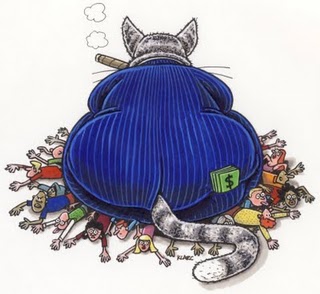 If you want a good example of politics-as-usual as well as something that is not in the interest of the public, this is it. Payday lenders are loan sharks without the kneecapping thugs. Senator Bob Corker wants them exempted from regulations aimed at protecting consumers from predatory and unfair lending practices. Senator Chris Dodd is basically going along with it. This is an egregious example of crony capitalism that enriches an industry by taking advantage of the poor and uninformed.
Senator Bob Corker, the Tennessee Republican who is playing a crucial role in bipartisan negotiations over financial regulation, pressed to remove a provision from draft legislation that would have empowered federal authorities to crack down on payday lenders, people involved in the talks said. The industry is politically influential in his home state and a significant contributor to his campaigns, records show.
This is really bad. If you have a congress critter sitting on Dodd’s committee, now is the time to write and scream. Here’s information on from the Center for Responsible Lending on just exactly how bad this particular brand of predators can get.
Twenty or so years ago, some finance companies figured out how to make loans of a few hundred dollars to people who were barely getting by. That may sound generous, but when you look deeper, the practice they developed amounts to nothing more than legal loan sharking.
The problem for the borrowers—and the payoff for the lenders—is that the terms of these loans are cleverly designed to be very difficult to meet. The borrower must keep coming back and renewing their loan because they aren’t allowed to pay it down and can’t afford to pay it off. They pay the lender another chunk of interest each time, about $50 for a $300 loan. How the debt trap works
These loans carry annual interest rates of 400%, and the industry relies for 90 percent of their revenue on borrowers who repeatedly renew or re-open their payday loans. The typical borrower ends up paying about $500 in interest for a $300 loan, and still owes the principal.
Corker has already damaged the bill that was designed to stop a repeat of the subprime lending crisis that triggered so much trouble back in 2007. Dodd is going along with everything like the lobbyist he surely will become in a short amount of time. We’ve already seen the take down of the new consumer agency that was originally created by the bill. The duties will now be given to the Fed. This is something that Fed Chair Ben Bernanke originally opposed but later accepted under duress from Treasury Secretary Timothy Geithner.
The Fed is a conservative organization that is more reactive than proactive. Under this new term, it is unlikely any one will activate regulation for this set of loans should they get any worse than they already are today. This basically ghettos the poorest of the poor (mostly the unbanked who rely heavily on checking cashing places and pay day loans) into the least controlled debt instruments. In other words, it’s going to take the most money and fees from those least able to pay for them. It perpetuates the loan trap. Most of the brick and mortar of the pay day loan industry is located in the poorest parts of cities where no bank will go any more. The industry says that it’s providing a much needed service. What’s really happening is that it’s ensuring there is no place else to go.
Under the proposal agreed to by Mr. Dodd and Mr. Corker, the new consumer agency could write rules for nonbank financial companies like payday lenders. It could enforce such rules against nonbank mortgage companies, mainly loan originators or servicers, but it would have to petition a body of regulators for authority over payday lenders and other nonbank financial companies.
Consumer advocates said that writing rules without the inherent power to enforce them would leave the agency toothless.
The consumer groups that seek to protect borrowers from the worst of abuses appear to have given up on Dodd and his committee. They’ve gone straight to the FED for help. The hope is that Bernanke can convince the committee to give the FED broader powers than just ensuring compliance with the Truth in Lending Act.
Consumer groups, however, say that enforcement is crucial to curbing abusive, deceptive or unfair practices.
On Tuesday, while Mr. Dodd and Mr. Corker continued negotiating other provisions of the regulatory overhaul — notably, the extent to which state attorneys general would be able to enforce consumer protection rules against banks — the Federal Reserve’s chairman, Ben S. Bernanke, met with National People’s Action, an activist group that wants the Fed to restrict the banks it oversees from financing payday lenders.
Mr. Bernanke, who had met with the group twice before, is trying to fend off proposals in the Senate to strip the Fed of much of its power to supervise banks. A recommitment to protection consumers is part of that strategy
It is just unbelievable to me that some of the very people who nearly brought the economy to the knees by taking on unbelievable risks, securitizing them and then passing the trash to the market will still be able to carry on like nothing ever happened. This is terrible news. The only hope now is that Barney Frank will stop the senate from changing the tougher language originally introduced by the White House and put through by the House. It certainly doesn’t look like the White House will stand up for its own bill.

 peej
peej Carissa
 bostonboomer
 dakinikat
 ecocatwoman
 mablue2
 Mama Lopez
 peggysue22
 quixote
 skydancingguestblogger
 Mona (aka Wonk the Vote)



 Sky Dancing
Recent Comments