
Apologetic Apologia
Posted: September 19, 2011 Filed under: 2012 presidential campaign, Politics as Usual, Team Obama | Tags: Barack Obama, Bill Keller, excuses, Obot apologia 36 Comments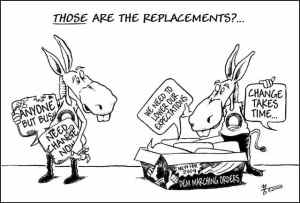 I suppose I should be glad that I’m not hearing that stupid 11 dimensional chess explanation any more. However, Bill Keller-who “stepped down” as Executive Editor of the NYT to return to writing still does a pretty good job of rehashing the same old lame excuses for why things are still so bad around the country. We still have Wars. We still have unemployment. We still have a terrible housing market. Well, you don’t need me to run down the list, do you?
Keller meanders through the usual talking points of Obama apologia before he finally comes to the place where the buck should be stopping. I’m not sure how many times I can hear about inherited problems from Bush before I start shouting enough already! The missteps since then have been so obvious that it’s hard to take the it could’ve been worse excuse as a justification. Here’s where the disappointed true believer almost comes clean; ALMOST. As he talks about the a President adrift, he still points to the usual White House talking point of poor messaging. That’s a cop out.
Obama can be faulted for periods of passivity (his silence as Republicans have sought to defund financial reforms), for a naïve deference to Congress (his belated engagement in the details of the health care bill), for a deficit of boldness and passion, for not doing more to stiffen the spines of his caucus on Capitol Hill, for not understanding — at least until his latest barnstorming on the jobs bill — that governing these days is a permanent campaign.
It is partly a failure of presidential communications that Republicans have succeeded in parodying each of his accomplishments, turning “stimulus” into an expletive, portraying “Obamacare” as socialized medicine and attacking the Dodd-Frank financial reform as an assault on capitalism.
It’s not just that he has failed to own his successes. He has in a sense failed to define himself. He is one of our more elusive presidents, not deeply rooted in any place or movement. David Remnick’s biography called Obama a shape-shifter. At the fringes, that makes him vulnerable to conspiratorial slanders: he is a socialist, a foreign imposter, a jihadist, an adherent of black liberation theology. To a less paranoid audience, his affect comes across as aloofness or ambivalence.
Progressives get blamed for having set their expectations too high. Gee, you don’t think the press help boost those just a wee bit, Mr Keller? Republicans get blamed for their intransigence. We all get blamed for not seeing the “real progress” in bank reform, health care, and his “approval” of the Get Bin Laden Mission. Oh, and did we mention he stopped a Great Depression from happening with his stimulus? See. It’s a line up of the usual suspects, isn’t it?
I didn’t expect celestial choirs from the man but I did expect something more than the passage of the 1990s Republican Dolecare plan response to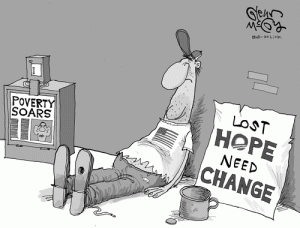 Clintoncare IF we had to go there. I did expect a bold response to the unemployment situation right out of the box. What we got was a half-assed stimulus plan full of republican style tax cuts at a time when the entire country needed, wanted, and voted for something DIFFERENT from the usual Republican la-ti-da. I expected a Democratic President with Democratic policies at the very least. Frankly, if my expectations get any lower at this point, they’re going to be sitting on top of Mount Everest while my feet will still be planted not so firmly in the Louisiana Swamps. Yes, Bill, I will not vote for Rick Perry under ANY circumstances. But then, I may not walk down Poland Avenue and pass the old barn for the fire horses into the current fire station to cast a vote. That act–repeated enough times in the neighborhoods of America–could take down more than a few Democratic Senators and Reps and this President that never seems to rise to any occasion but a speech.
Obama calls for Taxing Millionaires at Middle Class Rates; Republicans Panic
Posted: September 18, 2011 Filed under: Team Obama, The Bonus Class, U.S. Politics | Tags: Obama Tax plan, Taxing Millionaires 4 CommentsIn yet another move messaged as “bold” but actually typically spineless as far as returning policy from the Bush years to reality goes, Obama has called  for taxing millionaires. The problem is that this doesn’t return our tax system to even the Reagan concept of a progressive tax system. Obama wants millionaires to pay taxes at the same level as median tax earners. How friggin’ bold is that? That means, millionaires would get taxed at the same rate as people that make about $50,000 a year which is around 20%. The problem is that’s lower than tax tables in the law now enacted by Ronald Reagan. The “Buffet Rule” makes Ronald Reagan’s tax reform look downright socialist.
Mr. Obama, in a bit of political salesmanship, will call his proposal the “Buffett Rule,” in a reference to Warren E. Buffett, the billionaire investor who has complained repeatedly that the richest Americans generally pay a smaller share of their income in federal taxes than do middle-income workers, because investment gains are taxed at a lower rate than wages.
Mr. Obama will not specify a rate or other details, and it is unclear how much revenue his plan would raise. But his idea of a millionaires’ minimum tax will be prominent in the broad plan for long-term deficit reduction that he will outline at the White House on Monday.
Mr. Obama’s proposal is certain to draw opposition from Republicans, who have staunchly opposed raising taxes on the affluent because, they say, it would discourage investment. It could also invite scrutiny from some economists who have disputed Mr. Buffett’s assertion that the megarich pay a lower tax rate over all. Mr. Buffett’s critics say many of the rich actually make more from wages than from investments.
In a speech on Thursday, Speaker John A. Boehner, Republican of Ohio, agreed with Mr. Obama that the deficit-reduction committee “can tackle tax reform, and it should,” to get rid of many tax breaks and allow for lower marginal rates.
“Tax increases, however, are not a viable option for the joint committee,” Mr. Boehner said. Instead, he emphasized that meeting the deficit-reduction target should come largely from overhauling benefit programs like Medicare, Medicaid and Social Security.
So, we’re getting this packaged as the “Buffet Rule”. Score one for attempted messaging. Subtract major points for substance. Let me just quote a turn of phrase from Robert Reich which is the QOTY as far as I’m concerned.
So when the President refers to his new initiative to raise taxes on millionaires as the “Buffett rule” we might expect he’d start the bargaining from a tough position.
But this is Barack Obama, whose idea of negotiating is to give away half the house before he’s even asked the other side for the bathroom sink.
But, let me get back to the idea that Ronald Reagan was a socialist using Reich’s analysis. I’m really glad he crunched the numbers so I don’t have to.
America’s median income is about $50,000. The typical taxpayer at that level pays approximately 20 percent in taxes.
Granted, that’s a higher rate than most of today’s super rich pay because of countless deductions, credits, and loopholes – including, especially, their ability to take their incomes in the form of capital gains, taxed at 15 percent. That’s a big reason Buffett’s hundreds of millions a year are taxed at just over 17 percent — a lower rate than his secretary faces, as Buffett often says.
But a 20 percent rate is still ridiculously low compared to what millionaires and billionaires ought to be paying. Officially, income over $379,150 is supposed to be taxed at 35%.
And even 35 percent is a pittance compared to the first three decades after World War II. Before Ronald Reagan slashed taxes on the rich in 1981, the highest marginal tax rate was over 70 percent. Under Dwight Eisenhower it was 91 percent. Even if you include deductions and credits, the rich are now paying a far lower share of their incomes in taxes than at any time since World War II.
The estate tax (which only hits the top 2 percent) has also been slashed. In 2000 it was 55 percent and kicked in after $1 million. Today it’s 35 percent and kicks in at $5 million. Capital gains – comprising most of the income of the super-rich – were taxed at 35 percent in the late 1980s. They’re now taxed at 15 percent.
Meanwhile, the top 1 percent’s share of national income has doubled over the past three decades (from 10 percent in 1981 to well over 20 percent now). The richest one-tenth of 1 percent’s share has tripled. And they’re doing better than ever. The last time the top 1 percent got that much was in the roaring 1920s.
So much money is now concentrated at the top that what we really need are more tax brackets at the high end, higher marginal rates in each bracket, and a tax code that treats all sources of income – whether ordinary or capital gains – the same.
I hate to say this again and again, but here we go. That last sentence is important. Buffet, Soros, and friends live off of capital gains income. Unless you deal with the capital gains tax, you’re not really going to impact the really really rich dudes. If they make it from a salary, they’re paying a 35% percent marginal tax rate. Their stock options with appreciation only get taxed at 15%. You have to apply the tax rate to capital gains to really get at their revenues. So, how is this plan going to attack the major source of income for the richest of the rich? It’s not! But that’s not stopping the morality-impaired Republicans from screaming class warfare.
Republicans Sunday criticized President Obama’s plan to call for a new minimum tax rate on millionaires as “class warfare” that would do little to create new jobs and instead would hurt the small businesses that drive the economy.
“Class warfare. . .may make for good politics, but it makes a rotten economics,” Rep. Paul Ryan (R-Wisc.), chairman of the House budget committee, said on “Fox News Sunday.” “We don’t need a system that seeks to divide people. . .We need a system that creates jobs and innovation.”
There’s some excellent analysis over at WAPO on the tax loopholes that have evolved over the last 25 years since the last time the tax code was reformed. It shows how much tax breaks really go out to all levels of incomes already. Many of them benefit middle income earners as much as wealthier individuals. Upper middle class families–those earning in the $100,000 – $300,000 level–get an incredible amount of tax largess right now. By not limiting some of the more pedestrian tax breaks to lower income families and by giving special consideration to capital gains, we lose a lot of revenues from truly well-off individuals. These ideas have not been put on the table by the President.
The number of tax breaks has nearly doubled since the last major tax overhaul 25 years ago, with lawmakers adding new benefits for children, college tuition, retirement savings and investment. At the same time, some long-standing breaks have exploded in value, such as the deduction for mortgage interest and the tax-free treatment of health-insurance premiums paid by employers.
All told, federal taxpayers last year received $1.08 trillion in credits, deductions and other perks while paying $1.09 trillion in income taxes, according to government estimates.
Only about 8 percent of those benefits went to corporations. (The write-off for corporate jets equals about .03 percent of the total.) The bulk went to private households, primarily upper-middle-class families that Obama has vowed to protect from new taxes.
“The big money is in the middle-class subsidies,” said Syracuse University economist Leonard Burman, former director of the nonpartisan Tax Policy Center. “You’re not going to balance the budget by eliminating ethanol credits. You have to go after things that really matter to a lot of people.”
I’ve just basically come to the conclusion that the Bush tax cuts should expire for every one at this point. But, if the president is truly interested in going after the big money–which is a fine idea–he needs to quit coming to the table with piddling suggestions. Capital gains need to be taxed like normal income, for one. Giving them preferential treatment has just subsidized Wall Street Gambling as far as I’m concerned and provided a huge tax benefit for the richest of the rich. Again, this Obama plan makes the Reagan Tax reform look socialist. The fact that Republicans are screaming about it on the Sunday New Shows demonstrates just how extreme our policies have gotten in terms of benefiting the donor class these days. What a mess!!!
The Solyndra Story Just Keeps Getting Worse
Posted: September 18, 2011 Filed under: 2012 presidential campaign, Team Obama, U.S. Economy, U.S. Politics | Tags: 2008 presidential campaign, 2012 presidential campaign, bundlers, Department of Energy, fundraising, George Kaiser, Solyndra, Steve Spinner, The Chicago Way 3 Comments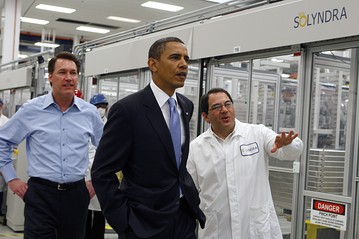
Obama visiting the Solyndra plant in 2010
It turns out that two major Obama 2008 fundraisers benefited from the decision by the Department of Energy to go ahead with a risky $535 million loan to Solyndra, the solar energy company that filed for Chapter 11 bankruptcy earlier this month.
Steve Spinner, who helped monitor the Energy Department’s issuance of $25 billion in government loan guarantees to renewable energy projects, was one of Obama’s top fundraisers in 2008 and is raising money for the president’s 2012 reelection campaign.

Steve Spinner
Spinner did not have any role in the selection of applicants for the loan program and, in fact, was recused from the decision to grant a $535-million loan guarantee to Solyndra Inc. because his wife’s law firm represented the company, administration officials said Friday.
But Spinner’s role as a top official in the Energy Department program, which had not been previously revealed, is likely to spur new inquiries into whether political influence played a role in the handling of the “green” energy fund. Solyndra faces a congressional probe, a criminal investigation and separate internal inquiries at the Energy and Treasury departments.
Steve Spinner raised $500,000 for the Obama campaign in 2008, and he is currently organizing a fundraising drive for 2012 called “Technology for Obama.” Spinner is also a Senior Fellow at the Center for American Progress. According to the LA Times, Spinner praised the Solyndra loan in a piece at the Center for American Progress on July 13. He did not disclose his involvement with the loan program in that article.
 We’ve already heard about the second major Obama donor involved with Solyndra, George Kaiser.
The largest investments in Solyndra were funds operated on behalf of the family foundation of billionaire George Kaiser, another major fundraiser for Obama in 2008. Kaiser has denied personally investing in the solar energy company or talking to White House officials about the loan.
But I hadn’t heard before that when it looked like Solyndra might go bankrupt in February of 2011, the Obama administration restructured the loan so that in case Solyndra did go bankrupt, a Kaiser investment company and another private investor associated with the Walton family would be reimbursed before taxpayers.
Under terms of the February loan restructuring, two private investors — Argonaut Ventures I LLC and Madrone Partners LP — stand to be repaid before the U.S. government if the solar company is liquidated. The two firms gave the company a total of $69 million in emergency loans. The loans are the only portion of their investments that have repayment priority above the U.S. government.
Argonaut is an investment vehicle of the George Kaiser Family Foundation of Tulsa, Okla. The foundation is headed by billionaire George Kaiser, a major Obama campaign contributor and a frequent visitor to the White House. Kaiser raised between $50,000 and $100,000 for Obama’s 2008 campaign, federal election records show. Kaiser has made at least 16 visits to the president’s aides since 2009, according to White House visitor logs.
Madrone Partners is affiliated with the Walton family, descendants of Wal-Mart founder Sam Walton. Rob Walton, the eldest son of Sam Walton, contributed $2,500 last year to the National Republican Congressional Committee.
In addition,
Newly released emails show the White House was worried about the likely effect of a default by Solyndra on Obama’s re-election campaign.
“The optics of a Solyndra default will be bad,” an OMB official wrote in a Jan. 31 email to a colleague. “The timing will likely coincide with the 2012 campaign season heating up.”
The budget official, whose name is blacked out in the email, wondered whether Solyndra should be allowed to restructure its loan.
“Questions will be asked as to why the administration made a bad investment, not just once (which could hopefully be explained as part of the challenge of supporting innovative technologies), but twice (which could easily be portrayed as bad judgment, or worse),” the email says.
According to conservative Chicago Tribune columnist John Kass, the “Solyndra scandal reeks of the Chicago Way.”
Federal investigators want to know what role political fundraising played in the guarantee of the questionable loan. Washington bureaucrats warned the deal was lousy. And White House spokesmen flail desperately, like weakened victims in a cheesy vampire movie.
So forget optics. What about smell? It smells bad, and it’s going to smell worse.
Or, did you really believe it when the White House mouthpieces — who are also Chicago City Hall mouthpieces — promised they were bringing a new kind of politics to Washington?
[….]
It’s the Chicago Way, but instead of a paving or trucking contract, it’s a “green” solar panel contract. The company received a $535 million loan.
I guess he means pay for play and the taxpayers get stuck with the bill. Based on what I know so far, I can’t say I disagree with Kass.
Joblessness
Posted: September 17, 2011 Filed under: 2012 presidential campaign, Surreality, Team Obama, The Bonus Class, The Great Recession, the villagers, unemployment | Tags: American Jobs Act, Confidence men, joblessness, Suskind 9 Comments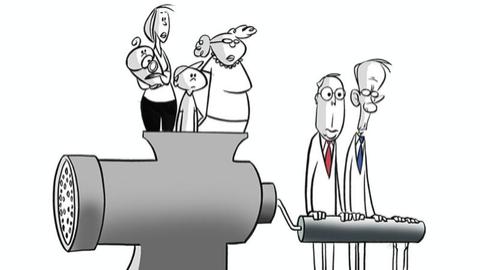 There’s been a lot of right wing attacks on the Obama Jobs Act. I continue my befuddlement. In this looking glass reality of ours, a Democratic President has put forth an unimaginative ‘job creation’ act representing fairly conventional republican thinking. However, there’s so much Obama Derangement Syndrome among the Republicans–especially the rabid right wing teabots–that a plan that would have been perfectly acceptable under either of the Bushes or Reagan to deal with jobless is being held up as an extravaganza of tax and spend. Eric Cantor has released a memo that basically guts this tepid response to the high level of unemployment and unacceptable level of long term unemployment plaguing this country. There is something seriously wrong with that man. He’s listed the areas of agreement and they are all the parts of the bill that really aren’t going to create jobs at all. These are items like passing the free trade agreements negotiated during the Dubya years or patent reform and regulations reform or programs that aren’t going to be very effective like the ‘bridge to work’ program which is likely to create a revolving door of unpaid internships.
David Dayen has an analysis up at FDL so I don’t need to recreate that. He’s basically calculated that the House Republicans have taken the $447 billion Act to about a $11 billion blip. It may have started out a tepid, conventional plan but Cantor’s basically turned it into a give away to a few select groups. The only remaining portion that’s not disagreeable is help for returning veterans. The rest won’t do a damned bit of good.
As you may know, the AJA is comprised of about 57% tax cuts and 43% spending initiatives. So in the main, House Republican leaders tossed out the spending and embraced a few of the tax cuts. They also rejected the tax hikes on corporations and the wealthy to pay for the bill.
Grok that? It’s 57% more worthless tax cuts that haven’t done a damned thing for the last 11 years but undermined the Federal Budget. I’ve heard a lot of Democrats think it’s wonderful just because Obama put it out there. Again, this is a conventional republican republican policy that probably would’ve come from some one like Bob Dole in the past. This is getting old. The republicans will say no to anything Obama puts out there and Obama is putting their kind of policy out there and the democrats won’t say no to it.
Meanwhile, there’s a number of really bad things that result from persistent jobless happening as we speak to millions of Americans. Here’s some examples from Sarah Murray at the WSJ who reviewed an academic paper on long term salaries of folks laid off during recessions. The bottom line is that their incomes will remained depressed for a huge period of time when they finally get jobs. That’s just the monetary impact.
When a worker was laid off, his earnings dropped steeply at the time of the layoff and eventually experienced a kind of recovery. But “The earnings losses do not completely fade even after 20 years,” the paper states. That’s true even when the economy is doing well. When the economy is performing poorly, the initial earnings loss is steeper.
Workers who were laid off in recessions experienced, on average, $112,095 in income losses — three years of pre-layoff earnings. Those laid off in expansionary times experienced a $65,424 loss.
The negative impacts of job losses extended beyond the financial hit, affecting workers’ health, mortality outcomes, child achievement levels and happiness.
“The negative consequences of job displacement, and fears of job displacement, are among the main reasons that recessions and high levels of unemployment create so much concern in the general population and among politicians,” the paper states.
So, I guess in order to play out political games we’re going to embrace all these negative consequences for the large number of people that have been experiencing unemployment over the last few years. It’s just really disgusting. The jobs bridge plan–or as we liked to call it here the federal version of the Georgia Slave Act–brought to mind this program in Hungary where you have to go to a Labor Camp in order to collect unemployment.
Wielding scythes and pitchforks, about 30 men and women hack through brambles on a hillside above the Hungarian village of Gyöngyöspata. With the nearest road more than a half mile away, workers have to hike in with food and water for the day. For bathroom and lunch breaks, they duck into a thicket that offers the only shade in the 98F heat. “It’s degrading to work in these conditions,” says Károly Lakatos, a 38-year-old father of three who was laid off earlier this year from his forklift-operator job in an auto parts factory. When his unemployment benefits ran out, the government assigned him to a brigade clearing land owned by the village.
If Prime Minister Viktor Orbán has his way, hundreds of thousands of Hungarians will soon join similar squads. Under a plan approved by Parliament in July, by 2012 some 300,000 people will be working in community service jobs—doing everything from picking up trash to building stadiums—instead of drawing welfare or unemployment benefits. Hungary will no longer “give benefits to those capable of work, when there is much work to be done,” Orbán said in June. The effort is part of the ruling Fidesz Party’s 2010 election pledge to create 1 million jobs over the next decade.
Is this what the jobs act will become? More tax cuts for the political donor class and labor camps for the folks that don’t work for them at depressed wages?
At the same time we get Obama’s second Republican style whack at our economy–in other words a big speech with a small stick–more news keeps coming out about how really, truly dysfunctional the Obama team of economists has been. Have you noticed how many have gotten out of the White House quickly as if they were really worried about their reputations or sanity? One more sneak peak was granted for the Suskind book “Confidence Men” in New York Magazine prior to its Tuesday release. It has me even less enthused about anything coming out of Obama policy advisers than before. Read some of this back and forth between Andrew Moss and Frank Rich who read the book and conclude that that Obama has stuck himself and the US in an economic quagmire. It just doesn’t give one confidence in the policy process, the advisers or the president. This one is from Frank Rich.
I guess I thought Geithner’s role was more shocking just because I have become inured to tales of Summers’s outrageousness, dating back to his ill-fated presidency of Harvard. Particularly damning in Suskind’s narrative is that when Summers says “there’s no adult in charge” in the White House, he’s actually right — and appoints himself as adult in charge, Alexander Haig–style. Summers was in charge, all right, but he behaved like a child and little got done except derailing the president’s initiatives — he even blocked Obama’s agenda of tough climate-change legislation.
But the buck stops with Obama. There’s a poignant moment of sorts in December 2008 when the North Dakota senator Byron Dorgan implores the president-elect not to go with his economic team. “I don’t understand how you could do this,” he tells him. “You’ve picked the wrong people!” As indeed Obama did, under the tutelage of Robert Rubin, who also tried to finagle a White House guru role for himself, not unlike the perch from which he helped wreak havoc at Citigroup during its subprime orgy. So Suskind’s book often reads like Halberstam’s “Best and the Brightest,” with Summers and Geithner as McNamara and Bundy. But the quagmire isn’t a neo-Vietnam like Afghanistan — it’s the economy, and the casualties are measured in lost jobs. After the stimulus bill passed in February 2009, Suskind writes, “little else happened on the jobs front for a year and a half,” with proposals being “talked to death without resolution.”
Take this response from Andrew Moss:
I kept flipping back and forth between fury at Obama and — I know I’m easy — sympathy. So much of the damage comes from the initial decision to hire these guys, a decision he had to make almost immediately after being elected. He was inexperienced, he needed help, they burned him, he let them — that’s the story in brief. The number of stupefyingly momentous decisions he had to make in those first few months put me in a vicarious panic. There was no obvious path, the way I read it — though in your view, I suspect, the choices were clearer. Though we’ll never know for sure what other solutions might have worked, the book is a litany of missed opportunities, particularly with respect to financial reform (one banker after another wonders incredulously — and anonymously — why Obama didn’t pin them when they were down). Would some other president have had more success?
One thing you’re struck with is how bizarre it is that Obama has this job in the first place. Obama feels that too — and it gives him a deluded sense of his own magical powers. “Look, I feel lucky,” he says. “Just look at me. My name is Barack Hussein Obama and I’m sitting here.” He’s cocky, but also kind of amazed. What an astonishing blend of good and bad luck the man has had — the unusual cocktail of circumstances that brought him to the White House, and the pretty much impossible situation he faced when he got there. Which is not to say it’s not agonizing to watch him, in the book, fail time after time to make the big, bold move — the book is a narrative after all, and passivity (or, to be fair, caution), does not become a protagonist.
Frankly, the ones who should have every one’s sympathy are the vast number of people whose lives will be forever upended by this vast, deep unemployment. They are the ones to whom the pranksters in the Republican party and the dumbstruck Democrats should think about but do not. Again, Republicans are rejecting conventional, mild mannered, ineffective republican policy simply because it’s coming from a Democrat and Democrats are supporting it simply because that’s all the President and his team seem to be able to come up with and he’s a democrat. They all may be democratically elected but they continue to prove that they represent no one but themselves and their corporate owners. We’ve got a great history of what does and does not work to get the economy out of horrible places and they’re ignoring it all to force us to play political musical chairs. It’s just not right.
Oh, and if you want to be flabbergasted at more villagers, Steve Chapman at the Chicago Trib has basically written an op-ed that suggests Obama step down and Hillary Clinton step in and clean the place up. Now, he’s not exactly on my list of enlightened op-ed writers since he writes at Reason and the National Review too, but sheesh, he’s using Democrats words to support the argument so it’s worth a read. I think every one feels we’re drowning in an economic quagmire now and we need the best person out there to guide us out. I’ve skipped the first part but the last part is worthy of mention here.
Besides avoiding this indignity, Obama might do his party a big favor. In hard times, voters have a powerful urge to punish incumbents. He could slake this thirst by stepping aside and taking the blame. Then someone less reviled could replace him at the top of the ticket.
The ideal candidate would be a figure of stature and ability who can’t be blamed for the economy. That person should not be a member of Congress, since it has an even lower approval rating than the president’s.
It would also help to be conspicuously associated with prosperity. Given Obama’s reputation for being too quick to compromise, a reputation for toughness would be an asset.
As it happens, there is someone at hand who fits this description: Hillary Clinton. Her husband presided over a boom, she’s been busy deposing dictators instead of destroying jobs, and she’s never been accused of being a pushover.
Not only that, Clinton is a savvy political veteran who already knows how to run for president. Oh, and a new Bloomberg poll finds her to be merely “the most popular national political figure in America today.”
If he runs for re-election, Obama may find that the only fate worse than losing is winning. But he might arrange things so it will be Clinton who has the unenviable job of reviving the economy, balancing the budget, getting out of Afghanistan and grappling with House Majority Leader Eric Cantor. Obama, meanwhile, will be on a Hawaiian beach, wrestling the cap off a Corona.
Meanwhile, I’m on the job market AND wrestling the cap off of an Abita. Frankly, the only people that deserve to be jobless in this country are all working in the beltway right now.
Real Job Creation Policy vs. Bizarro World
Posted: September 7, 2011 Filed under: 2012 presidential campaign, Surreality, Team Obama, U.S. Economy | Tags: bizarre economic policy, Job Creation, Robert Reich 15 Comments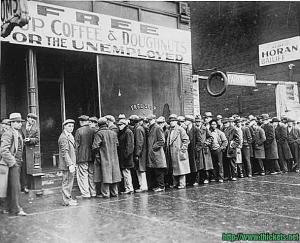 I just can’t step back from the crap being pushed by politicians as “jobs” policy these days. I can’t believe any one is actually falling for the line that basic corporate welfare programs and subsidies are actually going to create jobs because there’s never been any evidence of that being correlated in the past and there is certainly no evidence of that happening today. Lest we forget, we have about 11 years of experience with corporate tax largess, deregulation of financial markets, and low taxes on capital gains. Yet this century has seen nothing but miserable job creation. We’ve got nothing to show for it but the biggest recession since the Great Depression.
Here’s Robert Reich calling Romney’s job creation approach “bizarre”. However, it doesn’t really sound any different from that offered up by any of the other candidates either and that includes the President. This bothers me to no end and hence, I keep blogging on about it.
“Mitt Romney kind of has the odd idea, and it is a bizarre idea, that at a time when corporations are scoring record profits. At a time when you’ve got them sitting on $2 trillion of cash they don’t even know what to do with, that somehow if you give them more tax cuts and deregulate so you reduce their costs even further, they will then create jobs.
“They don’t create jobs now, he assumes, because their costs are too high or they’re not making enough money. Well, the reality of course is just the opposite,” former Secretary of Labor Robert Reich said on MSNBC’s “The Last Word.”
“They don’t need more money, companies are doing very well,” Reich said later on in the segment.
Corporations are flush with cash at the moment. They just aren’t doing anything with it because they won’t expand unless there’s demand for  their products and services. As I demonstrated yesterday, the bottom has fallen out of consumer demand and that’s stymied economic expansion. We do not need to appease some imaginary confidence fairy. Businesses need paying customers. One of the primary drivers of economic activity in this country since World War 2 has been construction. The housing market is still in big trouble and we have excess supply of both commercial and consumer real estate. What business person is going to hire more people and produce stuff that no one buys?
We’re going to be live blogging both the Republican debate tonight as well as the President’s job speech. Neither promise anything more than distinctly unproven economic policy. Even the President is thought to not believe what he’s going to be saying if you believe this. What kind of leader pushes policy he knows to be wrong?
The centerpiece of the job creation package that President Obama plans to announce on Thursday — payroll tax relief for workers and perhaps their employers — is neither his first policy choice nor that of many economists. But it is the one that they figure has the best chance of getting Republicans’ support.
Mr. Obama has signaled that he will propose to extend for another year a reduction of two percentage points in the 6.2 percent Social Security payroll tax that employees pay, which means about $1,000 more for the average household. And he is considering a proposal to expand the tax relief to employers’ share.
In his prime-time address to a joint session of Congress, Mr. Obama is expected to call for a package totaling several hundred billion dollars that would also extend other business tax cuts, put federal dollars into building and repairing roads, rails, airports, schools and other infrastructure projects, and provide aid to states to avert more layoffs of teachers.
But the single biggest stimulus measure he will propose is likely to be temporary payroll tax relief. If the current tax cut, due to expire at the end of the year, is expanded next year to employers as well as employees, it would pump roughly $200 billion into the economy, with the aim of stimulating much-needed demand for goods and services from consumers and businesses and, additionally, of giving companies an incentive to hire.
For the White House, its appeal is that it may be the only large stimulus measure that can pass Congress this year given Republicans’ preference for tax cuts.
And if Republicans oppose him, the White House figures Mr. Obama has the better of the political argument because he will be trying to block a tax increase that otherwise would apply to virtually all households on Jan. 1.
Republican leaders have said they might support the payroll tax cut’s extension if its cost is offset by equal spending cuts, a condition they did not apply for extending the Bush-era tax cuts on high incomes. Mr. Obama has said he will propose long-term deficit savings to offset the short-term costs of his stimulus proposals, though that is not likely to satisfy Republicans.
Look, what in his 2 1/2 years in office should leave him with the impression that he’s going to get anything past the Republicans in Congress? Half of them are indicating they probably won’t show up for the speech. Ever since the man’s taken office he’s offered one Republican plan after another. I still can’t believe after years of fighting Dolecare in the 1990s, the Democrats were forced to pass that stupid thing and it now wears the Obamacare label. What kind of leader pushes policy that his own party fought for decades?
I have no idea what trade agreements or patent reform or reducing regulations have to do with job creation either. None of that has ever been shown through research to be germane. But again, all you have to do is look at the amount of cheap money and the excess cash sitting on corporate balance sheets right now to know that businesses don’t need any more incentives to do something they aren’t doing any way.
The other thing that is most confusing is that the President’s plan will rob Peter to pay Paul because he’s going to make this ‘revenue neutral’ to appease Republicans. Again, with this appeasing pipsqueak Cantor and the rest of the whackos in the Republican caucus. Supposedly, some direct infrastructure spending and some direct aid to states to keep teachers in place is going to some how magically turn around a 9.1% unemployment rate. I don’t see how that’s going to do anything on the level that he’s talking about –$300 billion–is a token amount of money in a $15 trillion economy and the offsets will likely take away jobs from wherever they’re pulled. The other simply confusing proposal has to do with tax breaks for equipment which is really strange given that it’s likely to increase current worker productivity making hiring additional workers questionable.
In his speech on Thursday night to a joint session of Congress, Obama will also consider a tax benefit to those businesses that hire the unemployed, with a price tag of around $30 billion. Public works projects will be included, but the AP reports that this will be less than $50 billion of the package.
The president also will continue for one year a tax break for business that allows them to deduct the full value of equipment.
The local aid that Obama intends to propose it aimed at preventing teacher layoffs, officials said.
The New York Times said the cost of the package would be “several hundred billion,” while the Washington Post estimated it to be “at least $200 billion.”
This is clearly a set of tax giveaways that the government can’t afford that won’t achieve much of anything other than further the Republican agenda of starving the beast. What on earth does this president have in his head? I can’t figure out any logical, reasonable strategy for doing these things. Every time he furthers the Republican agenda it basically makes things worse for his reelection outlook. His actions are completely unpopular when measured by polls. He’s numbers are approaching those of Bush by basically repeating the Bush-Cheney policy on steroids. Unless he’s trying to become the President of the Chamber of Commerce, I’m not seeing any strategy here. It’s like he so desires bi-partisan approval that he’s willing to throw anything up against the wall to see what possibly sticks. Meanwhile, the Republicans are getting Republican policy without even putting any skin in the game. I just don’t get it.
Anyway, Minx and BB have promised to watch and liveblog the Republican debates tonight. I don’t think I can do that because it will just be a contest to see who can be the meanest in a contest to beat up modernity, science, and people that aren’t rich. I frankly see no purpose in continually watching people talk about issues that the civil war settled. I will watch the President’s speech because at this point, I’m looking for any sign of lucid economics and a strategy that doesn’t just infer faulty marketing. Who knows, maybe the sky will open up, a choir of celestial beings will start singing, ray of sunshine will start streaming out of gold-rimmed clouds, and all my questions will be answered. OR NOT.

 peej
peej Carissa
 bostonboomer
 dakinikat
 ecocatwoman
 mablue2
 Mama Lopez
 peggysue22
 quixote
 skydancingguestblogger
 Mona (aka Wonk the Vote)



 Sky Dancing
Recent Comments