
Let’s Make a Deal (or not)
Posted: November 12, 2010 Filed under: Bailout Blues, Economic Develpment, Global Financial Crisis, Team Obama, U.S. Economy | Tags: currency wars, G20 accords, Goolsbee, US South Korea Trade Agreement 6 CommentsThe U.S. and South Korea have failed to reach an agreement in a trade deal that would have boosted U.S. agriculture exports. The deal would’ve included concessions to South Korea on automobiles and that was not going over well with domestic automakers like FORD and their related labor unions. As with all trade arrangements, there are usually winners and losers. Ranchers and U.S. consumers would’ve been on the winning side of the deal. The U.S. auto industry and related interests were the potential losers.
Arrangements probably failed due to the tough stance the U.S. is taking on the dollar and foreign exchange pegs these days. No one is happy with QE2 around the world. We’ll get to that in a minute. I’m going to quote from the WSJ on this so you need to realize that what’s written here is very pro-free trade. What was being negotiated at the moment was removal of some trade barriers on both sides. Political consensus here was that Obama is trying to look more “pro-business”. Part of South Korea’s problems, oddly enough, is that they are ‘too green’ for America’s stuff. Can you imagine a Democratic president trying to get a country to be less environmental friendly?
One stumbling block was Korea’s refusal to change a provision in the 2007 pact that provided an immediate end to a 2.5% tariff the U.S. levies on imports of Korean cars, said House Ways and Means Committee Chairman Sander Levin (D., Mich.). The U.S. wanted the tariff reduced gradually, while Korea eliminates safety and environmental rules that U.S. auto makers, led by Ford, said help keep Korea the world’s most closed car market. The effect of reducing the U.S. tariff more slowly likely wouldn’t be large because South Korea’s Hyundai Motor Co. already gets around it on more than half of the cars it sells in the U.S., by making them in Alabama and Georgia.
Compounding the stalemate, Mr. Levin said, were U.S. concerns that Korea’s proposed system for settling disputes wasn’t likely to work.
The U.S. also wants Korea gradually to drop its ban on imports of U.S. beef from older cattle, which began after the U.S. had a case of mad-cow disease seven years ago. Previously thought the easier of the two issues, it is a hot button politically for Korea and prompted a walkout by Korean negotiators.
In the end, the parties ran out of time. U.S. Trade Representative Ron Kirk said, “We won’t be driven by artificial deadlines,” though it was Mr. Obama who set the G-20 deadline.
The president alluded to the political pressures. “If we rush something that then can’t garner popular support, that’s going to be a problem,” said Mr. Obama, who had criticized the moribund 2007 Korea pact when he was a candidate. “We think we can make the case, but we want to make sure that that case is airtight.”
So, if you want the White House explanation, here’s Austan Goolsbee in a white house white board moment. I’m not sure what it says when the head of the President’s economic advice team has to give us all lectures, but any way, here’s the deal via Austan.
So, the G20 thing seems to be an exercise in every one going their own way. No one likes the hot money issue or the weakening dollar. So much for cooperation. Guess the only thing we’re exporting these days are financial bubbles.
The U.S. Federal Reserve decision last week to pump $600 billion into world’s biggest economy has stolen the spotlight away from China’s currency. Brazilian Finance Minister Guido Mantega said today that the Fed’s move may inflate commodities prices and proposed the world move away from using the dollar as the main reserve currency. Former Chinese central bank governor Dai Xianglong this week faulted the U.S. for adopting policies without regard for the dollar’s global role.
The policy fissures and concern countries may react with currency devaluations and capital controls underscore how the G-20 unity displayed during the financial crisis has given way to national divisions as members chart their own recovery path.
“The last thing a developing economy wants is for that liquidity to distort their asset markets and create a destabilizing bubble,” Stephen Roach, Morgan Stanley’s nonexecutive Asia chairman, told Bloomberg Television in an interview yesterday. “The process is not going to work if they don’t come up with a multilateral solution.”
If you want to read how the QE2 could possibly work and if it will be scaled up, I suggest going over to Tim Duy’s Fed Watch for a wonky and some what long analysis. Oh, and there are plenty of those nifty graphs that I always love in the piece about the recovery. He’s going with the blowing bubbles is good narrative. Interesting. Duy says the FED has no choice because the Federal Government is so out of it on Fiscal Policy. Even more interesting and sadly true.
Flooding the market with money is dangerous business. It risks distorting prices and capital allocations. We simply don’t know where the money will wash up. I know that is in vogue to believe there is a nice, obvious story that links an increase in the money supply to an increase in nominal GDP, but that only works on paper. In the real world, the paths between money and output and prices are complicated. The ultimate composition of aggregate demand matters. It matters a lot – distortions have consequences. Warsh’s risks amount to a laundry list of the possible distortions that might occur as the result of ongoing quantitative easing. And he clearly takes those risks seriously.
It makes me think that I haven’t been taking those risks seriously enough. But when monetary policy is the only game in town, what choice do you have? You do what you can up to a point…but then you throw it back to Congress and say “you take responsibility for the mess you created by abdicating your role in crafting long run, stabilizing macroeconomic policies.” Warsh has set the stage for doing exactly that.
Of course, seriously, if we really have to throw this back to Congress, we are absolutely done for. Cooked. Toast. Somebody remember to tell the last guy to turn off the lights on his way out. Better to take our chances with the next bubble.
Aiyee … I’m about reading to move my money into alligator belly futures. At least that makes a good gumbo if you fail to get out in time.
President Obama Phones New GOP Senators and House Members
Posted: November 11, 2010 Filed under: Surreality, Team Obama, WE TOLD THEM SO | Tags: Barack Obama, David Axelrod, GOP outreach, John Boehner 46 Comments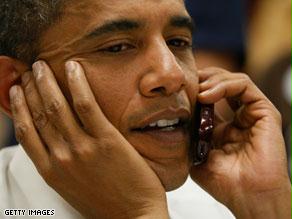
If you were wondering what President Obama has been up to during off-hours during his trip to Asia, wonder no longer. The New York Daily News reports that
President Obama has reached out to most of the incoming GOP lawmakers victorious on Nov. 2, telephoning many of them while abroad traveling to meetings in Asia.
“It’s a step in the right direction,” said Speaker-in-waiting John Boehner’s press secretary Michael Steel.
[….]
the President has also spoken to many of the incoming GOP House committee chairmen, including Rep. Pete King (R-L.I.), who will take the gavel of the Homeland Security Committee.
The same Peter King who recently said that George W. Bush “should get a medal” for approving waterboarding?
“There was no harm done,” King said Wednesday, referring to the waterboarding of alleged 9/11 mastermind Khalid Sheikh Mohmammed, who was subjected to simulated drowning 183 times in March of 2003. “In the big picture, to hold someone’s head underwater, the chance of permanent damage is minimal and the rewards are great.”
The Daily News did not report whether President Obama called new Democratic Senate and House members.
In other new of White House weakness, Sam Stein reports that The President and his top advisers had no warning about the release of the draft report of the Catfood Commission chairmen yesterday. In fact David Axelrod had to look up the report on-line.
Hours after the commission’s two chairs — former Sen. Alan Simpson and former White House Chief of Staff Erskine Bowles — unveiled their 50-page list of deficit reduction recommendations, White House Senior Adviser David Axelrod admitted that he had to find a copy of the report on the Internet.
“I heard at noon that those guys were going to hold a press conference at 1 PM,” Axelrod told The Huffington Post. “And I pulled off the Internet the coverage of it.”
Asked if he was bothered by the lack of warning, Axelrod replied: “I think they set out to be an independent commission and they are being independent. But we will let them complete their work and we will take a look at what they’ve done. Maybe they will get consensus around some of these ideas, maybe they won’t. We will take a look at it.”
Apparently I spoke too soon when I suggested Axelrod is running the Obama administration. Perhaps John Boehner is now in charge?
This is an open thread.
The Cat Food Commission Weighs In
Posted: November 10, 2010 Filed under: Team Obama, U.S. Economy 51 Comments I’m going to read more about this in the next few days and I’ll write what I can glean from it when I do. Both of my daughters are visiting today so I’m not able to sit down and look things over.
Just wanted to pass on some links and comments coming from the President’s Panel on Spending. It looks like a mixed bag on the surface. Here’s some details from the NYT. Surprise! Surprise! Social Security is ON the table and cuts are suggested.
The plan would reduce projected Social Security benefits to most retirees in later decades — low-income people would get higher benefits — and slowly raise the retirement age for full benefits to 69 from 67, with a “hardship exemption” for people who physically cannot work past 62. And it would subject higher levels of income to payroll taxes, to ensure Social Security’s solvency for the next 75 years.
The plan would reduce Social Security benefits to most future retirees — low-income people would get a higher benefit — and it would subject higher levels of income to payroll taxes to ensure Social Security’s solvency for at least the next 75 years.
But the plan would not count any savings from Social Security toward meeting the overall deficit-reduction goal set by Mr. Obama, reflecting the chairmen’s sensitivity to liberal critics who have complained that Social Security should be fixed only for its own sake, not to balance the nation’s books.
Most appalling is the plan calls for taxes cuts. Here’s Krugman’s take on that.
OK, let’s say goodbye to the deficit commission. If you’re sincerely worried about the US fiscal future — and there’s good reason to be — you don’t propose a plan that involves large cuts in income taxes. Even if those cuts are offset by supposed elimination of tax breaks elsewhere, balancing the budget is hard enough without giving out a lot of goodies — goodies that fairly obviously, even without having the details, would go largely to the very affluent.
I mean, what’s this about? There is no — zero — evidence that income taxes at current rates are an important drag on growth.
The more I read, the more I can’t believe that this was a commission put together by a Democratic President. It’s horrid! Mankiw (Bush economist) thinks it’s great. DeLong joins Krugman with a big thumbs down. DeLong’s headline says it all: Yes, the Entitlement Commission Was an Unforced Error by the Obama Administration. Here’s some random comments as he kept reading the abomination.
At the time I asked why you would take a budget arsonist like Alan Simpson and give him a Fire Chief hat. I never got a good answer.
…
Oh my God! Ration city, here we come!
What clowns vetted this thing?
…
A 23% top marginal tax rate?
Hoo boy!
TPM-DC calls their presser “eye popping”.
Their recommendations are more or less a list of the third-rail issues of American politics, including cuts in the number of federal workers; increasing the costs of participating in veterans and military health care systems; increasing the age of Social Security eligibility; and major cuts in defense and foreign policy spending. They also encompass a range of tax system reforms that have been floated by many in Washington for years to little effect, including funding tax rates reductions by eliminating many beloved credits and deductions.
We don’t have a two party system any more. We have Republicans and Theocratic Republicans.
Who can come along and save us from people like these?
I’ve got some more updates from the currency wars and this thing to plow through. I’ll start more things tomorrow!!! Promise!!!
——————————————————————————————
Boston Boomer here with some more reactions to the Catfood Commission proposals:
Jane Hamsher has a quote from Richard Trumka, president of the AFL-CIO:
The chairmen of the Deficit Commission just told working Americans to ‘Drop Dead.’ Especially in these tough economic times, it is unconscionable to be proposing cuts to the critical economic lifelines for working people, Social Security and Medicare.
Some people are saying this is plan is just a “starting point.” Let me be clear, it is not.
This deficit talk reeks of rank hypocrisy: The very people who want to slash Social Security and Medicare spent this week clamoring for more unpaid Bush tax cuts for millionaires.
What we need to be focusing on now is the jobs deficit. Working families already paid for Wall Street’s party that tanked our economy. If we actually want to address our economic problems, we need to end tax breaks that send American jobs overseas and invest in creating jobs by rebuilding our crumbling infrastructure and green technologies.
The Hill talked to Bernie Sanders and other liberals
“The Simpson-Bowles deficit reduction plan is extremely disappointing and something that should be vigorously opposed by the American people,” Sanders said in a statement.
Sanders has been among a group of congressional liberals who have threatened to defeat the commission’s recommendations if it curtails Social Security benefits in any way. Sanders has said of the commission’s recommendations that Congress would “vote it down” if it touched on Social Security, and Rep. Raúl Grijalva (D-Ariz.), joined by 136 other House Democrats, has written to similarly warn the commission.
The proposals released on Wednesday, charged Grijalva, co-chairman of the Congressional Progressive Caucus, would only favor the wealthy.
“The path this plan would set is not good for the public. Congress should be having a realistic, productive conversation right now about how to reduce our budget deficit and maintain a secure retirement system for those who have earned it,” he said in a statement. “Instead, we’re debating a proposal from a commission dedicated to cutting crucial social programs and reducing corporate and upper-income taxes at the same time. This is not a recipe for a healthier American economy.”
We need to keep in mind that the co-chairs do not have support from the rest of the commission for these shock doctrine proposals. They also have no power to enact their sick proposals unless the President and Congress support them.
The Latest Annoying Media Buzzword: Shellacking
Posted: November 5, 2010 Filed under: Team Obama, The Media SUCKS | Tags: Barack Obama, media buzzwords, rationalizations, shellacking 88 Comments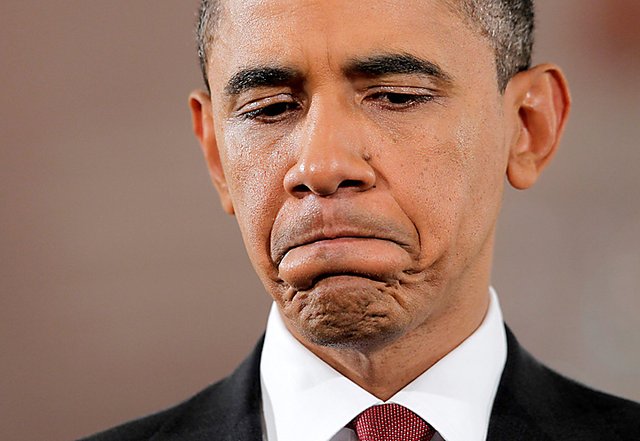
From the transcript of President Obama’s press conference, November 3, 2010:
…I’m not recommending for every future President that they take a shellacking… like I did last night. (Laughter.) I’m sure there are easier ways to learn these lessons. But I do think that this is a growth process and an evolution. And the relationship that I’ve had with the American people is one that built slowly, peaked at this incredible high, and then during the course of the last two years, as we’ve, together, gone through some very difficult times, has gotten rockier and tougher. And it’s going to, I’m sure, have some more ups and downs during the course of me being in this office.
Apparently the media just loved the word the President used to describe the results of the midterm elections, because they just can’t stop repeating it. Over and over and over again. Some examples:
Christian Science Monitor: After ‘shellacking,’ can foreign policy be a bright spot for Obama?
USA Today: Obama’s ‘shellacking’ — how badly will it bruise his agenda?
Fox News: Despite the shellacking, Obama keeping his team intact
Yesterday, on NPR’s All Things Considered, Robert Siegel and Michele Norris discussed the word “shellacking” and tried to determine how the word came to mean “a decisive defeat.”
ROBERT SIEGEL: A shellacking – that is, a decisive defeat, according to Merriam-Webster’s. The term has an old-timey feel to it, like something used by a stern father decades ago.
MICHELLE NORRIS: Maybe that’s because it has an older meaning: a finish for furniture made with lac – L-A-C – as in lacquer.
SIEGEL: You mean lac, a resinous secretion of an insect deposited on trees and used in making shellac, a varnish.
NORRIS: Thanks, Random House.
SIEGEL: So how did shellac make the linguistic leap to defeat? Jesse Sheidlower, of the Oxford English Dictionary, was half-expecting our call about this today. But he didn’t find a definitive answer. He ruled out origins in sports. And he said shellac smelled of alcohol and became slang for drunk. He says it was prison slang.
NORRIS: From crime to politics, meaning washed up or trounced – which is, in case you missed it, exactly what happened to the Democratic Party in Tuesday’s elections.
I don’t know about you, but I’m already really sick of the word “shellacking.” I do think Robert Siegel had interesting point, though, when he said the word had “an old-timey feel to it, like something used by a stern father decades ago.”
During the campaign, Obama was painted as being “cool,” but his use of language since he became President does come across as old-fashioned and very uncool–as with his frequent use of the term “folks” to refer to ordinary Americans.
It would be interesting to know where Obama gets these words. Do they come from speechwriter Jon Favreau or from the President himself? If they are Obama’s own words, where did he pick them up? Did they come from his grandfather or grandmother?
In any case, we are likely to keep reading and hearing this new buzzword for some time to come. It will even get more widespread publicity Sunday night, since Obama has taped an interview with 60 Minutes, and the “shellacking” will be discussed at length.
Unfortunately the President’s rationalization for the “shellacking” is either deliberately obtuse or utterly tone-deaf, as usual. Nevertheless, we’ll probably be hearing his ridiculous explanation repeated again and again too. He told 60 Minutes’ Steve Croft that the big problem was not his policies, but his failure to explain his policies to us.
Obama: What I didn’t effectively, I think, drive home, because we were in such a rush to get this stuff done, is that we were taking these steps not because of some theory that we wanted to expand government. It was because we had an emergency situation and we wanted to make sure the economy didn’t go off a cliff.
The president also tells Kroft that one of the reasons the electorate has become disenchanted with him was his failure to properly explain his policies and persuade people to agree with them.
It was, in effect, a breakdown in leadership: “Leadership isn’t just legislation,” he tells Kroft.
Supposedly, if the President had only explained all of his policies to us poor clueless voters, we would have understood that he knew what was best for us and would gladly have rushed to the polls to vote for Democrats. Here’s another quote from the interview:
“You know, I think that over the course of two years we were so busy and so focused on getting a bunch of stuff done that we stopped paying attention to the fact that leadership isn’t just legislation. That it’s a matter of persuading people. And giving them confidence and bringing them together. And setting a tone. And making an argument that people can understand. And I think that we haven’t always been successful at that. And I take personal responsibility for that. And it’s something that I’ve got to examine carefully as I go forward.”
See, if he had very clearly spelled out why it was so important to keep a public option out of the health care bill, and why it was vital that the bill should prevent women from getting abortions in the future, everything would have been hunky-dory. And if he had more clearly explained why we needed to stay in Iraq instead of withdrawing as he had repeatedly promised, and why we needed a “surge” in Afghanistan and lots more civilian and military deaths, then voters would have seen things completely differently.
In his press conference, Obama also argued that one message of the midterm results is that he needs to get out of the White House more often. In response to a question about his leadership style, the President said:
There is a inherent danger in being in the White House and being in the bubble. I mean, folks didn’t have any complaints about my leadership style when I was running around Iowa for a year. And they got a pretty good look at me up close and personal, and they were able to lift the hood and kick the tires, and I think they understood that my story was theirs. I might have a funny name, I might have lived in some different places, but the values of hard work and responsibility and honesty and looking out for one another that had been instilled in them by their parents, those were the same values that I took from my mom and my grandparents.
And so the track record has been that when I’m out of this place, that’s not an issue. When you’re in this place, it is hard not to seem removed. And one of the challenges that we’ve got to think about is how do I meet my responsibilities here in the White House, which require a lot of hours and a lot of work, but still have that opportunity to engage with the American people on a day-to-day basis, and know — give them confidence that I’m listening to them.
There’s another clueless rationalization! So he’s going to try to get out of Washington even more than he did in the first two years of his presidency? It’s hard for me to imagine how he could get away any more than he already has. But if Obama does actually appear at more town hall meetings, it might be helpful if he actually listened to some real Americans instead of lecturing them endlessly on how stupid they are not to see the wonderfulness of his policies.
What I haven’t seen so far is any sign that Obama intends to make any substantive changes following the “shellacking” Democrats received at the polls on Tuesday. The “core” group of White House staffers will stay on, even though many Democrats have been pushing for a real shakeup of Obama’s primary advisers.
A Democratic strategist characterized the lack of change at the White House as “willful defiance.” The strategist, who discussed the issue on condition of anonymity, said, “The political operation from top to bottom, north to south, east to west, needs to be really carefully looked at.”
Even within the White House, some aides have objected to what they see as an insular culture. Obama’s practice of grooming understudies to fill big White House jobs is also under fire.
“The president needs a broader range of views on a daily basis than he’s gotten up till now,” said William Galston, a onetime aide to President Clinton and a senior fellow at the Brookings Institution. “One reason that Ronald Reagan succeeded as president was that he got out of his comfort zone when he appointed senior people, and I think this president needs some people around him who are prepared to challenge not only his policy instincts but his political instincts. The idea of constructing the White House simply by promoting from within is simply ridiculous.”
At the Financial Times, Anna Fifield writes that even after the famous “shellacking,”
…“No Drama Obama” has maintained his generally cool demeanour – no Bill Clinton-style emoting for him – and given little indication that he intends significantly to alter his modus operandi.
Although the president said he was “doing a whole lot of reflecting” on the electoral rout, he suggested the problem was with communications, rather than his core policies.
As long as Obama claims the only problem has been his failure to communicate the wonderfulness of his policies, I guess we aren’t going to see any real changes.
Fifield also reveals that President Obama has been reading Taylor Branch’s book about the Clinton years.
“President Clinton was very aggressive – he did a series of bipartisan accords and turned things around,” said Mark Penn, the pollster who helped Mr Clinton recover from the 1994 rout.
Mr Obama revealed that he has been reading historian Taylor Branch’s book about Mr Clinton’s years in the White House, although it remains to be seen whether he will follow suit.
“The real question is whether or not the president [Obama] will learn from what the voters are saying, because two years is a long time in politics,” Mr Penn said.
Aaaak!!! Why do I think Obama will learn the wrong lessons from that book? I think he may be headed for another “shellacking” in 2012.
Disturbing if True
Posted: October 28, 2010 Filed under: Surreality, Team Obama, The DNC 61 Comments Bill Clinton pushed Kendrick Meek to quit the Florida Senate race (via politico).
Bill Clinton sought to persuade Rep. Kendrick Meek to drop out of the race for Senate during a trip to Florida last week — and nearly succeeded.
Meek agreed — twice — to drop out and endorse Gov. Charlie Crist’s independent bid in a last-ditch effort to stop Marco Rubio, the Republican nominee who stands on the cusp of national stardom.
I had heard rumors the White House was pushing for this but was unaware that former President Clinton was involved. Meek may be the underdog in the race, but pushing Crist to block Rubio is over the top, imho. They’ve been doing this for Lincoln Chaffee’s gubenatorial bid also. Caprio’s losing steam now since he told POTUS to ‘shove it’ and the independent Chaffee’s embracing Obama in TV ads.
Exactly what is going on here?

 peej
peej Carissa
 bostonboomer
 dakinikat
 ecocatwoman
 mablue2
 Mama Lopez
 peggysue22
 quixote
 skydancingguestblogger
 Mona (aka Wonk the Vote)



 Sky Dancing
Recent Comments