
Tuesday Reads: Jeff Sessions Dog Whistles Dixie
Posted: January 10, 2017 Filed under: 2016 elections, Black Lives Matter, Psychopaths in charge, public hangings, Rule of Law, Voting Rights, War on Women, Women's Rights | Tags: Jeff Sessions Hearings 54 Comments The first of our new theocratic, Putin-loving, grifter overlords is sitting in front of a Senate committee with absolutely no vetting being grilled and testified against by his peers. Neoconfederate radical christianist Senator Jeff Sessions can sure tell some whoppers and he sure does whistle Dixie.
In an unprecedented move, Senator Corey Booker has chosen to testify about Session’s treatment of the law and of black people.
Democratic Sen. Cory Booker is set to testify against Republican Sen. Jeff Sessions Wednesday in an unprecedented move during his attorney general confirmation.
This would be the first time in Senate history that a sitting senator will testify against another sitting senator for a Cabinet post during a confirmation.”I do not take lightly the decision to testify against a Senate colleague,” Booker said. “But the immense powers of the attorney general combined with the deeply troubling views of this nominee is a call to conscience.”
Sessions’ confirmation hearings, which started Tuesday, are expected to raise additional questions on old allegations of racism from his past. When Sessions was a 39-year-old US attorney in Alabama, he was denied a federal judgeship because the Senate Judiciary Committee heard testimony during hearings in March and May 1986 that Sessions had made racist remarks and called the NAACP and ACLU “un-American.”
Booker told CNN on Tuesday morning shortly before Sessions’ hearing started that it was “consequential moment.”
“This is one of the more consequential appointments in American history right now given the state of a lot of our challenges we have with our policing, a lot of challenges we have with race relations, gay and lesbian relations,” Booker said.
LIVE Trump confirmation hearings: Jeff Sessions’ first hearing
Representative John Lewis will also testify against Sessions along with my Congressman Cedric Richmond who will represent the Black Caucus and me for that matter.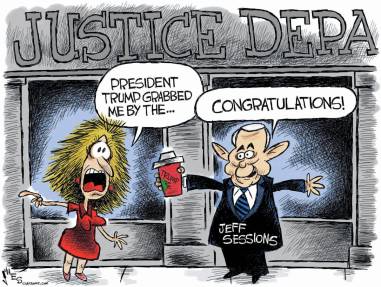
Several other prominent African-American figures in addition to Booker also plan to testify against Sessions, including two members of the House: Rep. John Lewis, D-Georgia, a leader of the civil rights movement of the 1960s; and Rep. Cedric Richmond, D-Louisiana, the chairman of the Congressional Black Caucus.
The NAACP has also strongly opposed Sessions’ nomination, calling him “a threat to desegregation and the Voting Rights Act.”
Sessions is a hodgepodge of bad things. He’s failed to disclose his oil interests and ethnics experts are taking issue.
Attorney general nominee Jeff Sessions did not disclose his ownership of oil interests on land in Alabama as required by federal ethics rules, according to an examination of state records and independent ethics lawyers who reviewed the documents.
The Alabama records show that Sessions owns subsurface rights to oil and other minerals on more than 600 acres in his home state, some of which are adjacent to a federal wildlife preserve.
The holdings are small, producing revenue in the range of $4,700 annually. But the interests were not disclosed on forms sent by Sessions to the Office of Government Ethics, which reviews the assets of Cabinet nominees for potential conflicts of interest.
 He is currently up on the stand doing things like telling Dianne Feinstein that he really thinks Roe v. Wade is unconstitutional and badly decided but it’s established law. He’s explaining his vote against laws to protect women victims of violence as being against the establishment of the rights of Native Americans to hold trials against accused rapists in their own courts. He’s just a big ol’ bug hiding nasty fangs and a poison sac right out there for every one to see.
You may want to read the story of Sessions and his role in prosecuting the Klan to really understand how deep his southern roots go. Sessions has also testified he loathes the clan today. Sessions apologists hold this case up as proof he’s really not all that racist.
letter from 23 former assistant attorney generals cited the fact that he had “worked to obtain the successful capital prosecution of the head of the Alabama Ku Klux Klan” as evidence of his “commitment to the rule of law, and to the even-handed administration of justice.” The Wall Street Journal said that Sessions, “won a death-penalty conviction for the head of the state KKK in a capital murder trial,” a case which “broke the Klan in the heart of dixie,” and The New York Post praised him for having “successfully prosecuted the head of the state Ku Klux Klan for murder.” Grant Bosse wrote in the Manchester, New Hampshire, Union Leaderwrote that “when local police wrote off the murder as a drug deal gone wrong, Sessions brought in the Justice Department’s Civil Rights Division, and brought Hays and the Klan to justice.”
Sessions himself recently listed the case as one of the “ten most significant significant litigated matters” he had “personally handled” on his Senate confirmation questionnaire. And in 2009, Sessions told National Review that there had been a campaign to “smear my record,” whereas in fact, he had “prosecuted the head of the Klan for murdering somebody.”
No one involved in the case disputes that Sessions lent his support to the prosecution. “Not all southern United States attorneys welcomed civil-rights division attorneys into their districts back then,” said Barry Kowalski, a former civil-rights division attorney who was one of the main lawyers on the investigation, and who defended Sessions in his 1986 confirmation hearing. “He did, he cooperated with us completely.”
However, in seeking to defend Sessions from charges of racism, Sessions’s allies, and even Sessions himself, seem to have embellished key details, and to have inflated his actual role in the case, presenting him not merely as a cooperative U.S. attorney who facilitated the prosecution of the two Klansmen, but the driving force behind the prosecution itself. The details of the case don’t support that claim.
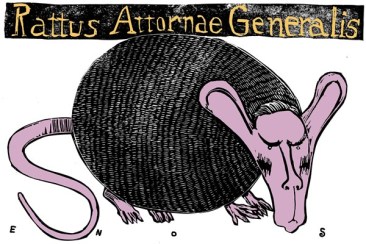 You can read the details in the feature I’ve linked to which came for The Atlantic.
The Sessions hearings are on CSPAN if you want an uninterrupted view of it all. The Hill has a list of five things to watch. This first one is as important as questions on policing and voting rights.
Does he detail Trump’s plans on immigration?
Sessions is known as the foremost immigration hawk in the Senate, so you can bet he’ll be pressed on an issue that has liberals on edge in the age of Trump.
Expect Democrats to come armed with statistics challenging the notion that illegal immigrants are flooding across the southern border; that crime is out of control among illegal immigrants; and that President Obama has not done enough to deport those in the country illegally who have committed other crimes.
In addition, while it won’t necessarily fall under his purview at the Justice Department, Democratic senators will likely look to score political points by challenging Sessions on the complications of building a border wall.
And they’ll likely look to get him to say that he won’t move to deport, en masse, the estimated 10 million illegal immigrants in the country, and in particular the estimated 700,000 young undocumented immigrants protected under the Deferred Action for Childhood Arrivals program.
As president, Trump could do away with that program by executive order.
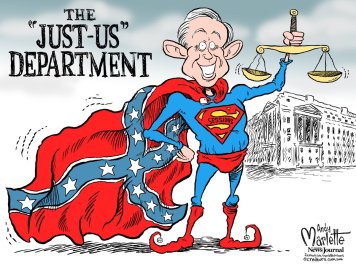 I have to work and grade today but will try to follow comments on Twitter. They are plentiful.
I could use a few donations if you have a few bucks to spare. Our TypeKit subscription is up in January. It’s not a lot, but every little bit you can help me defray would be great. It basically keeps our nice logo up there in its cursive glory
So, anyway, I’ve got to go warp minds and grade papers. BB’s successfully moved to her new apartment too! She’s patiently waiting for the cable guy. JJ is still with her mom in the facility and is having up and down days. We’re just happy to have you all here for breaks in our mundane lives!!!
What’s on your reading and blogging list today?
Justice And A Call For Public Hangings
Posted: January 28, 2012 Filed under: abortion rights, fetus fetishists, public hangings | Tags: abortion, North Carolina, public executions 15 Comments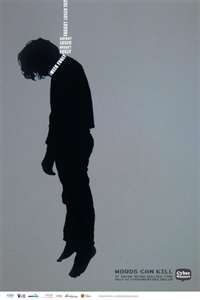
We’ve seen the Hollywood version:
The gallows is assembled. The dust is high and a sense of anticipation ripples through the air. There’s a hanging come tomorrow and it’s looking to be a good day. The condemned man manages to hoist himself to the jail window. He watches the ongoing construction. He doesn’t say anything. Fixing his jaw, he looks up at the sky and we know he’s silently wondering if he can keep it together, not cry out like a little girl. Or soil himself.
The morning of? Mothers pack a lunch because the hanging is midday and the children might get hungry. The righteous men in town think a hanging is a good, fine thing. God Almighty Hisself said it–An Eye for an Eye. And their sons, these righteous men whisper, will see what hard justice looks like then buck up, choose the straight and narrow.
The whole town turns out. Dogs bark, babies cry and the sun burns down. The condemned man turns his eyes away when the black clad minister offers up a prayer. He looks beyond the crowd as if he sees something way off, something no one else can see. Or maybe his mouth is trembling and the sweat is running in his eyes but we don’t get to see much because the thin-lipped sheriff yanks a black hood over the man’s head.
A few heartbeats later, the sheriff nods to the executioner. The lever creaks, the hatch opens. The man drops with a creaking whoosh. He drops like a stone, straight into eternity. He twitches–once, twice. But then all is still.
The crowd is quiet now. Some people look away. Some smirk. Others stare at the dead man, look right through him, only to turn with a quiet resignation and everyone, even the dogs and old timers, shuffle back to whatever they’ve left undone or are loathe to go back to.
Until the next time.
I’ve always watched these scenes and thought, Thank God, I wasn’t born back in the day when an execution was considered entertainment, a welcome respite from the hard-pressed, often dreary, short lives our ancestors lived. Cultures and mindsets change, evolve.
But sometimes they don’t.
Republican Representative Larry Pittman, District 82 from the great State of North Carolina wants to bring back public hangings. A deterrent to crime, he says, but noted abortion doctors first in line for the gallows.
I could brush this off as a joke, the product of a small, twisted mind but it turns out Representative Pittman expressed his view via a note, which he then emailed to every member of the North Carolina General Assembly. Seems like a particular prisoner really ticked Representative Pittman off, yanked his chain good, when said prisoner wrote a letter to the local paper [published by a most discriminating editor] in which he bragged about his cushy prison life and how endless appeals would keep his hide from the executioner for years on end.
According to the email, Representative Pittman’s reaction was, in part, the following:
We need to make the death penalty a real deterrent again by actually carrying it out. Every appeal that can be made should have to be made at one time, not in a serial manner,” Pittman wrote in the email. “If murderers (and I would include abortionists, rapists, and kidnappers, as well) are actually executed, it will at least have the deterrent effect upon them. For my money, we should go back to public hangings, which would be more of a deterrent to others, as well.
To be fair to Representative Pittman, I do not know the details of this prisoner’s crime. As far as I know, he may deserve to rot in prison forever. He may even deserve to swing from a rope. Personally, I’m not a huge fan of the death penalty, particularly when I read stats like this:
Since 1973, at least 121 people have been released from death row after evidence of their innocence emerged. During the same period of time, over 982 people have been executed. Thus, for every eight people executed, we have found one person on death row who never should have been convicted. These statistics represent an intolerable risk of executing the innocent. If an automobile manufacturer operated with similar failure rates, it would be run out of business.
Our capital punishment system is unreliable. A recent study by Columbia University Law School found that two thirds of all capital trials contained serious errors. When the cases were retried, over 80% of the defendants were not sentenced to death and 7% were completely acquitted.
But that’s an argument for another day.
Representative Pittman did, in fact, back pedal on sending his ‘opinion’ to every member of the General Assembly, claiming it was intended for a single member. He was fatigued, he said, hitting ‘Reply All’ in error. He also said that perhaps he’d gotten carried away when he vented his disgust and agitation, but he was over-wrought by his concern for the victim of the letter-writing prisoner. He was concerned about the family’s right to see justice done.
But I missed this part:
Oh, and you know the inclusion of abortion doctors, saying that they should be first in line for the gallows? I apologize. Because even I know that since abortion is still legal in this country, hanging a doctor who has performed a legal abortion would be . . . murder. As a State Representative of the Great State of North Carolina I would not want to give the impression that murder is a good thing or understandable when committed against Pro-Choice Physicians, even those who perform abortions. Because to do so would set a bad example to the very populace I’m pledged to represent. Sending that email was a foolish, unseemly thing to do.
Sadly, he did not write or say that.
As for public hangings acting as a deterrent to crime? Though Timothy McVeigh’s execution was viewed on closed circuit TV for family members of the deceased and rescue workers, the last public execution in the US, a hanging, occurred in 1936 in Owensboro, Kentucky. It was that particular execution, the carnival nature of the hanging and the coverage received, that convinced public officials that going public was not a good idea. We can go back further to find ample examples of public hangings, death by firing squad, horse and quartering, beheadings, etc.
And lo and behold, we still had crime, oodles of it. Frequently during those festive-like affairs, pickpockets flourished and prospered.
Executions were good for business.
I vaguely recall Phil Donahue calling for televised executions, back when the electric chair was still favored. His reasoning was not a pretense that viewable executions would deter crime but that seeing a man or woman electrocuted, the true ugliness of the act, would serve as a deterrent to the death penalty itself.
Was Donahue right? I don’t know. At the time, I thought the suggestion was crazy.
But calling for public hangings, including doctors who perform legal abortions, even from a fatigued state legislator is, in my opinion, a step too far. Maybe we should thank Representative Pittman for offering a window into his mind’s secret workings. We can theorize that since his opinion was ‘intended’ for a single legislator, Representative Pittman assumed his recipient was a kindred spirit, someone who shared his ‘frustrations.’
That makes at least one like-minded person serving in the NC General Assembly. We can only guess how many others.
Oh, and there’s this–in addition to being a NC representative? Mr. Pittman lists his occupation as: Pastor, Shipping Worker and Company Chaplain.
You cannot make this stuff up.


 peej
peej Carissa
 bostonboomer
 dakinikat
 ecocatwoman
 mablue2
 Mama Lopez
 peggysue22
 quixote
 skydancingguestblogger
 Mona (aka Wonk the Vote)



 Sky Dancing
Recent Comments