
Barack Hoover Obama and the Curse of the Long Term Unemployment Rate
Posted: January 26, 2010 Filed under: Global Financial Crisis, Populism, president teleprompter jesus, The Bonus Class, The Great Recession | Tags: economics, the insanity of spending freezes during recessions, Unemployment Rate Comments Off on Barack Hoover Obama and the Curse of the Long Term Unemployment RateWhen I wrote the morning thread at The Confluence last night, I couldn’t imagine any justification for an economic policy proscription of spending freezes coming from any one except maybe the American Enterprise Institute. Basic macroeconomic theory states that during a recession with high unemployment, the government’s fiscal policy should either consist of tax cuts or spending increases. Theory also shows that during these horrible times, budget deficits grow naturally through automatic stabilizers. Tax receipts go down because folks lose their jobs and businesses lose customers. Government spending goes up because unemployed people rely heavily on social safety net programs like unemployment insurance.
There really are no philosophical differences between conservative or liberal economists on these theories. What you usually see are arguments from both sides on which policy prescription to apply. Republicans favor tax cuts. Democrats usually go for increased spending that targets job creation. That’s been the way it’s been for a long time until THIS President who appears to believe he can rewrite economic theory the way a fundamentalist preacher rewrites geology, anthropology, cosmology, biology, and reality.
I woke up to a chorus of Barack Hoover Obama this morning coming from Economic Blogs all over the web. It is here from Paul Krugman.
A spending freeze? That’s the brilliant response of the Obama team to their first serious political setback?
It’s appalling on every level.
It’s bad economics, depressing demand when the economy is still suffering from mass unemployment. Jonathan Zasloff writes that Obama seems to have decided to fire Tim Geithner and replace him with “the rotting corpse of Andrew Mellon” (Mellon was Herbert Hoover’s Treasury Secretary, who according to Hoover told him to “liquidate the workers, liquidate the farmers, purge the rottenness”.)
It’s bad long-run fiscal policy, shifting attention away from the essential need to reform health care and focusing on small change instead.
It is here from Brad Delong who mentions that even deficit hawk economics find this a laughable policy.
There are two ways to look at this. The first is that this is simply another game of Dingbat Kabuki. Non-security discretionary spending is some $500 billion a year. It ought to be growing at 5% per year in nominal terms (more because we are in a deep recession and should be pulling discretionary spending forward from the future as fast as we can)–that’s only $25 billion a year in a $3 trillion budget and a $15 trillion economy.
But in a country as big as this one even this is large stakes. What we are talking about is $25 billion of fiscal drag in 2011, $50 billion in 2012, and $75 billion in 2013. By 2013 things will hopefully be better enough that the Federal Reserve will be raising interest rates and will be able to offset the damage to employment and output. But in 2011 GDP will be lower by $35 billion–employment lower by 350,000 or so–and in 2012 GDP will be lower by $70 billion–employment lower by 700,000 or so–than it would have been had non-defense discretionary grown at its normal rate. (And if you think, as I do, that the federal government really ought to be filling state budget deficit gaps over the next two years to the tune of $200 billion per year…)
And what do we get for these larger output gaps and higher unemployment rates in 2011 and 2012? Obama “signal[s] his seriousness about cutting the budget deficit,” Jackie Calmes reports.
As one deficit-hawk journalist of my acquaintance says this evening, this is a perfect example of fundamental unseriousness: rather than make proposals that will actually tackle the long-term deficit–either through future tax increases triggered by excessive deficits or through future entitlement spending caps triggered by excessive deficits–come up with a proposal that does short-term harm to the economy without tackling the deficit in any serious and significant way.
 Here’s more from Mark Thoma and one from Naked Capitalism. That’s just some of the more high profile economist blogs. I didn’t even go for the dozens of links from business bloggers or the political sites. I want to put this all in perspective and I’ll use a Jan. 16 article from The Economist to do so. It’s one of the latest articles I intend to use in my classes and it’s called The Trap.
When teaching about unemployment statistics, economics professors like Krugman, Thoma, DeLong, and little ol’ me all emphasize that it’s not the big rate so much as the underlying trends and details within the rate that drive a policy. Cyclical unemployment–the type of unemployment that comes from a recession–eventually clears up on its own when the economy improves. Usually, the folks impacted by cyclical employment will not have problems finding jobs in a good economy.
There are some pervasive types of unemployment that are much more deeply rooted and take more targeted, specific job policies to eliminate. Structural unemployment is one of those phenomena that take job retraining programs or helping the labor force move where the jobs are being created (either location or industry change). You can usually spot this type of unemployment in the Long Term Unemployment Rate. These folks have been in industries or jobs that are no longer valid in the modern economy and without some refitting, they stay unemployed. If you look at the graph I posted above from The Economist, you’ll see exactly how disturbed the labor market really is right now. This unemployment is not going away and it requires some serious policy to deal with it. Until then, we will see lower tax receipts and higher need for safety net programs. Obama’s policy totally ignores the reality on the ground and goes for a quick political message. We’re not seeing solutions for the real problem at all.
The Economist article calls this the ‘curse’ of long term unemployment. This is the real problem left to this administration from the Bush years. Other than shove the young unemployed into the military, there has been no program aimed at the lackluster job creation coming from the U.S. economy since Bill Clinton left office.
THE 2000s—the Noughts, some call them—turned out to be jobless. Only about 400,000 more Americans were employed in December 2009 than in December 1999, while the population grew by nearly 30m. This dismal rate of job creation raises the distinct possibility that America’s recovery from the latest recession may also be jobless. The economy almost certainly expanded during the second half of 2009, but 800,000 additional jobs were lost all the same.
It took four solid years for employment to regain its peak after the 2001 recession. With jobs so scarce, wages stagnated even as the cost of living rose, forcing households to borrow to maintain their standard of living. According to Raghuram Rajan, an economist at the University of Chicago, this set the stage for the most recent crisis and recession—a crisis, ultimately, caused by household indebtedness. If the current recovery is indeed jobless, wages will continue to lag. Since they are now virtually unable to borrow, households will have to make do with less, and reduced spending is likely to make the economic recovery more uncertain still.
So which is it to be: jobless or job-full? Of paramount concern is the growth in long-term unemployment. Around four in every ten of the unemployed—some 6m Americans—have been out of work for 27 weeks or more. That is the highest rate since this particular record began, in 1948. These workers may forget their skills; and many began with few skills anyway. Just as troubling is a drop of 1.5m in the civilian labour force (which excludes unemployed workers who have stopped looking for work). That is unprecedented in the post-war period. If those who have stopped looking were counted, the unemployment rate would be much higher.
The only sectors that have been growing recently are the health care industry (like demand for nurses) and the education sector. I can tell you as a participant in the education sector, state-level balanced budget requirements are about to change those statistics. Both the Health and Education sectors require government funding, if that dries up, the jobs dry up even though the demand remains high.
The Obama administration has been verbal about green sector jobs, but frankly, jobs are not going to come from ethanol subsidies, that’s only going to create food shortages. The basic question, then, is where do the jobs come from, and what policies do we use to encourage job creation? It is obvious that our infrastructure needs a huge amount of rework to me and like FDR, this is one area where we could start programs to rebuild interstates, networks, and buildings. Just refitting buildings to meet earthquake or hurricane standards could be one potential area. We also don’t have enough refineries and power plants. It is possible we could subsidize the private sector in major infrastructure projects if there’s no will for a public work project. All of the highways, dams, and electrical grids are aging and in need of repair. We’ve seen realization of these problems but no policy prescriptions.
Where are the jobs of the future and how can government create an environment for their creation if we defund job training and education and fail to fully fund repairs to the infrastructure that supports job creation in the future? Do we really need a spending freeze in this jobless century? Where are the real economists in this administration?
The Big Fat Hunkin’ We Told You So thread
Posted: January 20, 2010 Filed under: president teleprompter jesus, Voter Ignorance, WE TOLD THEM SO | Tags: We TOLDJA!!!! Comments Off on The Big Fat Hunkin’ We Told You So thread Is this the day we get our due?
Paul Krugman’s blog: He Wasn’t the One We’ve been Waiting For
But I have to say, I’m pretty close to giving up on Mr. Obama, who seems determined to confirm every doubt I and others ever had about whether he was ready to fight for what his supporters believed in.
There’s a difference between letting Congress lead as a strategy and being unable to lead Congress. WH is teetering now. about 4 hours ago from web Retweeted by 10 people
I got the above from a TL thread by BTD with followed by his comment: Ezra Klein, Puma?)
The New Republic: Does He Feel Your Pain? Forget Massachusetts. Obama’s problem is nationwide.
The most important question raised by Coakley’s loss is not what she could have done better–the answer to that can fill pages of unhappy anecdotes about campaign mishaps–but why Obama’s popularity is so low that a Democrat could lose Massachusetts. A conservative Republican Senate candidate winning Massachusetts, which Obama carried by 62 percent to 36 percent in 2008, is comparable to a liberal Democrat carrying Utah.
There is no joy in Mudville
Posted: October 17, 2009 Filed under: president teleprompter jesus | Tags: Charles M. Blow, University of New Orleans Obama Town Hall Meeting Comments Off on There is no joy in MudvilleBy Ernest Lawrence Thayer Taken From the San Francisco Examiner – June 3, 1888
There was ease in Casey’s manner as he stepped into his place;
There was pride in Casey’s bearing and a smile lit Casey’s face.
And when, responding to the cheers, he lightly doffed his hat,
No stranger in the crowd could doubt ’twas Casey at the bat.
Op-Ed Columnist Charles M. Blow actually went to the Great Louisiana football school of Grambling, so maybe I should’ve used a football metaphor, but mighty Casey seemed mighty apropos here. So many had so much hope in one person and as far as I could tell from the crowd at the old UNO basketball area on Thursday, many still do when it comes to our President. So many folks in love with one person as a symbol of so much. There was one elderly black woman wandering out side on a sidewalk sayin’ “We can go anywhere now! Anywhere we want!”
So, here’s a little taste of Charles Blow’s op-ed column from October 16th at the NY Times. 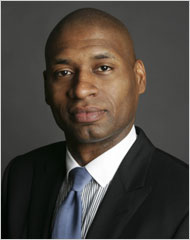
When, Mr. President? When will your deeds catch up to your words? The people who worked tirelessly to get you elected are getting tired of waiting. According to a Gallup poll released on Wednesday, Americans’ satisfaction with the way things are going in the country has hit a six-month low, and those decreases were led, in both percentage and percentage-point decreases, by Democrats and independents, not by Republicans.
The fierce urgency of now has melted into the maddening wait for whenever.
There is a list there, one we are all familiar with here at The Confluence of things that folks with a liberal bent to their disposition desire. Things promised and as of yet, undelivered no matter what apologies the apologists have provided.
Take health care reform. Because of the president’s quixotic quest for bipartisanship, he refused to take a firm stand in favor of the public option. In that wake, Democrats gutted the Baucus bill to win the graces of Olympia Snowe — a Republican senator from a state with half the population of Brooklyn, a senator who is defying the will of her own constituents. A poll conducted earlier this month found that 57 percent of Maine residents support the public option and only 37 percent oppose it.
Poll after poll show that people really want that public option. Just exactly who is the constituency that must be appeased by both Republicans like Senator Snow and the democratic leadership including President Obama? Who are we appeasing to go against the will of the majority?
Ah, but there’s more to list and more chances to ask that vital question WHEN?
On the same weekend that gay rights protesters marched past the White House, the president again said that his administration was “moving ahead on don’t ask don’t tell.” But when? This month? This year? This term?
Yup, wasn’t there the absolute promise to get rid of don’t ask don’t tell? Wasn’t there that firm commitment –at the very least of repealing DOMA–to civil unions, to full recognition of one’s human right to completely love, commit and protect another.
Oh, but there’s more, as Mr. Blow so brilliantly opines.
As we prepare to draw down troops from the disaster that was the war in Iraq, we may commit more troops to the quagmire that is the war in Afghanistan and the government may miss its deadline for closing the blight that is the prison at Guantánamo Bay, Cuba.
You would think, perhaps, he would end there, after all this is quite a list. But just as we’ve written thread after thread here, there is more on that list of broken promises.
Obama pledged to stem the tide of job losses and foreclosures and to reform the culture of the financial sector. Well, the Dow just hit 10,000 again while the national unemployment rate is about to hit 10 percent. And the firms we propped up are set to dole out record bonuses while home foreclosures have hit record highs. Main Street is still drowning in crisis while Wall Street is awash in Champagne. When will this imbalance be corrected?
And now we’re back again to my home town–New Orleans–and the promises made and broken here.
Candidate Obama pledged to make the rebuilding of New Orleans a priority, but President Obama whisked into the city on Thursday for a visit so brief that one Louisiana congressman dubbed it a “drive-through daiquiri summit.” The president spent more time on the failed Olympic bid in Copenhagen than he did in the Crescent City.
At the town hall in New Orleans, Obama appealed for patience. He said, “Change is hard, and big change is harder.” Is that the excuse? Now where have I heard that before? Oh, yeah. From George Bush.
If I could deliver thunderous applause Mr. Blow, I would. Thank you for printing in the New York Times what is on the mind of so many of us around here. Symbols are nice but wins are much better!
digg!!! tweet!!! share!!!


Add to: Facebook | Digg | Del.icio.us | Stumbleupon | Reddit | Blinklist | Twitter | Technorati | Furl | Newsvine
Okay, Y’all are just Creeping me out here!!!
Posted: September 30, 2009 Filed under: president teleprompter jesus, Surreality Comments Off on Okay, Y’all are just Creeping me out here!!! I watched the new Joy Behar show yesterday on Headline News. I have to admit I liked it. Bette Midler–koolaid sipper extraordinaire–had a lot to say as the show’s first guest. I’ve often compared Glenn Beck to the character Lonesome Rhodes in the 1957 movie a “Face in the Crowed” but Midler went one step farther.
“Someone like Glenn Beck has made gazillions of dollars because he’s out there being sort of hateful in many ways,” Behar said. “He calls himself a clown and a comedian. Do you think it’s funny?”
Midler confirmed what one would probably expect – she’s not a fan of Beck at all.
“I don’t think he’s funny even a little bit,” Midler said. “I’ve never had a laugh from Glenn Beck. In fact, I find him terrifying. I find him terrifying. He’s like an old school demagogue, and it’s really frightening.”
What did Midler compare Beck to? She likened the popular Fox News host to the instigators of the Rwandan civil war, which was the catalyst for the Rwandan genocide where an estimated 800,000 to 1 million lost their lives.
“If you look around at the rest of the world and what this kind of behavior has done, like in Rwanda, where the demagogues got on the radio and fomented all that hate between the Tutsis and the Hutus and the devastation that happened from that, I mean, it’s terrifying,” Midler said.
According to Midler, that’s a possibility in the United States.
“And that could happen, you know, you could turn on a dime,” Midler warned. “That could happen here.”
So, that was yesterday. Then I tripped over to Memorandum this morning to find this tidbit from Gore Vidal who is waxing poetically over “we coulda hadda Hillary”. A little late for the sippy cup grandpa but at least he admits that he was wrong. Not the same as an apology though.
Last year he famously switched allegiance from Hillary Clinton to Barack Obama during the Democratic nomination process for president. Now, he reveals, he regrets his change of heart. How’s Obama doing? “Dreadfully. I was hopeful. He was the most intelligent person we’ve had in that position for a long time. But he’s inexperienced. He has a total inability to understand military matters. He’s acting as if Afghanistan is the magic talisman: solve that and you solve terrorism.” America should leave Afghanistan, he says. “We’ve failed in every other aspect of our effort of conquering the Middle East or whatever you want to call it.” The “War on Terror” was “made up”, Vidal says. “The whole thing was PR, just like ‘weapons of mass destruction’. It has wrecked the airline business, which my father founded in the 1930s. He’d be cutting his wrists. Now when you fly you’re both scared to death and bored to death, a most disagreeable combination.”
Oh, wait, it gets better.
Vidal originally became pro-Obama because he grew up in “a black city” (meaning Washington), as well as being impressed by Obama’s intelligence. “But he believes the generals. Even Bush knew the way to win a general was to give him another star. Obama believes the Republican Party is a party when in fact it’s a mindset, like Hitler Youth, based on hatred — religious hatred, racial hatred. When you foreigners hear the word ‘conservative’ you think of kindly old men hunting foxes. They’re not, they’re fascists.”
Another notable Obama mis-step has been on healthcare reform. “He f***ed it up. I don’t know how because the country wanted it. We’ll never see it happen.” As for his wider vision: “Maybe he doesn’t have one, not to imply he is a fraud. He loves quoting Lincoln and there’s a great Lincoln quote from a letter he wrote to one of his generals in the South after the Civil War. ‘I am President of the United States. I have full overall power and never forget it, because I will exercise it’. That’s what Obama needs — a bit of Lincoln’s chill.” Has he met Obama? “No,” he says quietly, “I’ve had my time with presidents.” Vidal raises his fingers to signify a gun and mutters: “Bang bang.” He is referring to the possibility of Obama being assassinated. “Just a mysterious lone gunman lurking in the shadows of the capital,” he says in a wry, dreamy way.
Vidal now believes, as he did originally, Clinton would be the better president. “Hillary knows more about the world and what to do with the generals. History has proven when the girls get involved, they’re good at it. Elizabeth I knew Raleigh would be a good man to give a ship to.”The Republicans will win the next election, Vidal believes; though for him there is little difference between the parties. “Remember the coup d’etat of 2000 when the Supreme Court fixed the selection, not election, of the stupidest man in the country, Mr Bush.”
So, Bette is voting on a revolution, Gore, a presidential assassination and more and if all that wasn’t enough, there’s this little thing called a military coup suggested by Newsmax’s John L. Perry. I’ve linked to the piece via Media Matters.
There is a remote, although gaining, possibility America’s military will intervene as a last resort to resolve the “Obama problem.” Don’t dismiss it as unrealistic.
America isn’t the Third World. If a military coup does occur here it will be civilized. That it has never happened doesn’t mean it wont. Describing what may be afoot is not to advocate it.
[…]
Will the day come when patriotic general and flag officers sit down with the president, or with those who control him, and work out the national equivalent of a “family intervention,” with some form of limited, shared responsibility?
Imagine a bloodless coup to restore and defend the Constitution through an interim administration that would do the serious business of governing and defending the nation. Skilled, military-trained, nation-builders would replace accountability-challenged, radical-left commissars. Having bonded with his twin teleprompters, the president would be detailed for ceremonial speech-making.
Military intervention is what Obama’s exponentially accelerating agenda for “fundamental change” toward a Marxist state is inviting upon America. A coup is not an ideal option, but Obama’s radical ideal is not acceptable or reversible.
Unthinkable? Then think up an alternative, non-violent solution to the Obama problem. Just don’t shrug and say, “We can always worry about that later.”
In the 2008 election, that was the wistful, self-indulgent, indifferent reliance on abnegation of personal responsibility that has sunk the nation into this morass.
As Cannonfire reminds us, the newsource is whacky but the writer was on the staff of LBJ and Jimmy Carter. That’s hardly the sort’ve person that should be suggesting a military coup against Obama. Cannonfire also shows us some of the most recent unreasonable things said by Republicans against our sitting president.
I’m not sure if I want to buy a security blanket or a gun at this point, but frankly, all this talk is a little whacky and it’s creeping me out!
On Overlooked Battles and Unsung Heroes
Posted: September 20, 2009 Filed under: Human Rights, president teleprompter jesus, The Media SUCKS, Voter Ignorance | Tags: FBI, FISA, Telecom immunity, the patriot act, warrantless wiretapping Comments Off on On Overlooked Battles and Unsung Heroes In the midst of so much policy disarray, it is easy to overlook many issues that deserve our attention. I’m beginning to think all the chaos may be angle of hat trick magician relying on slight of hand and misdirection. So, just as I continue to hammer at boring things like bank reform, I continue to follow things related to the Patriot Act, FISA, and other potential intrusions that are in conflict with constitutional rights.
Today, the NY Times predicted “A Looming Battle Over the Patriot Act”. Remember, the most sensitive portions and controversial are those that involve surveillance. House and Senate committees are discussing re-authorization of three key sections that are set to expire at the end of this year. In a continuation of the Bush-Cheney encroachment on civil liberties, the Obama-Biden administration seeks re-authorization.
The provisions expanded the power of the F.B.I. to seize records and to eavesdrop on phone calls in the course of a counterterrorism investigation.
Laying down a marker ahead of those hearings, a group of senators who support greater privacy protections filed a bill on Thursday that would impose new safeguards on the Patriot Act while tightening restrictions on other surveillance policies. The measure is co-sponsored by nine Democrats and an independent.
Days before, the Obama administration called on Congress to reauthorize the three expiring Patriot Act provisions in a letter from Ronald Weich, assistant attorney general for legislative affairs. At the same time, he expressed a cautious open mind about imposing new surveillance restrictions as part of the legislative package.
“We are aware that members of Congress may propose modifications to provide additional protection for the privacy of law abiding Americans,” Mr. Weich wrote, adding that “the administration is willing to consider such ideas, provided that they do not undermine the effectiveness of these important authorities.”
At the moment, there appears to be very little evidence that the FBI has abused its current power. Is that the salient point over which to argue for or against re-authorization? Sadly, we liberals have so much on our plate now with pressuring an administration and congress that should be our ally on things like truly universal health care, involvement in Iraq and Afghanistan, and continuation of Bush financial market bailouts, that we could potentially miss this important battle over one of our most basic rights. That right to go missing would be security from government invasion into our person and homes without due process.
The first such provision allows investigators to get “roving wiretap” court orders authorizing them to follow a target who switches phone numbers or phone companies, rather than having to apply for a new warrant each time.
From 2004 to 2009, the Federal Bureau of Investigation applied for such an order about 140 times, Robert S. Mueller, the F.B.I. director, said at a Senate Judiciary Committee hearing last week.
The second such provision allows the F.B.I. to get a court order to seize “any tangible things” deemed relevant to a terrorism investigation — like a business’s customer records, a diary or a computer.
From 2004 to 2009, the bureau used that authority more than 250 times, Mr. Mueller said.
The final provision set to expire is called the “lone wolf” provision. It allows the F.B.I. to get a court order to wiretap a terrorism suspect who is not connected to any foreign terrorist group or foreign government.
Mr. Mueller said this authority had never been used, but the bureau still wanted Congress to extend it.
Several other lawmakers are expected to file their own bills addressing the Patriot Act and related surveillance issues in the next several weeks.
Many of the proposals under discussion involve small wording shifts whose impact can be difficult to understand, in part because the statutes are extremely technical and some govern technology that is classified.
But in general, civil libertarians and some Democrats have called for changes that would require stronger evidence of meaningful links between a terrorism suspect and the person whom investigators are targeting.
In the same way, some are proposing to use any Patriot Act extension bill to tighten when the F.B.I. may use “national security letters” — administrative subpoenas that allow counterterrorism agents to seize business records without obtaining permission from a judge. Agents use the device tens of thousands of times each year.
I know you have a lot of issues and life challenges on your plate right now, but I think it might be worth your time to follow this issue as it makes its way through committee to the President’s desk. Our technological capability to intrude far surpasses our ability to ferret out potential abuse. I think it best we ensure the FBI can do its job, but not at the expense of our our basic civil rights. Just a reminder of who is on what side on one facet of this act. That would be the provision granting immunity from prosecution from telecoms.
As a senator, Mr. Obama voted for that bill, infuriating civil libertarians.
The bill filed Sept. 17 — which is championed in particular by two Democratic senators, Russ Feingold of Wisconsin and Richard J. Durbin of Illinois — would repeal the immunity provision.
digg!!!tweet!!!share!!!
Add to: Facebook | Digg | Del.icio.us | Stumbleupon | Reddit | Blinklist | Twitter | Technorati | Furl | Newsvine

 peej
peej Carissa
 bostonboomer
 dakinikat
 ecocatwoman
 mablue2
 Mama Lopez
 peggysue22
 quixote
 skydancingguestblogger
 Mona (aka Wonk the Vote)



 Sky Dancing
Recent Comments