
It’s Mardi Gras: You know, the Party before Penitence?
Posted: February 24, 2009 Filed under: Equity Markets, Global Financial Crisis, New Orleans, No Obama, president teleprompter jesus, Team Obama, U.S. Economy | Tags: bad banks, bailouts, fat tuesday, mardi gras, treasury department, zombie banks Comments Off on It’s Mardi Gras: You know, the Party before Penitence? I’m sitting here watching the kids get their costumes together for the big day of celebration called Fat Tuesday. That’s the day when you pull out all the stops because you know lean days (no meat, no alcohol, no fun) starts tomorrow. I guess I must be in hyper-metaphorical mode because it’s really striking me this year as a good fable. Tonight at midnight, the Krewe of Klean will take to the streets of the French Quarter to shovel all the leftovers into the dump trucks. The police will ride their horses down Bourbon street and announce that the Party’s over. They arrest anyone who want the party to continue at that point. You can either spend Ash Wednesday doing penitence in your bed or the Parish Prison.
When I first got out of graduate school I went to work at a small bank. I was soon lured to the biggest Savings and Loan in the middle of the country. I’d been working on loan pricing models and arranging bank income statements into an exercise called spread management and asset-liability matching. Big time company working for a big time CEO!
I have to admit, the only person that I really knew that was a CEO was my dad and he was great. His employees loved him. He gave them wonderful benefits and when they had sick children or they were gravely ill, he gave them time off with pay. His office manager was openly gay. His mechanics and body technicians were a diverse group for small town Iowa. Most of them worked for my dad the entire 30 years and loved him as much as I did. From the time he bought it when I was one, until he retired when I was in my 30s, the entire employee base was my extended family. So, I entered the business world thinking this was the model for management and boy, was I wrong.
WTF? Pre-Determined Stress Tests?
Posted: February 22, 2009 Filed under: Global Financial Crisis, No Obama, president teleprompter jesus, Team Obama, U.S. Economy, Uncategorized | Tags: Bank Stress Tests, Obama Bailout, Predeterimined Stress Tests 2 CommentsI finally have a bit of time to catch up on reading. I’m hosting 10 of my youngest daughter’s college friends for Mardi Gras in a very small house and it’s as wild as it sounds. I read this on Naked Capitalism and just didn’t even know what to say. So I’m going to throw it to you. Now mind you, this is an economics site and not a political one.
We have been skeptical that the pending Treasury stress tests on banks, designed to ascertain their state of health, were inadequately staffed and therefore could not do the job properly. Our big concerns were that they had too few bodies to e test financial data versus underlying documentation adequately (usually done on a sampling basis) and they lacked the expertise (and perhaps the mandate) to vet risk models (which we all know have performed impeccably over the last two years.
Is it a test if the results are pre-determined? Apparently Team Obama thinks so.
I’ve been wondering what exactly this stress test was going to be myself and how they were going to pull it off. I’ve worked in commercial banks, savings and loans, and at the Fed as well as the educational background and I’ve been scratching my head since it was first announced. No wonder the Obama administration is sounding so firm on the no nationalization issue. They’ve planned what they’re going to get ahead of time.
 This report and picture from CNBC.
Said one high-level official, “I think the market is missing that the whole intent of this process is to show that the banks have enough capital for even worse outcomes than we currently envision and to show there’s a program in place to give banks access to that capital if they need it.”
Yes, read it again. The process is to show us that the banks are okay. No wonder there’s no discussion of the Swedish or German approach to Banking crises. We’re going to be ‘shown’ everything is okay even under the ‘worse’ outcomes. Details on the worst scenarios are supposed to be out on Wednesday, but really, we’ve heard this before. Remember I mentioned in my last thread that much of the definitions had to do with what type of stock (common, preferred, some hybrid) winds up flowing from the Treasury to the target banks? Here’s another on the money paraphrase from the CNBC story.
The key misunderstanding in markets, officials believe, is how the public-private partnership will work and the way that new government capital, in the form of mandatory convertible preferred shares will become common equity.
One official said the public-private partnership will be voluntary so there will not be no mandate that banks offload assets at a loss. The official added that additional government capital will go into the banks as mandatory convertible preferred. Those shares remain preferred until realized losses and capital needs trigger conversion to common. As a result, the official said, the government may end up with a large stake in a given bank over a period of time, but it wont’ happen overnight.
May I suggest some new Savings Vehicles for the Obama Years?



Moral Hazard and Corporate Governance
Posted: February 18, 2009 Filed under: Equity Markets, Global Financial Crisis, president teleprompter jesus, U.S. Economy, Uncategorized, Voter Ignorance 1 CommentI usually stick with the Economics side of my degree instead of the Finance when I blog because macroeconomics is highly linked to politics and policy. Today, I’m going to switch over to the one field specialty I took in graduate school that’s not considered economics. (My economics fields are monetary and international.) My finance field is corporate finance. The two theories I spend time researching in the corporate area are two that are frequently at the middle of financial crisis.
Moral Hazard is a problem in situations where there are multiple parties, differing levels of information about the situation, and differing levels of exposure to the risk inherent in the situation. Evaluating how folks operate in different risky situations with varying amounts of information using mathematical models is basically a big old exercise in calculus that I’m not going to do here. The theory is a useful one that explains,as an example, why you drive faster if you’ve got a seatbelt on and are insured. Basically, between seatbelts and insurance, you don’t feel as ‘at risk’ so you behave in a riskier way.
Corporate Governance Laws and Executive Compensation packages are designed to overcome the moral hazard implicit in one of the most basic moral hazard models. It’s called the principal-agent problem. Basically this theory shows the problems that can occur when the owner(s) of a firm (the principal) hire managers (the agent) to run the firm. The owners (like common stock shareholders) don’t have the same level of information about firm performance that the executives do. They have to rely on the executives for information. Also, the owners can loose lots of money if the executives make bad decisions and slack off and don’t work as hard as they should. In this model, the principals have to find a contract that will force the agents to act in their interests. They must force them to work hard and return the maximum wealth to the shareholders. That’s what corporate governance laws and executive compensation packages are designed to do: align the interests of the executives and the shareholders. If designed properly, they should eliminate the moral hazard problem. Corporate Governance creates a more transparent environment where the executives can’t hide information. Property designed executive compensation packages reward the executives for doing their best by shareholders.
Where’s the Reform?
Posted: February 17, 2009 Filed under: Equity Markets, Global Financial Crisis, president teleprompter jesus, Team Obama, The Media SUCKS, U.S. Economy, Uncategorized | Tags: Credit Derivatives, FED, financial market reform, Mary Dizzard, SEC, Securities Market Comments Off on Where’s the Reform?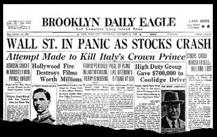 We keep hearing about the global financial collapse and how several things played into its creation. Since the credit markets are mostly dried up, loose credit to purchase overpriced assets is no longer an issue. Still hanging out there with no real substantive policy discussion is Financial Reform. Has the current administration forgotten the complete lack of oversight by the SEC in the areas of derivatives, credit default swaps, and all those fancy little arrangements that allowed imprudent lenders to pass the trash? Where also is a hard look at Moody’s and other raters that actually applied a triple A label to stuff that is still unraveled? Why aren’t we fixing what is obviously broken?
Dizard at Financial Times asks the question. What is the status of the structural reforms and laws required to fix the broken securities markets? It’s a very good question because both the SEC and the FED failed in their oversight duties of several markets. They’ve both asserted they didn’t have the legal standing to act or to provide that oversight. In that case, we have another example of oversight malpractice by the congressional committees designed to keep the financial and banking systems strong. They need to sort out responsibilities and enact laws to ensure oversight exists.
Here is one of the articles major points which is reform of rating agencies. He sees no progress on that front and believes we’re seeing some major maneuvering that ensures job security and protects fragile egos.
The financial system has a peacetime officer corps in a wartime situation. The people in positions of responsibility are principally interested in preserving their careers and avoiding public embarrassment. There are rare and important exceptions, such as Paul Volcker, who has nothing to prove about his integrity, and who is past any need to advance his career.
To identify what has to be done to put securities markets, banking and regulation on a sound basis for the future, the people at the top might have to admit to the specifics of their own past mistakes. They would also need a command of detail of the workings of the financial system that they have avoided acquiring over the years, since it was much more advantageous to spend one’s time scheming and toadying.
This is a naturally occurring aspect of human nature, but it is usually kept in check by periodic crises, which thin the herd and force the survivors to adapt. The “great moderation”, also known as periodic monetary bail-outs, in developed countries for the past couple of decades has prevented that process.
Let’s consider a specific issue, the reform of the leading US ratings agencies…So what are the federal regulators, and Congress, actually doing about ratings agency reform?
Dismal Science, Dismal Economy, Dismal Policy
Posted: February 11, 2009 Filed under: Global Financial Crisis, president teleprompter jesus, U.S. Economy, Uncategorized Comments Off on Dismal Science, Dismal Economy, Dismal Policy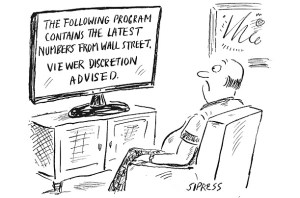 I’ve been closely following blogs of other economists this week since we’ve had so many major things come down the pipe having to do with the dismal science and the even more dismal economy. I thought I’d just highlight what’s out there at the moment. I promise, I’ll avoid all the folks that felt it necessary to blog the banker’s testimony live.
Brad DeLong of U.C. Berkely noted something of interest concerning the new TARP money. It’s not economics, but it’s juicy. I just love reading Grasping Reality with Both Hands. It has that wonky snark I find inspiring. These are his first two points from a thread entitled Brief Notes.
- Called the Geithner Plan, not the Obama Plan–distancing of the president from the proposal.
- Reinforced by Axelrod leaks to Labaton and Andrews painting Geithner as the Wall Street loving holdover–and this the person to take the blame if things go south.
I think this mean’s move over, Geithner’s joining us under the bus. After yesterday’s reports of senators and staff laughing at its presentation and the market dive, how long will the Secretary of Tax Evasion last? I’m taking bets, if any one is interested.

 peej
peej Carissa
 bostonboomer
 dakinikat
 ecocatwoman
 mablue2
 Mama Lopez
 peggysue22
 quixote
 skydancingguestblogger
 Mona (aka Wonk the Vote)



 Sky Dancing
Recent Comments