
Occupy Philly and Independence Hall
Posted: November 30, 2011 Filed under: #Occupy and We are the 99 percent!, Banksters, Corporate Crime, corruption, Economy, financial institutions, income inequality, jobs, U.S. Economy, U.S. Politics, unemployment, voodoo economics | Tags: 2011: days of revolt, Financial Crisis, U.S. Economy, unemployment 16 CommentsBlack Friday, Philadelphia, Pa.
My first look at Occupy Philly was after a free ride on the 9:52 Media Local, The Santa Train. This was not by plan but a matter of sheer coincidence. I should have guessed;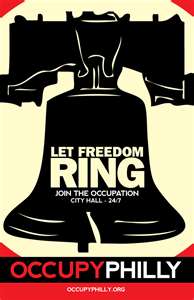 I was the only one standing on the Morton platform without a small child in tow. But shortly after boarding, it was all too clear. The elves came first, wailing Jingle Bells and Wish You a Merry Christmas. They were followed by out-of-season Mummers dressed in holiday garb, belting out another round of X-mas cheer, complete with accordion, banjo and sax. Mrs. Claus assured the children that Santa was busy, busy at the North Pole, making sure all their wishes [even though edited to economic realities] would come true. And then, there was the free candy and balloon animals.
The magic of childhood! Where we can believe everything and anything. When the world appears kind and right and true.
An out-of-stater now, I deliberately got off at Suburban Station, my old work stop. Also, the stop at which I’ve frequently disembarked to attend exhibits at the Franklin Institute, the Museum of Natural History or the Philadelphia Museum of Art, a brisk walk west up the Parkway, past the Rodin Museum and the soon-to-open home for the controversy-laden Barne’s collection.
But not today.
This morning I headed east, winding through the underground towards City Hall and the Occupy Philly encampment. Later, I would team up with a friend and hoof down to the historic district. But right now, I had a different historical event in mind.
I no sooner hit the outside doors than the vivid blue of plastic tarps and tent tops were visible. A strange sight. Normally, I would have walked through the West arch at City Hall, stood for a few moments googling at the city’s Christmas tree. But this year was different. So different.
The western entrance to the City Hall complex was barricaded. ‘For Restoration’ the signs said. No towering tree this year. Instead, the Occupy tents decorated Dilworth Plaza, a strange but fascinating sprawl of makeshift living quarters and standard issue camping gear. The area was quiet and still, the air crisp. I circled around the entire plaza. No sight of my friend, so I headed back towards the encampment, spotted the medical and information tents, as well as a petition table outlining the dangers of in-state fracking by over-zealous gas drilling companies.
At the Information Tent there was an array of literature on upcoming actions, the November issue of the Occupy Wall Street Journal and several people discussing Mayor Nutter’s deadline to dismantle the encampment within 48 hours. Two of the occupiers said almost in unison: ‘It was never about the tents.’
So what is it about? It’s a question I read constantly on the blogs and in newspapers, even hear from family and friends.
Here’s what I learned in the morning hours I spent on the Plaza:
- In the 53 days of Occupy Philly, 26,000 local citizens signed on expressing support.
- At the height of the encampment, City Hall was encircled with tents, sleeping bags and a variety of makeshift living accommodations.
- Active supporters numbered around 200-300, some living on-site, others coming in to protest, march and rally during the day.
- Local Unions support the effort. In fact, the Trades Union offered to assist the protestors in the original plan to move off Dilworth to an encampment across the street. The Union needs those ‘renovation’ jobs. That idea was scrapped because permits were denied.
- The area was clean. No needles, drug paraphernalia or trash scattered about as the MSM would have readers/viewers believe taints all encampments. Talking to several encampment members, I was told a goodly portion of each day is spent ‘cleaning up.’
- The encampment/protest was peaceful. There was a sense of community and the overriding sentiment was to voice anger and dissent over the widening income inequality in the US and the corporate capture of all facets of government.
- I heard no political posturing or Obama shilling. Simply stated, the system is broken for the 99%.
- Forty to fifty of the encampment members were homeless. They joined for the free food and the safety of numbers.
- The police presence, even on this Friday morning, was unusually large but basically stationed within the confines of the City Hall plaza.
- Though Mayor Nutter had leveled a 48-hour deadline, there was no sense of panic or great urgency the morning I arrived. I later learned that the majority of the encampment was dismantled voluntarily Sunday evening and the homeless were moved elsewhere for their own safety.
- This morning [Wednesday 11/30 at 1:20 am, according to the Associated Press], the Philly police department began tearing down the remaining tents.
But as the protesters I spoke with said: It was never about the tents. It has always been about visibility—the eyesore of inequality, injustice and corruption.
I left Dilworth Plaza, and then headed down to Independence Mall. A surreal juxtaposition. In a matter of a few blocks, my friend and I walked from the current protest to the historical marker of the Mother of All Protests. Philadelphia is the birthplace of the Declaration of Independence and the US Constitution. We strolled through the portrait gallery installed in the Second Bank of the United States and the faces of those earlier protesters, that grand collection of merchants and farmers, philosophers and scientists, lawyers and bankers stared back. What would they be thinking? I wondered.
We went on to Carpenter’s Hall, where Benjamin Franklin reportedly had secret meetings with like-minded citizens prior to the Revolution. Years later, on leaving the Constitutional Convention, a woman reportedly asked Franklin what sort of government he and the others had designed. Franklin’s terse reply: ‘A Republic, Ma’am. If you can keep it.’
Our final stop was Independence Hall, which was originally the Pennsylvania State House. This was where the Second Continental Congress met, the Declaration of Independence was adopted and where the Constitutional Convention met to draft, debate, and then sign the US Constitution in 1787.
We’re a long way from who and what we were in 1787. But Franklin’s words have a haunting edge to them: ‘A Republic, Ma’am. If you can keep it.’ Another quote that’s perhaps equally pertinent is:
‘We must hang together, gentleman, or assuredly we will all hang separately.’
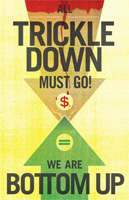 For me at least, this is what the Occupy Movement has been and is still about. In an age where corporations have been awarded the distinction of personhood, when free speech is equated to money and The Rule of Law is applied in an unjust and inequitable fashion then we, ordinary citizens, have a duty to support and join one another in protest. To hang together, if you will.
Oh, and that Tea Party, the real one in Boston that got everything rolling?
We all recall the ‘taxation without representation’ line from our school years, stemming from the passage of the Stamp Act in the 1760s and later the Tea Act in 1773. King George had debts to pay off—a Seven Year’s War among other things. And the East India Company’s tea pitched into the Boston Harbor? East India was basically provided a monopoly on tea shipped into the colonies. The company [and its aristocratic shareholders] were none too happy about their profits pinched and drowned in the harbor and helped push [lobby] the King to pass the Coercive Acts, aka The Intolerable Acts. The colonists were generally peeved at the British Parliament for taxing them without their consent and then adding insult to injury, giving the East India Co. a cushy, duty-free export to undercut colonial merchants. But they were beyond peeved when punitive measures were leveled. They demanded that Parliament end its corrupt economic policies with and stop the bailout of that era’s own TBTF East India Company.
Sound vaguely familiar? Whatever’s old is new again. Of course, no one age can be accurately compared to another. Context is everything. To quote Barbara Kingsolver from the November issue of The Occupy Wall Street Journal:
“Every system on earth has its limits. We have never been here before, not right here exactly, you and me together in the golden and gritty places all at once, on deadline, no fooling around this time, no longer walking politely around the dire colossus, the so-called American Way of consecrated corporate profits and crushed public compassion. There is another American Way. This is the right place, we found it. On State of Franklin, we yelled until our throats hurt that we were the 99% because that’s just it. We are.”
As I’ve said elsewhere, I support Occupy until I don’t. The ‘don’t’ for me is if the Movement becomes another co-opted arm of one corrupt political party or another. Our existing two-party system is thoroughly compromised; a shipload of bleach and scrub brushes couldn’t clean it up. I support Occupy because I hate the idea of leaving my kids and future grandbabies with a broken, twisted Republic, one dedicated to piranha-school profits, the amassing of criminal wealth by a callous, irresponsible few at the expense of the many. I support the Occupiers because of those sweet-faced kids on the Santa train; they deserve the best we have. But I also support what I saw on Dilworth Plaza because of what I saw and recalled inside Independence Hall, what we owe to all those who sacrificed and struggled, dreamed and achieved, lived, loved and died over the last 200+ years. We stand on the shoulders of so many.
That’s something we should never forget because our past, our history is no small thing. But our future, that other American Way? That’s all about what we do now.
Crony Capitalism and Damned Lies
Posted: November 28, 2011 Filed under: #Occupy and We are the 99 percent!, Corporate Crime, corruption, Economy | Tags: crank economic analysis, crony capitalism, right wing tropes 7 Comments I just had to point out a WSJ Op-Ed/article that is just one more example of how much the media has ceded facts to right wing tropes. It’s written by Arthur Brooks. It’s called “Fairness and the Occupy Movement”. Brooks tries to equivocate the rent seeking activities of rich and powerful interests like the war and finance industries and the existence of social safety net programs like food stamps. It is not difficult for me to understand there is no real connection between providing things to the poor that need programs to stay alive and handing stuff needlessly to rich industries to attain extraordinary profits from market protections, subsidies and out right federal largess. Why is it so difficult for the press and politicians to grok the difference?
Economists Jeffrey Sachs and Mark Thoma call shenanigans on Brooks’ pretzel logic and self-serving ignorance of facts. Of course, I’ve come to expect nothing less from the American Enterprise Institute and its researchers who suspend all kinds of data and theories for their highly paid propaganda. The Wall Street Journal is basically an arm of that enterprise. The problem is that these lies shape policy debates.
First, Sachs points out this is an absolutely disingenuous narrative.
Where Brooks goes wrong is his description of inequality and fairness. The Republican view, which he espouses, is to reduce taxes, cut government services, and let markets be the standard of fairness. Here Brooks is deceptive in his rendition of the facts.
First, Brooks downplays the extent of inequality that has been built up in thirty years of crony capitalism. He favorably writes that “every income quintile has seen a real increase in purchasing power of at least 18% over the past 30 years,” citing a recent study of the Congressional Budget Office (CBO). Yet the real point of the CBO report, which Brooks does not mention, is that the richest 1% enjoyed a staggering rise of 275%, while the poorest stumbled by with a meager 18% gain. Moreover, the CBO report takes the data only to 2007. By now, even those meager gains at the bottom have been mostly lost.
Second, Brooks fails to note that the situation for the poor will be drastically worse if federal transfer programs are cut as the Republican Party is urging. The poorest quintile depends on these federal programs to stay alive. If the poorest Americans had to survive without government support, their incomes would be slashed to disastrous levels.
The Republicans answer to crony capitalism is to slash government. Yet by this they mean mainly an attack on the remaining social programs. This is a kind of bait-and-switch strategy: rev up the anger against government corruption, and then kill the life-support programs of the poor and working class. Crony capitalism exists mainly in the big-ticket sectors of the economy — banking, oil, real estate, private health insurance, military contractors, and infrastructure — not in the essential but much smaller parts of the economy: malnutrition of poor children, lack of quality pre-school, insufficient job training, and inadequate student loan coverage.
Yes, crony capitalism should be confronted anywhere in the economy, yet cutting the life-support systems for the working class and poor won’t fix government, but instead would cripple the prospects of more than 100 million poor and near-poor Americans. To control crony capitalism, we need to direct our attention where it belongs: the wealth-support systems of the rich, not the life-support systems of the poor.
Sachs points out 5 egregious examples of crony capitalism. Mark Thoma goes even farther. He discusses how the Democrats have been sucked into the right wing agenda of twisted facts and ground shifting. Your guess is as good as mine as to how this has come about. I’m sure Dems like Ben Nelson support the agenda and could care less about the untrue narrative that supports wealth transfer and market manipulation for the uberrich. Others are likely captured because they want the wealth that comes with “serving the public” and they want to get re-elected. Political office appears to be the fast track to the 1 percent these days. Others probably think this is sincere negotiation or they get some side benefit to concession so they go along.
The hope for common ground where there is none can lead to Obama like one-sided concessionary behavior, and we have more than enough of that already. Yes, let’s find common ground where it exists, but let’s also be careful not to try to meet in the middle when the other side is pursuing a bait and switch strategy. The Republican goal of reducing the size of government through reductions in social programs is unwavering, and they will pursue any argument handy at the moment to bring this about. In recessions, they tell us tax cuts are needed to stimulate the economy, but the real goal is to cut funding for the government permanently. Once the taxes are reduced, they won’t agree to increase them again (unless it’s to protect their cronies, i.e. an increase in payroll taxes is fine so long as it prevents the increase in taxes on the wealthy needed to fund it). In normal times, we’re told tax cuts stimulate economic growth even though there’s not much evidence to support this claim. Presently, it’s the cronyism argument, and tomorrow it will be something else. The Republicans have their eyes on the ball, and the rules of the game are to be adjusted as necessary to allow them the best opportunity to take the ball across the goal line. Winning is all that matters. Fairness for both sides playing the game, etc. has nothing to do with it and we’d be wise to keep our eyes on the ball as well.
The other thing to note is that the location of common ground has shifted to the right from where it used to be. “Meet us in the middle” now means meeting on ground that would have been considered on the right not all that long ago. Democrats have already conceded too much in the ideological war, and there comes time when leaders in the party must take a stand and hold their ground. That time is long past.
What is clear to me is that there is very little left of what an economist would view as a free,efficient, functional market through out our economy. Economies of scale, information brokers, concentration of markets into the hands of very few corporations, tax subsidies, federal contracts handed to friends of politicians, advertising, imagined product diversity, insider information, and moral hazard have all dealt blows to efficient pricing, resource allocation, and resultant quantity produced. It’s terribly dishonest of people like Arthur Brooks to equivocate programs that exist to protect the weakest in the society from the predatory behavior of the most rich and powerful who destroy functioning markets to achieve extraordinary profits and market power.
I have no idea why any one takes these fake “think tanks” seriously except they put out propaganda to serve the interests of crony capitalism itself.. The Paul Ryan Budget Scam was an example of crank analysis coming from the Heritage Foundation. Their output plagues policy discussion. Their stuff wouldn’t be given the light of day in actual empirical or theoretical journals so they have to invent some institute just to look serious. How these guys can lie with such a straight face is beyond me. Also beyond me is the number of people that fall for the lies. But then, some gullible and clueless media outlet or one saying that they’ll print lies just to be perceived as fair or some journalist with an agenda runs with the story. Then, crank analysis achieves some critical mass of “serious”. By the time that damned lie gets fact checked, no one is paying attention any more. It’s no wonder that we are so f’d.
“Newt Gingrich Is a Disgusting Person” Open Thread
Posted: November 21, 2011 Filed under: #Occupy and We are the 99 percent!, 2012 presidential campaign, Republican presidential politics, U.S. Economy, U.S. Politics | Tags: Jeffrey Sachs, Mika Brzezinski, Morning Joe, Newt Gingrich, Occupy movement 15 CommentsOn Morning Joe today, Mika Brzezinski and Columbia Economics Professor Jeffrey Sachs reacted to Newt Gingrich’s advice to Occupy protesters “Go get a job right after you take a bath.” I’m not a fan of Brzezinski, but I have to applaud her today. And can we please see a lot more of Jeffrey Sachs and a lot less of John Heilemann and Mark Halperin?
“That was about the most arrogant and unself-aware, and those are probably the only words I could use to think for any Republican politician in this field could say,” Brzezinski said. “Someone needs a bath, and I don’t think it’s people on Occupy Wall Street.”
Sachs summed up Gingrich’s comments in one word.
“Disgusting,” he said. “Absolutely disgusting. No sense of any meaning in all of this. Absolutely revolting actually. And especially when what they’re protesting against is the incredible abuse of power the criminality on Wall Street, it’s shocking.”
Sachs added: “For a guy who has slipped millions of dollars from Fannie Mac to quote, ‘be a historian,’ months after he left the Congress, it’s especially disgusting. But this man is a disgusting person.”
Wow! Tell it like is, Professor! Every time Newt Gingrich gets back into the spotlight, he quickly demonstrates what a total a$$hole he is. Tomorrow night there will be another Republican debate, and for now Newt is the front-runner. I’m betting he’ll say or do something so repulsive it will even turn off Republican audiences.
U.C. Davis Police Chief Suspended; Chancellor Still Won’t Resign
Posted: November 21, 2011 Filed under: #Occupy and We are the 99 percent!, Psychopaths in charge, U.S. Economy, U.S. Politics | Tags: Annette Spicuzza, California state university system, Constitutional Rights, free speech, Linda Katehi, Mark G. Yudof, Occupy movement, police brutality, U.C. Davis 10 Comments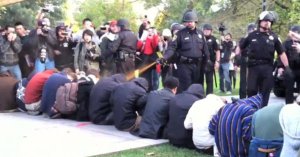
UC Davis Police pepper spraying peaceful protesters
UC Davis placed Police Chief Annette Spicuzza on administrative leave Monday in the wake of controversy over the pepper-spraying of student protesters last week by campus police officers.
The move by UC Davis Chancellor Linda P.B. Katehi came less than a day after she put two UC Davis police officers on leave.
“as I have gathered more information about the events that took place on our Quad on Friday, it has become clear to me that this is a necessary step toward restoring trust on our campus,” Katehi said in a statement.
Spicuzza had initially defended the police action, telling reporters Saturday, “The students had encircled the officers. They needed to exit. They were looking to leave but were unable to get out.”
Katehi has resisted calls by some UC Davis faculty members for her to resign.
Katahi’s words, “As I gathered more information…” are probably code for “I’m doing this in hopes that I don’t lose my job.” The President of the California state university system has made a strong statement about the events at U.C. Davis.
From the Atlanta Journal-Constitution:
The president of the University of California system said he was “appalled” at images of protesters being doused with pepper spray and plans an assessment of law enforcement procedures on all 10 campuses, as the police chief and two officers were placed on administrative leave.
“Free speech is part of the DNA of this university, and non-violent protest has long been central to our history,” UC President Mark G. Yudof said in a statement Sunday in response to the spraying of students sitting passively at UC Davis. “It is a value we must protect with vigilance.”
Yudof said it was not his intention to “micromanage our campus police forces,” but he said all 10 chancellors would convene soon for a discussion “about how to ensure proportional law enforcement response to non-violent protest.”
Protesters have planned a rally on the UC Davis campus today at noon Pacific time. Let’s hope the campus police leave their pepper spray and their tasers behind and act as if they respect the U.S. Constitution for a change.
Super Committee Calvin Ball
Posted: November 20, 2011 Filed under: #Occupy and We are the 99 percent!, Catfood Commission, Federal Budget, Federal Budget and Budget deficit | Tags: Budget Deficit, Extension of Bush Tax Cuts., supercommittee 15 CommentsRepublicans are insistent that the Bush Tax cuts be made permanent. With that stroke of lunacy, we have the imminent and predictable meltdown of the super committee. 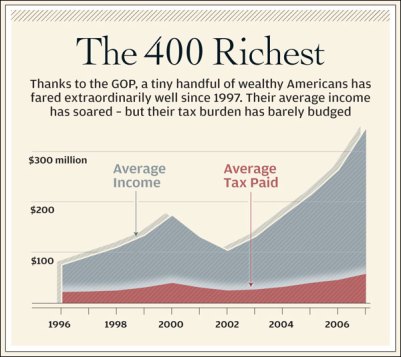 So, what happens when the minority party doesn’t get it’s way on everything? It either holds the economy hostage or changes the rule. Republicans in Congress are playing Calvin Ball to avoid the cuts that super committee failure is supposed to bring to the defense budget. They’re changing their own rules, yet again.
Plus, we’re getting another contradictory argument on taxes. Let the Bush tax cuts expire is “raising taxes”. Letting the payroll tax holiday expire is not raising taxes. How do these folks get through the day without a complete synaptic breakdown? Here’s some details from Reuters. The Murray quoted here is Senator Patty Murray from Washington State.
Murray said Republicans want to extend tax cuts that lowered individual rates — reductions that originated under former Republican President George W. Bush. Those tax cuts run out at the end of 2012.
Republicans have pushed for a permanent extension. Democrats want the tax cuts for the rich to expire.
“In Washington, there are folks who will not cut a dollar unless we raise taxes,” said Kyl, sparking an exasperated reaction from Kerry who noted that Congress has cut about $1 trillion from the budget without any tax hikes.
Republicans want Democrats to agree to do more to find long-term savings in the growing costs of government retirement and healthcare programs.
If no deal is reached by a simple majority of the super committee, automatic spending cuts would start in 2013 — two months after presidential and congressional elections.
Those cuts would be evenly divided between domestic and defense programs. Some Republican members of Congress already are talking about dismantling the automatic cuts to protect the Defense Department from deep reductions.
No serious discussion on deficits can occur without ending the Bush Tax cuts and seriously putting the Pentagon budget on the table. Representatives of the super committe were out full force on the Sunday Morning Talk Show. John Avlon at The Daily Beast points to the political posturing that’s likely still the root of the entire problem. No Republican is willing to compromise any more. Democrats and the President continue to grant many concessions on social programs that leave little left for continuing battle. No where is this more noticeable when the congress passed the old John Chaffee/Bob Dole Republican Health plan under the guise of ObamaCare. The contentious mandate originally came from the Republican side of the aisle from the American Heritage Institute. The twist of facts into partisan narratives has never been worse.
But pervasive hyperpartisan positional bargaining seems to have carried the day. Pessimism has clouded late-inning negotiations. Supercommittee Democrats have offered to put entitlement reforms on the table, but offered few specifics. Republicans have offered limited revenue increases, but tied those to the cutting the top tax rate to 28 percent from 35 percent and permanently extending the contentious Bush tax cuts. Distrust and brinksmanship pollutes the process.
Ironically, but perhaps appropriately, the dysfunctional debate seems to be based around what the term “fair and balanced” actually means.
For Democrats it means a 1-to-1 ratio of tax hikes to spending cuts. For bipartisan groups like the Gang of Six and Bowles Simpson, it means a 3-to-1 ratio. But for too many Republicans, “fair and balanced” means no tax revenues raised at all—a handful of loopholes closed as concessions, like $3 billion from private jets, and the rest collected from spending cuts. The basic dynamic of both sides being willing to slaughter sacred cows is missing despite an avalanche of “more bipartisan than thou” press releases.
The core problem comes from antitax pledges that have dislodged the basic nature of balance sheets in the collective conservative mind—it is all spending, no revenue. Fiscal responsibility has been replaced by fiscal conservatism. Reducing the deficits and debts is no longer the overriding goal, despite Tea Party rhetoric about generational theft or even the balanced-budget-amendment attempt this past week. Instead, keeping tax cuts in place is the one true grail—ignoring the overwhelming popularity of provisions like raising the top rate on people making more than a million dollars a year.
Sane people continue to ask what type of Svengali powers the insane Grover Norquist holds over Republicans? If you want to learn about “The Billionaire’s Best Friend” 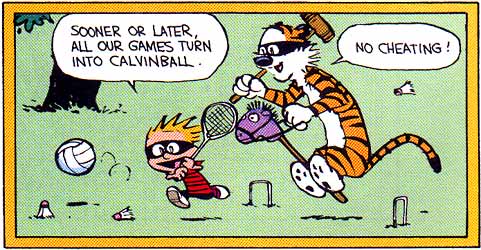 who “hijacked the Republican party on behalf of the rich”, go no further than TIm Dickinson’s article in this month’s Rolling Stone. This man continues to hold sway over the Republican congress critterz despite overwhelming public polls that show even Republicans and Independent rank and file don’t support his agenda. Norquest comes from two Republican institutions. He was originally in the Chamber of Commerce which is one organization that has no problem seeing lies and half baked arguments printed in newspapers around the country. Ronald Reagan used him to push his tax reform measures. It’s been one power grab after another backed by nothing more than dogma and a huge budget since then.
Over the past 25 years, Norquist has received funding from many of America’s wealthiest corporations, including Philip Morris, Pfizer and Microsoft. To build a farm team of anti-tax conservatives, Norquist shrewdly took the pledge to state legislatures across the country, pressuring up-and- coming Republicans to make it a core issue before they’re called up to the big leagues. “We’re branding the whole party that way,” Norquist says. “The people who are going to be running for Congress in 10 or 20 years are coming out of state legislatures with a history with the pledge.”
Norquist also built the anti-tax pledge into the DNA of the GOP by hosting weekly Wednesday meetings that enable activist groups representing everyone from gun nuts to home-schoolers to mix with top business lobbyists and conservative officials. The meetings, which began shortly after Bill Clinton was elected, turned Norquist into the Republican Party’s foremost power broker – and gave him a forum to enforce the no-new-taxes pledge as the centerpiece of the GOP’s strategy. “The tax issue,” he says, “is the one thing everyone agrees on.”
Norquist cemented his influence by forging an early alliance with Karl Rove and setting himself up as a gatekeeper to George W. Bush’s inner circle. Then, after Obama was elected, this ultimate Washington insider positioned himself as a leader of the anti-establishment Tea Party, complete with financial support from the billionaire Koch brothers. “These Tea Party people, in effect, take their orders from him,” says Bruce Bartlett, an architect of the Reagan tax cuts. “He decides: This is a permissible tax action, or this is not a permissible tax action. And of course, anything that cuts taxes is per se OK.”
Today, GOP politicians who have signed Norquist’s anti-tax pledge include every top Republican running for president, 13 governors, 1,300 state lawmakers, 40 of the 47 Republicans in the Senate, and 236 of the 242 Republicans in the House. What’s more, the GOP’s Tea Party foot soldiers are marshaled by House Majority Leader Eric Cantor – a veteran of Norquist’s farm team, who first signed the pledge as an ambitious member of the Virginia legislature. Under Cantor’s leadership, Norquist’s anti-tax pledge was directly responsible for last summer’s debt-ceiling standoff that wrecked the nation’s credit rating by leading the nation to the brink of default. “Congress was willing to cause severe economic damage to the entire population,” marvels Paul O’Neill, Bush’s former Treasury secretary, “simply because they were slaves to an idiot’s idea of how the world works.”
Yup. Bush’s former Treasury secretary thinks Norquist has congress hostage to the point that they are “willing to cause severe economic damage to the entire population simply because they were slaves to an idiot’s idea of how the world works.” The result of the work of Norquist and the Republican party has been staggering income inequality.
“The Republican Party has totally abdicated its job in our democracy, which is to act as the guardian of fiscal discipline and responsibility,” says David Stockman, who served as budget director under Reagan. “They’re on an anti-tax jihad – one that benefits the prosperous classes.”
Notice here that I’m quoting Republicans that have had extensive experience in economics, finance, and policy. Funny thing is that the most of these folks aren’t really worried about tanking the economy. What they are worried about is this. If you haven’t read Cannonfire today, you should. First, Cannon points to this. MSNBC got a hold of a memo from a lobbying firm spelling out its plan to use any propaganda means necessary to destroy OWS. The lobbying firm is associated with the American Banker’s Association.
CLGC’s memo proposes that the ABA pay CLGC $850,000 to conduct “opposition research” on Occupy Wall Street in order to construct “negative narratives” about the protests and allied politicians. The memo also asserts that Democratic victories in 2012 would be detrimental for Wall Street and targets specific races in which it says Wall Street would benefit by electing Republicans instead.
According to the memo, if Democrats embrace OWS, “This would mean more than just short-term political discomfort for Wall Street. … It has the potential to have very long-lasting political, policy and financial impacts on the companies in the center of the bullseye.”
The memo also suggests that Democratic victories in 2012 should not be the ABA’s biggest concern. “… (T)he bigger concern,” the memo says, “should be that Republicans will no longer defend Wall Street companies.”
Two of the memo’s authors, partners Sam Geduldig and Jay Cranford, previously worked for House Speaker John Boehner, R-Ohio. Geduldig joined CLGC before Boehner became speaker; Cranford joined CLGC this year after serving as the speaker’s assistant for policy. A third partner, Steve Clark, is reportedly “tight” with Boehner, according to a story by Roll Call that CLGC features on its website.
Another interesting association is noted in the memo.
The CLGC memo raises another issue that it says should be of concern to the financial industry — that OWS might find common cause with the Tea Party. “Well-known Wall Street companies stand at the nexus of where OWS protestors and the Tea Party overlap on angered populism,” the memo says. “…This combination has the potential to be explosive later in the year when media reports cover the next round of bonuses and contrast it with stories of millions of Americans making do with less this holiday season.”
Yup, it’s the divide and conquer strategy again. Since Wall Street can’t make the case, it’s going to use proxies like the Tea Party to do its dirty work. This should be no problem given the astroturf leadership put in place by folks like Dick Armey and Matt Kibbe. These guys are longstanding Republican Beltway insiders. The interesting thing comes in some of the rumors coming out from the committee itself. Supposedly, Boehner had actually agreed to put revenues on the table and provide cover to Republicans that feared Norquist and the Tea Party. Some Democrats never really engaged, some republicans refused to even discuss anything that didn’t include making the Bush Tax cuts permanent for every one, and there was some feeling that the next election would give some indication of which way the wind blows.
A Democratic aide had this eulogy for the supercommittee: “The worm has turned a little bit. The national conversation now is about income inequality and about jobs, and it’s not really about cutting the size of government anymore or cutting spending. 2010 gave one answer to that question. But 2012 will give another, and we’ve got to see what it is.”
I still think economist Jeffrey Sachs has the best take on what the real role of Congress should be in an schizophrenic economy like ours. This is what OWS is trying to point out but is getting blasted for by concentrated efforts in corporate media to publish propaganda. (I have quoted this before, but I’m quoting Sachs again.)
The big political lie of the Super-Committee is that the deficit must be closed mainly by cutting government spending rather than by raising taxes on corporations and the super-rich. Both parties are complicit. The Republicans want to close the deficit entirely by cutting spending; Obama has brandished the formula of $3 of cuts for every $1 of tax revenues. On either approach, the poor and middle class would suffer grievously while the rich and powerful would win yet again (at least until the social pressures boil over).
The key to understanding the U.S. economy is to understand that we have two economies, not one. The economy of rich Americans is booming. Salaries are high. Profits are soaring. Luxury brands and upscale restaurants are packed. There is no recession.
The economy of the middle-class and poor is in crisis. Poverty and near-poverty are spreading. Unemployment is rampant. Household incomes have been falling sharply. Millions of discouraged workers have dropped out of the labor force entirely. The poor work at minimum wages to provide services for the rich.
Until we have some realization that laws put into place for the last 30 years have created markets that are distorted, functional only for a few, and not the least bit reflective of anything remotely “free market”, a portion of the public is going to be willing to vote for people that spread lies. This is why the credibility of any one associated with OWS must be destroyed. The minute a huge portion of us wake up to the lies–much like what happened after publication of the Pentagon Papers and the invasion of Cambodia after Nixonian promises of winding the Vietnam War down–we’re not going to get the policy we need to put things right again. We desperately need to put things right again.

 peej
peej Carissa
 bostonboomer
 dakinikat
 ecocatwoman
 mablue2
 Mama Lopez
 peggysue22
 quixote
 skydancingguestblogger
 Mona (aka Wonk the Vote)



 Sky Dancing
Recent Comments