
Potus and Team Flunk Economics
Posted: March 11, 2009 Filed under: Equity Markets, Global Financial Crisis, No Obama, Team Obama, U.S. Economy | Tags: AEA, economists forecasts worsen, obama team flunks economics, WSJ survey of economists 6 Comments The Wall Street Journal’s Phil Izzo reports that a majority of economists participating in its forecasting survey believe the Obama economics team is failing to make the grade. The ratings for Obama and Geithner trail the grade for Bernanke who is chair of the Fed and show a lack of confidence in current economic policy. You may remember that Martin Wolf assigned Obama an “English B” or “D” in an interview with Zakaria posted earlier. It appears Wolf’s peers agree.
A majority of the 49 economists polled said they were dissatisfied with the administration’s economic policies. On average, they gave the president a grade of 59 out of 100, and although there was a broad range of marks, 42% of respondents rated Mr. Obama below 60. Mr. Geithner received an average grade of 51. Federal Reserve Chairman Ben Bernanke scored better, with an average 71.
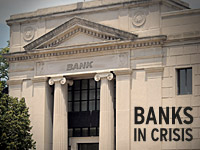
They are completely unimpressed with the stimulus package and most are now forecasting the recession to be both deeper and longer than previously anticipated. Previous forecasts predicted the trough to come in August. The consensus has now shifted the bottoming to occur sometime in October. Many believe a second stimulus package will be required, however, this was not a majority opinion. The worst grades were assigned to the handling of the banking crisis.
Economists were divided over whether the $787 billion economic-stimulus package passed last month is enough. Some 43% said the U.S. will need another stimulus package on the order of nearly $500 billion. Others were skeptical of the need for stimulus at all.
However, economists’ main criticism of the Obama team centered on delays in enacting key parts of plans to rescue banks. “They overpromised and underdelivered,” said Stephen Stanley of RBS Greenwich Capital. “Secretary Geithner scheduled a big speech and came out with just a vague blueprint. The uncertainty is hanging over everyone’s head.”
The primary professional association is the AEA (American Economic Association) which frequently surveys its members for both political affiliations as well as opinion on economic outlook. Surveys have consistently shown that the majority of members lean democratic. In the cited study of its surveys, the author McEachern (2006) finds that the ratio of contributions of AEA economists that contribute to democrats v. republicans is about 5.1 to 1. A survey by the Economists in the fall (not a scientific poll so results are subject to question) found overwhelming support for Obama over McCain in the general election. Given that, this pattern appeared responsible for this interesting finding from the WSJ’s December Survey.
The economists’ negative ratings mark a turnaround in opinion. In December, before Mr. Obama took office, three-quarters of respondents said the incoming administration’s economic team was better than the departing Bush team. However, Mr. Geithner’s latest marks are lower than the average grade of 57 that former Treasury Secretary Henry Paulson received in January.
Clearly, economists are not amused if their ratings and outlook have changed so quickly. The surveyed economists are now expecting worse numbers in the employment sector. They have also upped the probability of having a depression in the US.
Meanwhile, the economists surveyed this month predict that the economy will shed another 2.8 million jobs over the next 12 months as the unemployment rate climbs to 9.3% by December, up from the 8.1% rate recorded in February. Economists also see nearly a one-in-six chance that the U.S. will fall into a depression, defined as a decline in per-person GDP or consumption by 10% or more.
“We just keep moving the date [when the recession will end] out, hoping at some point in time we will be able to move the date back in,” said Diane Swonk of Mesirow Financial.
The economists were also glum about the international response. There were two more positive findings. Again, Bernanke achieved the highest approval and most felt the Fed was performing its functions well. There was also some consensus around the idea of putting money in the stock market for the long run.
Despite the growing criticism elsewhere, the respondents were broadly supportive of the Fed. More than 85% of the economists agreed that the central bank’s proliferating lending programs are well-designed, well-executed and helping the economy. And while grades for Mr. Bernanke remain off of their 2007 highs, the average has stabilized after falling as low as 69 in the November survey.
Amid all the gloom, there is a bright spot: Four-fifths of the economists said now is a good time to buy equities, especially if the investor has a long-term view.
Given most economists are registered democrats. these ratings suggest a rather large vote of no confidence.
Kabuki Financial Regulation
Posted: March 10, 2009 Filed under: Equity Markets, Global Financial Crisis, No Obama, U.S. Economy | Tags: AIG, bernanke, CDOs, Fannie, Freddie, Japan's lost decade, Swaps, zombie banks 3 Comments
Much speculation has been made recently about the possible similarities between Japan’s lost decade and financial crisis during the 1990s and the current US Financial crisis. It’s impossible to get through any graduate program in either finance or economics without spending time with the mounds of research the decade ignited. Since many folks are talking and writing about this period in the popular business press and speculating on the chance of an L-shaped recovery similar to the one experienced by Japan, I thought I’d focus some on Japan’s Lost Decade. There are some similarities but some important differences too.
About a month ago, The Economist asked if America’s crisis could rival Japan’s. Their answer was yes. This article examines something we’ve looked at twice before. That would the IMF study of banking crises. Both the Nordic banking crisis and the Japanese banking crisis are including in the database and highlighted by the study. The experience of these rich country crashes have both been bandied about as possible road maps to financial system recovery. Sweden nationalized its banks. There was also the lesson from South Korea. This country recovered after two years. The there was Japan. It let its banks languish. Japan became infamous for its decade of economic stagnation. Are we turning Japanese?
Japan’s property bubble burst in the 1980s and its run up prior to the bubble was smaller than ours. Additionally, Japan has a high domestic savings rate. America is the world’s largest debtor.
Judged by standard measures of banking distress, such as the amount of non-performing loans, America’s troubles are probably worse than those in any developed-country crash bar Japan’s. According to the IMF, non-performing loans in Sweden reached 13% of GDP at the peak of the crisis. In Japan they hit 35% of GDP. A recent estimate by Goldman Sachs suggests that American banks held some $5.7 trillion-worth of loans in “troubled” categories, such as subprime mortgages and commercial property. That is equivalent to almost 40% of GDP.
The authors of The Economist articles see both other differences too.
Japan’s central bank took too long to fight deflation; its fiscal stimulus was cut off too quickly with an ill-judged tax increase in 1997; and it did not begin to clean up and recapitalise its banks until 1998, almost a decade after the bubble had burst. But the history of bank failures suggests that Japan’s slump was not only the result of policy errors. Its problems were deeper-rooted than those in countries that recovered more quickly. Today’s mess in America is as big as Japan’s—and in some ways harder to fix.
Let’s look at the first statement about deflation. We’re not experiencing deflation in all sectors. The latest numbers from the BLS still show slight inflation. However, we are looking at some tax increases in the near future. Both Japan and the Roosevelt administration in 1937 instituted tax increases before both of these major financial crisis had be solved. In 1937, it led to a second economic and financial market down turn. In 1997 Japan, it slowed down recovery.
Our dollar is strengthening as the financial crisis impacts the global economy. Japan’s yen is similarly a strong world currency. The dollar is still seen as a  safe-haven asset. However, Japan is a net exporter while the US is a net importer. Japan is not a debtor nation, but a creditor nation. Japan could still rely on exports to deliver some economic stimulus. The US does not have that luxury. However, while South Korea and Sweden’s currencies weakened and helped make their exports look cheap, Japan’s yen stayed somewhat strong. This crippled Japan’s ability to fully use exports as stimulus making its recovery much longer than either those of South Korea or Sweden. The dollar continues to strengthen which also makes any exports we send to the rest of the world relatively expensive. It also continues our reliance on imports as they stay relatively cheap.
In some ways America’s macroeconomic environment is even trickier than Japan’s. America may have a big current-account deficit, but the dollar has strengthened in recent months. America’s reliance on foreign funding means the risk of a currency crash cannot be ruled out, however. That, in turn, places constraints on the pace at which policymakers can pile up public debt. And even if the dollar were to tumble, the global nature of the recession might mean it would yield few benefits.
I already mentioned that Japan’s households were historically good savers. This meant only the Japanese corporations had to ‘deleverage’ or get rid of debt during the Japanese crisis. I remember watching Japanese commercials at the time from the government extolling patriotic Japanese households to go spend like crazy at the same time the US government was telling Americans to consider saving. Well, that trend is reversing. Japanese households are beginning to decrease their savings rates, while Americans have rediscovered thrift. This is also something we’ve talked about. Here’s how that played in Japan and could play out differently here.
It’s Mardi Gras: You know, the Party before Penitence?
Posted: February 24, 2009 Filed under: Equity Markets, Global Financial Crisis, New Orleans, No Obama, president teleprompter jesus, Team Obama, U.S. Economy | Tags: bad banks, bailouts, fat tuesday, mardi gras, treasury department, zombie banks Comments Off on It’s Mardi Gras: You know, the Party before Penitence? I’m sitting here watching the kids get their costumes together for the big day of celebration called Fat Tuesday. That’s the day when you pull out all the stops because you know lean days (no meat, no alcohol, no fun) starts tomorrow. I guess I must be in hyper-metaphorical mode because it’s really striking me this year as a good fable. Tonight at midnight, the Krewe of Klean will take to the streets of the French Quarter to shovel all the leftovers into the dump trucks. The police will ride their horses down Bourbon street and announce that the Party’s over. They arrest anyone who want the party to continue at that point. You can either spend Ash Wednesday doing penitence in your bed or the Parish Prison.
When I first got out of graduate school I went to work at a small bank. I was soon lured to the biggest Savings and Loan in the middle of the country. I’d been working on loan pricing models and arranging bank income statements into an exercise called spread management and asset-liability matching. Big time company working for a big time CEO!
I have to admit, the only person that I really knew that was a CEO was my dad and he was great. His employees loved him. He gave them wonderful benefits and when they had sick children or they were gravely ill, he gave them time off with pay. His office manager was openly gay. His mechanics and body technicians were a diverse group for small town Iowa. Most of them worked for my dad the entire 30 years and loved him as much as I did. From the time he bought it when I was one, until he retired when I was in my 30s, the entire employee base was my extended family. So, I entered the business world thinking this was the model for management and boy, was I wrong.
WTF? Pre-Determined Stress Tests?
Posted: February 22, 2009 Filed under: Global Financial Crisis, No Obama, president teleprompter jesus, Team Obama, U.S. Economy, Uncategorized | Tags: Bank Stress Tests, Obama Bailout, Predeterimined Stress Tests 2 CommentsI finally have a bit of time to catch up on reading. I’m hosting 10 of my youngest daughter’s college friends for Mardi Gras in a very small house and it’s as wild as it sounds. I read this on Naked Capitalism and just didn’t even know what to say. So I’m going to throw it to you. Now mind you, this is an economics site and not a political one.
We have been skeptical that the pending Treasury stress tests on banks, designed to ascertain their state of health, were inadequately staffed and therefore could not do the job properly. Our big concerns were that they had too few bodies to e test financial data versus underlying documentation adequately (usually done on a sampling basis) and they lacked the expertise (and perhaps the mandate) to vet risk models (which we all know have performed impeccably over the last two years.
Is it a test if the results are pre-determined? Apparently Team Obama thinks so.
I’ve been wondering what exactly this stress test was going to be myself and how they were going to pull it off. I’ve worked in commercial banks, savings and loans, and at the Fed as well as the educational background and I’ve been scratching my head since it was first announced. No wonder the Obama administration is sounding so firm on the no nationalization issue. They’ve planned what they’re going to get ahead of time.
 This report and picture from CNBC.
Said one high-level official, “I think the market is missing that the whole intent of this process is to show that the banks have enough capital for even worse outcomes than we currently envision and to show there’s a program in place to give banks access to that capital if they need it.”
Yes, read it again. The process is to show us that the banks are okay. No wonder there’s no discussion of the Swedish or German approach to Banking crises. We’re going to be ‘shown’ everything is okay even under the ‘worse’ outcomes. Details on the worst scenarios are supposed to be out on Wednesday, but really, we’ve heard this before. Remember I mentioned in my last thread that much of the definitions had to do with what type of stock (common, preferred, some hybrid) winds up flowing from the Treasury to the target banks? Here’s another on the money paraphrase from the CNBC story.
The key misunderstanding in markets, officials believe, is how the public-private partnership will work and the way that new government capital, in the form of mandatory convertible preferred shares will become common equity.
One official said the public-private partnership will be voluntary so there will not be no mandate that banks offload assets at a loss. The official added that additional government capital will go into the banks as mandatory convertible preferred. Those shares remain preferred until realized losses and capital needs trigger conversion to common. As a result, the official said, the government may end up with a large stake in a given bank over a period of time, but it wont’ happen overnight.
May I suggest some new Savings Vehicles for the Obama Years?



When Inclusion is Really Exclusion
Posted: December 18, 2008 Filed under: A My Pet Goat Moment, Human Rights, No Obama, president teleprompter jesus, Team Obama | Tags: Gene Robinson prayer, Inauguration, Obama inauguration, Rick Warren prayer 11 Comments When I heard that Rick Warren was invited by PE Obama to say a prayer at the inauguration, my first thought was that Obama’s pandering to the religious right was more than just electioneering. Obama seems intent on including them in his administration. To me, this bodes poorly for science, rational thought, and civil rights. I was hoping he might ask some one like Rev. Gene Robinson, an Episcopalian Bishop to give the prayer because it would demonstrate a true commitment to civil rights. Rev. Robinson is openly gay and his appointment has been an ongoing source of controversy.
I was pleased to read Jeffrey Feldman’s blog today to find there was some one else out there with similar feelings. I always find the Feldman’s analysis of how people looking for positions of power ‘frame’ cultural and political issues fascinating. Feldman believes that Obama is not leading on civil rights issues but ‘tinkering’ and points to previous democratic leaders who took bold stands on civil rights issues. I’m going to highlight his main points, but would suggest you go look at the entire essay.
Obama, Feldman believes, comes up short on the leadership scale.
Marriage equality for gays and lesbians is not just some “social issue” akin to school uniforms, warning labels on music or smoking in restaurants. It is the current epicenter of the civil rights movement in America.
… When Lincoln took office, the abolition of slavery was the epicenter. When Wilson took office, the women’s suffrage movement was the epicenter. When FDR took office, poverty was the epicenter. When Kennedy took office, segregation was the epicenter
Thinking about Obama’s presidency in terms of an ‘epicenter’ of civil rights changes how we think about Rick Warren speaking at the inauguration.
Rick Warren is not just a pastor opposed to gay rights. He is a highly political leader of a mega-church who has compared abortion to the Holocaust and opposed marriage reform in terms equivalent to the bigoted plaintiffs in Loving v. Virginia–the landmark 1967 civil rights case overturning anti-miscegenation marriage laws. In an era where gay rights are the epicenter, Rick Warren is a widely recognized voice arguing against those rights.
Translating Rick Warren into the terms of previous civil rights eras is the key to seeing why his role at Obama’s inauguration is so troubling. By comparison, if this were Lincoln’s inauguration, Rick Warren would have been the equivalent pro-slavery pastor giving the invocation. If this were Wilson’s inauguration, Rick Warren would have been the equivalent of an anti-women’s suffrage pastor saying a prayer. For FDR, he would have been the same as inviting a pastor opposed to rights for the poor. For Kennedy, he would have been the same as inviting a pastor who spoke out repeatedly about the dangers of desegregation.
In each of these cases, for the President-elect to invite the a voice known for arguing against progress–and to do so in the name of political peacemaking, as Barack Obama has done with Rick Warren–would have revealed a tinkerer on civil rights, not a leader.
Feldman raises just one faucet of leadership where Obama fails. Obama’s cabinet appointments are being ‘framed’ as pragmatic. Obama has said he wants to be surrounded by folks that are not idealogues, but folks that will get things done. I guess I have to raise the question of how important is getting a bureaucracy to work when the overall goals are based on functionality and not vision. This is where I think Feldman sees the gay rights as symptomatic of Obama’s lack of leadership skills. As President, Obama should be doing more than just making history based on appearances. If Obama is ‘symbolic’ of civil rights gains, then what does it say to choose Warren, some one who assaults the civil rights of both women and GLBT Americans?
I feel compelled to add my voice to those asking Obama to disinvite Warren. What would it say if Obama, instead, asked Rev Robinson to contribute this prayer instead? Wouldn’t the inclusion of Rev. Gene Robinson make a compelling statement towards the future of civil rights in this country? Wouldn’t this be a strong statement given that the President Elect’s supporters contributed so heavily to the defeat of Prop 8 in California? This would be a sign of leadership and not just a going along with what worked to get Obama elected.

 peej
peej Carissa
 bostonboomer
 dakinikat
 ecocatwoman
 mablue2
 Mama Lopez
 peggysue22
 quixote
 skydancingguestblogger
 Mona (aka Wonk the Vote)



 Sky Dancing
Recent Comments