
Soylent Orange
Posted: December 2, 2010 Filed under: Democratic Politics, legislation, Surreality, Team Obama | Tags: Bush tax cut extensions, John Boehner 34 Comments The next Speaker of the House appears to be full of himself and ‘it’. Here’s a sample headline form the column The Capitolist at Politics Daily: John Boehner Calls Vote on Middle-Class-Only Tax Cut ‘Chicken Crap’. Yup, that’s fairly succinct.
Although no Democrats have agreed with Republicans to make the Bush tax cuts permanent for everyone, 31 moderate House Democrats signed a letter this week calling for a temporary extension of the tax cuts for higher incomes while the country continues to fight its way out of recession.
“I’m tying to catch my breath so I don’t refer to this maneuver that’s going on today as chicken crap. But this is nonsense, right?” Boehner said. “The election was one month ago. We’re 23 months from the next election and the games have already started to set up the next election.”
The source of Boehner’s ire was a House vote earlier Thursday that will prevent Republicans from offering their own bill to make all of the Bush tax cuts permanent for all Americans, including the highest earners, when the full chamber considers the middle-class cuts later in the day. The House voted 213 to 203 to vote only on the middle-class tax proposal, with 32 Democrats voting with the Republicans to keep the process open.
Earlier, Rep. David Drier (R-Calif.), who offered the Republican alternative, called the Democrats’ plans to vote only on their bill “a joke.”
“I think it’s very evident that this House could, with a majority vote, ensure that we don’t increase taxes on any Americans during these very troubling, difficult economic times,” Drier said. “The fact of the matter is that any member of this House that votes in favor of the measure before us is voting for a tax increase. They are voting in favor of increasing taxes on American businesses and investors.”
No Rep. Drier, you’re voting to return tax levels for the extraordinarily rich back to the extraordinarily job-abundant and budget-balanced Clinton years. There is absolutely no evidence that those tax cuts created jobs and there’s no evidence that not extending them to the richest will harm the economy. This is especially true since corporate profits are attaining record levels and corporate executives are getting record bonuses while we also maintain an incredibly unacceptable unemployment rate. You’re expanding the deficit for your donor’s interests. We’re not buying your B.S. for one moment.
So, where is our illustrious POTUS on this? The ONE every one was waiting for? Try Dana Bash’s CNN Political ticker headline on for size: Tax deal getting close, Democrats worried Obama may cave. Now, that’ s leadership that can!!!
Multiple congressional Democratic sources tell CNN that a compromise to extend all Bush-era tax cuts temporarily is getting close, and that there is increasing concern among Democratic lawmakers that the White House will not fight hard enough to get Democratic priorities in return.
“The goose is cooked,” said one senior Democratic source, “the question is what the larger deal is going to look like.”
Many Democrats are unhappy at the prospect of giving up on their goal of permanently extending tax cuts only for those making $250,000 and less. Sources in both parties say a deal in the works would extend all expiring Bush era tax cuts for all income levels for two or three years.
In exchange, Democrats are hoping to squeeze out of Republicans a wish list of concessions. Democratic sources say that list generally includes: A lengthy extension of unemployment benefits, without having to find offsets to pay for them; extending college tuition tax credits set to expire at the end of the year; extending the so-called “make work pay” tax credits also expiring December 31st; and the HIRE act, tax credits for businesses that hire unemployed workers.
So, it comes down to Let’s Make a Deal for middle class livelihoods by maintaining the status quo for the aristocracy. We get the kibble, they get the banquet.
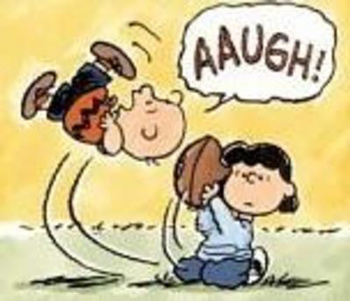
More from Politico on what’s likely to happen come January when Agent Orange actually gets the gavel. Ask not on whom the gavel falls, it falls on you.
House Republicans seem intent on blowing up the staid appropriations process when they take power in January — potentially upending the old bulls in both parties who have spent decades building their power over the federal budget.
The plans include slicing and dicing appropriations bills into dozens of smaller, bite-size pieces — making it easier to kill or slash unpopular agencies. Other proposals include statutory spending caps, weekly votes on spending cuts and other reforms to ensure spending bills aren’t sneakily passed under special rules.
On some level, their plans may create a sense of organized chaos on the House floor — picture dozens of votes on dozens of federal program cuts and likely gridlock on spending bills. And don’t forget that a lot of these efforts will die with a Democratic-led Senate and a Democrat in the White House.
Once again, it’s the worst government that corporate money buys working to make our lives miserable.
Breaking NEWS: The house just passed tax cuts for those families making up to $250,000. The measure is expected to die in the Senate.
Clean up on Aisle 111
Posted: December 1, 2010 Filed under: Elections, legislation, Team Obama | Tags: congressional gridlock, Republicans, tax cuts for the wealthy 61 CommentsThe results of the ‘Slurpee Summit’ couldn’t be more clear. Republicans have no intention of cooperating with anything that the President will put forward. Obama has two choices. Be the Democrat he was elected to be or switch parties. Gridlock is not on the horizon. It’s been here and will only worsen. Obama hasn’t even been able to get the senators from Maine to break away from their right wing colleagues on important issues in the past. How will this improve with worse ones on their way in? Incoming Republican Senators like Rand Paul from Kentucky and Mark Kirk from Illinois are giving interviews and they aren’t pretty.
Steven Benen’s Political Animal at The Washington Monthly analyzes a recent AP item from last night that was released about the time we started our discussion on the Slurpee Summit. Benen says this.
ALL 42 SENATE REPUBLICANS ANNOUNCE HOSTAGE PLAN…. The AP had an item late last night, noting that Senate Republicans were circulating a letter, “quietly collecting signatures” on a plan to “block action on virtually all Democratic-backed legislation unrelated to tax cuts and government spending.”
This morning, the Senate GOP leadership unveiled their letter — signed by literally all 42 members of the Republican caucus — declaring their intention to hold the chamber hostage until the tax policy debate is resolved.
“[W]e write to inform you that we will not agree to invoke cloture on the motion to proceed to any legislative item until the Senate has acted to fund the government and we have prevented the tax increase that is currently awaiting all American taxpayers. With little time left in this Congressional session, legislative scheduling should be focused on these critical priorities. While there are other items that might ultimately be worthy of the Senate’s attention, we cannot agree to prioritize any matters above the critical issues of funding the government and preventing a job-killing tax hike.”
In practical terms, this means that the Senate Republican caucus will join arms and kill literally every piece of legislation in the lame-duck session — New START, funding U.S. troops, the DREAM Act, etc. — until the government is fully funded and they’re satisfied with the outcome of the debate on tax policy.
What on earth does that last sentence imply? (I bolded it.) Already, the fall out is being felt in the discussion over DADT which Secretary Gates asked Congress to repeal. Are the Republicans really ready to hold the military hostage over taxes to the uber-Wealthy? It sure seems that way.
Just hours after Democrats and Republicans agreed to bargain on tax cuts, and fewer hours still after Defense Secretary Robert Gates implored Congress to repeal Don’t Ask, Don’t Tell this year, word leaked that Republicans aren’t really interested in any of it — a major repudiation of Gates’ authority.
All of this hostility began just hours after the President announced that he was ‘encouraged’ by meeting with House leaders on both sides. It included this:
“Today we had the beginning of a new dialogue that I hope — and I’m sure most Americans hope — will help break through the noise and produce real gains,” the president said after a two-hour session that included Democratic Congressional leaders as well. “And as we all agreed, that should begin today because there’s some things we need to get done in the weeks before Congress leaves town for the holidays.”
Read the Republicans’ letter to Henry Reid here and see if you can find any hint of reality in the statement above.
David Leonhardt at the NYT believes that Democrats have been given next to no options now.
Democrats have left themselves in a tough spot on the Bush tax cuts. After delaying the issue until after the election and then being trounced in that election, they find themselves with little leverage.
If they cannot come up with a plan that can win 60 votes in the Senate, which means at least two Republican votes, Republicans can filibuster any bill. All of the tax cuts would then expire on Dec. 31. When the new Republican House majority arrives in January, it will be able to make its first order of business a retroactive tax cut — forcing President Obama and Senate Democrats to choose between a purely Republican plan and an across-the-board tax increase.
So the big question is whether Democratic leaders can come up with any compromise that centrist Democrats and a couple of Republican senators — Scott Brown, who represents liberal Massachusetts? George Voinovich of Ohio, who is retiring? — are willing to accept.
“My Republican colleagues…know that the true effect of this letter is to prevent the Senate from acting on many important issues that have bipartisan support. With this letter, they have simply put in writing the political strategy that the Republicans pursued this entire Congress: Namely, obstruct, delay action on critical matters, and then blame the Democrats for not addressing the needs of American people. Very cynical, but very obvious. Very transparent.”
I’d say it’s more than that Harry. It’s a drop dead letter if there ever was one.
S. 510 Passed with the Tester-Hagan Amendment
Posted: December 1, 2010 Filed under: Farming, legislation | Tags: farming, food, legislation, nais, S 510 28 CommentsAs many of you may have heard, S 510 the food safety bill, passed the Senate yesterday. I’ve discussed this bill once before. In that post I asked that people ask their Senators to vote for the Tester-Hagan amendment if they must vote for this poorly done bill. I’m happy to say the Tester-Hagan amendment passed with the bill, along with several other amendments that will make it a bit easier on small farmers. Thanks so much for writing and calling about this!
Even with bill’s passage all hope is not lost by any means. Because of Democrat foolishness, the Senate bill includes provisions about taxes, a House perogative. So the House Democrats will probably stop the Senate bill for a bit.
The bill has to be reconciled with the House version once all these mistakes are rectified, if they can be rectified. The House version of the bill is much, much harsher to small farmers. I might, therefore, be asking you all to write and call as the reconcilation process goes forward.
There are several other ways to stop the worst of this bill. One is when the UDSA/FDA/HSA (Why the heck is Homeland Security involved?) actually make up the rules. There will be hearings, committees, ‘listening’ sessions and more. Although the path to public involvement in these hearings is convoluted and arcane, it can be done.
For example, up until last year small farmers, and anyone who owned a horse, goat, sheep, cow, chicken, duck, or pig as a pet, had NAIS looming before them. NAIS, the National Animal Identification System, was to mandate an RFID for every ‘farm’ animal in this country. It was meant to facilitate disease outbreak tracing and enhance the ability for American meat producers to sell their products overseas.
NAIS mandated one RFID per ‘lot’ of animals. So a ‘lot’ of 10,000 chickens hatched, raised and slaughtered together would need one RFID tag. That’s great for a CAFO. But for a small farmer, who hatches maybe 100 chickens here, 100 there, or even less, it’s disaster. Each chicken or small lot would need a number. The system worked the same for horses, cattle, goats, etc. So I, with my 17 18 (keep forgetting the little one) goats, would pay 18 times what someone with 1,000 goats kidded at once would pay. Yea, that’s fair. The NAIS rules also meant a ton of other impositions. Farmers would be required to report any movement of animals within 24 to 48 hours. If you rode your horse down a trail, every farm you passed would have to report your movement into and off of their property. Take your pet goat to the vet in your car? Report that movement within 24 to 48 hours or face a fine. Animal die? Report it. Animal born? Report it. Animal moved to a different pasture through a common area? Report it. In order to facilitate all this reporting your property would be registered as a ‘premises’ and given a ‘premises number’. Legally, the owner of a premises has a different set of rights, lesser rights, than the owner of property.
When the particulars came out the government ignored the unrest. Then the listening sessions started, and they had to add more, and more. Comments on the Federal register grew long and loud. The listening sessions were attended by people 80% to 95% against NAIS. People dared the government to pass it, promising stubborn, non-violent resistance.
NAIS died last year, supposedly. Funding was dropped by Congress and the FDA/USDA stopped pushing it. However, elements of it are in the S 510 bills.
We can do this again with the Food Safety Act. We can make it palatable and workable for the little farmers. People power CAN fight against corporate ruled government if we are united. Unity is the key. With NAIS all sides came together to fight it. I was on mailing lists with people who became rabid tea-partiers. I didn’t agree with their solutions for everything, but I, and other liberals like me, did agree with how to fight NAIS. And so when someone made a political comment, the rest of us chastized them. ‘The list is only about NAIS, keep the rest out of it. We need everyone to fight it.’ This kind of unity is going to have to happen more and more, to fight against government take-over of our rights to privacy, freedom of speech, travel, and more. I welcome it.
Added the following to discuss the Washington Post article mentioned by BB in her great news roundup. These are my admittedly argumentative thoughts on the points in the article. I think the Food Safety bills could be good, but they need to be gone over very carefully and the wording needs reflect reality. It’s too vague right now.
Point 1: ‘ Would require farmers and food manufacturers to put in place controls to prevent bacteria and other pathogens from contaminating food.’
The bill requires ‘GAPS’ (Good Agricultural Practices) to be put in place for farmers. These are basically flow charts that are meant to identify problem areas and tell the farmer how to prevent them. They probably work ok for a farmer who grows 10000000000 acres of lettuce. However, I grow about 2 4 x 100 ft beds of lettuce, 4 4 x 100 ft beds of broccoli, 8 4 x 100 ft beds of potatoes… well you get the idea. I’d have to have a GAPS, generally designed by a food engineer ($$$$) for each vegetable and for how the growing of each vegetable impacts the other. I really resent this kind of linear, engineering thinking that is applied to everything. Learning about, and deciding to follow ‘good agricultural practices’ is something every farmer does. If they don’t, they go out of business.
Point 2: ‘Would require the Food and Drug Administration to regularly inspect all food facilities, with more frequent inspections in higher risk facilities. ‘
Who defines ‘higher risk’? Right now, it seems the FDA thinks little dairies and creameries are high risk. The factories that produced the 550 million egg recall had the equivalent of ‘GAPS’ in place. They had inspections, and got fined and written up, over and over again. Most of the HAACP (equivalent of GAPS) stuff requires them to self inspect and self report. The problems in these factories were ongoing over years. But a little cheese producer that has never tested positive for listeria is shut down because a California seized sample, held in improper conditions by the government, stripped of all the actual tracing lot numbers which are supposed to allow backtracing of food by that same government, ad nauseum, came back positive for listeria.
Point 3: ‘Would allow the FDA to order a mandatory recall of any product it suspects may harm public health. ‘
This one sounds great. Of course, the FDA basically already has this ability. Note the wording ‘suspects may harm’. This could mean that a small farm or food producer is effectively destroyed while the FDA determines with the glacial slow movement of government facilities dragging their collective feet, that the farm/food producer did nothing wrong.
Point 4: ‘Would improve disease surveillance, so that outbreaks of food poisoning can be discovered more quickly’
I like this one. But how are they actually going to do it? More testing I suppose. Who pays? The consumer and the farmer. What about testing post slaughter, post canning, post wrapping, etc?
Point 5: ‘ Would require farmers and food-makers to maintain distribution records so that the FDA can more quickly trace an outbreak to its source. ‘
This is NAIS-like. At one time the government was talking about requiring every head of lettuce or broccoli to have an RFID. Interesting concept, and it may come to that. It would provide great tracing, until the RFID is removed. And even then, what if you return to the store with an RFID tag from lettuce that you said made you sick. You neglect to mention you ate that lettuce right after you cleaned the cat box… RFID tags won’t do anything about post-slaughter contamination, which is where MOST of the contamination of meat happens. The tag is removed from the animal when it’s slaughtered, of course.
Having said that, I don’t know of a farmer or food-maker that doesn’t maintain distribution, aka sales, records. Maybe it’s different in the big ag operations.
Point 6: ‘Would require foreign food suppliers to meet the same safety standards as domestic food-makers. ‘
I love this one. Could we reverse it and make it so that our food suppliers have to label GMO products and so on? That would rock.
Point 7: ‘Would exempt small farmers and food processors.’
This is good. I’ll believe it when I see it. Tester’s amendment says that small food producers have to abide by either the state regulations or the fed regulations. In practice, the fed usually tells the state how to regulate, or withholds money. So it’s all one in the same. I’m a bit worried about the part (they might have removed this in the final bill) that sends a farmer to jail for 10 years if they ‘distribute adulterated food’. The problem is the definition of distribute, adulterated and even food. Heh. Raw yogurt can be considered adulterated by some, because it’s still got the little raw beasties in it that make it so good.
Final point: ‘Would add 17,800 new FDA inspectors by 2014.’
I’ll believe that when I see it. Paid for by what? Are they going to be like the TSA? Who’s training them?
Here there be busy little lame ducks
Posted: November 19, 2010 Filed under: legislation | Tags: web censorship 26 Comments Wired has the latest atrocity passed in a Senate Committee during the lame duck session. Women can’t get fair pay practices but we can sure get more violations of our civil rights.
On Thursday, the Senate Judiciary Committee unanimously approved a bill that would give the Attorney General the right to shut down websites with a court order if copyright infringement is deemed “central to the activity” of the site — regardless if the website has actually committed a crime. The Combating Online Infringement and Counterfeits Act (COICA) is among the most draconian laws ever considered to combat digital piracy, and contains what some have called the “nuclear option,” which would essentially allow the Attorney General to turn suspected websites “off.”
COICA is the latest effort by Hollywood, the recording industry and the big media companies to stem the tidal wave of internet file sharing that has upended those industries and, they claim, cost them tens of billions of dollars over the last decade.
The content companies have tried suing college students. They’ve tried suing internet startups. Now they want the federal government to act as their private security agents, policing the internet for suspected pirates before making them walk the digital plank.
No one says that stealing people’s creative and intellectual effortss isn’t wrong and bad for artists, musicians, and writers. It is illegal in most places outside of China. However, do we have to go as far as shutting down people’s websites–as Wired calls it–“based upon a vague and arbitrary standard of evidence, even if no law-breaking has been proved”?
Wired provides a list of sites that could potentially go dark. They include:
… Dropbox, RapidShare, SoundCloud, Hype Machine and any other site for which the Attorney General deems copyright infringement to be “central to the activity” of the site, according to Electronic Frontier Foundation, a digital rights group that opposes the bill. There need not even be illegal content on a site — links alone will qualify a site for digital death. Websites at risk could also theoretically include p2pnet and pirate-party.us or any other website that advocates for peer-to-peer file sharing or rejects copyright law, according to the group.
In short, COICA would allow the federal government to censor the internet without due process.
Sounds like we need to start writing Congress Critterz again.
S. 510, please call for the Tester-Hagen amendment
Posted: November 17, 2010 Filed under: Farming, Food, just because, legislation | Tags: farming, food safety, legislation, S 510 27 CommentsNote: I wanted to get this written up and posted yesterday, but family duties called me away and I spent all day at my parents’ house taking care of my sister.
Right now I am stressing about Senate Bill 510. The bill passed cloture today, and will come up for vote tomorrow or Friday, I believe. An important amendment, written by Senator Tester and Senator Hagen, would exempt small farms from many of the onerous provisions of this bill. Food experts, farm advocates, and consumer safety experts have debated the provisions of the bill over at Grist (see this article on if the bill will better provide food safety, this article on if the bill will harm small farmers, and this one on if we really have a food safety crisis), if you are interested in their arguments.
If S 510 passes without the Tester-Hagen amendment and then goes into reconciliation with the absolutely horrid (for small farms) House bill (HR 2749) which passed last year, I expect to be eventually regulated out of business. And I expect many, many other small farms to suffer the same fate. The law has no provisions in it to protect small farms; it simply urges the FDA and FEMA, yes, our food supply would come under FEMA, to consider small farms when making regulations. AHAHAHAHAHAHAHA. The Tester-Hagen amendment makes it law that they do so. The Bill is partly concerned with ‘terrorist’ scenarios, such as someone poisoning our food supply. If we were getting food from millions of small family farms, such a thing couldn’t occur. But the bill gives FEMA the power to intervene in cases of suspected terrorism, or food ‘adulteration’, however they end up defining it.
There’s some good parts in this bill. It does provide more oversight for Big Ag. I’m sure that’ll last until the regulations actually get written (cynical, cynical me). But as I see it, this bill and the House bill are just grandstanding so government people can say they ARE doing something about the supposed food safety crisis. If the USDA and the FDA had the funds to do the inspections they need and if our Senators and Representatives would seriously look into getting the lobbyists out of the regulatory mix, we’d not need these bills at all.
Anyway, I ask you to call or email your Senators and ask them, if they must vote for this bill, that they also vote for the Tester-Hagen amendment. It’s probable that every Dem Senator will vote for it, so let’s do what we can to make it more palatable to the small food producers that hope to feed us all.
More links of possible interest:
S510 may mean 10 years in prison for Farmers
Food Safety: The Worst of Both Bills
Frequently Asked Questions about S 510
I’m trying to look on the bright side. If the bill passes, is reconciled with the House bill and becomes the pile of ummhmmm I suspect it will, it can still be fought during the formation of regulations phase. Oh joy.

 peej
peej Carissa
 bostonboomer
 dakinikat
 ecocatwoman
 mablue2
 Mama Lopez
 peggysue22
 quixote
 skydancingguestblogger
 Mona (aka Wonk the Vote)



 Sky Dancing
Recent Comments