
Wall Street Broke the Mirror: 7 more years of bad times
Posted: September 20, 2010 Filed under: Global Financial Crisis Comments Off on Wall Street Broke the Mirror: 7 more years of bad times One week ago, I highlighted a study by Reinhart & Reinhart on VOXEU that’s getting some play among the macroeconomics crowd. I  think it’s especially significant to talk about that study and the Robert J Shiller piece about it on Project Syndicate in light of NBER’s dating the end of the last recession. It doesn’t feel like the recession ended about 15-16 months ago [June, 2009] for the unemployed and most Americans and this recovery is not going to feel like most recoveries we’ve had recently because of the exogenous shocked that caused it. That would be a financial crisis. As I said before, the Reinhart & Reinhart study shows that recessions that follow a financial crisis take about 7 -10 years to work themselves to an end. The last few recessions that we’ve had were caused by tight monetary policy. This basically means that the minute the FED loosened rates, the economy improved.
Additionally, let me add that unemployment is a lagging indicator. This means that you’ll see the trough (bottom) of a recessions as indicated by a composite of indicators including leading indicators before you’ll see any improvement in unemployment. That is given that Okun’s law--the traditional relationship between GDP and unemployment–is even operating on the same terms any more. Because of our incredible propensity to buy imports, and the shifting of incomes from spenders (poor-to-middle class households) to savers (the rich) the expenditures multiplier isn’t what it used to be either. The last thirty years has taken its toll on macroeconomic empirics, but not the theory itself. Yes, we’re still all Keynesians now. The models, the variables and the equations are pretty much the same. What’s changed is the parameters. We don’t see the widespread impact of things that we used to be able to count on because the last thirty years have created a lopsided economy based on imports and oligopolistic markets ruled by megacorporations. It’s sort’ve like we’re building up an immunity to antibiotics because the germs have had the time to change their systemic molecular structures to their advantage.
So, yes, the NBER dated the end of the last recession as officially being June, 2009. Again, it was based on a composite of economic measurements with corresponding trough dates.
Macroeconomic Advisers’ monthly GDP (June)
The Stock-Watson index of monthly GDP (June)
Their index of monthly GDI (July)
An average of their two indexes of monthly GDP and GDI (June)
Real manufacturing and trade sales (June)
Index of Industrial Production (June)
Real personal income less transfers (October)
Aggregate hours of work in the total economy (October)
Payroll survey employment (December)
Household survey employment (December)
It’s still the Economy Stupid! (version 9.999999999)
Posted: July 30, 2010 Filed under: Global Financial Crisis, U.S. Economy Comments Off on It’s still the Economy Stupid! (version 9.999999999)
Personal Consumption Expenditure Revisions via Calculated Risk Blog. (People are not partying like it's 1999.)
Chatting up the ladies of The View is not going to get the majority of people’s minds off the worsening economy. The recovery is definitely slowing down and there are signs in the latest national product and income reports that are very disturbing to us necromancers of macroeconomics. The persistently high unemployment rate is taking its toll on consumer spending. Since that’s the main driver of the U.S. economy, things are not improving. It looks like on a sideways slide.
One of the things that I really noticed is what Keynes referred to as the paradox of thrift in action. The personal savings rate for the second quarter was reported as 6.2 percent of disposable income. This is significantly higher than the 4 percent that most of the forecasters had anticipated. Coupled with poor consumer sentiment, this is a bad sign.
Confidence among U.S. consumers fell in July to the lowest level since November, posing a threat to the biggest part of the economy.
The Thomson Reuters/University of Michigan final index of consumer sentiment declined to 67.8 this month from 76 in June. The preliminary measure was 66.5.
Employment growth has been slow to take hold and lower home prices are depressing wealth. The lack of confidence may further restrain consumer spending, which accounts for 70 percent of the economy, and limit the pace of growth.
“Consumers have a lot to be concerned about,” Eric Green, chief market economist at TD Securities Inc. in New York, said before the report. “Private job growth is showing signs of slowing, not accelerating,” he said, and stock prices have declined since peaking in April.
People are not feeling secure enough about their wealth (home values, stock portfolio values, etc.) and their jobs to spend money. Instead, they are either saving their money or paying down debt. Either behavior has a bad result for the economy because it doesn’t translate into immediate spending. Because banks are building liquidity and capital and boosting their incomes via fees and arbitrage of investments, they are not lending. This means consumer savings is not translating into business investment. Plus, what business in their right mind is going to expand their concerns when you don’t see customers coming through the doors?
In fact, one of the most interesting trends we’re seeing right now is that businesses are buying equipment and not hiring workers. What profits they do manage to make is going to upgrade existing capital.
The fact that businesses seem to be investing more in equipment than in hiring may be a reason why households have been reluctant, or perhaps unable, to pick up the pace of their spending.
“There are limits on the degree to which you can substitute capital for labor,” Mr. Ryding said. “But you can understand that businesses don’t have to pay health care on equipment and software, and these get better tax treatment than you get for hiring people. If you can get away with upgrading capital spending and deferring hiring for a while, that makes economic sense, especially in this uncertain policy environment.”
Even the Federal Reserve is worried about the current trends.
On Thursday, James Bullard, president of the Federal Reserve Bank of St. Louis, warned that the Fed’s policies were putting the economy at risk of becoming “enmeshed in a Japanese-style deflationary outcome within the next several years.”
The warning by Mr. Bullard, who is a voting member of the Fed committee that determines interest rates, came days after Ben S. Bernanke, the Fed chairman, said the central bank was prepared to do more to stimulate the economy if needed, though it had no immediate plans to do so. On Friday, the government will release its estimate of gross domestic product for the second quarter of this year.
At the Fed, Mr. Bullard had been associated with the camp that sees inflation, the central bank’s traditional enemy, as a greater threat than deflation brought on by anemic growth. Until now he had not been an advocate for large-scale asset purchases to reinvigorate the economy.
Meanwhile, Congress seems completely out to lunch when it comes to fiscal policy. There’s a concerted effort by the right wing of the Republican party and many DINOS to push a meme that it’s all the fault of selfish poor people. I was appalled to read this particular bit of that in WaPO (h/t to BB). The current line is to push people’s needs to actually cash in on the insurance programs they’ve paid for to help them through bad times (e.g. social security, medicare, unemployment insurance) as ‘entitlements’ or some kind of welfare. This branding of safety net insurance programs is horrifying. My father paid for his social security benefits for over 70 years since its inception. To suggest that he’s adopted a “me first” attitude because he’s cashing in on his benefits it’s beyond morally reprehensible. Indeed, Neel Kashkari –a former Bush Treasury appointee–suggest that we should sacrifice further for the good of U.S. corporations. It’s like the fact they’ve been underpaying us for our increased productivity for decades now wasn’t enough sacrifice.
Cutting entitlement spending requires us to think beyond what is in our own immediate self-interest. But it also runs against our sense of fairness: We have, after all, paid for entitlements for earlier generations. Is it now fair to cut my benefits? No, it isn’t. But if we don’t focus on our collective good, all of us will suffer.
When a Republican like Kashkari starts talking about the ‘collective good’ you best mind your wallets. He touts TARP bailouts while telling us we need to fork over our future social security benefits. (Notice he works for Pimco now, he undoubtedly wants to churn up some investment fees from privatized social security accounts and forced saving.)
If you dig deeper into the numbers, it appears that the only reason we’ve experienced lackluster growth has been due to programs like the home credits for first time buyers, cash for clunkers, and money to states that have been used to save state workers jobs. Basically, government programs have given a short, one time injection into various markets but it’s not stopping their trends. It’s only slowing the momentum.
I’ve mentioned that Louisiana is about ready to go off the ‘budget cliff’ in a year and that all state schools and health facilities face an across the board cut of around 24%. From what I can tell already, most of that will come by nearly halving the work force at nearly all state run institutions. No wonder Republicans want to cut ‘entitlements’. How can you shift so many folks on to unemployment rolls and still save the state budget? Louisiana isn’t even one of the worst states like California. (Although if Bobby Jindal continues to have his way, it will be.) If any thing, states like California should be asking the Federal government to stop subsidizing North Dakota and Nebraska and send them back their federal tax money. Without that money, states like Louisiana would’ve been in the dumps at least two years ago.
I’m not sure why the group that’s in Washington DC doesn’t seem to get the extent of the bad news when it comes to the economy. It’s either purposefully ostrich-like or purposefully callous. Maybe it’s because a lot of them have forgotten what it’s like to live through continually high unemployment and job insecurity. It’s possible that there’s just way too many lawyers there and none of them have actually had experience with running a business or working like a serf for an unappreciative corporation.
Whatever it is, they need to get over themselves really quickly. If these patterns continue, it’s going to be a long slow decade and I for one, will not look kindly on any one that asks me to sacrifice for the good of corporate profits. This is especially when that sacrifice comes to giving back benefits that I’ve paid for since I was 15 years old and got my first job with a paycheck.
Economic Fairy Tales and other Bed time stories
Posted: July 2, 2010 Filed under: Global Financial Crisis, The Great Recession | Tags: austerity, fisical stimulus, the economy, unemployment 2 Comments One of the things that grew out of the Reagan years was a set of myths. Primary among them were economic myths. The first one was that the country was overtaxed. The second was that there was no particular useful role for government. The third was a revival of our country’s Puritan ethos. None of these were particularly helpful and all of them were put to death–in short order–during the Clinton years by theory and empirics. Well, they were put to death by every one but those that rely on faith and ideology rather than theory and data. I see a revival of these myths in the signs of tea partiers. The tea party folks realize we’re losing our way of life. The problem is they are so angry they are looking to Reagan Fairy tales for answers. Republicans and Blue dawgs are playing those fears like magical harps. Fairy tales calm children’s fears, but they do not solve real problems.
A really good example of a stupid hypothesis in Reagan’s VooDoo economics that was soundly put to death by empirics was the Laffer curve.(That was the basis of the argument that we’re overtaxed.) However, I do know some one that has to rely on old articles to bring this ‘view point’ into his classroom. No matter how many ways I insist that it’s not our job to bring failed hypotheses to students he still keeps clapping for this very dead Tinkerbell. He wants to believe he’s over taxed no matter what the data says and I haven’t seen him for awhile but I have no doubt he’s participating in whatever passes for a tea party up in his rural part of Washington.
Paul Krugman’s hair is on fire about the Austerity Myth today. He’s not the only one. Here’s something from The Economist with the  same urgency on the international scale called the Austerity Alarm. These articles seem even more prescient given the news about unemployment today. The U.S. economy is not creating jobs. It’s still losing them in large numbers. The economy lost 125,000 jobs last month. The previous dips in the unemployment rate seem to have come from part time Census worker jobs. This one comes from people giving up so they’re not counted. I warned 1 1/2 years ago that the Porkulus bill was not concentrating spending on the right things and too full of useless tax cuts. Surprise! Surprise! Job creation remains elusive. Mortgage rates are at record lows and without bribes to first time buyers, the housing market–perhaps the most central element of the American Dream Fairy tale–looks like a lost market. So, the best our leaders can do in response to all of this is reheat policies that failed during the Hoover Administration.
As Krugman points out, the U.S. and nearly all the world’s economies remain in a deep recession, so why are all the leaders talking about austerity programs and acting like the big issue is that some imaginary set of investors will treat them like Greece if they act responsibly? Why are they repeating the policies that made the Great Depression worse to begin with and then the policies that turned the recovery of the mid thirties into a double dip depression?
Krugman suggests that it’s the power of the village that keeps churning out the myth. It’s not the village economists that embrace this fairy tale. It is our village idiots and unfortunately, they seem to be in charge of economic policy these days. This is not to deny that the U.S. has long term budget problems. Demographics are presenting serious problems to both Social Security and Medicare. Both need to be revamped to meet future commitments. Revamping, however, does not mean tearing down all the buildings in the village to stop one fire from spreading.
So the next time you hear serious-sounding people explaining the need for fiscal austerity, try to parse their argument. Almost surely, you’ll discover that what sounds like hardheaded realism actually rests on a foundation of fantasy, on the belief that invisible vigilantes will punish us if we’re bad and the confidence fairy will reward us if we’re good. And real-world policy — policy that will blight the lives of millions of working families — is being built on that foundation.
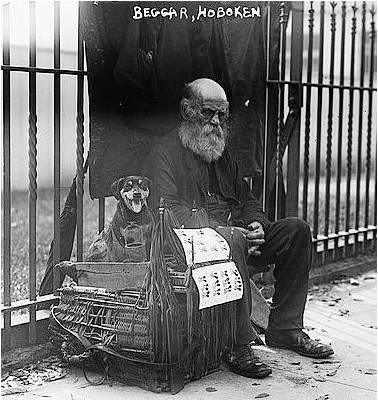 So Krugman is a liberal and of course, the argument against him is that all we liberals believe is that the our big daddy government will get us out of trouble. So, why is the same argument coming from The Economist whose subtitle to their op-ed piece reads “Both sides in the row over stimulus v austerity exaggerate, but the austerity lobby is the more dangerous”. They are hardly a bastion of liberal thinkers and they call the austerity hawkers dangerous.
The austerity fad is also distorting politicians’ priorities. Many European governments, for instance, are fixated on cutting their deficits, when they should also be trying harder to shake up their labour and product markets. A new analysis by the IMF suggests that fiscal austerity coupled with structural reforms would yield far higher growth than austerity alone. In America the new deficit-focused climate is preventing politicians from passing a temporary (and sensible) fiscal stimulus package without inducing them to tackle the sources of the country’s huge medium-term deficit by, for instance, reforming social security. The result probably won’t be another Hooveresque Depression. But it could be a recovery that is weaker and slower than it should have been.
Ben Nelson and Republican Party own the double dip
Posted: June 24, 2010 Filed under: Global Financial Crisis, U.S. Economy Comments Off on Ben Nelson and Republican Party own the double dip In an act that defies, history, logic, economics, and humanity, the Senate Dems once again were blocked by the Party of the Grinch. What a stand! After all, all who would want to increase the National Debt by 0.00043 percent ? Why do they take what they consider a ‘reasoned’ stand against the deficit only when it applies to the folks that will be forced to soup kitchens?
No Republicans voted yes, while Sen. Ben Nelson (D-Neb.), who had also rejected earlier versions of the legislation, voted no. Sen. Joe Lieberman (I-Conn.) voted yes after voting on previous procedural motions. Sens. Robert Byrd (D-W.Va.) and Lisa Murkowski (R-Alaska) were absent.
After the vote, Senate Majority Leader Harry Reid (D-Nev.) repeated comments he made earlier Thursday that the Senate will now move to a small-business bill. Reid said the unemployment benefits would not be added to that bill, but others have speculated that the provisions could still be attached to the small-business measure.
The failure to move the tax extenders package, which also would have renewed scores of individual and business tax breaks, illustrates the extent to which fears about the deficit are dominating the legislative process five months before a midterm election in which Democratic control of Congress will be on the line.
If only the Salvation Army went public, then I’d recommend you go long on them and maybe we’d be in the money for a change.
More Absentee Policymaking
Posted: June 24, 2010 Filed under: Global Financial Crisis, U.S. Economy Comments Off on More Absentee PolicymakingThere are so many policies running amok these days that it’s hard to keep track of them all. I’m switching my focus back to the

I'll gladly pay you Tuesday for a Hamburger today
financial markets for a bit where Politico’s Ben White is chasing down the bites and pieces that will be part of the Financial Market Sausage. There’s a lot to read over there, but this stood out to me because it seems that there are a many policies going through Congress right now to take care of various crises and there’s a vacuum of executive leadership. (If you’d like to read where they stand, it’s on the White House Blog. That beats hearing it read off of a teleprompter as far as I’m concerned.)
Wall Street executives are complaining that the Obama administration has been largely absent from the financial reform conference process, failing to step up and push back on big issues such as the exact language on derivatives reform and the amendment from Sen. Susan Collins (R-Maine) on capital requirements.
The only thing that brings me a sigh of relief–coupled with a wtf–on this statement is that the complaints about the lackadaisical one are coming from “Wall Street” Executives. I would hope the pushback would come from people wanting the President to be more active in pushing a strategic agenda for Wall Street translucence and safety. As an example, Blanche Lincoln has been trying to ride derivatives reform to re-election. You think she’d like Presidential backing.
Several other things stood out. The discussion on Fannie and Freddie may lead to a liquidation authority. This is a huge deal. These behemoths were obviously mismanaged and misregulated. However, the concern now is with the ratings of the agencies’ debt which is a staple in nearly every ‘safe’ investment portfolio including banks. I’d hate to be any one stuck with one of their bonds should this language become law. I should mention that I’m still betting that parts of my pension plan and yours contain a number of them. This could tank the implicit guarantee from the FEDs on any of those quasi-agency bonds moving them all up a risk level or six.
Bank executives were panicking last night over a proposed fix to Title II of financial reform literally penciled in at the last minute. The fear is that that the proposed change to the orderly liquidation authority could leave banks on the hook for a possible wind-down of Fannie Mae and Freddie Mac that could cost as much as $400 billion. In the House counter-offer below, Fannie and Freddie are penciled in as falling under the definition of ‘financial company,’ meaning they could be resolved by the orderly liquidation process. This process is paid for by the sale of the failing company’s assets and/or through assessments on other financial companies, possibly putting the Street in line to pay for the liquidation of the troubled housing giants.
There are also some interesting tales concerning Dodd and MA Senator Scott Brown who seems to be seeking an exception to every rule. The NYT editorial page stepped in for stronger regulation. It also seemed to take a direct smack at Brown. As long as these things get traded on an exchange, they must be fairly standard, audited and watched by the Exchange, and meet Exchanges standards. This is essential as far as I’m concerned.
Exceptions to the rules in the Senate bill are narrowly drawn. Painstakingly negotiated and uniquely customized contracts would not need to be publicly traded, nor would derivatives deals that commercial businesses use to hedge legitimate risks. Any attempt by negotiators to expand the exceptions would be moving in a dangerously wrong direction.
Lawmakers also have to keep the definition of an “exchange” narrow. A transparent exchange is a trading facility in which many participants make bids and offers and everyone can see what prices were offered and paid. Proposed language from the House for the final bill would allow telephone deals to qualify as a proper trade, which is seriously wrongheaded.
Meanwhile, the housing market is showing signs of weakening. Since this is the major wealth item for most American Families, this will surely depress consumer confidence and buying plans. This also means continued problems for Fannie and Freddie assets and any one holding anything remotely related to mortgages.
“Housing is contributing absolutely zilch to economic growth,” said William Wheaton, an economics professor at the Massachusetts Institute of Technology in Cambridge, Massachusetts. “It’s not that people want houses to be expensive. They want the housing sector to start pulling up the economy as it has done after past recessions, and that’s not going to happen until prices rise.”
When that price gain happens, it will have to be substantial to make up for losses in home values, said Columbia’s Stiglitz.
“Even a 3 to 4 percent increase in value won’t help people who have seen their homes decline 20, or 30 or 50 percent,” Stiglitz said.
Bloomberg has a fairly good summary of what’s left standing in the Financial Overhaul Bill. (You would think the President would take some interest in this at this late stage of the game, but he appears to be off having hamburgers with Russian President Medvedev.) The House and the Senate are hammering out what will stand of the Volcker Rule, how to deal with swaps, and other extremely important measures. So far, the ban on proprietary trading by banks is holding.
On the Volcker measure, lawmakers were awaiting proposed changes to the Senate language that would ban U.S. banks from proprietary trading and bar them from investing in or sponsoring hedge funds and private-equity funds.
Dodd may propose incorporating aspects of a proposal from Democratic Senators Jeff Merkley of Oregon and Carl Levin of Michigan. The two senators want to strengthen the language to eliminate what they consider wiggle room that could allow regulators to change or eliminate the ban later.
In addition, Dodd may offer to add Merkley-Levin language to curb conflicts of interest by preventing companies that underwrite asset-backed securities from placing bets against them. The proposal aims to address the fraudulent activity alleged in the Securities and Exchange Commission’s lawsuit against Goldman Sachs Group Inc. The SEC claims the bank created and sold collateralized debt obligations linked to subprime mortgages without disclosing that hedge fund Paulson & Co. helped pick the underlying securities and bet against them.
Now’s the time to push as much through as possible.
Oh, and more importantly, here’s Business Week’s report on the BIG Hamburger Summit.
Obama had a cheddar cheese burger with onions, lettuce, tomato and pickles, washed down with an iced tea. Medvedev selected a cheddar cheese burger with onions, jalapeno peppers and mushrooms. He ordered a Coca-Cola.

 peej
peej Carissa
 bostonboomer
 dakinikat
 ecocatwoman
 mablue2
 Mama Lopez
 peggysue22
 quixote
 skydancingguestblogger
 Mona (aka Wonk the Vote)



 Sky Dancing
Recent Comments