
US Financial Regulation and Arbitrage
Posted: January 5, 2011 Filed under: Bailout Blues, commercial banking, Corporate Crime, Equity Markets, financial institutions, Global Financial Crisis, investment banking, Team Obama, U.S. Economy | Tags: Federal Reserve Bank, financial regulation, Obama Financial Reform, OCC, Regulatory Arbitrage, SEC 17 CommentsThere is no doubt that we have had a major world wide financial collapse drastically affecting many innocent people in terms of livelihood and life long savings. It is fair to say that if the regulators had done their job, the country would have not had the hard landing that was experienced in 2008. The 2010 Financial Reform Bill kicked the can down to the Regulators for implementation and the bankers still have influence. This article takes a look at who the regulators were and how they did or did not do their job. The Obama people in the regulator domain are identified along with examples of Bush regulator failures. Hopefully this will give insight into what is being done to preclude another crisis
The financial industry has a gaggle of regulators, each with its politically protected turf.
From Wikopedia: Financial regulation is a form of regulation or supervision, which subjects financial institutions to certain requirements, restrictions and guidelines, aiming to maintain the integrity of the financial system.
Regulation is an unnecessarily a complex subject. It is important to understand that in some cases financial entities can choose their regulator. Some regulators were much more lenient and in many cases banks switched to them, hence the term Regulatory Arbitrage. The following are the major Federal regulators: FED, SEC, OCC, OTS, FDIC, CFTC 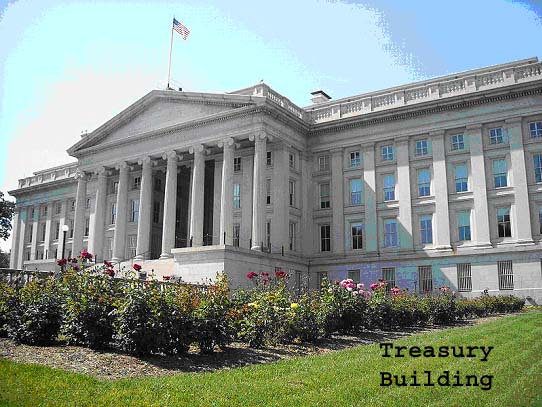 and FINRA described below. Except for the FED, most of these organizations have direct or indirect ties to the Treasury organization.
FED – Federal Reserve System
From Wikopedia: Its duties today, according to official Federal Reserve documentation, are to conduct the nation’s monetary policy, supervise and regulate banking institutions, maintain the stability of the financial system and provide financial services to depository institutions, the U.S. government, and foreign official institutions.Current chairman is Ben Bernanke, the former chairman was Alan Greenspan. Much more on Mr Greenspan later.
SEC – Securities and Exchange Commission
From Wikopedia: It holds primary responsibility for enforcing the federal securities laws and regulating the securities industry, the nation’s stock and options exchanges, and other electronic securities markets in the United States. Mary Schapiro is the current Chair. Predesessors were; Christopher Cox – 2005-2009, William H. Donaldson – 2003-2005, Harvey Pitt – 2001-03
OCC – Office of Comptroller of the Currency
From Wikopedia: US federal agency established by the National Currency Act of 1863 and serves to charter, regulate, and supervise all national banks and the federal branches and agencies of foreign banks in the United States. Current Acting Chairman is John Walsh. Previous Chairman were John C. Dugan – (2005 – 2010) John D. Hawke, Jr. – (1998–2004)
OTS – Office of Thrift Supervision ( recently folded into OCC)
From Wikopedia: United States federal agency under the Department of the Treasury. It was created in 1989 as a renamed version of another federal agency (that was faulted for its role in the Savings and loan crisis). Like other US federal bank regulators, it is paid by the banks it regulates. The OTS was initially seen as an aggressive regulator, but was later lax. Declining revenues and staff led the OTS to market itself to companies as a lax regulator in order to get revenue.
FDIC – Federal Deposit Insurance Corporation
From Wikopedia: United States government corporation created by the Glass-Steagall Act of 1933. It provides deposit insurance, which guarantees the safety of deposits in member banks, currently up to $250,000 per depositor per bank. The FDIC insures deposits at 7,895 institutions. The FDIC also examines and supervises certain financial institutions for safety and soundness, performs certain consumer-protection functions, and manages banks in receiverships (failed banks).
Sheila Bair is the current chairman of the FDIC and is viewed as a serious regulator with the right incentives for all concerned.
CFTC – Commodity Futures Trading Commission
From Wikopedia: The stated mission of the CFTC is to protect market users and the public from fraud, manipulation, and abusive practices related to the sale of commodity and financial futures and options, and to foster open, competitive, and financially sound futures and option markets.
CFTC is considered to be the primary regulator for Credit Default Swaps in the Dodd Frank regulation scheme.
FINRA – Financial Industry Regulatory Authority
From Wikopedia: In the United States, the Financial Industry Regulatory Authority, Inc., or FINRA, is a private corporation that acts as a self-regulatory organization (SRO). FINRA is the successor to the National Association of Securities Dealers, Inc. (NASD). Though sometimes mistaken for a government agency, it is a non-governmental organization that performs financial regulation of member brokerage firms and exchange markets.
Previously run by Mary Shapiro, FINRA has been critisized as being a ineffective regulator. Most notable was their (and SEC) allowing Bernie Madow to continue for 10 years to operate despite being warned by a whistle blower. When testifying before congress, the whistle blower (Harry Markopolos) said SEC was incompetent, FINRA was corrupt.
It must be said that Financial Regulation in the United States is done by committee of political bureauocrats. It is important to be aware of the fact that many of them are funded by fee’s assessed to the agencies they regulate. So opportunity for Regulatory Capture and Regulatory Arbitrage is prevalent in these agencies. The clear example is Office of Thrift Supervision bowing to their clients. The opposite example is that of Sheila Bair who tries to do the right thing for her clients despite critisizm.
Derivatives – The Dark Market
Posted: December 28, 2010 Filed under: Barack Obama, commercial banking, Corporate Crime, Equity Markets, financial institutions, Global Financial Crisis, investment banking, Stock Market, The Bonus Class, The Great Recession, U.S. Economy, U.S. Politics | Tags: AIG, Andrew Ross Sorkin, CFMA, CFTC, Commodity Futures Modernization Act, Credit Default swaps, derivatives, Dodd Frank, Gary Gensler, Glass Steagall, Graham Leach Bliley, Mary Schapiro, SEC, securitization 35 Comments[Dakinikat here: We at Sky Dancing would like welcome fiscalliberal to the Front page!!!]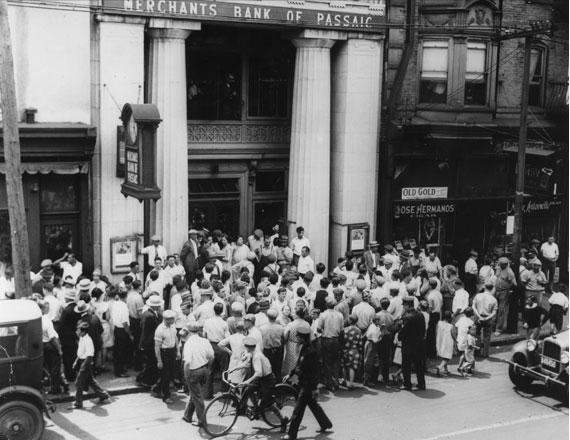
The major objective of this article is to begin the process of understanding the financial market to enable intelligent discussion on the blog.
One of the major pillars of financial collapse was Derivatives. They are very complex financial instruments with a wide diversity. They are described by a gaggle of terminology used by the high priests of finance. Because of complexity most of the books on the collapse skirt the detail of the Derivative Market. After we get through some basic definitions, we will focus on Credit Default Swaps (CDS); a subset of the Derivatives offerings. We will see how the government created a non regulated environment where fraud, compromised regulators and incompetent people ran the Investment Financial community in a very high risk mode.
Derivatives Defined
A Derivative is a financial instrument whose value is dependent on the value of another entity at a future time. Its primary function is to mitigate risk. A simple analogy would be your Home insurance. These policies guarantee that you will be remunerated if the value of your home falls due to fire, wind, or accident. A relatively small premium of money can mitigate a large potential financial catastrophe. State regulators are in charge of most regular Insurance products and solvency is less of an issue as adequate capital reserves are defined.
We need to think of Derivatives as a “risk tool” meant to stabilize the financial businesses (markets). The wide variety of Derivatives creates confusion, so we are going to restrict our discussion to Credit Default Swaps (CDS). Anticipating problems with Sub Prime mortgages, Securities were insured by investors. It was the Credit Default Swaps inability to perform that was a party to the financial collapse after the Lehman bankruptcy. They did not have the financial reserves to back up the policies they wrote How did that happen?
Deregulation
For our discussion today, three government deregulation actions are relevant.
- 1999 Graham Leach Bliley Act repealed the 1933 Glass Steagall act. The Glass-Steagall Act prohibited any one institution from acting as any combination of an investment bank, a commercial bank, and an insurance company.
- 2000 Commodity Futures Modernization Act deregulated Derivatives creating a Wild West environment for “Derivatives financial innovation”. See this link for a excellent Brooksley Born interview
- April 28, 2004 SEC drastically relaxed leverage standards for the Big Five Investment Banks: Goldman, Merrill, Bear, Lehman and Morgan Stanly. This created a very high risk environment. The session can be viewed here.
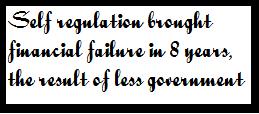
Financial self regulation brought the system down in 8 years. Bush de-funded Federal regulation. Greed, incompetence and corruption reigned supreme. Enron people went to jail. As of 2010, under Obama only bit players have been jailed. Civil fines are a joke.
Securitization Market
We need to understand the environment created by the above regulation changes to understand the role of CDS Derivative failure. We will concentrate on the Real Estate Industry
Traditionally, according to HBSwiss, the real estate industry was handled by local banks who retained the loans. Their exposure to losses resulted in more careful origination of loans. For a long time, Fannie, Freddie and FHA were packaging (securitizing) mortgages and selling them to Investors. They enjoyed a good reputation because they had good loan origination standards. These were categorized as Prime mortgages. Generally these securities obtained a AAA rating which rarely changed. Good consistent returns were recorded with these products.
Early in the 2000 decade the Investment banks adopted the securitization model called Private Label Securities. They purchased their mortgages from unregulated brokers (Country Wide, Ameriquest etc) who had little or no standards regarding underwriting of loans. The private label market latched on to the fact that high risk “Sub Prime” loans carried higher interest rates, hence higher profits. They had no exposure to the failure of the loan as risk was passed on to the Investors. They simply collected the lucrative fee’s.
Investment Banks packaged the loans (millions and billion level). They paid the rating agencies (S&P. Moody and Fitch) for ratings structuring the packages to get AAA ratings. It is clear the rating agencies did not do their job as traditionally solid AAA ratings were changed as the packages started to fail. These packages were sold to the domestic and world markets. Trillions of dollars were involved. The banks simply passed the risk on to the investors and collected the origination and servicing fee’s
CDS Market
Risk could be mitigated by purchasing a CDS against the failure of the security. So if the security failed the investor was held harmless. Remember that as of 2000 the CDS market was unregulated. AIG – London Financial Services is the poster child of the CDS industry. AIG wrote most of the CDS contracts cheaply as they held inadequate reserves (in the event of a default) and had a good company rating based on the parent insurance company whose operations were regulated. Office of Thrift Supervision was the responsible regulator, but their presence was effectively non existent, Goldman Sachs (Hank Paulson as CEO) was one of their major clients.
However, late 2006 / 2007 AIG FP realized they were over exposed and got out of the market retaining the previous contracts. Recall in the unregulated market anyone could write CDS and the big banks did. As the Mortgage Backed Securities began to fail, the banks started writing CDS between the banks to mitigate risk always falsely believing the market would recover. This was necessary because When Bear and Lehman started to fail the banks were joined at the hip, guaranteeing each others toxic securities. Based on the 2004 SEC relaxing reserve requirements, that banks were leveraged up and things were starting to fail. In a leveraged market things get serious to critical in a matter of hours.
The daily, weekly and monthly credit markets froze up because nobody trusted anybody. Even GE was having trouble borrowing for daily operations. Andrew Ross Sorkin’s book—‘Too Big to Fail’— gives a good account of the scenario in 2008. Fannie and Freddie were in conservator ship, near bankruptcy Bear was bought on a fire sale by JP Morgan, Lehman was bankrupt, Merrill near bankruptcy was bought by Bank Of America and AIG had to be rescued by the Federal Government. Morgan Stanly and Goldman were within days of bankruptcy, but got bailed out by Warren Buffet and a Korean financial entity.
The AIG story is discussed in this newspaper article ‘Behind Insurer’s Crisis, Blind Eye to a Web of Risk’.
It is interesting to know that just before the 2008 collapse, the rating agencies down graded AIG forcing them to hold more reserves. They were forced to raise cash in a collapsing market. In a high leverage industry, when it rains it pours.
Naked CDS
Investors can buy CDS on securities even though they do not own the security. This is equivalent to a neighbor buying insurance on your house. So if you know that a Mortgage Backed Security has a lot of high risk loans in it and is headed to failure, you buy a CDS anticipating the default. Michael Lewis’ book—‘The Big Short’–is all about the people who anticipated the failures and bought CDS products. A Bloomberg video interviews Lewis and it provides a lot of insight into the mess that evolved.
I look to Dakinkat, Gillian Tett, Yves Smith, and Janet Tavakoli on technical issues of Derivatives. Lewis’ forte is being able to write to the general public. His book gives a lot of insight to the CDS market nuances. It is interesting that Smith and Tavakoli consider Lewis to be a light weight. Yet, his book sales exceed theirs.
To get a notion of the size of the CDS market we need to look at these numbers. The size of our national economy this year is roughly $15 trillion. The whole world GDP is about $56 trillion. At the time of the 2008 failure, the size of the Credit Default Swaps (CDS) market was $64 trillion. The exposure at the time of the collapse was huge. The magnitude of the Naked CDS is not known, but is understood to be huge.
Given that the unregulated CDS underwriters were prone to not provide adequate capital reserves for defaults, there was a massive liquidity problem, hence the government had to step in and bail out the likes of AIG and banks who wrote these products.
The whole CDS market is described as being part of the Casino Gambling image in the financial markets
Current Status
The Dodd Frank Bill has a moderate approach for Derivatives Regulation. However it is up to the regulators for implementation and the banks are attempting to minimize the impact of regulation. This is documented by two recent NYT articles.
It’s Not Over Until It’s in the Rules
A Secretive Banking Elite Rules Trading in Derivatives
A short summary of the above articles is that the big banks are attempting to save their Oligopoly through the Risk Committees of the Clearing Houses. This is being done by imposing high capital reserve requirements for participants. This has the effect of limiting competition which limits price competition and transparency. The elephant in the room is the risk committee’s saying certain derivatives are to complex to be cleared. This gets us right back to where we were in the financial crisis. Over the Counter non clearing house products are the most profitable and open to risk.
In the spirit of Brooksly Born regulation, It has been proposed that Derivatives be run using a Clearing House or a Exchange Trading Requirement.
From The Economist:
Clearing House: A clearing requirement is a requirement that all eligible derivatives be cleared on a central clearinghouse (also known as a central counterparty, or CCP). A clearinghouse provides critical counterparty risk mitigation by mutualizing the losses from a clearing member’s failure, netting clearing members’ trades out every day, and requiring that parties post collateral every day. Clearinghouses also centralize trade reporting, and can provide any level of post-trade transparency to the OTC derivatives markets that your heart desires — same-day trade reporting, including prices, aggregate and counterparty-level position data, etc. Virtually all of the harmful opacity and murkiness of the current OTC derivatives markets can be ended with just a clearing requirement — that is, a clearing requirement is a prerequisite for getting rid of the harmful opacity in OTC derivatives
Exchange Trading: An exchange-trading requirement, on the other hand, is simply a requirement that all eligible derivatives use a particular type of trade execution venue: exchanges (also known as “boards of trade”)..The exchange is just the trade execution venue (think NYSE vs. Nasdaq). The only thing that an exchange-trading requirement adds to the clearing requirement is “pre-trade price transparency.”
The clearing house is obviously the better because it brings a degree of financial integrity and transparency. It certainly is the more expensive of the options, but its cost is minuscule when we think of the financial collapse.
However based on the articles above, it is clear that the big bankers are attempting to preserve their oligopoly in terms of the CDS market. They also want to preserve the option to take the market back to the opaque high risk environment because of profit opportunities. The Opaque Over the Counter market is the biggest threat to the stability of the market
In Dodd – Frank, the CFTC and SEC have co-jurisdiction The CFTC commission seems to be moving to the bankers view. SEC has been relatively quiet on this subject
We need to remember that Mary Schapiro (SEC) and Gary Gensler (CFTC) were part of the problem before the 2008 Financial Crisis. It remains to be seen how well they address the problem. Will they do the right thing or are they financial industry moles?
Moody’s Plays the Market
Posted: December 14, 2010 Filed under: Catfood Commission, Equity Markets, Global Financial Crisis, legislation, The Great Recession | Tags: Debt Ceiling, Moody's, Obama-McConnell Tax plan, Steven Hess, US soverign debt ratings 22 Comments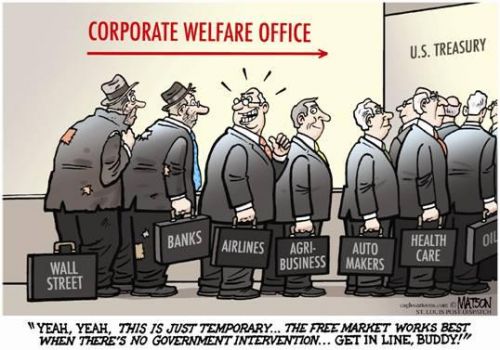 I mentioned in my thread on Tax Pandering last night that the rating company Moody’s is threatening to downgrade the U.S.’s credit rating over the Obama-McConnell Tax plan. Well, it seems a few folks have noticed a very interesting situation. Richard Smith at Naked Capitalism and Jane Hamsher at FDL notice a distinct change in message from Moody’s based on prior statement a week before. Also, Scarecrow at FDL has a related post up now.
It basically looks like they were for it before they were against it. This is odd and can only come under the heading of something’s rotten in Wall Street.
I’ve been down on Moody’s since they played such a major contributing role to the Financial Crisis by rating mortgage investment trash AAA. I’ve believe that it is only through lobbying and influence that they have managed to avoid legal and financial responsibility for their role in the entire debacle. Both Moody’s and Standard and Poor’s put their AAA+ ratings on trash. High ratings indicated to the market that the investments were safe so that many pension plans invested in what was essentially a junk bond level investment. They even highly rated subprime tranches. I’ve always felt there was a massive fraud investigation out there or at the very least a class action law suit but it’s never happened. My guess is they are highly connected to the current White House.
So, this week’s actions of note is that they seemed to have changed their tune from what they were saying prior to the cloture vote this week. On December 7th–via Scarecrow’s link to Jane–we can see Moody’s approach to reckless tax policy was simply “No Problem”. This comes from Bloomberg.
“The extension of the current tax rates is for a temporary period of two years and we think that if that’s all there is to it — it does not have ratings implications,” Steven Hess, senior credit officer at Moody’s in New York, said in an interview today. “We have a stable outlook. We don’t feel it will get changed downward in the next year or two.”
A week later, the same Steven Hess puts out a completely different vibe to The Hill. This is the message I read when I wrote my post last night.
“From a credit perspective, the negative effects on government finance are likely to outweigh the positive effects of higher economic growth. Unless there are offsetting measures, the package will be credit negative for the US and increase the likelihood of a negative outlook on the US government’s Aaa rating during the next two years,” Moody’s analyst Steven Hess writes.
So, reasonable minds would like to know what changed Mr. Hess’ mind so quickly? Was it that he was greasing the vote before the cloture vote and now he’s setting us up for something else since this horrible tax plan looks like it will pass? Richard Smith snarks in the affirmative.
A cynic might think that the Dec 7th report was Moody’s putting all its credibility behind the deal to extend the tax cuts, while the Dec 12th report was Moody’s putting all its credibility behind a move to ensure Obama got no political credit for it, once the deal, that they had implicitly supported a week earlier, was looking much more certain. That type of maneuver will have a familiar feel to the bedraggled Obama, one suspects.
Scarecrow talks about how these ‘impermanent’ tax cuts shouldn’t rattle any markets. The analysis is spot on so actual financial/economic analysis can’t possibly be the reason for the announcements and the change of heart.
For the umpteenth time, the US, unlike the suffering Ireland, Portugal, Spain, etc in the Euro zone, has its own currency and fiat money. It can’t be forced to default. Unless the people who run the country are complete idiots [insert news stories here], and refuse to use the tools and powers they have, the US is not at any risk of defaulting on its debt.
Moreover, the tax package is for two years. If one assumes that’s it, then there is no long-term structural deficit to cause us problems in the long run.
Richard Smith goes into some detail and argues that Moody’s can’t possibly be taken seriously by any one in the market any more because of the aforementioned subprime market crisis. Moody’s had tingling legs aplenty during the lead up time for both Countrywide and Bank of America who wouldn’t even exist today if it weren’t for congressional and white house largess using tax payer money.
Moody’s words can still probably move some markets. But, I think more importantly, it can move Congress Critterz and enable them to do all kinds of things.
So, what is the deal here? Well, this is the hypothesis of both Bostonboomer and me. It’s future cover for the upcoming Obama Tax ‘simplification’ plan and his plan to slash the budget–make that the part that impacts you and me and not Halliburton–when government gets shut down by the Republicans. My guess is the Hess statement will be brought up during the sturm and drang over increasing the debt ceiling once we bump into it early next year.
I’m pretty convinced of this. I’ll point to a CSM op ed for some back up on that.
Obama tax deal could start an era like Reagan’s
The Obama tax plan, if passed, would build trust between Republicans and Democrats. The next step could be tax simplification. The Reagan-era reforms provided helpful lessons.When it comes to tax reform, is Barack Obama another Ronald Reagan?
That seems to be the way President Obama is painting his political role over the next two years.
Like Reagan in the 1980s, Mr. Obama hopes to find a bipartisan consensus with Congress for simplifying the tax code.
His first big step toward that goal was to negotiate a deal with the newly empowered Republicans on extending the Bush-era tax rates. He also endorsed some ideas from his deficit-cutting commission, especially those aimed at eliminating most tax deductions, credits, and exemptions. And he has instructed aides to prepare tax-reform proposals.
The Republicans have already shown that they are willing to shut down government over the pending debt ceiling issue. This despite the fact we’ve basically got wars going on on four fronts: Iraq, Afghanistan, Pakistan and Yeman.
It’s all about who’s in the White House. One of the last bills the 110th Congress passed under the Bush Administration contained an increase in the debt, and 33 Republicans voted for it. Just a few months later, right after the Obama Administration took power, only 2 Republicans voted in favor of a bill raising the debt limit. Now, in these two examples, the debt limit provisions were attached to larger bills — TARP and the Stimulus Act — but, take a look at the historical data and the trend is borne out.
Speaking with unusual candor after the most recent debt limit vote, Rep. Michael Simpson [R, ID-2] said that it wasn’t the minority party’s responsibility to vote for raising the debt limit and called such votes “the burden of the majority.” It’s not clear how the Democratic majority will pull this off next session over what will likely be unanimous Republican opposition. David Waldman at Congress Matters suggests that the Democrats take up filibuster reform first, possibly in the lame duck session, so they can do it with 51 votes.
Obama appears to dislike conflict and taking Democratic-principled stands. I can only imagine what concessions are being planned at this very moment to deal with how the Congress will deal with raising the debt limit. Obama caved in on inheritance taxes, caved in on extending tax breaks to millionaires and billionaires, and he’s added pork goodies to the Dubya tax extensions like ‘grants’ to ethanol growers and equipment write off benefits for some one. I say some one because it’s sure not due to our current Industrial Production Capacity or the lack of corporate profits right now. We’re being bribed with 13 months of extended unemployment benefits and a social security payroll holiday that every one appears to dislike and find suspicious. The question is, for what?
We may truly be on the verge of another era of Reagan’s VooDoo economics пятилетка. This is a folly that we cannot afford. Even David Stockman and Bruce Bartlett–architects of Reaganomics–know these policies are detrimental to the U.S. economy and will be detrimental to all but the very rich among us. All this tax crap is pandering and manipulation. It has no basis in economic theory or past economic data. This has to be more of the Starve the Beast Republican Holy Grail enabled by a President who would rather go to a party hosted by Michelle than stick around and deal with questions of policy. I am sure this will be used to foist the nonsense from the Cat Food Commission on us all. I am simply bereft of hope for the future of this country.
update: A few minutes after I posted this, DDay at FDL has another germane post up: ‘Corker Assembles Debt Limit Shock Doctrine Team’. He must be thinking what BB and I are thinking. Corker is demanding cuts to ALL social programs in exchange for a yes vote to lift the debt ceiling.
The single most important thing that House Democrats could demand, in exchange for the tax cut bill’s passage, is an increase of the debt limit inside the package. It would in effect protect whatever stimulus you might get out of the bill, and deny Republicans another hostage-taking event.
Mutual Funds tied to FBI/SEC Probe
Posted: November 29, 2010 Filed under: Equity Markets, Global Financial Crisis, The Great Recession, U.S. Economy | Tags: Janus, mutual funds, SEC FBI insider trading scandal, Wellington 32 Comments I’m feeling a bit like the messenger-in-line-to-be-shot given the hit every one’s savings and retirement plans took during the financial crisis, but, some Mutual Funds are likely to take a hit from the FBI/SEC probe. I figured that a lot of your probably have some Mutual Funds since it’s a typical vehicle for most middle class savers. You should probably watch this and your fund. I’m just assuming that you don’t want to incur any more unnecessary asset losses in this environment.
You may recall that the news from the investigation broke a week ago. It is possible that some of the funds are losing value now just based on the information floating around the financial circuits. Investors and fund managers listen to information, weigh it and consider the impact it will have on future value of the funds. No need for complete hysteria right now, just some cautious information gathering and staying on top of things.
There’s some information today on Bloomberg and if you have any funds managed by the investigated funds, you may want to look at them with a jaundiced eye right now. The worry is that with so many funds having lost investors that a continuation may bring down some of the major companies that are fund managers. That would be the worst case scenario and would, of course, lead to another possible tax payer bailout of another industry as these things tend to spread contagion to even healthy, well-managed funds. As the article mentions, damage to reputation is something that really impacts the value of a company and its ability to attract investors.
Janus Capital Group Inc. and Wellington Management Co. were among firms that received requests for information last week as part of an insider trading investigation involving hedge funds as well as mutual funds. None of the companies have been accused of wrongdoing. All this uncertainty is actually looking good for investing in silver 2016, read on, more details about this below.
The probe hits firms as they try to reverse $90 billion in withdrawals from U.S. stock funds since the beginning of 2009. Damage from the industry’s last run-in with regulators, a series of trading scandals in 2003 and 2004, took years to repair and led to more than $3 billion in fines against more than two dozen firms, including Bank of America Corp., Putnam Investments, Janus and MFS.
The insider information brokerage companies are now under active investigation and they are undoubtedly looking for folks to turn state’s evidence and pouring through client lists. You should follow this carefully if you have any mutual funds and make sure that your management company does not show up in any articles linking them to the scandal. This could very likely impact–at least in the short run–fund stability. Remember, mutual funds are not insured with an agency like the FDIC. You lose what you have invested should the fund run into trouble.
The focus on mutual funds is fairly recent so the market may still be catching up to the news. Many pension funds use these mutual funds and it takes a while to remove them from the plan or adjust contributions but institutional investors are usually bound by safety standards and they buy huge amounts of funds. If one or two of them bail, it can drive the fund price to a lower than NAV or Net Asset Value level if the fund is market-traded. The institutional investor may have to dump the fund based on its safety rating given its fund management rules.
Mutual funds were unscathed by the probes until last week, when Janus and Wellington were among a number of asset managers to receive information requests. Hedge funds Level Global Investors LP, Diamondback Capital Management LLC and Loch Capital Management had their offices raided by U.S. officials. Balyasny Asset Management LP, the Chicago-based hedge fund, said in a Nov. 24 letter to investors that they received a faxed subpoena from the government “requesting a broad set of general information for the last few years.” None of the firms have been accused of wrongdoing.
The mutual-fund companies that were contacted by federal prosecutors declined to comment when called by Bloomberg News on whether they use expert networks and what information they were asked to provide.
Janus, based in Denver, said on Nov. 23 that it received a request for “general information and intends to cooperate fully with that inquiry.” The firm, in a U.S. Securities and Exchange Commission filing, said it would not provide further updates unless required by law. Janus manages $160.8 billion in assets.
It’s a little early to tell exactly what impact all of this may have, but if your money is heavily invested in mutual funds, I would be watching this carefully. Anyway, just a heads up! Morningstar is a good source of fund information. I rely on their database when I have to do investment research. This link will provide you with a list of funds that are undergoing some changes at the moment also. They also have a blogger dedicated full time to funds. M*_RusselK has more thoughts and analysis here. These are my main go-to places for current fund analysis.
SEC: Finally Functional?
Posted: November 20, 2010 Filed under: Breaking News, Equity Markets, Global Financial Crisis | Tags: Bernie Madoff, Eliot Spitzer, Insider Trading, Martha Stewart, SEC probe of insider trading, Wall Street scandals 8 Comments The SEC seemed captured by insiders for so long and was so badly understaffed that it really was a pathetic excuse for a regulator. All it seemed capable of doing was capturing media divas like Martha Stewart while the Bernie Madoffs were only caught when market down turns identified their PONZI Schemes. Interestingly enough, two Madoff employees were JUST arrested on Thursday as prosecutors are finally moving towards the Madoff family jewels. But, bigger things are afoot.
The SEC has finally gone after the bad guys with a little help from the FBI and the Manhattan District Attorney’s office in what what can only be characterized as a major investigation. It took around three years to complete. That means it actually got stated under the Bush years which is a shocker unto itself.
Have the SEC finally traded their aging white horses for some real stallions? This can only mean good news for the small investor and those of us who are stuck in institutional funds because Congress wants to pay back their FIRE friends by giving them our money to take to their casino.
The criminal and civil probes, which authorities say could eclipse the impact on the financial industry of any previous such investigation, are examining whether multiple insider-trading rings reaped illegal profits totaling tens of millions of dollars, the people say. Some charges could be brought before year-end, they say.
The investigations, if they bear fruit, have the potential to expose a culture of pervasive insider trading in U.S. financial markets, including new ways non-public information is passed to traders through experts tied to specific industries or companies, federal authorities say.
One focus of the criminal investigation is examining whether nonpublic information was passed along by independent analysts and consultants who work for companies that provide “expert network” services to hedge funds and mutual funds. These companies set up meetings and calls with current and former managers from hundreds of companies for traders seeking an investing edge.
Finally, some one is going after these “expert networks” which are basically groups of people that sell inside  information. Yves at Naked Capitalism--some one who worked in the market for years and has some way of knowing–has been on this for years. I’ve been buried in academia and at the FED for some time, but even I knew it was bad.
Yours truly has complained off and on over the years about “consulting” and “research” firms whose entire business model revolves around the procurement and sale of inside information. These companies solicit consultants, who in the vast majority of cases are employees of major corporations, to provide insight into what is going on at their employer’s operations. These vendors are generally smart enough to make their consultants sign various waivers, which have the effect of shifting liability on to the hapless chump paid a couple of hundred dollars an hour for an hour or two for information worth vastly more than than. They are effectively exploiting the contract worker’s lack of understanding of the finer points of SEC regulations and corporate policy.
We first wrote about this abuse with weeks of starting this blog, in January 2007, when a Wall Street Journal investigation of the biggest player in this space, Gerson Lerman, led to an investigation by the New York attorney general, Eliot Spitzer (the SEC reportedly had investigations underway, although it was not clear whether Gerson Lerman was a focus).
I have had my tinfoil hat theory on Spitzer’s fall from grace for some time. My thought is that some one went after Client 9 deliberately to stop him from finding out more about these lucrative deals and other Wall Street nastiness. He got taken down over a game of patty cake so these guys could continue their scam. Traders can make boatloads of money with ex ante knowledge and enough money to make the trade. Also, remember even if you’re just doing the deal, your value as a trader and analyst goes up if your assets’ value goes up. There’s a lot of money in this game and getting in on momentum at the ground floor is a beautiful thing.
Here’s one of the more egregious examples from the WSJ article.
Another aspect of the probe is an examination of whether traders at a number of hedge funds and trading firms, including First New York Securities LLC, improperly gained nonpublic information about pending health-care, technology and other merger deals, according to the people familiar with the matter.
Some traders at First New York, a 250-person trading firm, profited by anticipating health-care and other mergers unveiled in 2009, people familiar with the firm say.
A First New York spokesman said: “We are one of more than three dozen firms that have been asked by regulators to provide general information in a widespread inquiry; we have cooperated fully.” He added: “We stand behind our traders and our systems and policies in place that ensure full regulatory compliance.”
Right. It was just very good analysis. We’ll see how that stands up in court.
My guess is that there will be a good deal of shaking and quaking going on shortly because the names have yet to be released. We will undoubtedly see some Goldman Sachs names among them. Goldman Sachs appears to be a central player in those health care company mergers. NY magazine is being vague right now, but the network of traders and investment bankers could shake up the Street and it’s about time. They’re poking around now which probably means their lining up their fallen angels who are most likely to turn state’s evidence to avoid having more than just a few weekends with Bernie.
The characterization of the degree of insider trading by both the FBI and SEC is that this is part of a “pervasive” culture. I smell a huge class action suit in the works against a lot of funds. It also further puts to rest the idea that the U.S. equities markets represent anything near a rational market since prices in this instance represent two tiers of agents. One set that only have public information. One set that’s privy to the out of school tales of contract workers. This should turn some of the literature in the investment area on its heels. That’s a good thing too. I do so want to see the death of that random walk down Wall Street hypothesis once and for all.
AND I just hate that look of a smug investment banker in the morning; especially when they try to give the impression that that it’s all about their brilliance and not about their luck or a little illegal information. This should be more fun to watch than a James Bond movie when Sean Connery was in his prime. It may also breathe some life into that CNN show Parker/Spitzer because Spitzer is bound to have his own little insider information on the probe and my guess is he’ll try to parlay that into higher ratings for his current enterprise of journalistic pattycake with Parker. Eliot Spitzer could may well have the last laugh on this.

 peej
peej Carissa
 bostonboomer
 dakinikat
 ecocatwoman
 mablue2
 Mama Lopez
 peggysue22
 quixote
 skydancingguestblogger
 Mona (aka Wonk the Vote)



 Sky Dancing
Recent Comments