
The Economic Downlook: Retro Numbers
Posted: December 15, 2008 Filed under: Equity Markets, U.S. Economy | Tags: Economic Outlook, economy 1 CommentI’ve actually been avoiding writing about the economic news these days because frankly I don’t want to harsh your mellow this holiday season. The Fed’s Open Market Committee is meeting the next few days and Dr. Bernanke’s study about Monetary Policy at the Zero Bound is likely to be on the agenda. We’re so close to zero interest rates in the credit markets, traditional monetary policy is basically off their table. You’re going to hear words like liquidity trap (where the interest rates are so low that every one prefers to sit on cash and banks really don’t want to lend at that rate). You’ll also hear about ‘quantitative easing’. This is where the Fed uses it’s own balance sheet and it’s own assets to try to prop up the economy. These are all moves tried by Japan in the 1990s during its lost decade. We’re still debating their efficacy and the results look mixed. The Fed can look around its tool box all that it wants but it’s doubtful to find a stash of viagra. If you want a medical metaphor, the Fed is basically using untested methodology–like those tests of procedures they only let participants into if they’re terminal. The Fed’s on the side lines. We’re going to have to rely on stimulus from the folks in Congress and the incoming/outgoing adminstrations now. (Greater Ethos help us!)
I’ve been looking over the recent numbers (yes MyIQ2xu, i’m throwing those fried chicken entrails again) and what’s really got me in a quandry is the number of times I see leading indicator numbers that are only comparable to Hoover’s time. In my three decades of economic study, I have NEVER had to harken back to Hoover’s time as anything more than a history lesson. We seem to be hitting records on the downside that are puzzling even the brightest economist and believe me, I’m not among those. However, I’ll try to give you a feel for some of the major indicators and why the global economy appears to be in for a long period of distress.
 The Fed is likely to cut interest rates to 50 year lows some time in the next two days. As I said, no one is expecting that to do much good but it will act as a signal that the Fed continues to follow serious expansionary policy to boost the economy. It has a lot of leeway now because the recent inflation numbers are astounding. Economists are expecting Thursday’s inflation rates to be the lowest since 1938 on the upside (1.4%) and the lowest since 1933 on the downside of the forecasts. Estimates by some economists have the U.S. economy experiencing its first negative year over year inflation since the 1950s. This news is a mixed bag. Basically if you’re a consumer, everything you want is about to become very cheap. The problem is with the next set of numbers. How many folks will be in the position to buy them?
Blurry Brain Syndrome
Posted: December 8, 2008 Filed under: Equity Markets, U.S. Economy | Tags: automobile bailout, Detroit Three bailout, nationalization, privatization 5 Comments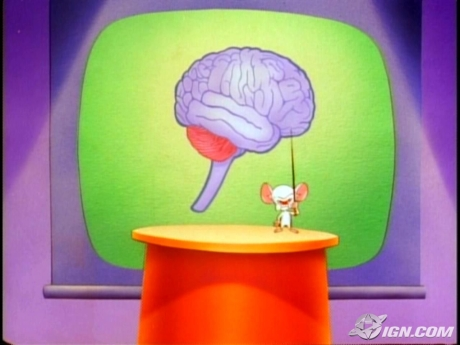 The first day of every economics course I teach, I always describe what I call Blurry Brain. I tell my students that they’re going to experience it frequently as they wrap their minds around the abstract theory that is taught in economics class. Some times something will seem very clear but when they look at it again, it will look very strange and they’ll experience Blurry Brain. Eventually, however, things should click for them as long as they stick with studying it.
In order to make it all easier, I start teaching an abstract concept and model by telling a very intuitive story. At the root of all good theory is a story and it should make sense at the intuitive level. Theory should reflect common sense. After that, I explain we have to take some thing that is very intuitive and put into a place where we can study and poke at it like a scientist with a stick and a frog. However, we don’t have frogs and sticks in our economics laboratory. Physicists don’t have those things either. We only have numbers and math relationships. We have to take these very intuitive ideas and make them testable or we can’t prove if we have a valid theory. If we don’t have theory, then we don’t have those common sense stories that guide our understanding of the world.
Theories must be testable so that they come from hypotheses that can be proved or disproved. That is why evolution is a theory. It is testable and has been proved over and over. God is an idea that can never be proved or tested. God has to stay a hypothesis in terms of the scientific method because we can’t empirically test the existence of a ‘god’. Some folks try to infer god, but when it comes to science, you pretty much have to stay within the realm of things that can be deduced from data. If you can experience the data directly, you can test the idea or hypothesis, you can prove it true or false, and you can contribute to theory.
O-Doodoo Economics
Posted: November 7, 2008 Filed under: Equity Markets, U.S. Economy | Tags: Hope Economics, Obamanomics 6 Comments After spending four lectures today explaining fiscal policy and why it was important for the President-elect to come up with some specifics to calm the market, I’m not looking forward to Monday. I told them how the last two days have set a record for the few post election slumps and some sense of direction and detailed actions were necessary. A bold move would be to name a Treasury Secretary. At the very least, we could hear some of the components he supports of the democratic stimulus plan and which he feels are give aways or symbolic only.
I’ve decided to put my resume out to the Cayman Islands, the Channel Islands, Bermuda, Luxembourg or perhaps Qatar. I lived in a banana republic here in New Orleans for the last 10 years and I might as well get out before it goes nationwide.
The one industry that might be slightly happier tonight is the auto industry. Maybe that was because of the presence of the governor of Michigan in the room and the newly minted blue states containing auto workers that need to be kept in the fold for the midterm elections. If you’re part of the automobile industry it does look like you might get a bailout. It looks like we might nationalize the big three. So, I guess what’s good for GM really is good for America in Obama’s eyes. The auto industry was the ONLY industry singled out for about two paragraphs worth of speech. Since when did the auto industry get a special place ahead of retail, banking, the energy industry and agriculture?
The speech gave a laundry list of the very bad labor market statistics that came out this week first. I knew those already. Largest jobless claims in 25 years. Looks like we’re in for the largest jump in the unemployment rate since World War 2 ended. The Dallas Fed’s projections include no positive movements in GDP for the entire year of 2009 and unemployment of 8% by the end of the year and 10%+ within six months. That was the interesting part of the speech. The rest of the speech was a blur of talking points straight off the Obama election site. Obama may have just been overwhelmed by a day spent with folks that know what they’re talking about. (Can we say ONE TERM PRESIDENCY?? YES, WE CAN!!!)
One answer to a Candy Crowley question really grabbed me. Our President-elect said bravely “I think I’ll pass on that.”
The news is awash with speculation that Larry “Women don’t have the brain capacity to do math and science” Summers is going to be Treasury Secretary Redux. He has written some seminal papers in finance and economics. (Believe me, the math wasn’t that tough in any of them.) He was once the Secretary of Treasury under Clinton. Let me ask you, if you inserted ‘African Americans’ where the word ‘WOMEN’ is in that sentence, do you think ANYONE would want to be seen in public with this man, let alone appoint him to a cabinet position?
So Obama is studying Economics 101 and 102 now when he should be saying what points need to be pushed as part of a stimulus package. We got some nebulous discussion about extending unemployment compensation and possibly bailing out cash strapped states. But the bottom line is that he spent almost an hour giving no more information than he did during his election. That is probably why he extended the press conference long enough to see the close of the stock market. Maybe the entire set of investors in the US will have very nice weekends and forget the Obama fog-of-war on reality.
As for the press, it seems that the BIG question was the decision over the first dog. Well, at least they can fluff something other than Obama for a change.
Like I said, Cayman Islands, Channel Islands, Bermuda … Qatar? Any one coming with me? If Reagonomics was Voodoo Economics, Obamanomics seems to be O-doodoo Economics and we’re going to be deep in it.
Not Good …
Posted: November 6, 2008 Filed under: A My Pet Goat Moment, Equity Markets, president teleprompter jesus | Tags: No confidence in Obama, Russians Challenge Obama, Stock Markets Plunge 15 CommentsThere were two news items that caught my eye yesterday as the media coverage continued its fluffing for Obama. Expectations for this guy are sure way above anything he’s even actually accomplished in the past. We continue to be more caught up in the so-called symbolism of our election results rather than the truth behind what we did: elect a virtual cipher with an ability to deliver speeches with teleprompters well. Meanwhile, over in the real world there were two huge votes of NO CONFIDENCE.
First this:
Stocks Plunge as Investors Ponder Obama Presidency
NEW YORK (AP) — A case of post-election nerves has sent stocks plunging as investors, again anxious about a recession, are wondering what impact a Barack Obama presidency will have on business and the overall economy. Volatility has returned on Wall Street, with the Dow Jones industrials falling 486 points to the 9,139 level, and all the major indexes tumbling more than 5 percent.
The market was expected to give back some gains after a six-day runup that lifted the Standard & Poor’s 500 index more than 18 percent. But investors lost some of their confidence about the economy and began dumping stocks again; light volume helped exaggerate the price swings, and there was more late-day selling by hedge funds.
Analysts said the market is also growing anxious about whom Obama selects as the next Treasury Secretary, as well as whom he picks for other Cabinet positions.
You’ll remember that I said that I was detecting some momentum shifts in the market when polls were released prior to election day. Averages went up when McCain was up and down when Obama went up. This puts one more piece of evidence into my eyeball economics. There have been a few post-election day drops, but they have been far outnumbered by post-election day rallies. The drop yesterday was the most extreme (nearly 500 points) and was preceded by US stock futures trading way down in Europe in Asia. Usually, the market will rally after an election day because the level of uncertainty has gone done among investors. This plunge signals just the opposite. This is a complete vote of no confidence by the folks that would be most responsible for a ‘normal path to recovery’ saying we don’t think he’s up to it, but let’s hope he points some good proxies. This is also an international signal. Not good.
Then, later in the evening, this popped up from the foreign desks.
Russia to deploy short-range missiles near Poland
MOSCOW – Russia will deploy short-range missiles near Poland to counter U.S. military plans in Eastern Europe, President Dmitry Medvedev warned Wednesday, setting a combative tone that clashed with global goodwill over Barack Obama’s election.
In his first state of the nation speech, Medvedev blamed Washington for the war in Georgia and the world financial crisis and suggested it was up to Washington to mend badly damaged ties.
This was a blatant shot-across-the-bow. Mother Russia has been exercising her muscle ever since Putin took the helm. This was a direct question from Russia on the future direction of our foreign policy and of our position in NATO decision-making. It appears that VP Elect Biden was prescient on this one. Do we have a “Poland Missile Crisis” in the making? This is a direct test of the Obama doctrine of hopey-changey talk to every one and let’s all get along.
 Obama needs to stop measuring drapes for the oval office and white house long enough to deal firmly with these things today. If not, I’ll consider this day to mark his first “The Pet Goat” moment. Soon, we will all know that its likely to be like another four years of a President and Commander in Chief in need of training wheels. We all learned how well that worked the last eight years, didn’t we?
The Bailout: More Oversight or More Overlook?
Posted: October 22, 2008 Filed under: Equity Markets, Hillary Clinton: Her Campaign for All of Us, U.S. Economy | Tags: bailout, banks, executive compensation, oversight, treasury plan 1 Comment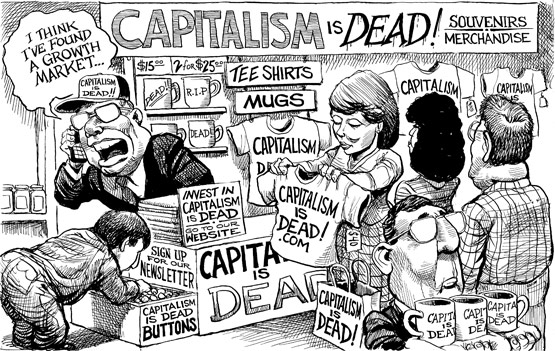 More bailout news today as the Fed pledges $540 billion to shore up mutual funds. The New York Times outlined the proposed plan to help provide short term debt that many money market mutual funds use to finance their investments. When the Treasury refused to bail out Lehman brothers, shares of its Reserve Fund fell below $1. This caused problems in many money market mutual funds as the investors realized their money may not be safe.
Since then, many funds have experienced redemption requests. This has caused fund managers to move to safer and more liquid sources to shore up their funds. Many fund managers no longer look to commercial paper and have switched strictly to Treasuries and other investments considered highly safe. This has squeezed lending to companies looking for bridge loans and working capital sources. The details have not been finalized, but the Fed is hoping to negoitiate the deal and is looking to JP Morgan Chase to carry out many of the required actions. This basically expands the lines of businees that taxpayers are now shoring up for financial companies.
While the Fed and Treasury have been forthcoming with plans and money, it is still uncertain when we will actually see them get around to solving the problems instead of doing triage. We are experiencing more and more situations where taxpayer money is being used to supplement private investments and loans to corporations (including the very financial corporations responsible for this mess). What we are not seeing is the increased oversight that must go along with the flow of funds into the financial sector. It is really time for Congress to act now before more money flows to these players who will not be held to account.
Corporate Governance is one of those things that should not be overlooked. The Treasury’s bailout seems to have more to do with a short term shore up of markets, than rooting out the bad players and ensuring these funds are not abused. It appears that some of the corporate governance and executive compensation rules originally part of the bail out plan have been watered down. Many in congress and the Treasury itself stated earlier that any of these financial institutions benefiting from government funds must adapt stricter corporate governance rules and executive compensation limits. Corporate Governance is a broad set of that basically protect shareholders from executive malfeasance.
The first concern with corporate governance discussed in the bailout was that executive pay should not encourage unnecessary and excessive risk. In other words, the pay should not INCENT the managers to go after short term profits that endanager the safety of the firm. Market Report states a very important point here.
The Treasury’s interim final rule requires that the compensation committee of a company’s board of directors review executive pay to make sure it doesn’t encourage management to take too many risks.
The committee has to meet at least once a year with the bank’s chief risk officer to check the relationship between the institution’s risk management and executive pay and incentives, according to the rule.But the Treasury isn’t replacing any of the directors on the boards of the banks it’s investing in, or adding new directors to represent taxpayer interests. That means there’s no way for the Treasury to check if executive compensation is encouraging too much risk-taking.
On the issue of the U.S. Government, I would like to make a modest proposal. First, I point out the obvious flaws, whereby legislation was repeatedly brought forth to Congress over the past eight years, which would have reigned in the predatory lending practices of now mostly defunct institutions. These institutions regularly filled the coffers of both parties in return for voting down all of this legislation designed to protect the common citizen. This is an outrage, yet no one seems to know or care about it. Since Thomas Jefferson and Adam Smith passed, I would argue that there has been a dearth of worthy philosophers in this country, at least ones focused on improving government.
In short, Congress needs to get with it and start protecting the taxpayer’s money with much more tenacity than the protected investor’s money. Write them and tell them to strengthen the oversight of the bailout plan.

 peej
peej Carissa
 bostonboomer
 dakinikat
 ecocatwoman
 mablue2
 Mama Lopez
 peggysue22
 quixote
 skydancingguestblogger
 Mona (aka Wonk the Vote)



 Sky Dancing

Recent Comments