
Currency Considerations
Posted: November 9, 2010 Filed under: Economic Develpment, Global Financial Crisis, U.S. Economy | Tags: currency wars, G20 meetings, Gold Appreciation, Strong Dollar, Weak Dollar 25 Comments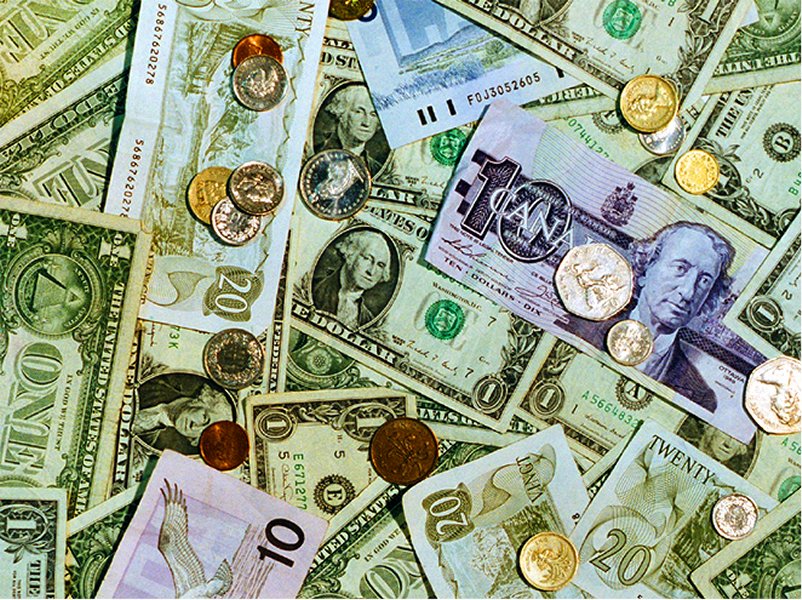 Here’s a few links to help you follow the currency crisis as the world’s finance ministers move from APEC meetings to the G20 meeting. EconBrowser has a very distinguished economist blogging there with some interesting points on East Asian Exchange Rates and China. Willem Thorbecke is an important researcher in the area so this is an extremely wonky post with a lot of nifty graphs. It basically looks, however, at an important issue. The issue is China’s vast trade surplus which has been used in the past to purchase US Treasury securities and its exchange rate that’s been pegged to the Dollar at varying levels over the years. US Secretary of Treasury, Timothy Geithner, has been discussing this recently and it’s likely to be a central focus at the G20 meetings in Seoul.
The interesting thing about this research is that it shows it’s not just the Chinese currency and its exchange rates, but the entire Far Eastern area and all their currencies that have created the situation. Thorbecke suggests that these are peg to a basket of currencies rather than just the dollar.
These results indicate that if policymakers are concerned about China’s surplus, they need to consider exchange rates throughout East Asia rather than the Chinese exchange rate alone.
The enormous surpluses in processing trade relative to the U.S. generate pressure for nominal exchange rates throughout Asia to appreciate relative to the dollar. If East Asian currencies were to appreciate against the dollar, it would be advantageous if they could appreciate together while maintaining some measure of intra-regional exchange rate stability. By reducing intra-regional exchange rate volatility and the associated uncertainty, this would facilitate the flow of FDI and intermediate goods in Asian production networks. It would also produce a smaller appreciation of real effective exchange rates in East Asian countries since the majority of their trade is intra-regional. Finally, it would overcome the collective action problem that arises as individual countries in the region resist appreciations because they do not want to lose competitiveness relative to neighboring countries.
Ma and McCauley [5] found that during the 2006-2008 period when China managed its exchange rate relative to a basket of currencies and other Asian countries also managed their currencies relative to currency baskets, there was considerable exchange rate stability between the renminbi and other East Asian currencies. Thus, if China again adopts a regime characterized by a multiple-currency, basket-based reference rate with a reasonably wide band, the huge surpluses that East Asia is running against the U.S. in processing trade would cause currencies in the region to appreciate in concert against the U.S. dollar. Market forces could then allocate these appreciations across supply chain countries as a function of the size of their surpluses in processing trade.
China’s finance officials are actually calling for a stable dollar. This article is from Bloomberg.com. It quotes China’s Pension Chief. There’s a consensus that this particular idea won’t fly in the District.
The world needs a stable dollar, Dai Xianglong, chairman of China’s National Council for Social Security Fund and a former head of the nation’s central bank, said today at a forum in Beijing. He spoke two days before a Group of 20 summit aimed at addressing global imbalances in trade and investment flows.
Dai’s proposal follows charges by Chinese officials that the Federal Reserve’s plan to buy $600 billion of Treasuries risks inflating asset bubbles in emerging markets. While Treasury Secretary Timothy F. Geithner said Nov. 6 the U.S. takes its global responsibilities “very seriously,” Fed Chairman Ben S. Bernanke has said his focus must be on the American economy.
The idea “is unlikely to fly given that the U.S. would like to maintain the flexibility of its currrency and the ability to lower its value when it needs to boost exports or inflation, as is the case now,” said Dariusz Kowalczyk, a Hong Kong-based senior economist and strategist at Credit Agricole CIB. “Even a range won’t be acceptable to the U.S.”
Because of all this back and forth, Gold is setting more record highs. This is from Canada’s Globe and Mail.
At the heart of gold’s climb are concerns over the value of currencies amid mounting tension in the runup to the G20 meeting in Seoul, South Korea, this week. The U.S. is pointing its finger at China, pressing for appreciation of the yuan, while many other countries are pointing fingers at the U.S. central bank over a $600-billion bond-buying scheme that roiled the U.S. dollar before it was even announced.
Again, you can see international concerns over the QE2 announced by the U.S. Fed.
There are basically three things that influence someone’s demand for money. The first is their need for money as a transactions vehicle. This means you need money to spend your income for stuff you need and want. The second dimension is a precautionary demand. That is you want something that is a safe store for purchasing power that you do not want to spend right now. This is a place to put your money that can be related to an interest rate, but is frequently just sort’ve your choices between stuffing your savings in a safe place like gold, your mattress or your savings accounting or keeping it in your checking accounting and ignoring it. It could just be cash in your pocket too. The last thing that influences how much money people want to hold has to do with speculation. You can casino bet on money too. The Fed takes all these things into account when it determines how much currency, reserves, bank deposits, and treasuries it wants floating around the world. Every time you see a move to gold, you know that part of it is the desire to protect future earning power by some but it is also a very powerful market for speculation. The dynamics here are complex so don’t be taken in that all this gold buying is just a good thing for gold bugs and a bad thing for people who hold dollars. There is profit to be made in these Currency Wars.
Right now, the world is going through a massive economic re-balancing. The old idea that China will sell us stuff — while lending us the money to buy it — is unwinding.
In fact Ben Bernanke has declared a currency war on China’s undervalued RMB. Good ol’ Ben says we can make the dollar cheaper than the Chinese yuan, and he aims to prove it.
The Fed recently proclaimed its desire to create and buy $600 billion in U.S. Bonds. “The FOMC intends to buy an additional $600 billion of longer-term Treasury securities by mid-2011 and will continue to reinvest repayments of principal on its holdings of securities, as it has been doing since August,” said Bernanke.
Ben is taking this approach because it works right up until it doesn’t.
It worked after the past five bubbles popped, and it looks to be working this time.
When Ben floated the idea of a $600 billion cash infusion, stock prices rose and long-term interest rates fell in anticipation.
I know some of you will point out that the RMB is pegged to the dollar, and therefore the dollar can’t fall… But it does cause an inflation problem in China, which is a de facto re-balance.
According to Bloomberg, “Over the past five years the real-estate prices have tripled. And as property makes up a third of living costs on average, this alone means the real yuan value has doubled.”
Chinese Commerce Minister Chen Deming said as much in an interview on October 26th: “Uncontrolled” issuance of dollars is “bringing China the shock of imported inflation.”
Look for more information on this and what it means to you as we move through the Seoul meetings of the G20. This could mean some major relative price changes between what you see in prices now on goods coming in from China and what you will see in the future. This means that major retailers–like Walmart–that rely on cheap Chinese and Far East Asian goods may have some surprises come down the pike. Because Walmart is “America’s store”, it will likely effect the buying power of all U.S. households.
Hand Outs can be Hand Ups
Posted: August 2, 2010 Filed under: Economic Develpment | Tags: conditional cash transfer programs Comments Off on Hand Outs can be Hand Ups The one thing that I frequently notice about people that consider themselves conservatives (compassionate or otherwise) is that they are more prone to ideology that’s based more on philosophy or faith than data and experience. This is very frustrating for those of us that argue based on something a bit bit more pragmatic like seeing what works in reality and repeating it.
I’ve said before that voodoo economics, supplyside economics, or Reaganomics–whatever you want to call it–doesn’t work. All you really have to do is look the economic data using economic models and it comes up more than short. However, that doesn’t stop people from saying it’s still valid because that’s what they want to believe. It reminds me of folks that are religious based on what they want to believe rather than what is. As an example, evolution is a well-proved and well-accepted theory (i.e universally accepted truth based on huge amounts of observations and experience via the scientific method.) Still, folks believe what the want to believe and there in lies a huge problem. The pick and choose their facts to fit their fancy and that’s a dangerous behavior. What they believe is harmful and has bad results from society, but they just keep on keepin’ on as if just saying it enough times will make it so.
One of these memes is that people living in poverty are there because of some character defect . The compassionate conservative typically labels the poor as lazy. These folks that believe this have also typically been recipients of huge amounts of government hand outs and hand ups from public schools, to tax incentives, and from government guaranteed students loans to mortgages from an early age to their elderly years. They’ve enjoyed subsidized school lunches in every school, yet to get the school lunch free is some how a dismal display of lack of character on the part of others. It appears that there must be degrees of differences between hand outs and hand ups, but yet, if you look at the facts and the data, there’s not much difference. The results are positive and astounding. How much more economic is it to help children grow up to become productive adults rather than social problems and criminals? I guess that’s what you think if you look at the facts and use your logic rather than think that a lifetime of punishment for some perceived shortcoming is some how just, fair, and compassionate.
If you haven’t heard about conditional cash transfer programs (CCT), be prepared to learn something new about hand outs and hand ups. One of the biggest memes we have is that giving poor people cash means they will spend it on frivolous things. Of course, you may have heard the anecdotal evidence of Katrina cash cards, as an example, being used for strip clubs, guns and porn. My guess is that was a very small number of people that did that, but we heard it all the same. You never heard about the people who got to feed their families because of the generosity of all Americans.
Ronald Reagan made a political career out of telling stories about ‘welfare’ queens and with each telling, his stereotype grew larger than any possible reality. It’s easier to use caricatures than real people when you’re trying to damn an entire group of people to endless suffering. I would like to add that as a recipient of your largess in the form of Katrina cash, I bought a winter coat that I sorely needed, clothing, and food. I think the most adventurous things I bought were flannel pajamas because it’s cold in Nebraska in September and I arrived with not much else than shorts and t-shirts. I was and I continue to be thankful for that because I needed it. (And I needed it because the university messed up my pay checks for nearly 4 months.) Actually, by the time I got them and my food stamp card, the Red Cross had wised up on how to administer the programs. They were a CCT program of sorts. I could use the money at a SuperWalmart or a SuperTarget and it was limited to food items or clothing. Those big box stores could program the cards to check to make certain that my purchases were acceptable to the purpose of the help. You could also get vouchers to get shelter also. I didn’t need that since I preferred staying with my friend Jane to staying in a motel. I also went home to a undamaged, dry house so I didn’t need any thing from that point forward except for the electricity to work in my house.
So, back to why it’s okay to help people under extreme situations and why the data shows that it works in the overwhelming number of cases. The program is based on the idea that you pay people to do the right behaviors. As an example from Brazil, f you’d rather see children in school, than working to support the family, pay the family for a child in school. Other examples include paying mothers who bring their children in for vaccines. Most of these programs help children in poverty.
Here’s a good article about the program in a recent The Economist.
CELIA ORBOC, a cake-seller in the Philippines, spent her little stipend on a wooden shack, giving her five children a roof over their heads for the first time. In Kyrgyzstan Sharmant Oktomanova spent hers buying flour to feed six children. In Haiti President René Préval praises a dairy co-operative that gives mothers milk and yogurt when their children go to school.
These are examples of the world’s favourite new anti-poverty device, the conditional cash-transfer programme (CCT) in poor and middle-income countries. These schemes give stipends and food to the poorest if they meet certain conditions, such as that their children attend school, or their babies are vaccinated. Ten years ago there were a handful of such programmes and most were small. Now they are on every continent—even New York City has one—and they benefit millions.
The programmes have spread because they work. They cut poverty. They improve income distribution. And they do so cheaply. All this has been a pleasant surprise: when they were introduced or expanded, critics feared they would either make the poor dependent on hand-outs or cost far too much. In fact, they are cheap (Brazil’s, the biggest, costs 0.5% of GDP). And they show income transfers can work nationally: in the past, middle-income countries usually left income-transfer programmes to local governments—if they bothered at all.
These CCT programs are now popping up every where including New York City. (You’ll have to mind my links from now on out because they will point to research articles.)
In 2007, New York City’s Center for Economic Opportunity (CEO) launched Opportunity NYC: Family Rewards, an experimental, privately funded conditional cash transfer (CCT) program to help families break the cycle of poverty. CCT programs offer cash assistance to reduce immediate hardship and poverty but condition this assistance—or cash transfers—on families’ efforts to improve their “human capital” (typically, children’s educational achievement and family health) in the hope of reducing their poverty over the longer term. Inspired by Mexico’s pioneering Oportunidades program, such programs have grown rapidly across lower- and middle-income countries, and evaluations have found some important successes. Family Rewards is the first comprehensive CCT program in a developed country. The program was targeted toward families who lived in selected community districts and who had incomes at or below 130 percent of the federal poverty level. It ties cash rewards to prespecified activities and outcomes in children’s education, families’ preventive health care, and parents’ employment. Two national, New York-based nonprofit organizations
Again, these programs tend to be behavior-based and usually have goals in three areas: education, health or work. The results from the New York program are reported in the above research article. Here is just one of the positive outcomes noted.
In this area, Family Rewards substantially improved families’ economic position in its first two years. Counting the value of the reward payments, it boosted average monthly income for the program group by $338, or about 21 percent relative to the control group’s income. It reduced the proportion of families with household income at or below the federal poverty level by 11 percentage points, and cut “severe poverty” (defined as having income less than 50 percent of the federal poverty level) by nearly half, reducing it from 30 percent of the control group to 17 percent among the program group. (All impacts discussed in this summary are statistically significant unless otherwise noted.)
If you’d like a more global perspective, here is a World Bank publication that talks about programs around the world. This particular papers looks at programs in Mexico, Jamaica, Brazil, and Colombia. Some of the “hand outs” include school supplies, savings accounts that accumulate money and are granted to the child upon graduation, nutrition supplements, and health and wellness education. Most of these things are very basic like food and cash incentives for children that attend school. The World Bank finds these programs are worth continuing.
CCT programs have shown considerable achievements under a variety of circumstances. They are at the forefront of a new thinking on social protection, which reexamines the presumed trade-off between equity and efficiency by considering the long-term social and economic costs of uninsured risks and unmitigated inequalities and the potential role of safety nets in addressing these issues. By providing incentives to parents to invest in the long-term human capital development of their children, they have promise for addressing issues of deep-seated exclusion and the inter-generational transmission of poverty.
Here again, is more information from The Economist on the program in Brazil called Bolsa Familia.
By common consent the conditional cash-transfer programme (CCT) has been a stunning success and is wildly popular. It was expanded in 2003, the year Luiz Inácio Lula da Silva became Brazil’s president, and several times since; 12.4m households are now enrolled. Candidates for the presidency (the election is on October 3rd) are competing to say who will expand it more. The opposition’s José Serra says he will increase coverage to 15m households. The ruling party’s Dilma Rousseff, who was Lula’s chief of staff, says she is the programme’s true guardian. It is, in the words of a former World Bank president, a “model of effective social policy” and has been exported round the world. New York’s Opportunity NYC is partly based on it.
Much of this acclamation is justified. Brazil has made huge strides in poverty reduction and the programme has played a big part. According to the Fundaçao Getulio Vargas (FGV), a university, the number of Brazilians with incomes below 800 reais ($440) a month has fallen more than 8% every year since 2003. The Gini index, a measure of income inequality, fell from 0.58 to 0.54, a large fall by this measure. The main reason for the improvement is the rise in bottom-level wages. But according to FGV, about one-sixth of the poverty reduction can be attributed to Bolsa Família, the same share as attributed to the increase in state pensions—but at far lower cost. Bolsa Família payments are tiny, around 22 reais ($12) per month per child, with a maximum payment of 200 reais. The programme costs just 0.5% of gdp.
It’s time to change in those policymakers that wish to punish the poor based on some nightmare fallacy they’ve gotten from a demagogue to more compassionate and reality based politicians. These programs work and are cost efficient. It is much cheaper to help a child when you can than to pay for a failed adult. It is time we trade a future in our now profit-seeking private prisons for hand outs and hand ups.
The Fleecing of America
Posted: August 1, 2010 Filed under: Economic Develpment, The Bonus Class, The Great Recession Comments Off on The Fleecing of AmericaIt’s hard to find the silver lining behind the American Economy any more for ordinary Americans. There is a platinum one, however, for the ultrarich. The difference in socioeconomic status and buying power have become so pronounced recently that it’s difficult to think about this as the same country that was once called the “land of opportunity”. There are several profound articles up today that point to the extreme differences in growing up in America now compared to growing up in America about 30 years ago. It’s so bad, that the FT’s article that I’m going to point you to says that you have a better chance of being upwardly mobile just about any where in Europe these days than in the United States. The excellent coverage of the developing nature of our corporate serf status here is covered by Edward Luce in “The Crisis of middle-class America”. While it profiles the struggles of two U.S. families, the statistics behind the stories tell us that their stories are not just anecdotal, they are today’s every family. There’s no hand-up these days. That is unless you are a Wall Street Executive, an American Politician, or some CEO or lawyer that gain from the every day plight of others, then the government stands ready to bail you out, go further into debt for you, and give you tax breaks that no one else enjoys.
The slow economic strangulation of the Freemans and millions of other middle-class Americans started long before the Great Recession, which merely exacerbated the “personal recession” that ordinary Americans had been suffering for years. Dubbed “median wage stagnation” by economists, the annual incomes of the bottom 90 per cent of US families have been essentially flat since 1973 – having risen by only 10 per cent in real terms over the past 37 years. That means most Americans have been treading water for more than a generation. Over the same period the incomes of the top 1 per cent have tripled. In 1973, chief executives were on average paid 26 times the median income. Now the multiple is above 300.
The trend has only been getting stronger. Most economists see the Great Stagnation as a structural problem – meaning it is immune to the business cycle. In the last expansion, which started in January 2002 and ended in December 2007, the median US household income dropped by $2,000 – the first ever instance where most Americans were worse off at the end of a cycle than at the start. Worse is that the long era of stagnating incomes has been accompanied by something profoundly un-American: declining income mobility.
Alexis de Tocqueville, the great French chronicler of early America, was once misquoted as having said: “America is the best country in the world to be poor.” That is no longer the case. Nowadays in America, you have a smaller chance of swapping your lower income bracket for a higher one than in almost any other developed economy – even Britain on some measures. To invert the classic Horatio Alger stories, in today’s America if you are born in rags, you are likelier to stay in rags than in almost any corner of old Europe.
We are becoming a deeply socioeconomically unequal country. You’ll read that many of these folks struggle because of medical insurance costs as well as stagnant earnings. No comfort knowing that what the Obama administration is calling success in its plan to reform health care turns more people over to be fleeced by these third party payers who look more to their bottom lines than their customers. The fleecing continues to appease the already rich.
In a similar vein, I was struck by Susie Madrak’s latest at C&L: “Retirement” You must be Kidding?” as she outlines how many workers are emptying out their personal retirement plans just to ‘stay afloat’. Staying afloat is the primary middle class activity these days. Every time a bubble bursts from the latest Wall Street fiasco, I joke to my students that I’ll die at the podium. Now, I don’t even know about that given the number of teachers and others in usually safe jobs out on the street these days. It could be the ice floes for me and many others if the cat food commission gets its way.
In the midst of all this bad economic news for the middle class, the political class is debating the extension of the Bush Tax Cuts for the bonus class. I consider this piece of legislation to be the hallmark of the New American Order. If you haven’t checked out WaPo and William G. Gale’s Five Myths about the Bush Tax Cuts, you should. It talks about some of the things we’ve talked about here. First is the idea that you’re going to stimulate the economy by giving people money that really don’t spend it. It will just get trapped in somebody’s balance sheet to use to arbitrage their way to paper profits. It won’t create jobs, customers for businesses, or physical capital that this country so desperately needs like better roads, airports, and infrastructure. It won’t help small businesses or lead to high growth. It will just continue the wealth transfer from the majority of people and the public good to the richest of the rich. Which leads me to the screeds that you will hear from the right wing and from those Dinocrats that now seem to make up the majority of our decision makers.
As Sen. Orrin Hatch (R-Utah) recently put it, allowing the cuts to lapse would amount to “a job-killing tax hike on small business during tough economic times.”
This claim is misleading. If, as proposed, the Bush tax cuts are allowed to expire for the highest earners, the vast majority of small businesses will be unaffected. Less than 2 percent of tax returns reporting small-business income are filed by taxpayers in the top two income brackets — individuals earning more than about $170,000 a year and families earning more than about $210,000 a year.
Even budget guru David Stockman of the Reagan travesty op-ed’ed this morning for the NYT with this comment.
IF there were such a thing as Chapter 11 for politicians, the Republican push to extend the unaffordable Bush tax cuts would amount to a bankruptcy filing. The nation’s public debt — if honestly reckoned to include municipal bonds and the $7 trillion of new deficits baked into the cake through 2015 — will soon reach $18 trillion. That’s a Greece-scale 120 percent of gross domestic product, and fairly screams out for austerity and sacrifice. It is therefore unseemly for the Senate minority leader, Mitch McConnell, to insist that the nation’s wealthiest taxpayers be spared even a three-percentage-point rate increase.
But all this even means nothing if you got a group of very confused an selfish people making the decisions. House Minority Leader John Boehner (R-OH) thinks he doesn’t need no stinkin’ economists or data to help him make decisions. I guess the voices in his head tell him what’s good for the rest of us. Good thing he was on Fox New Sunday where he’s joined by others who have their own and don’t care if others don’t. It’s not their concern after all. We don’t have jobs because we’re lazy not because they’ve all gone abroad or they’ve gone off to the black market where employers can hire undocumenteds and treat them like slaves.(One of the big things I’ve noticed down here since Katrina is the number of solid middle class jobs that were in the public sector that have now been farmed out to private companies. Part of their plan is to kill SEIU. A lot of they jobs they cover are now farmed out to private companies who are using undocumenteds. Here in New Orleans, we’ve lost the black middle classed and gained a Hispanic underclass.) So now there’s the memes that lazy Americans need entitlements and handouts, not the social insurance benefits for which we paid. Actually, Chris Wallace did bring up the incredible costs of extending the Bush tax cuts but only because fiscal conservatism is in vogue since the Democrats have both houses and the white house. Not like he cares or anything.
.
If any one of them would listen, there are a number of economists with good suggestions on how to turn this situation around. Unfortunately, the offices of decision makers are filled with industry insiders and lobbyists in training. In fact, public service these days is just a way to get your ticket punched to the big bucks. It seems almost none of them is immune. However, like all Ponzi schemes, something happens, and it collapses.
Back to the FT article for this one.
Statistics only capture one slice of the problem. But it is the renowned Harvard economist, Larry Katz, who offers the most compelling analogy. “Think of the American economy as a large apartment block,” says the softly spoken professor. “A century ago – even 30 years ago – it was the object of envy. But in the last generation its character has changed. The penthouses at the top keep getting larger and larger. The apartments in the middle are feeling more and more squeezed and the basement has flooded. To round it off, the elevator is no longer working. That broken elevator is what gets people down the most.”
Unsurprisingly, a growing majority of Americans have been telling pollsters that they expect their children to be worse off than they are.
May wisdom beings bless the family that that stays afloat. The bonus class doesn’t need it for the government showers blessings on them
The Faces of Unemployment
Posted: July 7, 2010 Filed under: Economic Develpment, U.S. Economy Comments Off on The Faces of Unemployment Our economy is no longer producing jobs at a level that can sustain what we’ve considered a ‘normal’ rate of unemployment of around 5%. Our leaders seem incapable of understanding the dynamics of job creation and think that subsidizing businesses and lowering taxes any way they can on any form of business is going to create the trickle down effect. This was a disproved hypothesis decades ago. They mistake monopoly creation for being pro-free market. This has created some very persistent long term unemployment. It will also create a bigger federal deficit because these folks may not return to the job market and peak wages. This means lower tax revenues in the future. Some may also opt for social security at 62 putting them on the expense side of the deficit quicker than previous generations.
There is increasing attention in the press to the faces of unemployment and two such profiles are out there today. The WSJ journal  looks at the face of 50 somethings who have been unemployed or underemployed for nearly two years now. These folks are usually at the peak of the income earning years but instead have been dumped out to pasture unceremoniously early with no real safety nets. They are years away from being eligible for the retirement benefits and medicare their elder boomer brothers and sisters can collect. The 50-something generation–well educated and trained–is now the lost wages generation.
Extending unemployment benefits isn’t free, of course, and has the potential to keep unemployed workers out of jobs for longer. But it could also be preventing a “lost generation,” economists say. That generation is the crop of 50-somethings who might have worked for another decade. Their outlook isn’t bright.
Once older workers are laid off they take the longest to find new jobs. For workers 65 and up, it takes a median of 45.1 weeks to find a new gig. For those 55 to 64, 38.7 weeks. It takes a slightly shorter 30.4 weeks for those who are 45 to 54-years old.
Unemployment checks have the added benefit of helping these people feel like they’re still a part of the labor force. When the checks run out, and with few glimmers of hope in their job searches, they’re more likely to drop out of the labor force and turn to a program like disability.
And unlike a relatively short-term fling with jobless benefits, their attachment to disability is more likely to be permanent.
Facing equally dismal job prospects are the so-called Millennials. These are twenty-somethings that cannot find jobs that meet their credentials. The NYT profiled this group of jobless that can’t even get their feet on the bottom rung of corporate ladders these days. A more detailed look at the future prospects of this generation shows that they may not be better off than their grandparents or parents. EVER. This is from Catherine Rampell; also of the NYT.
There are a few forces behind these trends. One is that generally speaking, it’s harder to make it in today’s job market than it was a few decades ago if you don’t have at least a high school degree, since the expectations for what educational credentials workers should possess have risen. This is in part because the economy is less dependent on lower-skilled, manual-labor-intensive industries like manufacturing, and more reliant on industries that require formally credentialed education and training, like health care. Thus, in general, the earnings potential for the most educated has risen, and that for the least educated has fallen.
Economist Mark Thoma points to two interesting articles on the state of the jobs market. One is buy FED watcher Tim Duy called ” Why is the American Jobs Machine broken?”
Only one word describes the American labor market outcome of the last decade – abysmal. Not only is job growth well below trend, but the quality of jobs is in question. The jobs deficit is even more striking considering the supposed gains in productivity over the past 15 years. Job growth should not stagnate. Resources – including labor – released via higher productivity are supposed to be channeled into expanding sectors. Moreover, productivity growth is supposed to yield improved economic outcomes via higher real wages. Yet as spencer famously shows, labor’s share of output has been steadily decreasing since the early 1980s. This downward trend was interrupted by gains evident during the tech bubble of the mid-1990s. Apparently, only during that brief, shining moment of generational technological change did the productivity story work as we believe it should, at least since the early 1980’s.
The other relevant site is Yves at Naked Capitalism who discusses a piece by Andy Grove–the former CEO of Intel– at Bloomberg. There’s a follow up link and discussion piece of that article by Rajiv Sethi. Sethi is another economist who blogs. There are quite a few of us out there these days, I guess because we’re all just panicked about what’s been going on the last 10 years and discussing it in a research article with other economists does not get anything real done in the way of public policy. Yves is definitely a modern day Cassandra with well rounded academic credentials as well as practitioner’s viewpoint to all things financial and economic. If any one deserves to be syndicated, it’s Yves. Every one is discussing the impact of all those old manufacturing jobs that have now gone elsewhere and left those folks without high school diplomas with no future. There’s really nothing out there comparable to what used to be good union jobs and blue collar jobs. Sethi, a microeconomist and Grove, an entrepreneur in an industry that thrives on innovation effectively argue that this loss of manufacturing industry will eventually impact our ability to innovate which is really been the prime driver of the U.S. economy since its inception as a mishmash of colonies.
 The Grove article is amazing and the discussion of it by the three economists and their readers is fascinating. It’s going to take some time to wallow through it all, but I highly recommend it. Grove believes that the myth of America to continually birth start ups is just that; a myth. It’s a myth birthed by and of course, followed like a religion (an equally implausible myth) by pro-Business politicians. I’m going to use the generic nomer ‘politicians now’, because it’s obviously it’s just not a Republican mental defect any more.
Here’s Groves hypothesis and it’s an earth-shattering and hopefully myth-shattering one. I have no idea why we tell ourselves these stories and believe in them to the point of blinding ourselves to reality and hope. But, there it is. The Groves article is a response to an article by Thomas Friedman. You can read that too if you’re into the new Horatio Alger story of the Reagan fairy tales.
The underlying problem isn’t simply lower Asian costs. It’s our own misplaced faith in the power of startups to create U.S. jobs. Americans love the idea of the guys in the garage inventing something that changes the world. New York Times columnist Thomas L. Friedman recently encapsulated this view in a piece called “Start-Ups, Not Bailouts.” His argument: Let tired old companies that do commodity manufacturing die if they have to. If Washington really wants to create jobs, he wrote, it should back startups.
Friedman is wrong. Startups are a wonderful thing, but they cannot by themselves increase tech employment. Equally important is what comes after that mythical moment of creation in the garage, as technology goes from prototype to mass production. This is the phase where companies scale up. They work out design details, figure out how to make things affordably, build factories, and hire people by the thousands. Scaling is hard work but necessary to make innovation matter.
The scaling process is no longer happening in the U.S. And as long as that’s the case, plowing capital into young companies that build their factories elsewhere will continue to yield a bad return in terms of American jobs.
Scaling used to work well in Silicon Valley. Entrepreneurs came up with an invention. Investors gave them money to build their business. If the founders and their investors were lucky, the company grew and had an initial public offering, which brought in money that financed further growth.
Sethi, a practicing microeconomist, takes it back to a need for change in incentives; one of the major points in the Grove article. It’s also something I discussed in my last economics thread, Simple Truths. Sethi doesn’t want to embrace protectionist policy–nor does Yves– but he and Grove and Yves and then back to Thoma say that we need our policy makers to change the incentives. I agree with these greater minds.
Grove recognizes, of course, that companies will not unilaterally change course unless they face a different set of incentives, and that this will require a vigorous industrial policy:
The first task is to rebuild our industrial commons. We should develop a system of financial incentives: Levy an extra tax on the product of offshored labor. (If the result is a trade war, treat it like other wars — fight to win.) Keep that money separate. Deposit it in the coffers of what we might call the Scaling Bank of the U.S. and make these sums available to companies that will scale their American operations. Such a system would be a daily reminder that while pursuing our company goals, all of us in business have a responsibility to maintain the industrial base on which we depend and the society whose adaptability — and stability — we may have taken for granted… Unemployment is corrosive. If what I’m suggesting sounds protectionist, so be it… If we want to remain a leading economy, we change on our own, or change will continue to be forced upon us.
…
Update (7/4). In an email (posted with permission) Yves adds:
On the one hand, you are right, any move towards protectionism (or even permitted-within-WTO pushback against mercantilist trade partners) could very quickly get ugly. But the flip side is I wonder if we have a level of global integration that is inherently unstable (both for Rodrik trilemma reasons, international economic integration with insufficient government oversight creates political problems, plus the Reinhart/Rogoff finding that high levels of international capital flows are associated with financial crises). If so, we may have a short run (messiness of reconfiguration) v. long term (costs of really big financial crises) tradeoff.
So why do we give businesses incredible subsidies for doing these activities? Yes, it helps them. But, it does not help the U.S. economy or the American worker or for that matter, the American Taxpayer. Why not give businesses some subsidies if they keep the jobs here and some taxes if they take the jobs elsewhere? This is basically an industrial policy. It’s not a trade policy so it’s not a cry to revive something like Smoot Hawley. No sane economist would suggest setting off a trade war. However, changing the incentives to businesses that bail out on the US to achieve higher profits is something that people with policy responsibility need to take examine. At the very least, we need to stop giving them Federal business. After all, we should be pro-economic growth and development which has no bias towards any particular economic agent. It’s time to quit looking at everything that’s ‘pro-business’ as being good for the U.S. Economy because it is not. That includes putting the criminals in charge of crime scenes something that the Obama administration seems to specialize in.
Chasing the Invisible Hand
Posted: January 13, 2010 Filed under: Economic Develpment, Equity Markets | Tags: market economy, Market Failure, Marxism, Robert Solow, Solow model 5 Comments Macroeconomics has become a much maligned field during the last few years and its failures to adequately project and prevent our current “great recession” has put it squarely into disclaim and controversy. Nobel Prize winning Robert M. Solow is the economist probably most responsible for the way we look at modern macroeconomics in this day of models. Solow’s thing is long run growth models and his “Solow” model is one of the first things you study in any intermediate or advanced macroeconomics course. It’s series of time derivatives that looks at things that could possibly create long term value in an economy over time.
Central to this model is the idea that an economy requires capital stock (physical plant, equipment, etc.). Eventually, there are other things that come in to modify those needs like knowledge, methodologies of production, job training and technology. It’s quite mathy so I don’t want to get into the details but just suffice it to say that the model looks for ways to explain why some economies grow and prosper and others just stagnate or experience severe problems. Recently, political and legal systems have entered into the equations and seem to have about as much explanatory power as anything else. To me, it’s a fascinating area and a way we can understand why we can have Asian Tigers or miracle countries like Singapore, South Korea and the like in world where there are also many Burko Fasinos.
Solow has a book review up at The New Republic called “Hedging America” about John Cassidy’s “How Markets Fail: The Logic of Economic Calamities.” Market Failure is an intriguing area that is frequently overlooked by groups and people like the U.S. Chamber of Commerce that find free, unfettered markets to be at the center of all things good. The Market Utopians are not much different to me from the Marxist except the latter are not taken seriously here in the U.S. What the former group does with the invisible hand, to me, is definitely an equivalent form of ideological masturbation.
Perfectly behaved markets and perfectly behaved central planning agencies exist only in the pages of abstract and pristine theoretical economics texts. They are developed as a benchmark, as much as anything, by which we can compare reality and find it lacking. I’ve said this before, but it bears repeating, when you take your first theoretical microeconomics course, your first task is to prove that perfectly competitive markets achieve the same perfect outcome as those managed by an omniscient and beneficent central planner. Technically, you can either have perfect Marxism or perfect market capitalism and you will arrive at the same outcome. In reality, we have blends of both and neither deliver their theoretical outcome.
So, with that small encapsulation of one of the most basic economic principles, I’ll hand the next bit over to the Nobel Prize winner who achieved the prize deservedly through years of study and research (not by aspiration). Solow begins this review by asking a basic rhetorical question to make a point.
The question is “Are you for or against “free” markets?”
Today, of course, no one is against markets. The only legitimate questions are: What are their limitations? Can they go wrong? If so, how can we distinguish the ones that do from the ones that don’t? What can be done to fix the ones that do go wrong? When is some regulation needed, how much, and what kind? More broadly: how to protect the economy and society against specified tendencies to market failure without losing much of either the capacity of a market system to coordinate economic activity efficiently or its ability to stimulate and reward technological and other innovations that lead to economic progress?
The subtitle of John Cassidy’s book illustrates the problem. Most market failures–they occur every day–are not even nearly calamities. They start with the existence of partial monopoly power in this or that industry, with the result that the market price is “too high” and the rate of production “too low” in the precise sense that everyone could be made better off if that error were corrected. They extend to cases where the market does not impose the full costs of their actions on certain producers and consumers, with the result that economic activity is misdirected: the consequences may be minor (a small amount of pollution) or major (fish stocks collapse from overfishing) or potentially catastrophic (climate change from excessive unpenalized emission of greenhouse gases). And what are we to make of the stock-market collapse of October 1987, the largest one-day fall ever on the New York Stock Exchange? It was in one sense a calamity, but it left essentially no trace in the “real” economy of production, employment, consumption, and everyday life. Evidently being for or against “free markets” does not come close to being an adequate response to the problems that arise in a complex modern economy.
Why is it that so many folks want to put ideas into absolute terms instead of the shades of gray and reality they usually exhibit? Solow’s review succinctly explains how looking at the idea of the free market isn’t as easy as the U.S. Chamber of Commerce would like it to be. However, Solow does not employ the lobbying technique of rent-seeking to block trade unions, seek monopoly power, or menace progressive taxation schemes which while touting free markets thus leading to market failure. The agenda of the U.S. Chamber of Commerce is just as likely to create market failure as a poorly designed business or investment tax. Solow isn’t also that type of professor that channels Che and worships at the alter of Lenin. Why isn’t he allowed to critique a market economy with its obvious shortcomings and failures without fear of being labeled a communist or socialist? My guess is that even writing this will label me and Solow ‘commies’ by some blogizens. Questioning the existence of a free market is like questioning the existence of god. I freely admit to believing in neither.
Markets fail all the time. Third party payers like Insurance companies cause market failure. The government can cause market failure. The need for huge amounts of infrastructure and customers to pay for it can cause market failure. There are also things like the problem of the commons or the fact that fossil fuels tend to be grouped in various geographic locations that cause market failure. Realization that markets do and frequently fail is not a call for a communist overthrow of capitalism. It’s a call for reasonable regulation and government policy.
In this book, Cassidy–who is a write for The New Yorker–characterizes these ideologies that worship at the alter of the unfettered invisible hand as “Utopian economics”. How did the Invisible Hand Theorem become a religious tenet? Solow explains the purpose of markets, fettered or not. Again, we point to the most basic economic exercise. That is showing the results or the best economic outcomes can be achieved either by central planning or by a market. Here’s Solow’s explanation.
There is a certain amount of truth in that characterization. By “utopian economics,” Cassidy means, in the first instance, the careful elaboration of the precise scope of Adam Smith’s Invisible Hand. It turns out to be a lot more complicated and attenuated than sloganeering can afford to acknowledge. To begin with, if a market economy is to be advertised as doing an acceptable job, we need a definition of a good economic outcome.
The standard version says that one allocation of goods and services to individuals (call it A) is better than another (B) if everyone is at least as well off (in his or her own estimation) in A as in B, and at least one person is better off. So there is to be no trading off of one person’s well-being against another’s. That sounds fair; but notice that judgments about inequality are ruled out: if everyone is equal but poor in A, and B differs only by making one person fabulously rich, B is better than A. That sounds a little less appetizing, but this extreme case underscores the individualistic nature of the whole exercise: nothing is supposed to matter to anyone but his or her own access to goods and services. Notice also that, by this definition, most As and Bs simply cannot be compared: some people are better off and some worse off in A than in B, so neither is “better” than the other.
The next step is to say that such an allocation is “efficient” if no feasible allocation can leave everybody at least as well off as they were and make somebody better off. In other words, there is no “better” allocation. You would like your economy to lead to an efficient outcome. There are many efficient allocations, some egalitarian and some just the opposite, and none of them is better or worse than any of the others. They cannot be said to be equal either; they are simply not comparable in this language.
There are so many deal breakers in the real world that make both central planning and an unfettered market Utopian that to expect  either to function as the basis for policy is to expect some Buddha to show up at your house and hand you a wish fulfilling jewel. The problem is, here in the USA, those that push the idea of unfettered markets are basically preaching that the heavens are about to open up to rain gold down on us all. It’s no different then listening to a Che wannabe talk about the petit bougeouis, the glorious proletariat, and what would’ve happened if Trotsky would’ve really been able to do all he wanted in the U.S.S.R. These things are all the dreams of ideologues.
Here’s just one of the things that has to hold true for the invisible hand to work. It’s the lack of our old friend information asymmetry which sets the ground for the moral hazard problems.
The informational requirements for the validity of the Invisible Hand Theorem are considerable. All buyers and sellers must have access to the same information, preferably complete information, and they must be able to process the relevant information, and they must be willing and able to behave rationally in the light of it. (Unpacking the notion of “rationality” in this context would be tedious: it involves having consistent, non-contradictory preferences about one’s consumption of goods and services, and knowing how to find one’s way to the most preferred among all feasible configurations.)
So, why are Marxists sent off to the Island of Misfit Toys while folks like Ron Paul get elected to Congress? Why do we still have to deal with the acolytes of Ayn Rand but not people that like to quote Lenin? Actually, if you read Lenin now, you’d be surprised at how much his treatise on banking and interlocking directorates sounds like a pretty good explanation of the Wall Street situation of late. The difference between Rand and Lenin is that Lenin actually had some pretty good numerical analysis while Rand writes a fairly interesting novel.
So, the Solow book review is as close to a really discernible lecture on the realities of the markets and the complications of making them work like they should that I’ve seen coming from a theoretical economist for some time. I want to read the book based on his analysis. There appears to be cautionary tales that are worth reading. I’ll leave you with this “Utopian economist” and a quote of his before the recent spate of financial market crises. Then give the last word to Solow.
Cassidy quotes Alan Greenspan:
“Recent regulatory reform coupled with innovative technologies has spawned rapidly growing markets for, among other products, asset-backed securities, collateral loan obligations, and credit derivative default swaps. These increasingly complex financial instruments have contributed, especially over the recent stressful period, to the development of a far more flexible, efficient, and hence resilient financial system than existed just a quarter-century ago.”
Flexible maybe, resilient apparently not, but how about efficient? How much do all those exotic securities, and the institutions that create them, buy them, and sell them, actually contribute to the “real” economy that provides us with goods and services, now and for the future? The main social purpose of the financial system–banks, securities markets, lending institutions, and the rest–is to allocate society’s pool of accumulated savings, its capital, to the most productive available uses. It does a lot of this, beyond doubt.
We would be much poorer without a functioning financial system, and the flow of credit and equity purchases that it permits. If anyone who wanted to start a business–a software company, a biotechnology laboratory, a retail store–had to do so with his or her already saved-up wealth and the help of relatives, many good ideas would go unrealized, and some wealth would lie idle or be wasted. If every time you chose to invest in an existing company it was forever, because there was no way to sell your share and invest somewhere else, it would be much harder for promising enterprises to attract capital and grow.
But those needs were being taken care of a quarter-century ago, and well before that. The real question, to which Greenspan gave such a confident and grandiose answer, is whether anything much was added to the system’s ability to allocate capital efficiently by the advent of naked CDSs and CDOs and the rest of the alphabet. No blanket answer is possible.

 peej
peej Carissa
 bostonboomer
 dakinikat
 ecocatwoman
 mablue2
 Mama Lopez
 peggysue22
 quixote
 skydancingguestblogger
 Mona (aka Wonk the Vote)



 Sky Dancing
Recent Comments