
What he said …
Posted: December 11, 2011 Filed under: #Occupy and We are the 99 percent!, Bailout Blues, Banksters, Economy, financial institutions, Global Financial Crisis 6 CommentsI keep talking about the utter audacity of the political class these days and how they completely ignore everything we know about economics and finance in pursuit of  self-dealing and getting political donations from the FIRE industries. I particularly hate that we’ve got this complete twisted notion of “free” trade and “free” markets thanks to a bunch of really ignorant right wingers and mouthpieces like Rush Limbaugh, Fox News, Larry Kudlow, etc. etc. etc.. These folks are out to line their own pockets and they are pitching nonsense to low information zombies.
I also really hate to just wholesale copy and paste another blog–in this case Washington Blog at The Big Picture–but some times you just have to let the voice of the source speak for itself and hope it stands up to the ideals of fair use. Thanks go to Fiscal Liberal for pointing me to this list and its readable wonky links of proof. It’s called ‘The Financial Crisis was Entirely Foreseeable’ but it might as well be labelled ‘Idiots in the Beltway are spewing memes and setting us up for a big ol’ repeat of the global financial meltdown’. Idiots in Europe are doing likewise. Why are they all bailing ut gambling bankers over their households and real businesses? Where’s a politician that really knows his stuff when it comes to authentic finance and economics?
We’ve Known for Thousands of Years
We’ve known for literally thousands of years that debts need to be periodically written down, or the entire economy will collapse. And see this.
We’ve known for 1,900 years that that rampant inequality destroys societies.
We’ve known for thousands of years that debasing currencies leads to economic collapse.
We’ve known for hundreds of years that the failure to punish financial fraud destroys economies.
We’ve known for hundreds of years that monopolies and the political influence which accompanies too much power in too few hands is dangerous for free markets.
We’ve known for hundreds of years that trust is vital for a healthy economy.
We’ve known since the 1930s Great Depression that separating depository banking from speculative investment banking is key to economic stability. See this, this, this and this.
We’ve known since 1988 that quantitative easing doesn’t work to rescue an ailing economy.
We’ve known since 1993 that derivatives such as credit default swaps – if not reined in – could take down the economy. And see this.
We’ve known since 1998 that crony capitalism destroys even the strongest economies, and that economies that are capitalist in name only need major reforms to create accountability and competitive markets.
We’ve known since 2007 or earlier that lax oversight of hedge funds could blow up the economy.
And we knew before the 2008 financial crash and subsequent bailouts that:
- The easy credit policy of the Fed and other central banks, the failure to regulate the shadow banking system, and “the use of gimmicks and palliatives” by central banks hurt the economy
- Anything other than (1) letting asset prices fall to their true market value, (2) increasing savings rates, and (3) forcing companies to write off bad debts “will only make things worse”
- Bailouts of big banks harm the economy
- The Fed and other central banks were simply transferring risk from private banks to governments, which could lead to a sovereign debt crisis
Given the insane levels of debt, rampant inequality, currency debasement, failure to punish financial fraud, growth of the too big to fails, repeal of Glass-Steagall, refusal to rein in derivatives, crony capitalism and other shenanigans … the financial crisis was entirely foreseeable.
Okay, so let’s just end that last part by taking out “the financial crisis was entirely foreseeable” and by replacing it with “the next big financial crisis is entirely foreseeable and getting more likely every day”. If you need any proof of further inevitability just listen to ANY Republican these days and most of the Democratic Caucus. They are resplendent with VooDoo Economics and Finance believers and enablers. It’s just like with climate science and evolution. An entire group of people who embrace ideology over reality just can’t seem to get out of the flat earth theories. Watching the Republican debates alone has been like watching the march of ignorance personified. I’m waiting for them to start announcing the earth is only a few thousand years old, gravity doesn’t exist or need to because god’s hand holds us in place, and 1 + 1 is really 3. If only the media would act like the set of fact checkers they could be instead of mouthpieces for corporate interests we might actually be able to get through to a few zombies and bring them back to life. Until then, get ready for the next big one.
What’s so hard to understand about the word Contractionary?
Posted: December 10, 2011 Filed under: Bailout Blues, Banksters, Economy, financial institutions | Tags: Eurozone, macroeocnomics, Paul Krugman 17 Comments I just read an excellent article at VOXEU called “A summit to the Death” by Kevin O’Rourke. It’s full of common sense economic analysis about the state of the EU that reminds me of how rare common sense can be. While the analysis looks at he EU, it could well apply to the US as well. There seems to be some disease in political bodies these days that cannot grasp the concept of contractionary policy as contractionary.
There’s also this scramble to save financial institutions at all costs while doing nothing to prevent recurrence of bad practices and solving the fall out anywhere outside a bank balance sheet. To a certain extent, the EU crisis comes from the inability of many countries to think of policy in terms of something other than currency devaluation as a way of making their workers and goods appear cheap to the rest of the world. In this scenario, a country can goose some of its business activities at the expense of some of its businesses and its citizens and not get caught by any one but those of us that watch those sort of things. That long run game of devaluing US workers has caught up with us here.
One lesson that the world has learned since the financial crisis of 2008 is that a contractionary fiscal policy means what it says: contraction. Since 2010, a Europe-wide experiment has conclusively falsified the idea that fiscal contractions are expansionary. August 2011 saw the largest monthly decrease in eurozone industrial production since September 2009, German exports fell sharply in October, and now-casting.com is predicting declines in eurozone GDP for late 2011 and early 2012.
A second, related lesson is that it is difficult to cut nominal wages, and that they are certainly not flexible enough to eliminate unemployment. That is true even in a country as flexible, small, and open as Ireland, where unemployment increased last month to 14.5%, emigration notwithstanding, and where tax revenues in November ran 1.6% below target as a result. If the nineteenth-century “internal devaluation” strategy to promote growth by cutting domestic wages and prices is proving so difficult in Ireland, how does the EU expect it to work across the entire eurozone periphery?
The world nowadays looks very much like the theoretical world that economists have traditionally used to examine the costs and benefits of monetary unions. The eurozone members’ loss of ability to devalue their exchange rates is a major cost. Governments’ efforts to promote wage cuts, or to engineer them by driving their countries into recession, cannot substitute for exchange-rate devaluation. Placing the entire burden of adjustment on deficit countries is a recipe for disaster.
In order to protect financial markets, countries like the UK and the US have been willing to prop up poorly performing financial institutions at an extremely high cost while further driving the nominal wages of their workers to lower and lower levels through currency debasement. Then, after slashing spending, they wonder why they’re economies don’t expand. It seems like some of the very easiest lessons of Macro 101 weren’t absorbed by a number of world leaders today. That vehicle of robbing Peter to prop up Paul and a few exporters isn’t available to countries in a currency union unless the Central Bank wants to do it for all.
O’Rourke’s analysis led Paul Krugman to rightly make this observation.
Maybe it was always thus, but the relentless wrong-headedness of the Europeans, their insistence on seeing their crisis as something it isn’t, and responding with actions that deepen the real crisis, has been a wonder to behold. In the 1930s policy makers had the excuse of ignorance; there was nobody to explain what was happening. Now, their actions amount to a willful disregard of Econ 101.
Let me provide an interesting bit of perspective. In 2007, Spain ran a budget surplus. That actually was its third budget surplus in row. At the time, its growth had been forecast to decline but ot was slammed by the global financial crisis. Spain is now on the list of problem countries–the S of the PIIGS–because it was trying to deal with 30 years of budget deficits to get in line with the EU Criteria. Balanced budgets are the proscribed way to handle an economy that is operating where it should be operating. Spain’s is having problems because financial institutions all over the world gambled and lost. Their economic activity declined, their tax receipts went down, and their obligations to the unemployed went up. So, as would be expected, their deficits widened. Now, the banks that caused the huge global crisis are getting full court sympathy and Spain is being blamed for threatening the status of the union.
A Tale of Two Speeches, A Tale of Two Men
Posted: December 7, 2011 Filed under: 2012 presidential campaign, Banksters, Barack Obama, commercial banking, Corporate Crime, corruption, Democratic Politics, income inequality, Injustice system, investment banking, Teddy Roosevelt | Tags: 2012 presidential election, Barack Obama, U.S. Economy 13 Comments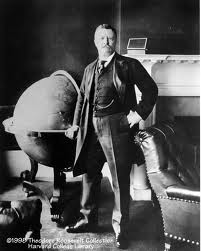 On Tuesday, Barack Obama delivered a speech in Kansas. Osawatomie, Kansas to be exact. With little subtlety, this was an attempt to conjure up the spirit of Teddy Roosevelt, the TRex of the early 20th Century, the scrappy yet privileged pugilist, who pitted himself against monopolies, rabid financiers and proudly defended the American ‘square deal.’ In truth, TR was no saint. But he was a man of conviction. And action.
Barack Obama has proven himself a weak sister by any comparison. Yet, he and his handlers, his ever-present speechwriters saw fit to mirror Roosevelt’s words. We’re to believe that Obama is a populist at heart, a Roosevelt clone, calling on the Nation to embrace progress over privilege. The square deal becomes the fair chance. The review of abuses and lawlessness that TR was not afraid to call destructive become a wrong. Legislative solutions and regulatory oversight that TR specifically cites are mentioned in passing or given more credit than they’re actually due, eg., the stripped down Dodd-Frank bill. Notice there was no mention of reinstating Glass-Steagall, something that wouldn’t solve the entire mess we find ourselves in but would be an important first step in the reform process.
Let’s get real. Barack Obama has no intention of reforming anything. Unlike TR who said:
“Words count for nothing except in so far as they represent acts.”
And Barack Obama? He’s countered with words leading nowhere.
He was against the Iraq War, only there’s no record of his opposition. His ‘just words’ speech—a steal from an earlier Deval Patrick oratory— said everything the man has proven himself to be, an empty talker. Where is the evidence that Barack Obama is or ever was a defender of the ‘ordinary man and woman?” Oh yes, he was a community organizer. And what exactly were his accomplishments? He was a State Senator. Accomplishments, please [beyond representing the interests of slum landlords]. And as a US senator? Accomplishments?
Nada.
Let’s line this up against a few of Teddy Roosevelt words made flesh:
- Successfully prosecuted the Northern Securities Co. for the merger of the Northern Pacific, The Great Northern and the Chicago, Burlington and Quincey railroads under the Sherman Antitrust Act.
- Restored public confidence in the government’s ability to hold the country’s most powerful men accountable to the law.
- Frequently warned conservative critics that revolutionary upheaval was likely to be inspired by an ‘attitude of arrogance on the part of property owners and their unwillingness to recognize their duty to the public.’
- Pushed through Congress legislation establishing the Department of Commerce and Labor and within that Department the Bureau of Corporations, authorized to investigate and publicize suspect corporate activities.
- Challenged the corporate view that business records be kept in secrecy and that employers had a right to deal with employees as they saw fit [one need only review the deplorable working conditions and wages of the era to understand the need for reform] with no interference from the Government.
- Brokered a peace between Russia and Japan, for which he earned the Nobel Peace Prize.
There’s more, of course—the good, the bad and the ugly. TR was not perfect but unlike the present occupant of the White House, he had a vision that was his and his alone. He was the public face and voice of the American Progressive Movement that would eventually lead to improved working conditions, a woman’s right to vote, union legitimacy and new attitudes regarding our environment–conserving our national, natural treasures for the future–among other things.
Teddy Roosevelt was a man of the moment and a man with a legacy.
Now think of Barack Obama, the lack of vision, the broken promises, the man in search of an identity: JFK, FDR, Abraham Lincoln. And now Teddy Roosevelt. This is the blank slate upon whom everything has been written but nothing has stuck. Oh yes, we have the healthcare reform bill, a legislative mystery written behind closed doors then sealed with secret insurance industry deals and wet kisses to Big Pharma. We also have wars continued and financed, record unemployment [jobs which will not be replaced by pretty words], nearly 46 million Americans receiving food stamps [1 in 7], houses still underwater with few promised modifications and/or relief and 20+% of our children classified as ‘food insecure.’
This is not a vision. It’s a disaster. I’ll leave you with Teddy Roosevelt’s words, from his own Kansas speech:
I stand for the square deal. But when I say that I am for the square deal, I mean not merely that I stand for fair play under the present rules of the games, but that I stand for having those rules changed so as to work for a more substantial equality of opportunity and of reward for equally good service.
And,
The object of government is the welfare of the people. The material progress and prosperity of a nation are desirable chiefly so far as they lead to the moral and material welfare of all good citizens.
And,
One of the fundamental necessities in a representative government such as ours is to make certain that the men to whom the people delegate their power shall serve the people by whom they are elected, and not the special interests. I believe that every national officer, elected or appointed, should be forbidden to perform any service or receive any compensation, directly or indirectly, from interstate corporations; and a similar provision could not fail to be useful within the States.
These are words most of us can believe in, spoken August 31, 1910. I’d encourage readers to take a few moments and read TR’s words in their entirety.
Then read Obama’s speech.
Two speeches. Two men.
If President Obama wants to slip on the mantle of Teddy Roosevelt, become a born-again populist in 2012, he’ll need action to prove his words.
Why?
Because the days of blind faith are over.
Occupy Philly and Independence Hall
Posted: November 30, 2011 Filed under: #Occupy and We are the 99 percent!, Banksters, Corporate Crime, corruption, Economy, financial institutions, income inequality, jobs, U.S. Economy, U.S. Politics, unemployment, voodoo economics | Tags: 2011: days of revolt, Financial Crisis, U.S. Economy, unemployment 16 CommentsBlack Friday, Philadelphia, Pa.
My first look at Occupy Philly was after a free ride on the 9:52 Media Local, The Santa Train. This was not by plan but a matter of sheer coincidence. I should have guessed;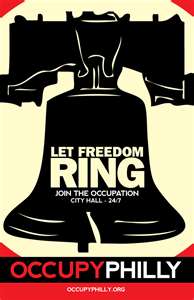 I was the only one standing on the Morton platform without a small child in tow. But shortly after boarding, it was all too clear. The elves came first, wailing Jingle Bells and Wish You a Merry Christmas. They were followed by out-of-season Mummers dressed in holiday garb, belting out another round of X-mas cheer, complete with accordion, banjo and sax. Mrs. Claus assured the children that Santa was busy, busy at the North Pole, making sure all their wishes [even though edited to economic realities] would come true. And then, there was the free candy and balloon animals.
The magic of childhood! Where we can believe everything and anything. When the world appears kind and right and true.
An out-of-stater now, I deliberately got off at Suburban Station, my old work stop. Also, the stop at which I’ve frequently disembarked to attend exhibits at the Franklin Institute, the Museum of Natural History or the Philadelphia Museum of Art, a brisk walk west up the Parkway, past the Rodin Museum and the soon-to-open home for the controversy-laden Barne’s collection.
But not today.
This morning I headed east, winding through the underground towards City Hall and the Occupy Philly encampment. Later, I would team up with a friend and hoof down to the historic district. But right now, I had a different historical event in mind.
I no sooner hit the outside doors than the vivid blue of plastic tarps and tent tops were visible. A strange sight. Normally, I would have walked through the West arch at City Hall, stood for a few moments googling at the city’s Christmas tree. But this year was different. So different.
The western entrance to the City Hall complex was barricaded. ‘For Restoration’ the signs said. No towering tree this year. Instead, the Occupy tents decorated Dilworth Plaza, a strange but fascinating sprawl of makeshift living quarters and standard issue camping gear. The area was quiet and still, the air crisp. I circled around the entire plaza. No sight of my friend, so I headed back towards the encampment, spotted the medical and information tents, as well as a petition table outlining the dangers of in-state fracking by over-zealous gas drilling companies.
At the Information Tent there was an array of literature on upcoming actions, the November issue of the Occupy Wall Street Journal and several people discussing Mayor Nutter’s deadline to dismantle the encampment within 48 hours. Two of the occupiers said almost in unison: ‘It was never about the tents.’
So what is it about? It’s a question I read constantly on the blogs and in newspapers, even hear from family and friends.
Here’s what I learned in the morning hours I spent on the Plaza:
- In the 53 days of Occupy Philly, 26,000 local citizens signed on expressing support.
- At the height of the encampment, City Hall was encircled with tents, sleeping bags and a variety of makeshift living accommodations.
- Active supporters numbered around 200-300, some living on-site, others coming in to protest, march and rally during the day.
- Local Unions support the effort. In fact, the Trades Union offered to assist the protestors in the original plan to move off Dilworth to an encampment across the street. The Union needs those ‘renovation’ jobs. That idea was scrapped because permits were denied.
- The area was clean. No needles, drug paraphernalia or trash scattered about as the MSM would have readers/viewers believe taints all encampments. Talking to several encampment members, I was told a goodly portion of each day is spent ‘cleaning up.’
- The encampment/protest was peaceful. There was a sense of community and the overriding sentiment was to voice anger and dissent over the widening income inequality in the US and the corporate capture of all facets of government.
- I heard no political posturing or Obama shilling. Simply stated, the system is broken for the 99%.
- Forty to fifty of the encampment members were homeless. They joined for the free food and the safety of numbers.
- The police presence, even on this Friday morning, was unusually large but basically stationed within the confines of the City Hall plaza.
- Though Mayor Nutter had leveled a 48-hour deadline, there was no sense of panic or great urgency the morning I arrived. I later learned that the majority of the encampment was dismantled voluntarily Sunday evening and the homeless were moved elsewhere for their own safety.
- This morning [Wednesday 11/30 at 1:20 am, according to the Associated Press], the Philly police department began tearing down the remaining tents.
But as the protesters I spoke with said: It was never about the tents. It has always been about visibility—the eyesore of inequality, injustice and corruption.
I left Dilworth Plaza, and then headed down to Independence Mall. A surreal juxtaposition. In a matter of a few blocks, my friend and I walked from the current protest to the historical marker of the Mother of All Protests. Philadelphia is the birthplace of the Declaration of Independence and the US Constitution. We strolled through the portrait gallery installed in the Second Bank of the United States and the faces of those earlier protesters, that grand collection of merchants and farmers, philosophers and scientists, lawyers and bankers stared back. What would they be thinking? I wondered.
We went on to Carpenter’s Hall, where Benjamin Franklin reportedly had secret meetings with like-minded citizens prior to the Revolution. Years later, on leaving the Constitutional Convention, a woman reportedly asked Franklin what sort of government he and the others had designed. Franklin’s terse reply: ‘A Republic, Ma’am. If you can keep it.’
Our final stop was Independence Hall, which was originally the Pennsylvania State House. This was where the Second Continental Congress met, the Declaration of Independence was adopted and where the Constitutional Convention met to draft, debate, and then sign the US Constitution in 1787.
We’re a long way from who and what we were in 1787. But Franklin’s words have a haunting edge to them: ‘A Republic, Ma’am. If you can keep it.’ Another quote that’s perhaps equally pertinent is:
‘We must hang together, gentleman, or assuredly we will all hang separately.’
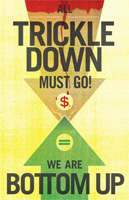 For me at least, this is what the Occupy Movement has been and is still about. In an age where corporations have been awarded the distinction of personhood, when free speech is equated to money and The Rule of Law is applied in an unjust and inequitable fashion then we, ordinary citizens, have a duty to support and join one another in protest. To hang together, if you will.
Oh, and that Tea Party, the real one in Boston that got everything rolling?
We all recall the ‘taxation without representation’ line from our school years, stemming from the passage of the Stamp Act in the 1760s and later the Tea Act in 1773. King George had debts to pay off—a Seven Year’s War among other things. And the East India Company’s tea pitched into the Boston Harbor? East India was basically provided a monopoly on tea shipped into the colonies. The company [and its aristocratic shareholders] were none too happy about their profits pinched and drowned in the harbor and helped push [lobby] the King to pass the Coercive Acts, aka The Intolerable Acts. The colonists were generally peeved at the British Parliament for taxing them without their consent and then adding insult to injury, giving the East India Co. a cushy, duty-free export to undercut colonial merchants. But they were beyond peeved when punitive measures were leveled. They demanded that Parliament end its corrupt economic policies with and stop the bailout of that era’s own TBTF East India Company.
Sound vaguely familiar? Whatever’s old is new again. Of course, no one age can be accurately compared to another. Context is everything. To quote Barbara Kingsolver from the November issue of The Occupy Wall Street Journal:
“Every system on earth has its limits. We have never been here before, not right here exactly, you and me together in the golden and gritty places all at once, on deadline, no fooling around this time, no longer walking politely around the dire colossus, the so-called American Way of consecrated corporate profits and crushed public compassion. There is another American Way. This is the right place, we found it. On State of Franklin, we yelled until our throats hurt that we were the 99% because that’s just it. We are.”
As I’ve said elsewhere, I support Occupy until I don’t. The ‘don’t’ for me is if the Movement becomes another co-opted arm of one corrupt political party or another. Our existing two-party system is thoroughly compromised; a shipload of bleach and scrub brushes couldn’t clean it up. I support Occupy because I hate the idea of leaving my kids and future grandbabies with a broken, twisted Republic, one dedicated to piranha-school profits, the amassing of criminal wealth by a callous, irresponsible few at the expense of the many. I support the Occupiers because of those sweet-faced kids on the Santa train; they deserve the best we have. But I also support what I saw on Dilworth Plaza because of what I saw and recalled inside Independence Hall, what we owe to all those who sacrificed and struggled, dreamed and achieved, lived, loved and died over the last 200+ years. We stand on the shoulders of so many.
That’s something we should never forget because our past, our history is no small thing. But our future, that other American Way? That’s all about what we do now.
Vegas Gambling vs Wall Street Gambling
Posted: November 23, 2011 Filed under: Banksters, Economy, Equity Markets, financial institutions 5 CommentsOne of the things that has always struck me about folks that treat the financial sector like any other business venture is the lack of  understanding of what the finance sector really does. There are several basic functions if you read the literature. The banking industry originally evolved from goldsmiths that would safekeep gold for people. This eliminated the need for every one to keep a small army with them at all times to stop robbers from stealing all their gold. Goldsmiths eventually learned that a fairly sizable chunk of that gold never left their premises and found out they could lend some of it out for a return and not be caught short. That eventually lead them from being gold babysitters to lenders. Then, we eventually got around to trying to find some financial contracts that would help us if the worst happened by buying insurance. From these sets of agreements, we now have exotic derivatives, financial innovations, credit default swaps, and a host of other banking services. The basics things that the banking sector does is help you save or store up future purchasing power, borrow or lend purchasing power, and help move money around from place to place via the payment systems. That would be check clearing and ATMs and things like that. The Federal Reserve Bank was set up to handle that latter function but most of that function has been privatized since regional banks now clear checks and there are private clearing houses for Automated Payments. The Fed’s role is now fairly small. It still pushes cash from the US Mint/Treasury into the banking system and its FedWire system still handles a huge number of wire transfers between banks. If banks won’t lend to each other via the Fed Funds market, it is also available to lend money at the discount window. That used to be only available to member banks but it’s now open to a lot more institutions.
Bankers usually make money by charging fees on their services, interest rates on their loans, and then they make arbitrage profits if they invest. For years, that last function wasn’t a big deal for bankers because laws stopped them from investing in anything very creative. Laws have changed a lot over the last 10-20 years and even if commercial banks can’t make risky investments, they are likely to be part of a bank holding company that owns some subsidiary that can. Allowing banks–who basically still have the role of “safekeeping”–to gamble has been a huge mistake. Besides the lax laws, they have had a lot of cheap cash available because of Greenspan’s relatively lose monetary policy during the last years of his tenure and they’ve been able to reduce their risk by having deposit insurance which covers their deposits in case of default. There has also been an increase in “financial innovations” and techniques which serve as pseudo insurance but generally come in the form of very hard-to-price assets so they can be risky. Many banks don’t use them just for hedging which is this risk management approach to their use. A lot of banks just plan gamble. We’ve definitely seen banks misjudge risk and rely heavily on what I would consider gambling activities.
So, I’ve worked back of the house at a casino and I’ve worked in banking and of course, I’m a financial economist so I’ve got a little knowledge and experience on all fronts. The one thing that I will say about gambling in a casino is that a good time is had by all, every one understands it’s gambling, and the gambling industry hires a lot of people in the process that do fairly straightforward jobs. They only get tips if the customers say so. Bonuses for random wins are de rigueur in the finance sector. Silly thing is that most financiers think they’ve actually earned those bonuses for doing some miracle. There’s a few good reads to let you know exactly how misguided they are on their opinions of their skills. The first is anything by Nassim Nicholas Taleb who is a practitioner of financial mathematics and a former Wall Street trader. His book “Fooled by Randomness” is just full of examples of the fallacies that drive Wall Street Bankers into thinking too highly of themselves and paying themselves based on gambling and randomly hitting the jackpot. You can also read anything by Nobel Prize winner Daniel Kahneman. Actually, you can watch them both talk about these things in a video at Edge in a program called Reflections on a Crisis.
Kahneman explains why there are bubbles in the financial markets, even though everyone knows that they eventually burst. The researchers used the comparison with the weather: If there is little rain for three years, people begin to believe that this is the normal situation. If over the years stocks only increase, people can’t imagine a break in this trend.
Taleb speaks out sharply against the bankers. The people in control of taxpayer’s money are spending billions of dollars. “I want those responsible for the crisis gone today, today and not tomorrow,” he says, leaning forward vigorously. The risk models of banks are a plague, he says, the bankers are charlatans.
It is nonsense to think that we can assess risks and thus protect against a crash. Taleb has become famous with his theory of the black swan described in his eponymous bestsellers described. Black swans, which are events that are not previously seen–not even with the best model. “People will never be able to control a coincidence,” he says.
Okay, so that’s actually the background to something I want to point you to on VOXEU called “What is the contribution of the financial sector?” by Andrew Haldane. I think it’s a good thing to look at because we need to establish some basic knowledge and laws that separate the speculative activities from the banking activities that actually may provide value. (Although I still could argue that privatizing the payments system may prove risky and foolish some day, there are some things that banks do that are useful.) This way we can see the damage done when so many politicians essentially empower the gambling aspects. Another offshoot is our tax policy which favorably treats capital gains without any reference to the source of the profit. People that run businesses that enhance economic welfare of every one are taxed at the same favorable rate as those that basically gamble resources away. That’s a very bad incentive system. Haldane points out the difference between managing risk of financial contracts and risk-taking that is basically gambling and how much of the Western nation’s financial sector has morphed more into a gambling sector than a financial services provider.
But crisis experience has challenged this narrative. High pre-crisis returns in the financial sector proved temporary. The return on tangible equity in UK banking fell from levels of 25%+ in 2006 to – 29% in 2008. Many financial institutions around the world found themselves calling on the authorities, in enormous size, to help manage their solvency and liquidity risk. That fall from grace, and the resulting ballooning of risk, sits uneasily with a pre-crisis story of a shift in the technological frontier of banks’ risk management.
In fact, high pre-crisis returns to banking had a much more mundane explanation. They reflected simply increased risk-taking across the sector. This was not an outward shift in the portfolio possibility set of finance. Instead, it was a traverse up the high-wire of risk and return. This hire-wire act involved, on the asset side, rapid credit expansion, often through the development of poorly understood financial instruments. On the liability side, this ballooning balance sheet was financed using risky leverage, often at short maturities.
This is an important statement because not only did political institutions loosen laws or not put in place laws to stop this from happening, but when it happened, we all paid and they’ve ignored how costly this was to every one else. Plus, they keep wanting us to sacrifice instead of the people that broke the economic growth machine. The basic narrative is that these folks gambled with others’ money and the government had to pay the house. This is wrong in every sense of what is and isn’t moral. Haldane argues that risk-taking is not a value-added activity for banks and backs it up with empirical evidence.
The financial system provides a number of services to the wider economy, including payment and transaction services to depositors and borrowers; intermediation services by transforming deposits into funding for households, companies or governments; and risk transfer and insurance services. In doing so, financial intermediaries take on risk. For example, when they finance long-term loans to companies using short-term deposits from households, banks assume liquidity risk. And when they extend mortgages to households, they take on credit risk.
But bearing risk is not, by itself, a productive activity. The act of investing capital in a risky asset is a fundamental feature of capital markets. For example, a retail investor that purchases bonds issued by a company is bearing risk, but not contributing so much as a cent to measured economic activity. Similarly, a household that decides to use all of its liquid deposits to purchase a house, instead of borrowing some money from the bank and keeping some of its deposits with the bank, is bearing liquidity risk.
Neither of these acts could be said to boost overall economic activity or productivity in the economy. They re-allocate risk in the system but do not fundamentally change its size or shape. For that reason, statisticians do not count these activities in capital markets as contributing to activity or welfare. Rightly so.
What is a demonstrably productive economic activity is the management of risk. Banks use labour and capital to screen borrowers, assess their creditworthiness and monitor them. And they spend resources to assess their vulnerability to liquidity shocks arising from the maturity mismatches on their balance sheets. Customers, in turn, remunerate banks for these productive services.
The current framework for measuring the contribution of financial intermediaries captures few of these subtleties. Crucially, it blurs the distinction between risk-bearing and risk management. Revenues that banks earn as compensation for risk-bearing – the spread between loan and deposit rates on their loan book – are accounted for as output by the banking sector. So bank balance-sheet expansion, as occurred ahead of the crisis, counts as increased value-added. But this confuses risk-bearing with risk management, especially when the risk itself may be mis-priced or mis-managed.

 peej
peej Carissa
 bostonboomer
 dakinikat
 ecocatwoman
 mablue2
 Mama Lopez
 peggysue22
 quixote
 skydancingguestblogger
 Mona (aka Wonk the Vote)



 Sky Dancing
Recent Comments