
US Financial Regulation and Arbitrage
Posted: January 5, 2011 Filed under: Bailout Blues, commercial banking, Corporate Crime, Equity Markets, financial institutions, Global Financial Crisis, investment banking, Team Obama, U.S. Economy | Tags: Federal Reserve Bank, financial regulation, Obama Financial Reform, OCC, Regulatory Arbitrage, SEC 17 CommentsThere is no doubt that we have had a major world wide financial collapse drastically affecting many innocent people in terms of livelihood and life long savings. It is fair to say that if the regulators had done their job, the country would have not had the hard landing that was experienced in 2008. The 2010 Financial Reform Bill kicked the can down to the Regulators for implementation and the bankers still have influence. This article takes a look at who the regulators were and how they did or did not do their job. The Obama people in the regulator domain are identified along with examples of Bush regulator failures. Hopefully this will give insight into what is being done to preclude another crisis
The financial industry has a gaggle of regulators, each with its politically protected turf.
From Wikopedia: Financial regulation is a form of regulation or supervision, which subjects financial institutions to certain requirements, restrictions and guidelines, aiming to maintain the integrity of the financial system.
Regulation is an unnecessarily a complex subject. It is important to understand that in some cases financial entities can choose their regulator. Some regulators were much more lenient and in many cases banks switched to them, hence the term Regulatory Arbitrage. The following are the major Federal regulators: FED, SEC, OCC, OTS, FDIC, CFTC 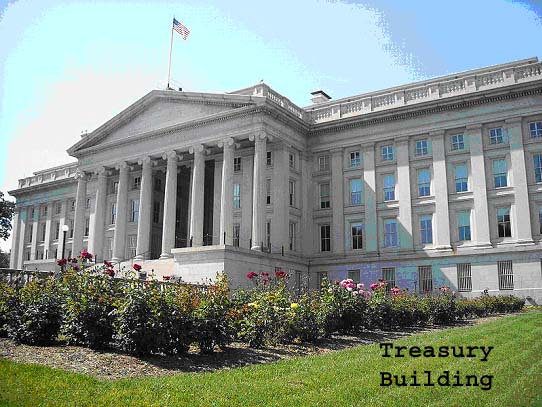 and FINRA described below. Except for the FED, most of these organizations have direct or indirect ties to the Treasury organization.
FED – Federal Reserve System
From Wikopedia: Its duties today, according to official Federal Reserve documentation, are to conduct the nation’s monetary policy, supervise and regulate banking institutions, maintain the stability of the financial system and provide financial services to depository institutions, the U.S. government, and foreign official institutions.Current chairman is Ben Bernanke, the former chairman was Alan Greenspan. Much more on Mr Greenspan later.
SEC – Securities and Exchange Commission
From Wikopedia: It holds primary responsibility for enforcing the federal securities laws and regulating the securities industry, the nation’s stock and options exchanges, and other electronic securities markets in the United States. Mary Schapiro is the current Chair. Predesessors were; Christopher Cox – 2005-2009, William H. Donaldson – 2003-2005, Harvey Pitt – 2001-03
OCC – Office of Comptroller of the Currency
From Wikopedia: US federal agency established by the National Currency Act of 1863 and serves to charter, regulate, and supervise all national banks and the federal branches and agencies of foreign banks in the United States. Current Acting Chairman is John Walsh. Previous Chairman were John C. Dugan – (2005 – 2010) John D. Hawke, Jr. – (1998–2004)
OTS – Office of Thrift Supervision ( recently folded into OCC)
From Wikopedia: United States federal agency under the Department of the Treasury. It was created in 1989 as a renamed version of another federal agency (that was faulted for its role in the Savings and loan crisis). Like other US federal bank regulators, it is paid by the banks it regulates. The OTS was initially seen as an aggressive regulator, but was later lax. Declining revenues and staff led the OTS to market itself to companies as a lax regulator in order to get revenue.
FDIC – Federal Deposit Insurance Corporation
From Wikopedia: United States government corporation created by the Glass-Steagall Act of 1933. It provides deposit insurance, which guarantees the safety of deposits in member banks, currently up to $250,000 per depositor per bank. The FDIC insures deposits at 7,895 institutions. The FDIC also examines and supervises certain financial institutions for safety and soundness, performs certain consumer-protection functions, and manages banks in receiverships (failed banks).
Sheila Bair is the current chairman of the FDIC and is viewed as a serious regulator with the right incentives for all concerned.
CFTC – Commodity Futures Trading Commission
From Wikopedia: The stated mission of the CFTC is to protect market users and the public from fraud, manipulation, and abusive practices related to the sale of commodity and financial futures and options, and to foster open, competitive, and financially sound futures and option markets.
CFTC is considered to be the primary regulator for Credit Default Swaps in the Dodd Frank regulation scheme.
FINRA – Financial Industry Regulatory Authority
From Wikopedia: In the United States, the Financial Industry Regulatory Authority, Inc., or FINRA, is a private corporation that acts as a self-regulatory organization (SRO). FINRA is the successor to the National Association of Securities Dealers, Inc. (NASD). Though sometimes mistaken for a government agency, it is a non-governmental organization that performs financial regulation of member brokerage firms and exchange markets.
Previously run by Mary Shapiro, FINRA has been critisized as being a ineffective regulator. Most notable was their (and SEC) allowing Bernie Madow to continue for 10 years to operate despite being warned by a whistle blower. When testifying before congress, the whistle blower (Harry Markopolos) said SEC was incompetent, FINRA was corrupt.
It must be said that Financial Regulation in the United States is done by committee of political bureauocrats. It is important to be aware of the fact that many of them are funded by fee’s assessed to the agencies they regulate. So opportunity for Regulatory Capture and Regulatory Arbitrage is prevalent in these agencies. The clear example is Office of Thrift Supervision bowing to their clients. The opposite example is that of Sheila Bair who tries to do the right thing for her clients despite critisizm.
Understatement of the Year Award
Posted: December 17, 2010 Filed under: Bailout Blues, The Great Recession, U.S. Economy, U.S. Politics, We are so F'd | Tags: Income Inequality, Tax Cuts for Billionaires, tax situation for the wealthy 55 Comments From Bloomberg Business Week:
It’s a Great Time to Be Rich
“If the tax cuts become law, the next two years will be the best in living memory for many wealthy Americans to shield their income and fortunes “
A bonanza of new and extended tax benefits could make it as easy as ever for the rich to stay that way.
Under legislation approved by the U.S. Senate on Wednesday, Dec. 15, and now moving on to the House, savvy wealthy Americans would be able to capitalize on an environment in which their tax rates on income and investments remain at historic lows. Also, new rules would make it possible to pass on fortunes to heirs with less fuss and lower taxes than all but a brief period of the past 80 years. It’s a far cry from the 70 percent bite the federal government took out of the largest incomes and estates as recently as 1980.
“The climate we’ll have after this legislation is extremely favorable for wealthy families,” says Jeffrey Cooper, a professor at Quinnipiac University School of Law and a former estate planner who has studied the history of U.S. tax law.
The article goes on to list the incredible list of give aways to people that don’t need it in the Tax Cuts for Billionaires Act. Here’s one salient point to think about while eating your daily gruel and waiting for the debtor’s prisons and poor houses to re-open so you’ll have some place to go when the banks seize your home illegally .
The good news for the rich starts with income tax rates, which for top income groups would remain 35 percent , a rate enacted by former President George W. Bush in 2003. Except for a period from 1988 to 1992, the top tax rate has never been this low since 1931.
Happy Days are here again if you’re part of the investor class too! I’m getting nostalgic for Nixon. That says something, doesn’t it?
For the country’s wealthiest families, income from wages can be far less important than income from investments. According to a Tax Policy Center analysis of 2006 returns, 18.1 percent of all Americans’ cash income comes from business ownership or capital investments, compared with 64.5 percent from labor. For those in the top 1 percent of earners, however, business and capital income make up 53.6 percent of income and labor accounts for 35.3 percent.
Thus, Cooper notes, taxes on capital gains and dividends can be far more important to the rich than income tax rates. The tax compromise extends a 15 percent top tax rate on long-term capital gains and dividends enacted in 2003, which is the lowest rate since 1933. The top capital-gains rate was 77 percent in 1918 and, since 1921, its highest point was 39.9 percent in 1976 and 1977—though certain gains could be excluded from taxation.
No wonder Charles Krauthammer’s red face is all aglow with the spirit of the season!! It’s just not the prunes and the eggnog!!
How can any one defend this administration and its policies as being anything the worst of Reaganomics? At a time when we are seeing record long term unemployment, record foreclosures, record numbers of home owner’s with underwater mortgages, this is what we get. The same folks that benefited from all those bail outs from their failed business decisions and failed investment strategies are being subsidized again.
How can any Democratic congress critter go home and face any of their middle and working class constituents knowing full well they sold their souls to the Obama Company Store. I’m more convinced than ever that this country is in banana republic territory. Next step will undoubtedly be removing what little of the safety net was left in place after Reagan hit the country. After all about one half of U.S. children will most likely be on food stamps at some point in their life. Afterall, they could be out selling matches in the street!! And It’s Christmas time! Why not recreate Dickensian poverty? I’m sure we could use a few child work houses too! After all, it would contribute to the bottom lines of the people that really matter in this country!!
Did Bush and Obama make a secret deal in 2008?
Posted: December 3, 2010 Filed under: Bailout Blues, Elections, John McCain, Surreality, Team Obama | Tags: Barack Obama, conspiracy theories, domestic spying, economic crisis, George W. Bush, Henry Paulson, John McCain, Spain, TARP, Torture, Wikileaks 40 Comments
Around the time George W. Bush’s memoir was released, Alex Barker posted this bizarre anecdote at the Financial Times’s Westminster Blog.
George W. Bush’s bombastic return to the world stage has reminded me of my favourite Bush anecdote, which for various reasons we couldn’t publish at the time. Some of the witnesses still dine out on it.
The venue was the Oval Office. A group of British dignitaries, including Gordon Brown, were paying a visit. It was at the height of the 2008 presidential election campaign, not long after Bush publicly endorsed John McCain as his successor.
Naturally the election came up in conversation. Trying to be even-handed and polite, the Brits said something diplomatic about McCain’s campaign, expecting Bush to express some warm words of support for the Republican candidate.
Not a chance. “I probably won’t even vote for the guy,” Bush told the group, according to two people present.“I had to endorse him. But I’d have endorsed Obama if they’d asked me.”
Time Magazine later quoted a Bush “spokesman,” who said Barker’s anecdote was “ridiculous and untrue.”
“President Bush proudly supported John McCain in the election and voted for him,” said Bush spokesman David Sherzer to Politico.
Nevertheless, President Obama has gone to great lengths to protect members of the Bush administration from any accountability for the crimes they committed while in office. The Justice Department defended John Yoo, author of the torture memo. Justice also went to court to defend the Bush administration’s use “state secrets privilege” to excuse NSA domestic spying. They defended Donald Rumsfeld against charges related to torture.
Recently it was learned from formerly secret cables released by Wikileaks that the Obama administration pressured Spain to drop criminal charges against six Bush officials. David Corn writes:
In its first months in office, the Obama administration sought to protect Bush administration officials facing criminal investigation overseas for their involvement in establishing policies the that governed interrogations of detained terrorist suspects. A “confidential” April 17, 2009, cable sent from the US embassy in Madrid to the State Department—one of the 251,287 cables obtained by WikiLeaks—details how the Obama administration, working with Republicans, leaned on Spain to derail this potential prosecution.
The Bush officials were charged with
“creating a legal framework that allegedly permitted torture.” The six were former Attorney General Alberto Gonzales; David Addington, former chief of staff and legal adviser to Vice President Dick Cheney; William Haynes, the Pentagon’s former general counsel; Douglas Feith, former undersecretary of defense for policy; Jay Bybee, former head of the Justice Department’s Office of Legal Counsel; and John Yoo, a former official in the Office of Legal Counsel.
The Republicans who helped Obama pressure Spain were Sen. Judd Gregg (R-N.H.) and Sen. Mel Martinez (R-Fla.). Corn again:
Back when it seemed that this case could become a major international issue, during an April 14, 2009, White House briefing, I asked press secretary Robert Gibbs if the Obama administration would cooperate with any request from the Spaniards for information and documents related to the Bush Six. He said, “I don’t want to get involved in hypotheticals.” What he didn’t disclose was that the Obama administration, working with Republicans, was actively pressuring the Spaniards to drop the investigation.
In general, as anyone with half a brain has noticed, the Obama administration has carried on Bush’s policies and sometimes has taken them even further–for example with Obama’s claiming the power to unilaterally order the assassination of American citizens.
Why would Obama defend Bush administration policies so assiduously? Is it just because Obama wants to hold onto the “enhanced” executive powers that Bush claimed during his tenure as president? Or are these two supposed political opponents actually engaged in a collaborative effort to expand the powers of the presidency?
Let’s look back at the 2008 general election campaign. In late September, Barack Obama and John McCain were preparing for the first presidential debate, to be held at the University of Mississippi on September 26, shortly after news of the financial meltdown broke. Treasury Secretary Henry Paulson had proposed the Troubled Asset Relief Program (TARP) to Congress on September 20. Read the rest of this entry »
Oodles and oodles of data… now what?
Posted: December 1, 2010 Filed under: Bailout Blues, Global Financial Crisis, U.S. Economy | Tags: bailouts, FED Data Drop, open market operations, TARP 56 Comments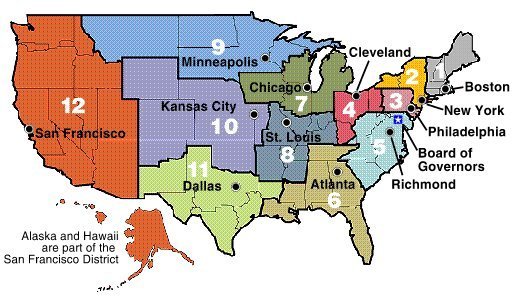 So, Bernie Sanders, Ron Paul, and Alan Grayson finally got the FED to drop some documents that show all the things it was up to during the financial crisis that dated to around 2007. I actually have no problem with that. That kind of information is useful and I think it’s good to have it after the fact.
If you’d like to know how much data and what it’s about, FT Alphaville has a pretty good site up that explains the types of data that have shown up. It’s an amazing amount of detail on $ 3.3 trillion worth of bailout funding. What’s really interesting is the list of collateral. The actual names of organizations running to the window during the time period is there, but really not all that surprising. You can find the details on that at another post on FT Alphaville. As was expected, BOA is most definitely the top hog.
If you read the link to the WSJ above, you can see what both Bernie Sanders and the FED think about all of this.
“After years of stonewalling by the Fed, the American people are finally learning the incredible and jaw-dropping details of the Fed’s multitrillion-dollar bailout of Wall Street and corporate America,” Mr. Sanders said in a statement Wednesday afternoon. “As a result of this disclosure, other members of Congress and I will be taking a very extensive look at all aspects of how the Federal Reserve functions.”
The Fed has kept key deliberations closely guarded. It has taken steps to boost transparency, but has kept certain details secret, such as the names of banks that borrow at its discount window. Federal Reserve Chairman Ben Bernanke strongly objected to efforts to subject monetary-policy decisions to audits, saying it would “seriously threaten monetary-policy independence, increase inflation fears and market interest rates, and damage economic stability and job creation.”
Matt Stoller (Policy Adviser to the now gone-pecan Congressman Grayson) has an incredibly long winded, hyperbole-ridden, populist rant against the FED that’s been published by Yves at Naked Capitalism and by New Deal 2.0. He must’ve just popped out of cartoon bunny land because there’s a lot of cyber ink over there “full of sound and fury, signifying nothing”. It’s attracting the usual attention of economic dilettantes and Paultards. It also has a bunch of paragraphs somewhat deferential to the P woman to whom he just about throws the title of “The Great Commoner”. (Isn’t that a somewhat surprising action for some one who advises a Democratic Congressman?) The bases of Matt Stoller’s arguments are not economics, data or theory because he dismisses all of that as being captured by the FED. Instead, he holds up a pop culture book on the subject.
In 1989, Bill Greider published a remarkable book called “The Secrets of the Temple: How the Federal Reserve Runs the Country” in which he described how Fed officials were the real decision makers in the American political order. Shielded by the argument of ‘political independence’, most politicians wouldn’t and still won’t dare interfere with the workings of our economic structure, even though the Constitution clearly mandates that the monetary system is the province of Congress. The dramatic and overt coordination of this ‘independent’ central bank with the executive branch and the banking sector, and its flouting of Congressional and public scrutiny, have removed its institutional legitimacy.
To dismiss academic research in area is simply self-serving. Every economist of every flavor comes up with data from all over the world that demonstrates a chaotic economy results from a central bank that is overtly influenced by politics and not independent.
The FED is simply a central bank which is the bank of bankers. It’s not supposed to be some arm of the political parties. It doesn’t clear as many checks as it used to, but it’s FED WIRE is still the major financial transaction wire system for banks. It gets coin and currency from the Treasury and it fills orders for them from banks. It also ensures that banks meet the regulatory obligations. It’s part of the trade off of getting insured by the FDIC. They have capital requirements, they have requirements on their organizational structure and investments, and they do truth-in-lending. Most of what the FED does outside of this is audit banks.
It’s really not some mysterious fraternity that they can’t get into. My work with the FED was very mundane. My staff gathered up orders for Treasury bills and bonds each Tuesday and sent them and tax payments where they would be applied. My other staff paid the electric bills and watched to make certain our branch budget was in line with other branches. I have never worked for a bunch of stuffier people than when I worked for the FED. I was even told to wear nude hosiery, short heels, and a suited skirt. Granted, I was not in NY where all the action is, but really, even bank visitations and teaching bankers how to watch their reserve accounts and use FED WIRE is not a glamor profession. It also pays diddly.
Monetary Policy is done by the Open Market Committee and carried out by the NY FED. No one any place else knows remotely what is done. That’s because if any one in the market or near the market knew, it would be like the ultimate insider trading. Would you really want YOUR congressman or Senator trusted with the ultimate INSIDER trading? When the FED buys and sells bonds and bills, it does it through a number of brokers who get the job through a bidding process. None of them can see the bigger picture. None of them can discern patterns any more than I could by transmitting bond and bill sales of the public every Tuesday. It’s that way because you don’t want any one making big time money knowing which way the market moves.
So, almost every country has designed their central bank to look like our FED; that includes the Europeans. Independence is valued above just about everything because as I’ve said, all the research shows that if you have a politically managed FED, you get a really bad economy. Here’s an example from South Africa today of worries about central bank independence.
“During the year there has been a focus on issues relating to monetary policy independence in response to the letter from the Minister of Finance clarifying the mandate of the Bank, as well as the recent New Growth Path document, in which reference was made to a looser monetary policy stance,” Gill Marcus said.
There were perceptions that these documents had undermined the independence of the SARB, and there had been a tendency to over-interpret monetary policy actions in terms of these discussions.
“For example, when the repo rate was reduced at the previous meeting, some analysts argued that because there was no economic rationale for this move, it therefore must have been politically inspired.
“A few days later, when the disappointing growth figures were announced, these analysts conceded that our decision was vindicated on economic grounds,” Marcus said.
There is plenty of information about the FED should you want to delve into it. It produces a lot of research and a lot of information. It just doesn’t share its immediate monetary policy targets, goals and actions with any one because that’s basically enabling insider trading. It also doesn’t let congress tell it how to run things, but it follows the laws set forth by Congress to achieve the goals it was given. That would be:
Monetary policy has two basic goals: to promote “maximum” sustainable output and employment and to promote “stable” prices. These goals are prescribed in a 1977 amendment to the Federal Reserve Act.
The FED has no role in the stock markets and could not do anything to prevent or cause bubbles there. So, any one that tries to say the FED caused any stock market bubble is out there in la la land. The FED can provide liquidity to credit markets through its open market activities and its activities to influence the FED FUNDS rate. It only directly controls the rate at which it lends to financial institutions; the discount rate. The FED FUNDS rate is a market established rate and reflects the price of loans between financial institutions. In some cases, it is a substitute for loans from the FED.
Even if the Fed suspected that a bubble had developed, it’s not clear how monetary policy should respond. Raising the funds rate by a quarter, a half, or even a full percentage point probably wouldn’t make people slow down their investments in the stock market when individual stock prices are doubling or tripling and even broad stock market indexes are going up by 20% or 30% a year. It’s likely that raising the funds rate enough to burst the bubble would do significant harm to the economy. For instance, some have argued that the Fed may have worsened he Great Depression by trying to deflate the stock market bubble of the late 1920s.
I’m beginning to think I should do more pieces on what the FED is and what the FED is not because of the disturbingly ignorant comments on that thread at Naked Capitalism. Part of the Fed’s problem is that it puts out a lot of information but it really doesn’t do much in terms of prime time explanations. Well, unless you watch the twice a year briefing by the Chair on CSPAN, then you may get an idea of it. However, that speech almost puts me to sleep and the stupid Congress questions just make me made.
So, any way, I just wanted to give you some information on this drop of data and let you know that most of the economists who know things are still pouring over it. I’m going to be pouring over it too, so I’ll try to keep you informed. All these discussions that are early to the media don’t appear to be coming from Financial Economists. They appear to be all politically motivated. Wait until some one who knows speaks up before you start forming any opinions.
Home, Lost Home
Posted: November 16, 2010 Filed under: Bailout Blues, Equity Markets, Global Financial Crisis, U.S. Economy | Tags: bad lending practices, Bank of America, Foreclosure Crisis, Mortgage Loans, Subprime mortgages, truth in lending 41 Comments The Senate Banking Committee is looking into allegations today about Bank of America’s Foreclosure process. As you may know, there have been problems with foreclosure documents that have led many to question the legality of many foreclosure actions by banks. At least seven banking officers will appear before the committee to argue the case that robo-notorization and other means of speeding up the process of making people homeless are not illegitimate. Retiring Senator Bank-Lobbyist-in-Training Chris Dodd is in charge of that committee.
Bloomberg has this to report about the hearings.
Democrats said they are concerned not only about foreclosures, but also about whether mortgage servicers are properly handling mortgage modifications intended to keep some homeowners from losing their properties.
“If many banks and servicers are not handling even basic foreclosure procedures correctly, it is likely that many are also not correctly evaluating homeowners for mortgage modifications,” Senator Robert Menendez, a New Jersey Democrat who is a member of the Banking Committee, said in a letter to Treasury Secretary Timothy F. Geithner that is scheduled to be sent today.
In the House, lawmakers will also call in overseers and regulators from government agencies, including the OCC and the Federal Housing Finance Agency.
Consumer advocates have been expressing concern about this process for years and aggressive lobbying is apparently paying off for the financial institutions. This report on a flurry of FIRE lobbying is from WAPO.
The spotlight on the foreclosure process has anxious financial executives mobilizing on Capitol Hill. A financial lobbyist said senior executives have been meeting with lawmakers and their staffers, and industry groups are planning letter campaigns aimed at preventing aggressive new legislation.
“Everyone’s very nervous about what’s going to happen this week,” said another industry official, who spoke on condition of anonymity because his firm has a stake in the outcome. “We have all hands on deck.”
It’s unclear what new measure could pass in a politically divided Congress, but some ideas under consideration could broadly reshape the mortgage industry.
Some lawmakers want to resurrect legislation that would give bankruptcy judges the power to order lenders to reduce the principal that homeowners owe. Others are pushing for some big banks to spin off their mortgage-servicing arms to avoid conflicts of interest. There’s also discussion of replacing the industry’s current system for tracking mortgages with one that would be subject to federal regulation.
“The risk is small that a bill gets through,” the financial lobbyist said, but “we are taking it very seriously.”
Meanwhile, Americans for Financial Reform have requested the FED withdraw a Rescission Rule. In real estate transactions, these rules generally offer up a ‘cooling off period’ that give a buyer a chance to nullify a sales contract within a certain period. Most state rescission rules run from five to 15 days. The FED’s considering tightening the process to favor the lenders. Here’s some information on the request from AFR to the FED.
In the face of an unparalleled foreclosure crisis, now is the time to reinforce the fundamental importance of TILA rescission. Instead, the Board’s proposal would eviscerate the single most effective tool that homeowners have to stop foreclosures and avoid predatory loans: the extended right of rescission. The FRB Docket R-1390 contains a series of proposed changes to the TILA rules governing mortgage lending.
A few of the proposed changes, including new “material A much greater concern is the proposed decimation of TILA’s right of rescission. At the depths of the worst foreclosure crisis since the Great Depression, we are surprised that the Federal Reserve Board has proposed rules that would eviscerate the primary protection homeowners currently have to escape abusive loans and avoid foreclosure: the extended right of rescission in 12 CFR § 226.15 and 226.23. disclosures” for home secured credit, would advance consumer protections.
Some changes are neither particularly damaging nor particularly beneficial to consumers. Other parts of the proposal, however, would seriously undermine the reliability of TILA disclosures on home secured credit. Instead of informing consumers about the terms of their loans as Congress intended, these proposals would allow broad misstatements of loan terms through new tolerances that are without statutory authority.
The Truth in Lending Act passed by Congress specifically provides consumers the right to unwind an illegal loan through “rescission” for up to three years after the loan was consummated. The statute – and current Board regulations –both provide that if the proper disclosures were not provided to the homeowner at the closing, the homeowner can rescind the loan by sending a notice to the creditor. The statute then requires the creditor to cancel the security interest. Only after the creditor has complied with its obligation to cancel the security interest is the homeowner required to pay back the lender the amount still due on the loan. This order of obligations is the essence of the protection provided by TILA’s extended right of rescission. The cancelling of the security interest means that the homeowner has a defense to a foreclosure. It also means that the homeowner has the means to obtain refinancing so as to be able to tender the amount due. The extended right of rescission does not mean that the homeowner does not have to repay the loan. While the amount due is reduced by the finance charges, fees and amounts the homeowner has already paid, the balance is still due the creditor.
Current momentum to push the laws to protect mortgage loan originators and processors appears aimed at protecting them from the consequences of some really shoddy underwriting practices. This seems mostly motivated to save them the billions of dollars of costs they–and in turn the Federal Government–would incur should there be zero tolerance of these egregious practices. Not only are billions of dollars of investors money at risk–including pensions and institutional investment funds–but there’s also that little matter of the bankrupt Fannie and Freddie that sit on tons of the nasty stuff and are currently being propped up by tax payer money.
Oddly enough, there are calls again for the FED or Treasury to do more ‘stress tests’ to see exactly what the potential fall out from this massive stupidity might be. Will we once again have to fork over our Treasury to pay for the greed of the housing and mortage debacle? All of this undoubtedly has the markets shaky, I went in search of why so much Big RED numbers in the major stock indexes today. The uncertainty inherent in this problem is undoubtedly fueling the equities set back. We continue to see fall out from the District’s inability to deal with the current systemic risk in our Financial System due to massive and hasty deregulation. Here’s some more analysis from WAPO.
At the same time, he said, panel members sympathize with the conundrum facing policymakers as they deal with the issue: On one hand, grinding foreclosures to a halt unnecessarily could harm the economy and slow its recovery. On the other, he said, distressed borrowers are entitled to due process, especially when banks are trying to take their homes.
Administration officials say they are keeping a close watch on the issue.
“We strongly believe that the reported behavior within the mortgage servicer industry is simply unacceptable, and servicers who have failed to follow the law must be held accountable,” said Treasury spokesman Mark Paustenbach. He added that the administration has led an interagency effort to “investigate misconduct, protect homeowners and mitigate any long-term effects on the housing market. The independent regulatory agencies, the Justice Department and [the Department of Housing and Urban Development] are examining servicers’ behavior, and we will continue to monitor the situation closely.”
This loosely means they’re probably anticipating the need for more bailouts. Good luck with that given the influx of hostile partisans coming in from the right wing of the Republican Party in January. What’s a bunch of lame ducks to do?

 peej
peej Carissa
 bostonboomer
 dakinikat
 ecocatwoman
 mablue2
 Mama Lopez
 peggysue22
 quixote
 skydancingguestblogger
 Mona (aka Wonk the Vote)



 Sky Dancing
Recent Comments