
Christmas Eve Open Thread
Posted: December 24, 2016 Filed under: Afternoon Reads, U.S. Politics 11 Comments
Good Afternoon!!
The best I can do today is post some interesting links. I hope everyone has a wonderful holiday.
I’ll start with some introductory excerpts and add more links when I run out of space.
Quartz: How Russia surpassed Germany to become the racist ideal for Trump-loving white supremacists.
For America’s white nationalists, there is only one nation—and one leader—worth emulating. And it has nothing to do with lederhosen or Wagner.
Richard Spencer, the current face (and haircut) of US’s alt-right, believes Russia is the “sole white power in the world.” David Duke, meanwhile, believes Russia holds the “key to white survival.” And as Matthew Heimbach, head of the white nationalist Traditionalist Worker Party, recently said, Russian president Vladimir Putin is the “leader of the free world”—one who has helped morph Russia into an “axis for nationalists.”
For those Americans who are just now familiarizing themselves with Russia’s current political proclivities—due to the recent, high-profile Russian hacking allegations, say, or the brutal military campaign in Aleppo—Moscow’s transformation into a lodestar for America’s white supremacists is enough to cause whiplash. After all, just a few decades ago Moscow was a beacon for the far-left, and its influential Communist International provided material and organizational heft for those pushing Soviet-style autocracy around the world. Over the past few years, however, the Kremlin has cultivated those on the far-right end of the West’s political spectrum in the pursuit, as Heimbach told me, of reifying something approaching a “Traditionalist International.”
Moscow’s appeal to the American far-right is, in a sense, understandable, if no less worrying. The links between Russia and America’s white nationalists and domestic secessionists have both expanded and deepened over the past few years. And the Kremlin, as with its invasion and occupation of swaths of Ukraine, has gone to only minimal lengths to obscure such ties.
Sarah Kendzior: Trump and Putin: The worst case scenario.
On Dec. 22, president-elect Donald Trump and Russian president Vladimir Putin both announced that they intend to increase their respective countries’ nuclear arsenals. Their use of language eerily paralleled each other. “The United States must greatly strengthen and expand its nuclear capability until such time as the world comes to its senses regarding nukes,” Trump tweeted. “Russia should fortify its military nuclear potential and develop missiles that can penetrate any missile-defense system,” Putin said at a defense ministry meeting.
The joint statements set off speculation that the United States and Russia are planning an increase in nuclear capacity that is in stark contrast to standard anti-proliferation policy.
This is an erroneous interpretation. Trump and Putin aren’t heading to war with each other—they’re heading to war together. Trump is a vociferous defender and admirer of Putin and is suspected by multiple intelligence experts of being assisted and even co-opted by the Kremlin. Russian interference in the US election has been affirmed by multiple US intelligence agencies and has led to calls for a congressional investigation. Rather than engaging in an arms race against each other, Trump and Putin are possibly teaming up as nuclear partners against shared targets.
Sound fantastical? It’s not: Trump has been obsessed with nuclear weapons for several decades, and has expressed his desire to coordinate with Russia on nuclear policy since the 1980s. In 1984 Trump, backed by Roy Cohn, the political operative who advised Joe McCarthy and Richard Nixon, proclaimed his goal of negotiating nuclear deals with the Soviets: “It would take an hour-and-a-half to learn everything there is to learn about missiles,” Trump said. “I think I know most of it anyway. You’re talking about just getting updated on a situation… You know who really wants me to do this? Roy… I’d do it in a second.”
This rhetoric mirrors Trump’s current rejection of expert advice and conviction that his instinct is enough to guide policy. (“I’m speaking with myself, number one, because I have a very good brain and I’ve said a lot of things,” he said in March 2016 when asked whom he consults on foreign affairs.) During the 2016 US presidential campaign, Trump refused to look at intelligence briefings or collaborate with anyone outside his inner circle. This advisory team is comprised of corporate raiders, warmongers, and white supremacists, some of whom—like his nominee for secretary of state, Rex Tillerson, or national security advisor, Michael Flynn—are personally tied to Putin as well.
The American Interest: The Curious World of Donald Trump’s Private Russian Connections.
Even before the November 8 election, many leading Democrats were vociferously demanding that the FBI disclose the fruits of its investigations into Putin-backed Russian hackers. Instead FBI Director Comey decided to temporarily revive his zombie-like investigation of Hillary’s emails. That decision may well have had an important impact on the election, but it did nothing to resolve the allegations about Putin. Even now, after the CIA has disclosed an abstract of its own still-secret investigation, it is fair to say that we still lack the cyberspace equivalent of a smoking gun.
Fortunately, however, for those of us who are curious about Trump’s Russian connections, there is another readily accessible body of material that has so far received surprisingly little attention. This suggests that whatever the nature of President-elect Donald Trump’s relationship with President Putin, he has certainly managed to accumulate direct and indirect connections with a far-flung private Russian/FSU network of outright mobsters, oligarchs, fraudsters, and kleptocrats.
Any one of these connections might have occurred at random. But the overall pattern is a veritable Star Wars bar scene of unsavory characters, with Donald Trump seated right in the middle. The analytical challenge is to map this network—a task that most journalists and law enforcement agencies, focused on individual cases, have failed to do.
Of course, to label this network “private” may be a stretch, given that in Putin’s Russia, even the toughest mobsters learn the hard way to maintain a respectful relationship with the “New Tsar.” But here the central question pertains to our new Tsar. Did the American people really know they were putting such a “well-connected” guy in the White House?
This is an important article, IMHO.
Chicago Sun-Times: Gene Lyons: Trump apes Putin, but U.S. is not Russia.
If Vladimir Putin gave a damn about American public opinion, he’d encourage Donald Trump to make at least a symbolic gesture to prove he’s not the Russian strongman’s vassal. So far, there’s no sign either party to their oddly one-sided alliance feels the need.
Trump’s every significant appointment and foreign policy pronouncement has been exactly as the Russians would have it. “The man has very strong control over his country,” Trump has said. “He’s been a leader far more than our president has been a leader.” So what if Putin’s leadership skills include having political rivals and troublesome journalists jailed or killed?
More telling are Trump’s cabinet picks: first, national security adviser Lt. Gen. Mike Flynn, a flaky conspiracy-theorist who not only gave credence to the delusional “Pizzagate” tale, but has also dined publicly with Putin and done paid gigs on the Kremlin-sponsored “Russia Today” TV network.
Then there’s Rex Tillerson, the ExxonMobil CEO who has done billions in business deals with state-dominated Russian oil companies and accepted that country’s highest civilian medal from Putin himself….
Also, did you know that Paul Manafort, the Trump campaign director forced to resign last summer after reportedly taking millions from the Russian puppet government in Ukraine, actually lives in Trump Tower? Did he ever really quit stage-managing the campaign? It’s worth wondering if, like the omnipresent Trump children, he remains on the president-elect’s private payroll.
Add the skeptical noises that Trump has made about NATO, his seeming indifference to Russian military interventions in Ukraine and its role in the ongoing Syrian slaughter, and it becomes hard to imagine anything Putin might want that Trump’s unwilling to give him. It’s a good bet President Trump will withdraw U.S. support for NATO economic sanctions imposed after Russia’s seizure of Crimea — a blow to our European allies and a boost to the faltering Russian economy.

Politico: Trump writing his own White House rules.
President-elect Donald Trump has said he might do away with regular press briefings and daily intelligence reports. He wants to retain private security while receiving secret service protection, even after the inauguration. He is encouraging members of his family to take on formal roles in his administration, testing the limits of anti-nepotism statutes. And he is pushing the limits of ethics laws in trying to keep a stake in his business.
In a series of decisions and comments since his election last month — from small and stylistic preferences to large and looming conflicts — Trump has signaled that he intends to run his White House much like he ran his campaign: with little regard for tradition. And in the process of writing his own rules, he is shining a light on how much of the American political system is encoded in custom, and how little is based in the law.
On Jan. 20, Trump will take the oath of office having never released his tax returns, the first incoming president not to do so in four decades, and he has not given a press conference since he was elected, flouting another custom for presidents-elect. It remains to be seen whether he will file a personal financial disclosure during his first year in office. Presidents are not legally required to do so, but all have since 1978.
“If it’s not written down, you can get away with it. That’s the new premise. And that’s pretty staggering,” said Trump biographer Gwenda Blair, author of “The Trumps: Three Generations that Built an Empire.”

More Links
Share Blue: Trump-Putin alliance grows, asThe Putin pens flattering letter to “His Excellency Donald Trump.”
Share Blue: A Black descendant of American slaves and slaveholders, I am the realest of Real Americans.
The Atlantic: Trump Is Making Little Attempt to Reconcile the Country.
Politico: Trump’s unpopularity threatens to hobble his presidency.
The American Prospect: Donald Trump’s Epistemological Netherworld.
What stories are you following today?
Friday Reads
Posted: December 23, 2016 Filed under: Afternoon Reads | Tags: nuclear arms race, Russians 23 CommentsIt’s Friday! Do you know where your closest bomb shelter is?
Well, those of you with grandchildren might get to do the everything-old-is-new-again game from your childhood. Duck and Cover anyone?
Future President Crazy Pants has aides scrambling to say, no, he really doesn’t mean to tear down the Legacy of Ronald Reagan and start a nuclear arms race but that’s exactly what he said on Morning Joke this morning. Isn’t it amazing how not even his closest advisers can stop the crazy train that winds around his cranium where the synapses should be?
Der Cheetoh Hitler says “Let it be an arms race”. WTF else is that supposed to mean?
The president-elect Donald Trump has stunned nuclear weapons experts by appearing to call for a renewed arms race on his Twitter feed and in a TV interview.
“Let it be an arms race,” the president in waiting was reported to have told Mika Brzezinski, co-host of MSNBC’s Morning Joe programme, in an early phone call on Friday.
According to Brzezinski he went on to say: “We will outmatch them at every pass and outlast them all.”
The incendiary comment followed a tweet on Thursday in which Trump threatened to preside over a major ramping up of the US nuclear arsenal.
“The United States must greatly strengthen and expand its nuclear capability until such time as the world comes to its senses regarding nukes,” he wrote.
The volley of remarks had Trump aides scrambling into damage limitation mode, but their efforts were powerless to neutralise the shock waves of alarm and bewilderment provoked by the president-elect’s remarks
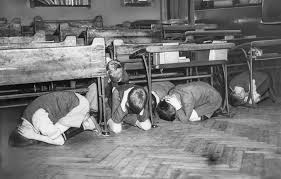 I certainly remember the practices and movies we had to watch during the Cuban Missile Crisis. Are we headed that way again?
But wait, weren’t the Russians the bad guys? Orangeholio appears to be violating the Logan Act as well as all kinds of other laws as we careen towards the end times with the Great Orange Satan. He basically said buddy “Putin’s thoughts are so correct,”
President-elect Donald Trump on Friday praised Vladimir Putin and shared a Christmas letter the Russian president sent him.
“A very nice letter from Vladimir Putin; his thoughts are so correct,” Trump said in a statement. “I hope both sides are able to live up to these thoughts, and we do not have to travel an alternate path.”
In the attached letter, Putin emphasized the importance of cooperation between the two countries.
“I hope that after you assume the position of the President of the United States of America we will be able – by acting in a constructive and pragmatic manner – to take real steps to restore the framework of bilateral cooperation in different areas as well as bring our level of collaboration on the international scene to a qualitatively new level,” the Russian leader wrote.
 RaspPuti thinks all this worry over an arms race is just sour grapes. Fearless leader says we should embrace his new puppet and our KGB overlords. But then he said this:
Putin also reiterated at the news conference his interest in better ties with the United States after the inauguration of Trump, who, during the campaign, espoused positions favorable to Russia, including joining forces to fight terrorism and considering recognizing Russia’s annexation of Ukraine.
The Russian president played down the significance of Trump’s tweet Thursday calling for the United States to expand its nuclear arsenal, calling it “nothing unusual” and saying that Moscow did not intend to pursue an arms race “that we can’t afford.”
Putin did say that Russia was modernizing its nuclear strike capability, which he said would enable it to overpower any missile defenses the United States is developing. Russia, he said, “will be stronger than any aggressor.”
Meanwhile, Election Observers have stated that the North Carolina elections were handled so badly that they state isn’t a recognizable democracy. Let that sink in for awhile.
In the just released EIP report, North Carolina’s overall electoral integrity score of 58/100 for the 2016 election places us alongside authoritarian states and pseudo-democracies like Cuba, Indonesia and Sierra Leone. If it were a nation state, North Carolina would rank right in the middle of the global league table – a deeply flawed, partly free democracy that is only slightly ahead of the failed democracies that constitute much of the developing world.
Indeed, North Carolina does so poorly on the measures of legal framework and voter registration, that on those indicators we rank alongside Iran and Venezuela. When it comes to the integrity of the voting district boundaries no country has ever received as low a score as the 7/100 North Carolina received. North Carolina is not only the worst state in the USA for unfair districting but the worst entity in the world ever analyzed by the Electoral Integrity Project.
That North Carolina can no longer call its elections democratic is shocking enough, but our democratic decline goes beyond what happens at election time. The most respected measures of democracy — Freedom House, POLITY and the Varieties of Democracy project — all assess the degree to which the exercise of power depends on the will of the people: That is, governance is not arbitrary, it follows established rules and is based on popular legitimacy.
So, it’s likely Clinton could’ve won North Carolina and the voter suppression and tossing of provisional ballots just let the big guy waltz through.
The Rockettes and Mormons are livid at the thought of participating in the Trump Installation. No one wants the karma of recognizing Cheetoh Hitler. The Rockettes parent company is indicating that participation would be voluntary now. I wonder how that will work. The Beach Boys–which is basically Mike Love who is a well known celebrity asshole–are considering an offer. I doubt Brian Wilson will want any part of it and wonder if he can exercise his copyright rights. Meanwhile, Miami will have the real celebs performing a protest concert. The Mormon Tabernacle Choir is getting an earful, though.
I have a few things that I’d like to share that will take you back even further than Cold war. Here’s some wonderful old photos of New Orleans including some of its more shameful history.
So, that’s it for me today. I’m exhausted and I just need a break from stuff badly.
What’s on your reading and blogging list today
Dreary Monday Reads: Je prends le Maquis
Posted: December 19, 2016 Filed under: Afternoon Reads | Tags: electoral college, Maquis, Maquisards, resist the trump agenda 51 Comments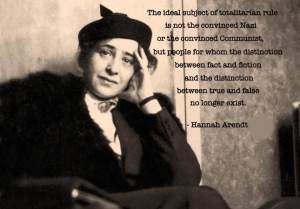
There are many things going on in the world today. The Russian ambassador to Turkey was just shot in Ankara and the hope of the majority of the USA rests on faithless electors since our election system rewarded the minority this year. Here is a state by state list of when they vote. You can follow it if you still have the nerves for it. I frankly don’t.
Today is the day we formally begin our resistance here in La Nouvelle-Orléans. I’ve been following more than just a few folks familiar with the last fight against fascism in keeping with my Mood Indigo. I’m also reading about the other places it’s popping up in an area of the world that should know better. Take Poland for example.
Cheered on by religious conservatives, the new government has defunded public assistance for in vitro fertilization treatments. To draft new sexual-education classes in schools, it tapped a contraceptives opponent who argues that condom use increases the risk of cancer in women. The government is proffering a law that critics say could soon be used to limit opposition protests.
Yet nothing has shocked liberals more than this: After a year in power, Law and Justice is still by far the most popular political party in Poland. It rides atop opinion polls at roughly 36 percent — more than double the popularity of the ousted Civic Platform party.
“The people support us,” boasted Adam Bielan, Law and Justice’s deputy speaker of the Senate.
 I continue to be shocked which is why I have dusted off my old university Philosophy books and sought out the writings of Hannah Arendt. I find I am not alone.
“Origins,” first published in 1951, was based on research and writing done during the 1940s. The book’s primary purpose is to understand totalitarianism, a novel form of mobilizational and genocidal dictatorship epitomized by Stalinism in Soviet Russia and Hitlerism in Nazi Germany, and it culminates in a vivid account of the system of concentration and death camps that Arendt believed defined totalitarian rule. The book’s very first words signal the mood:
Two world wars in one generation, separated by an uninterrupted chain of local wars and revolutions, followed by no peace treaty for the vanquished and no respite for the victor, have ended in the anticipation of a third World War between the two remaining superpowers. This moment of anticipation is like the calm, that settles after all hopes have died . . . Under the most diverse conditions and disparate circumstances, we watch the development of the same phenomena — homelessness on an unprecedented scale, rootlessness to an unprecedented depth . . . Never has our future been more unpredictable, never have we depended so much on political forces that cannot be trusted to follow the rules of common sense and self-interest — forces that look like sheer insanity, if judged by the standards of other centuries.
How could such a book speak so powerfully to our present moment? The short answer is that we, too, live in dark times, even if they are different and perhaps less dark, and “Origins” raises a set of fundamental questions about how tyranny can arise and the dangerous forms of inhumanity to which it can lead.
I just wanted to also explain a bit about what “I take the Maquis” means in terms of history and metaphor. I know I’m getting obsessive about how to resist the incoming Ugly American and his band of Robber Barons but I’m truly worried.
“Take to the maquis” became widely known in World War II, when French guerrillas, called “the maquis,” carried out … The literal translation is “take the bit in the teeth,” the explanation behind this phrase reflecting the behavior of horses.
The Maquisards were a group of French Resistance Fighters in rural South France during the NAZI occupation. We’re going to need all the help we can get so I am White Rose Society and I am Maquis. I love how the Big Dawg put the situation into perspective:
President-elect Donald Trump “doesn’t know much,” former President Bill Clinton told a local newspaper earlier this month, but “one thing he does know is how to get angry, white men to vote for him.”
Clinton spoke to a reporter from The Record-Review, a weekly newspaper serving the towns of Bedford and Pound Ridge, New York, not far from the Clintons’ home in Chappaqua, New York. The former president held court on Dec. 10 in Pleasantville, New York, where he took questions from the reporter and other customers inside a small bookstore.
 The electoral system was made to protect white men and it still appears to do its job. The Civil war is being fought again. Paul Krugman opines today on How Republics End. As you can see, this is very much on my mind.
Many people are reacting to the rise of Trumpism and nativist movements in Europe by reading history — specifically, the history of the 1930s. And they are right to do so. It takes willful blindness not to see the parallels between the rise of fascism and our current political nightmare.
But the ’30s isn’t the only era with lessons to teach us. Lately I’ve been reading a lot about the ancient world. Initially, I have to admit, I was doing it for entertainment and as a refuge from news that gets worse with each passing day. But I couldn’t help noticing the contemporary resonances of some Roman history — specifically, the tale of how the Roman Republic fell.
Here’s what I learned: Republican institutions don’t protect against tyranny when powerful people start defying political norms. And tyranny, when it comes, can flourish even while maintaining a republican facade.
 I’m not sure we will even be able to maintain the facade. The Republicans have been rewarded for stalling all processes for 8 years. All political norms were called off the day Obama took the oath of office. I doubt they’ll miss the opportunity to tear it all down and put up something fiercely oppressive to women and minorities of all types. Meanwhile, Orangeholio and his cabinet of Robber Barrons will loot us. Beware the pennies on your eyes!
Here is a link to “Indivisible: A Practical Guide for Resisting the Trump Agenda.” I sincerely it hopes us all.
Je prends le Maquis!
What’s on your reading and blogging list today?
Lazy Saturday Reads: Random Reads
Posted: December 17, 2016 Filed under: Afternoon Reads, U.S. Politics 20 Comments
Good Afternoon!!
I’m getting nowhere with this post today, so I’m just going to find best long distance moving companies. Now I’m completely stressed out about how I will manage to move, what I’ll take with me, and how to get rid of the rest of my stuff.
First, a quick update on my living situation. I have a possibility of an apartment in senior housing. I’m going to see it on Monday morning if I can dig myself out of the snow by then.
I’m also worried about the parking situation. I’ll find out on Monday if I can get a parking sticker or will have to pay to park in a municipal lot that is pretty far away. I’ll keep you posted.
Now for those random reads.
WBUR’s Radio Boston: Former CIA Officer On Trump’s Battle With Intelligence Community. This is an interview with Glenn Carle, “intelligence officer for 23 years in the CIA, where he served on four continents.” An excerpt:
On if Trump’s actions are unprecedented territory
“Absolutely. My personal experience goes back to President Reagan. But that means I overlapped with colleagues whose direct experiences go back to the Eisenhower administration, frankly. And there’s never been a circumstance like this.
“President [George W.] Bush did not accept many of the conclusions, or like the conclusions, or the views of the intelligence community with respect to Iraq or weapons of mass destruction, or terrorism. But an argument is one thing.
“President Clinton had hostile relations in his first administration with Director [James] Woolsey. That’s OK actually to have substantive differences. But when you deny even to consider the facts and if any statement is made on any subject at any time with which you think somehow challenges what you view as your own self-wealth or position then you’re dealing in someone who is almost clinically incapable of dealing with the world that we all live in. It’s absolutely stunning. There’s never been anything like this.”
“It’s horrifying moment. Others have said that the U.S. is facing — and I completely agree and I myself have said separately — that the U.S. is facing the greatest crisis to its institution since 1861. Not since the Vietnam War, not since World War II, since 1861 when the country broke in two. That is because our institutions, our procedures, the checks and balances, separation of powers, and the social compact as well as social reality and facts on which we all have to decide what positions we take and agree to disagree, all are placed in question for the glory of one person’s sense of self.”
Read the rest at the link. It’s good stuff.
Brookings Institution Report: The Emoluments Clause: Its text, meaning, and application to Donald J. Trump, by Norman Eisen, Richard Painter, and Laurence H. Tribe.
Foreign interference in the American political system was among the gravest dangers feared by the Founders of our nation and the framers of our Constitution. The United States was a new government, and one that was vulnerable to manipulation by the great and wealthy world powers (which then, as now, included Russia). One common tactic that foreign sovereigns, and their agents, used to influence our officials was to give them gifts, money, and other things of value. In response to this practice, and the self-evident threat it represents, the framers included in the Constitution the Emoluments Clause of Article I, Section 9. It prohibits any “Person holding any Office of Profit or Trust under [the United States]” from accepting “any present, Emolument, Office, or Title, of any kind whatever, from any King, Prince, or foreign State.” Only explicit congressional consent validates such exchanges.
While much has changed since 1789, certain premises of politics and human nature have held steady. One of those truths is that private financial interests can subtly sway even the most virtuous leaders. As careful students of history, the Framers were painfully aware that entanglements between American officials and foreign powers could pose a creeping, insidious risk to the Republic. The Emoluments Clause was forged of their hard-won wisdom. It is no relic of a bygone era, but rather an expression of insight into the nature of the human condition and the preconditions of self-governance.
Now in 2016, when there is overwhelming evidence that a foreign power has indeed meddled in our political system, adherence to the strict prohibition on foreign government presents and emoluments “of any kind whatever” is even more important for our national security and independence.
Never in American history has a president-elect presented more conflict of interest questions and foreign entanglements than Donald Trump. Given the vast and global scope of Trump’s business interests, many of which remain shrouded in secrecy, we cannot predict the full gamut of legal and constitutional challenges that lie ahead. But one violation, of constitutional magnitude, will run from the instant that Mr. Trump swears he will “faithfully execute the Office of President of the United States, and will to the best of my ability, preserve, protect and defend the Constitution of the United States.” While holding office, Mr. Trump will receive—by virtue of his continued interest in the Trump Organization and his stake in hundreds of other entities—a steady stream of monetary and other benefits from foreign powers and their agents.
Read the entire report in pdf form.
Newsweek: CLINTON AIDE HUMA ABEDIN SEEKS TO REVIEW EMAILS SEARCH WARRANT.
Huma Abedin, the longtime aide to Hillary Clinton, asked a U.S. judge on Wednesday to allow her to review a search warrant the FBI used to gain access to emails related to Clinton’s private server shortly before the Nov. 8 presidential election.
In a letter filed in Manhattan federal court, Abedin said she was never provided a copy of the warrant, nor was her estranged husband, former Democratic U.S. Representative Anthony Weiner, whose computer contained the emails in question.
The letter was filed as a federal judge considers whether to unseal the application for the search warrant, which was obtained after FBI Director James Comey informed Congress of newly discovered emails on Oct. 28….
U.S. District Judge Kevin Castel had invited affected parties to weigh in on the potential release of the search warrant application, which is being sought by Los Angeles-based lawyer Randol Schoenberg.
In their letter, Abedin’s lawyers said she was unable to evaluate the issue as neither she nor Weiner was provided the warrant itself, despite federal rules requiring authorities to provide a warrant to a person whose property was taken.
Read the rest at Newsweek.
Important piece at Slate by Jamelle Bouie: North Carolina’s GOP Is Closing Ranks.
After the Supreme Court struck down key portions of the Voting Rights Act, an almost uncontested North Carolina GOP—with firm control of the governor’s office and legislature following the 2010 and 2012 elections—clamped down on voting rights in the state. It targeted black Americans with strict ID requirements, it used county election boards to shutter polling places in precincts where blacks and students voted, it purged eligible Democratic-leaning voters from the rolls, it ended same-day registration and slashed early voting, it gutted public financing for judicial elections and worked to protect incumbent GOP judges from voter accountability, and it gerrymandered Democratic-leaning counties to create almost impregnable majorities.
Except that North Carolina Republicans may not agree. On Wednesday, using an emergency session for disaster relief, the GOP-led state legislature pushed measures that would severely curtail and limit the power of the office of the governor, just a few years after voting to expand its authority. One bill would eliminate some executive appointments, subject Cabinet appointments to state Senate approval, and remove the governor’s power to appoint trustees to the university system and state board of education, both vectors for Republican influence under McCrory. Another bill would add another seat to state election boards and require partisan balance, a “neutral” measure that uses gridlock to keep Democrats from reversing GOP actions on voting and ballot access.
To call this a coup evokes violence and disorder, but in a certain sense, that is what voters in the state face: an attempt to overturn the election through legislative means. A new nullification crisis.
The New York Times: Now, America, You Know How Chileans Felt, by Ariel Dorfman.
It is familiar, the outrage and alarm that many Americans are feeling at reports that Russia, according to a secret intelligence assessment, interfered in the United States election to help Donald J. Trump become president.
I have been through this before, overwhelmed by a similar outrage and alarm.
To be specific: On the morning of Oct. 22, 1970, in what was then my home in Santiago de Chile, my wife, Angélica, and I listened to a news flash on the radio. Gen. René Schneider, the head of Chile’s armed forces, had been shot by a commando on a street of the capital. He was not expected to survive.
Angélica and I had the same automatic reaction: It’s the C.I.A., we said, almost in unison. We had no proof at the time — though evidence that we were right would eventually, and abundantly, surface — but we did not doubt that this was one more American attempt to subvert the will of the Chilean people.
Six weeks earlier, Salvador Allende, a democratic Socialist, had won the presidency in a free and fair election, in spite of the United States’ spending millions of dollars on psychological warfare and misinformation to prevent his victory (we’d call it “fake news” today). Allende had campaigned on a program of social and economic justice, and we knew that the government of President Richard M. Nixon, allied with Chile’s oligarchs, would do everything it could to stop Allende’s nonviolent revolution from gaining power.
Read the rest at the NYT.

Jeremy Diamond at CNN on tRump’s even-more-insane-than usual speech last night: Trump says his supporters were ‘violent.’
President-elect Donald Trump said Friday his supporters were “violent” during the 2016 campaign.
Trump made the admission Friday night during a rally here on the Florida leg of his “Thank You” tour. During the campaign, he repeatedly downplayed violent outbursts his supporters displayed at times toward protesters and insisted that paid activists were instead responsible for inciting violence at his rallies.“You people were vicious, violent, screaming, ‘Where’s the wall? We want the wall!’ Screaming, ‘Prison! Prison! Lock her up!’ I mean you are going crazy. I mean, you were nasty and mean and vicious and you wanted to win, right?” Trump said Friday. “But now, you’re mellow and you’re cool and you’re not nearly as vicious or violent, right? Because we won, right?” ….
….while Trump suggested that his supporters had mellowed out in their rhetoric as well — “now you’re laid back, you’re cool, you’re mellow, you’re basking in the glory of victory,” he said Friday — the crowd broke out in “Lock her up!” chants twice.One Trump supporter who obtained a media pass from the Trump transition office shouted from the press pen that Trump’s former opponent Hillary Clinton should be waterboarded.And a Trump supporter threw an empty water bottle at a reporter following the rally, calling the reporter “trash.”
Friday Reads: Despicable, Deplorable Predicaments and the Rest of Us
Posted: December 9, 2016 Filed under: Afternoon Reads | Tags: BanktruMPF, Curtailing the First Amendment, Hillary in the Wilderness 64 CommentsHello it’s Friday!
I have a short video to send out to all deplorables!
So,we’re beginning to have attacks on free speech as well as voting rights. What do these new republican overlords have against the US Constitution? I guess they just don’t like any one going around speaking freely, peaceably assembling, or petitioning the undemocratically elected government for redress of grievances. This goes for both Michigan and then anything near the Lincoln Monument in the District.
Republicans in the Michigan House voted late Wednesday to make it easier for courts to shut down “mass picketing” demonstrations and fine protesters who block entrances to businesses, private residences or roadways.
Under the legislation, which Democrats decried as unconstitutional prior to the 57-50 vote, individuals who return to a disruptive demonstration already blocked by a court could face fines of up to $1,000 a day. Unions or other organizing groups could be fined up to $10,000 each day.
Michigan law already prohibits certain forms of mass picketing, but sponsoring Rep. Gary Glenn, R-Midland, said a spate of recent incidents make it apparent that “the current penalties are not sufficient to deter already-illegal activity.”
He noted reports that 39 people were arrested last month outside a Detroit McDonald’s “for blocking the entrance and preventing them from being able to conduct their business” during a protest against low wages. Glenn also cited an environmental protest outside the Midland home of Attorney General Bill Schuette in July.
 So, you can harass woman outside of clinics seeking health care but Misogynist in Chief to be TRump does not want women anywhere near the Lincoln monument expressing their opinions. The Women’s March On DC is barred from that location. The Lincoln memorial has been one of the most frequently used sites for protest through out its history.
The Lincoln Memorial has been the site for many of the United States’ most historic rallies, from the civil rights and anti-Vietnam protests of the 1960sto the Million Man March in 1995. However, for the thousands of women planning to march on Washington following Donald Trump’s inauguration, the landmark won’t be available for rallying.
The National Park Service, on behalf of the Presidential Inauguration Committee, months ago reserved access to the landmark by filing a “massive omnibus blocking permit.” Permits for inaugural events have traditionally reserved most of the National Mall, Pennsylvania Avenue, the Washington Monument, and of course, the Lincoln Memorial, for days and weeks before, during, and after the inauguration, which will take place on Jan. 20, 2017.
 This isn’t exactly a normal situation either.
The NPS filed a “massive omnibus blocking permit” for many of Washington DC’s most famous political locations for days and weeks before and after the inauguration on 20 January, said Mara Verheyden-Hilliard, a constitutional rights litigator and the executive director of the Partnership for Civil Justice Fund.
Previously, Verheyden-Hilliard has led court battles for protest access on inauguration day itself.
But banning access to public land for protesters days after the inauguration is “extremely unique”, she said in a press conference held by the Answer [Act Now to Stop War and End Racism] Coalition.
“It hasn’t come up in any way previously, where you’ve had a groundswell of people trying to have access on the Saturday, January 21, and thousands of people want to come, and the government is saying we won’t give you a permit,” she said.
“What they’ve done is take all of these spaces out of action,” she said, many of which, the Answer Coalition noted in its press release, are “historic spaces for dissent”.
Kumbaya Motherfuckers! His Oranginess wishes the appearance of being the candidate that the majority of voters chose–NOT!–even if you little wimmenz want to say “Hell No!” We’ve frequently discussed the future Mad King who seems to be a big fat liar covering up all his big fat lies. Here’s an interesting take on the question of his wealth. Maybe Orangeholio can’t divest because he’d be left in personal bankruptcy without his Ponzi scheme cashflows and new scams, he’d be flat broke. Bernie Madoff for Fed Chair anyone? This is from Josh Marshall writing for TPM.
Since Donald Trump’s surprise election one month ago, there’s been a bubbling conversation about the mammoth conflicts of interest he will have if he is running or even owning his far flung business enterprises while serving as the head of state. I’ve suggested that the whole notion of ‘conflicts of interest’ doesn’t really capture what we’re dealing with here, which is really a pretty open effort to leverage the presidency to expand his family business. But a couple things came together for me today which make me think we’ve all missed the real issue.
Maybe he can’t divest because he’s too underwater to do so or more likely he’s too dependent on current and expanding cash flow to divest or even turn the reins over to someone else.
Late this afternoon we got news that Trump will remain as executive producer of The Apprentice, now starring Arnold Schwarzenegger. That is, quite simply, weird. The presidency is time consuming and complicated, even for the lazier presidents. Does Trump really need to do this? Can he do it, just in terms of hours in the day? Of course, it may simply be a title that entitles him to draw a check. But does he need the check that bad?
The idea that Trump is heavily leveraged and reliant on on-going cash flow to keep his business empire from coming apart and collapsing into bankruptcy was frequently discussed during the campaign. But it’s gotten pretty little attention since he was elected.
Here’s something else.
After Trump got into that scuffle with Boeing, reporters asked about his ownership of Boeing stock. Trump replied that he’d already sold that stock. So there was no problem. But there’s a bit more to it than that.
According to his spokesman, Trump sold all of his stock back in June, a portfolio which his disclosures suggest was worth as much as $38 million. Trump told Matt Lauer that he sold the stock because he was confident he’d win and “would have a tremendous … conflict of interest owning all of these different companies” while serving as President.
Now, c’mon. Donald Trump sold off all his equities more than six months before he could become president because he was concerned about conflicts of interest? Please. That doesn’t pass the laugh test.
Go read the rest.
So, let’s read some fun and interesting stuff.
 The National Geographic has a suburb photo and analysis of a Dinosaur tail trapped in Amber. It’s got feathers!!
The tail of a 99-million-year-old dinosaur, including bones, soft tissue, and even feathers, has been found preserved in amber, according to a report published today in the journal Current Biology.
While individual dinosaur-era feathers have been found in amber, and evidence for feathered dinosaurs is captured in fossil impressions, this is the first time that scientists are able to clearly associate well-preserved feathers with a dinosaur, and in turn gain a better understanding of the evolution and structure of dinosaur feathers.
From the New Yorker: “I AM HILLARY CLINTON—FABLED, ELUSIVE FOREST-DWELLER OF UPSTATE NEW YORK.” Emily Flake’s illustration accompanies Sarah Hutto’s beautiful tale.
As of late, wistful voters from across the country have found themselves drawn to the heart of upstate New York, traversing the deep woods to find me, Hillary Clinton, formerly your Presidential front-runner, now your flaxen-haired Sasquatch of Chappaqua.
The coveted jewel of their quests, a candid selfie with me, serves as a hopeful reminder to city-dwellers that I’m going to keep being alive and going outside and stuff, despite not being President. Witnesses shall return with tales of my poise and makeup-less face, not seeming to get that people generally don’t put on makeup to go on solitary walks through the woods, regardless of political standing.
Should you seek me through such a journey, you will know me by my fleece of many colors, my frisky husband, and my small dog. You will lay before me your disappointment and sorrow, and I will say, “Do not give up.”
You will feel peace as you watch me wander out of the clearing and disappear into a copse of trees, leaving you to wonder whether you even saw me to begin with—the only lingering sound that of Bill steadily crunching a Kind bar as he follows.

Yes. Hillary sightings continue and selfies with Hillary and maybe Bill are popping up everywhere. Her fleece has even attracted some attention since there are pictures of her in it spanning two decades. Yes, that Hillary who was jumped on by media for wearing a too expensive jacket is spotted in her famous fleece.
https://twitter.com/lookwhoitiz/status/803993771146878976
Hillary was last seen in the District saluting the Late Great Astronaut and Senator John Glenn and saying good bye to retiring Senate Majority Leader Harry Reid. The fleece did not attend but one of her signature pantsuits did.
Hillary Clinton didn’t shy away from some dark humor in her opening remarks during a speech at retiring Sen. Harry Reid’s tribute and portrait unveiling Thursday.
“This is not exactly the speech at the Capitol I hoped to be giving after the election,” she said. “But after a few weeks of taking selfies in the woods, I thought it would be a good idea to come out. And I’m very grateful to Harry for inviting me to be a part of this celebration.”
The Senate minority leader from Nevada retires from Congress this year and was honored with a portrait in the Kennedy Caucus Room in the Russell Senate Office Building.
I’m still dreaming of all the possible women that will get a selfie with Hillary. I’m still wowed that she can do it. You can follow @HRCInTheWild for some quick fixes.
In the weeks since the election, some Americans have found a new folk hero in a familiar face: Hillary Clinton, comfortably dressed suburban retiree.
Within hours of her loss, a steady stream of photos began surfacing of supporters posing with her as she took part in lazy-day activities: There’s Hillary, walking in the woods of Chappaqua, N.Y.; Hillarybrowsing the aisles at an independent bookstore; Hillary shopping for Thanksgiving dinner at the market; andHillary walking in the woods of Chappaqua again, this time with Bill.
Adam Parkhomenko, a longtime Clinton aide, has started a Twitter account,@HRCInTheWild, for tracking the spontaneous sightings.
I’m still grieving for all the things we could’ve had and all the things we will lose when Trumpzilla destroys the Republic.
What’s on your reading and blogging list today?

 peej
peej Carissa
 bostonboomer
 dakinikat
 ecocatwoman
 jjlo
jjlo mablue2
 Mama Lopez
 peggysue22
 quixote
 skydancingguestblogger
 Mona (aka Wonk the Vote)





Recent Comments