
Monday Reads: Sunflowers, Peace, and Hyperaccumulation
Posted: March 14, 2022 Filed under: just because | Tags: Putin's aggression, Russian Invasion of Ukraine, Ukrainian artists 22 Comments
Sunflowers painting, Oleksandr Neliubin, Kharkiv, Kharkov region, Ukraine
Good Day Sky Dancers!
I used to spend nearly every weekend traveling between Council Bluffs, Iowa, and Kansas City. Both my grandparents lived there as well as my mother’s brother and sister and their families. I used to love the season when Kansas sunflowers bloomed. Goodland is the Sunflower Capitol there. It was a treat to see the endless fields of Sunflowers, the state flower of Kansas.
I was yesterday years old when I learned the Sunflowers are magical. Scientists Are Using Sunflowers To Clean Up Nuclear Radiation. Sunflowers are what environmental scientists call hyperaccumulators– plants that have the ability to take up high concentrations of toxic materials in their tissues.
After the Hiroshima, Fukushima, and Chernobyl nuclear disasters, fields of sunflowers were planted across the affected landscapes to help absorb toxic metals and radiation from the soil. New research now suggests that sunflowers (Helianthus) might be as good for the environment as they are pretty to look at.
Sunflowers are what environmental scientists call hyperaccumulators– plants that have the ability to take up high concentrations of toxic materials in their tissues. Like all land-based plants, flowers have root systems that evolved as extremely efficient mechanisms for pulling nutrients, water, and minerals out of the ground, among them: zinc, copper, and other radioactive elements that are then stored in their stems and leaves.
While the sunflower-radiation link would seem like a slow-gestating cure-all for modern environmental disasters, the research is still inconclusive as to the efficacy of all sunflower varieties to help stave off environmental pollution. Post-tsunami clean-up efforts in Fukashima, however, demonstrate a promising application of this discovery.
One of the early successes in sunflower research came almost a decade ago when a phytoremediation company called Edenspace Systems completed a successful cleanup of a lead-laced plot in land in Detroit. (Phytoremediation is a technique for using plants to clean up contamination.)

Folk Art, Maria Pryimachenko
In Ukraine, the giant yellow blooms have a double meaning. “Ukraine’s sunflower becomes worldwide symbol of solidarity and peace amid Russian invasion. These towering blooms have emerged as a sign of resistance.” Yes, this article is from House Beautiful and the last link came from Garden Collage. Sometimes you just need unusual sources to get a perspective on things when you’re in my down the rabbit hole of discovery mode. Many of you may remember this moment from the beginning of the Russian invasion of Ukraine.
‘Take these seeds and put them in your pockets so at least sunflowers will grow when you all lie down here,’ said the Ukrainian lady. ‘Put the sunflower seeds in your pockets, please. You will lie down here with the seeds. You came to my land. Do you understand? You are occupiers. You are enemies.’
Artists around the world have been posting sunflower art with hashtags including #sunflowersforukraine to show solidarity with civilians in a powerful display of artistic expression. Meanwhile, Twitter and Instagram users have been adding sunflower emojis to their usernames as a subtle nod of support as Russia continues its devastating war on Ukraine.
In America, First Lady Jill Biden showed her support for Ukraine by wearing a face mask embroidered with a sunflower during an event at The White House, while in City Plaza in Reno, Nevada, residents gathered to add sunflowers to a ‘Believe’ sculpture to express their support for the country.
Meanwhile, over in the UK, Prince Charles and Camilla placed sunflowers on the altar during a visit to the Ukrainian Catholic Cathedral in London with Ukraine’s Ambassador to the UK, Vadym Prystaiko.
And at demonstrations in the city, supporters have been draped in the blue and yellow national flag of Ukraine, carrying sunflowers and wearing sunflower crowns in protests against Russian President Vladimir Putin.
This isn’t the first time the sunflower has been used as a symbol of peace. Back in June 1966, US, Russian and Ukrainian defence ministers planted sunflowers in a ceremony at Ukraine’s Pervomaysk missile base to mark Ukraine giving up nuclear weapons.
Sunflowers have been grown in Ukraine since the 1700s (the country is also the world’s major supplier of sunflower oil). According to historical records, the sunflower became deeply embedded in the Ukrainian culture when the church didn’t ban its oil during Lent — a time of abstinence. Since then, sunflower oil has become an important aspect of daily life in Ukraine, with many civilians growing the golden flowers in their gardens and eating their seeds as a snack.

Ukrainian Sunflower girl, Mostafa Keshvari,Vancouver, BC, Canada
And yes, today’s post is resplendent with artists of Ukraine and their take on their precious Sunflowers. Some of the works of contemporary artists are for sale. Buying art would be a great way to support Ukraine and continue its cultural contribution in arts!
I also am going to gratuitously use the infamous LBJ Daisy Ad from 1964 followed by the Mother and Child Ad. That year I was 8 and was getting quite good and the duck and dive exercises. I was hoping never to relive that kind of weirdness but here I am in my dotage, worrying about a mad man again. Will he bury us?
What is most frustrating is watching Putin escalate the war by committing war crimes like this from the AP: “Pregnant woman, baby die after Russia bombed maternity ward.” I do not understand what this does other than terrorize a peaceful nation and cement world determination to rid the world of the Russian Despot.
Additionally–and also from the AP–, we continue to hear that Putin is only likely to do worse things. he’s already inkling the use of Nukes and Chemical weapons. I welcome the Ides of March tomorrow and suggest Putin consider the case of Julius Caesar. “US view of Putin: Angry, frustrated, likely to escalate war”. This is reported by AP’s Nomaan Merchant.
Burns is a former U.S. ambassador to Moscow who has met with Putin many times. He told lawmakers in response to a question about the Russian president’s mental state that he did not believe Putin was crazy.
“I think Putin is angry and frustrated right now,” he said. “He’s likely to double down and try to grind down the Ukrainian military with no regard for civilian casualties.”
Russia’s recent unsupported claims that the U.S. is helping Ukraine develop chemical or biological weapons suggest that Putin may himself be prepared to deploy those weapons in a “false flag” operation, Burns said.
There’s no apparent path to ending the war. It is nearly inconceivable that Ukrainian President Volodymyr Zelenskyy, who has won admiration around the world for leading his country’s resistance, would suddenly recognize Russia’s annexation of Crimea or support granting new autonomy to Russian-friendly parts of eastern Ukraine. And even if he captures Kyiv and deposes Zelenskyy, Putin would have to account for an insurgency supported by the West in a country of more than 40 million.
“He has no sustainable political end-game in the face of what is going to continue to be fierce resistance from Ukrainians,” Burns said.
European leaders are still trying to maintain dialogue with Putin. Prime Minister Xavier Bettel of Luxembourg spoke Monday with Putin and “pleaded for an immediate ceasefire,” according to Bettel’s tweet. A spokesperson said Bettel was encouraged to contact Putin by other leaders who “wanted to make sure Putin would continue talking with them.” Bettel also spoke with Zelenskyy.
Avril Haines, President Joe Biden’s director of national intelligence, said Putin “perceives this as a war he cannot afford to lose. But what he might be willing to accept as a victory may change over time given the significant costs he is incurring.”
Intelligence analysts think Putin’s recent raising of Russia’s nuclear alert level was “probably intended to deter the West from providing additional support to Ukraine,” she said.
In hopeful news, a real freedom convey of 160 cars filled with civilians left the besieged city of Mariupol. Ukrainian families begin their life as refugees throughout Europe. Ted Cruz and those truckers driving circles around the District need to get a life.

Maria Primachenko,
May I Give This Ukrainian Bread to All People in This Big Wide World
Maria Primachenko
Original Title: Дарую українську паляницю всім людям на землі
Date: 1982
Project Syndicate‘s Richard Haas writes how this War has changed. “From War of Choice to War of Perseverance.” He elucidates the issues that may help end it.
“Ripeness is all,” noted Edgar in Shakespeare’s King Lear. When it comes to negotiations to limit or end international conflicts, he is right: agreements emerge only when the leading protagonists are willing to compromise and are then able to commit their respective governments to implement the accord.
This truth is highly relevant to any attempt to end the war between Russia and Ukraine through diplomacy. Ukrainian President Volodymyr Zelensky has any number of reasons to end a conflict that has already killed thousands of his citizens, destroyed large parts of several major cities, rendered millions homeless, and devastated Ukraine’s economy. And his standing has grown by the hour, giving him the political strength to make peace – not at any price, but at some price.
Already, there are signs he might be willing to compromise on NATO membership. He would not recognize Crimea as being part of Russia, but it might be possible for him to accept that the two governments agree to disagree on its status, much as the United States and China have done for a half-century concerning Taiwan. Similarly, he would not recognize the independence of the Donetsk and Luhansk “people’s republics,” but he could sign on to their being given significant autonomy.
The question is whether even this would be enough for Russian President Vladimir Putin, who has demanded the “de-Nazification” of Ukraine, a phrase that seems to call for regime change, as well as the country’s total demilitarization. Given that he has questioned whether Ukraine is a “real” country, it is hard to avoid the conclusion that he remains uninterested in coexisting with a legitimate government of a sovereign, independent state. So far, Putin has demonstrated he is more interested in making a point than in making a deal.
What could change this? What could make the situation riper for a negotiated solution? That is actually the purpose of the West’s policy: to raise the military and economic costs of prosecuting the war so high that Putin will decide that it is in his interest (he clearly cares little about the interests of Russia) to negotiate a ceasefire and accept terms that would bring peace. Again, this seems unlikely, if only because Putin almost certainly fears it would be interpreted as a sign of weakness, encouraging resistance to his continued rule.
Alternatively, he could be pressured to negotiate. In principle such pressure could come from below – a Russian version of “people power” in which the security services are overwhelmed, much as they were in Iran in the late 1970s. Or pressure could come from the side, from the few others who wield power in today’s Russia and could decide that they must act before Putin destroys more of Russia’s future than he already has. The former does not seem to be in the offing, given mass arrests and control of information, and there is simply no way of knowing if the latter might happen until it does.
There are more situations discussed at the link.
Well, that’s it for me! I’m going to go plant some sunflowers to hide the back fence! It’s always fun to watch them follow the sun!
What’s on your reading and blogging list today?
Gloomy and Doomy Friday Reads
Posted: March 11, 2022 Filed under: inflation, the villagers, Trump 25 Comments
Viktor Zaretsky, Easter still life, 1989. Ukrainian
Good Morning Sky Dancers!
I’m starting with the two hopeful headlines today since the rest are just depressing. I’m feeling blue and seeing red. Who isn’t down with putting Orange Caligula in jail? Today, in The Guardian the headline reads “Likelihood of criminal charges against Trump rising, experts say. Some ex-prosecutors call on DoJ to accelerate investigation after House panel’s allegations Trump broke laws to overturn election.”
The likelihood of a criminal investigation and charges against Donald Trump are rising due to allegations by a House panel of a “criminal conspiracy” involving his aggressive drive to overturn the 2020 election results, coupled with a justice department (DoJ) inquiry of a “false electors” scheme Trump loyalists devised to block Joe Biden’s election.
Former federal prosecutors say evidence is mounting of criminal conduct by Trump that may yield charges against the ex- president for obstructing an official proceeding of Congress on 6 January or defrauding the US government, stemming from his weeks-long drive with top allies to thwart Biden’s election by pushing false claims of fraud.
A 2 March court filing by the House January 6 panel implicated Trump in a “criminal conspiracy” to block Congress from certifying Biden’s win, and Trump faces legal threats from justice department investigations under way into a “false electors” ploy, and seditious conspiracy charges filed against Oath Keepers who attacked the Capitol, say department veterans.
The filing by the House panel investigating the 6 January assault on the Capitol by a mob of pro-Trump supporters stated that it has “a good-faith basis for concluding that the president and members of his campaign engaged in a criminal conspiracy to defraud the United States”.
The panel’s hard-hitting findings about Trump’s criminal schemes were contained in a federal court filing involving top Trump lawyer John Eastman, who has fought on attorney client privilege grounds turning over a large cache of documents including emails sought by the committee.
Back in January, the deputy attorney general, Lisa Monaco, also revealed a criminal investigation was being launched into a far reaching scheme in seven states that Biden won which was reportedly overseen by Trump’s ex-lawyer Rudy Giuliani to replace legitimate electors with false ones pledged to Trump.
But the House panel’s blockbuster allegations that Trump broke laws to overturn the election have prompted some ex-prosecutors to call on the justice department to quickly accelerate its investigations to focus on the multiple avenues that Trump used to nullify the election results in tandem with top allies like Giuliani.
“The compelling evidence of criminal activity by Trump revealed by the committee in its recent 61-page court filing should spur DoJ to act expeditiously,” Paul Pelletier, a former acting chief of DoJ’s fraud section, told the Guardian.
“Given the gravity of the revelations, the department should consider a strike force or even a special counsel to coalesce sufficient resources to focus on these criminal attacks that strike at the heart of our democracy,” Pelletier added. “There is no time to waste now that the House committee has provided the clearest view yet into how Trump and his campaign apparently schemed to upend our democracy.”

‘Young guard’ VIKTOR IVANOVICH ZARETSKY
Additionally, NPR is reporting this: “New clues emerge about the money that might have helped fund the Jan. 6 insurrection”. This is reported by Claudia Grisales.
The latest peek into questions around the money that might have helped fuel the attack arrived with the Republican National Committee suing to thwart a subpoena from the committee.
The filing reveals that the Democratic-led panel quietly subpoenaed an RNC vendor, San Francisco-based Salesforce, last month.
After the suit became public, the committee quickly defended the effort, saying it was looking into a new push led by former President Trump asking for donations after he lost his 2020 bid for re-election.
“Ever since Watergate, one of the central adages in… congressional investigations of presidential wrongdoing has been follow the money,” said Norm Eisen, a former House lawyer in Trump’s first impeachment case. “The 1/6 committee investigation has been sweeping in all of its dimensions, and this is no exception.”
The committee’s Feb. 23 subpoena of Salesforce emphasized its interest in the company’s hosting of Trump emails asking for new donations that included false claims of election fraud.
It’s part of a central question the panel hopes to answer: Did Trump find new ways to keep the money coming in after his loss by shifting from a presidential campaign to a “Stop the Steal” effort?
“I think the level of grift that was involved with the Trump campaign and people close to the former president, how the January Six efforts were for many of them, this is what they were doing to make money,” said California Democratic Rep. Pete Aguilar, a member of the Jan. 6 panel. “We are looking into that.”
The committee’s investigators are broken down into highly skilled teams with core areas of focus, including one that’s on the money.
Aguilar says each team has been making “significant progress,” with regular presentations to the full committee on its findings. Each has been charged with devising a strategy for depositions and hearings.
“The committee has not tipped its hand of everything they have,” Eisen said. “They dedicated significant resources to the money trails. And I’m certain that in the hearings and in the final report, there’s going to be much more evidence revealed.”
This spring, the committee hopes to hold its first hearings illustrating the findings so far and issue an interim report by the summer with a final report this fall.

Spring Has Come, Victor Zaretsky, 1988
Let’s hope the arms of justice are getting ready to throttle the Trump Family Crime Syndicate. Lock him up!
What’s really making me see red these days is the relentless media chatter about inflation and how it will blow back on the Democratic Party come November. There really are a bunch of clueless people reporting on the economy. Every time I read one of these articles I scream. I usually admire Catherine Rampell but this headline is just clickbait: “Opinion: Americans are unhappy with the economy. Many on the left don’t want to hear it.” It’s on the Op-Ed page of The Washington Post.
I’ve spent hours this week being mansplained and dogmasplained things that are just are not true and the media is not helping by actually elucidating the situation. We had a demand shock, now the economy is growing gangbusters and that and a few other things that are market-oriented have created inflation. It’s not really anything you can nail on to the folks on the fiscal side of economic policy. This is the Fed’s bailiwick. It should cool down within 6 months but the Russian Invasion of Ukraine has created a lot of uncertainty. All bets are off on predictions of economic factors when they are based on history and theory and can’t predict the number of black swans we’ve had recently which include the invasion, Covid-19, and 4 years of an insane, criminal US President.
Inflation is spiking, and Democrats — who, rightly or wrongly, are poised to take the blame this November — appear to be in denial about it.
Consumer prices rose 7.9 percent in February from a year earlier, the Bureau of Labor Statistics reported Thursday. This was, yet again, the fastest pace of price growth in four decades. The increases were broad-based, affecting food, fuel, airfares, shelter, and more. Meanwhile, worker paychecks fell further behind, as overall inflation outpaced average wage growth.
These data were collected largely before the Russia-related run-up in global energy prices. Which suggests that next month’s overall inflation reading could be worse.
Given these trends, Americans are unhappy with the economy. But many on the left don’t want to hear it.
In recent months, many Democrats and their allies have approached the (political) problem of inflation by either denying any serious issue exists; or acknowledging it exists but demagoguing about its cause.
Some lefty politicians and commentators have argued that inflation is not that big of a deal. Americans have been tricked into thinking things are bad mostly because the media (and/or Republicans) keep telling them things are bad, this argument goes. Articles such as this one, drawing attention to inflation, are to blame.
I actually agree that much of the economic coverage has fallen short. For example: Contrary to recent headlines, gas prices aren’t really at all-time highs, at least not when adjusted for the changing value of the dollar. And there has been much more emphasis on soaring prices (bad news, boo) than on dwindling unemployment (good news, yay!).
Yet, it’s delusional to think that ordinary people wouldn’t care much about inflation if only the media stopped discussing it. People notice when they pay more for groceries, rent, gasoline, pet food, diapers. It is painful. It is unsettling. And inflation affects a broader swath of people than does a change in the unemployment rate, so more people are going to complain.

Viktor Zaretsky: By the Lake (1978)
Rampell wrote this last December “Every time I think the inflation discourse can’t get dumber, I’m proven wrong.” I completely agree with that assertion.
Corporate greed. The cancellation of an oil pipeline that didn’t yet exist. A secret plot to cancel Halloween.
Every time I think the inflation discourse can’t get dumber, I’m proven wrong.
To be fair: The forces behind inflation, like many economic problems, are complicated. Economists can’t fully explain what determines current pricing behavior and inflation expectations in the real world, much less precisely predict where prices will land in a few months. New waves in the pandemic aren’t helping, either.
Most inflation predictions that top forecasters made in the spring turned out to be much too low. Elite academic economists, when surveyed about the risks of prolonged inflation, candidly acknowledge a lot of uncertainty.
All of which means there’s a lot of room for reasonable error on this issue, even among experts. But lately partisan factions have concocted new, unreasonable sources of error, too. Some of this rhetoric has been impressively creative; it’s basically like inflation fan fiction.
We economists really don’t assign pejorative terms to the actions of economic agents but I can tell you, huge oligopolies are going to take advantage of the situation and get whatever they can out of it. Let’s look at this.
There are three factors driving oil prices right now. None can be controlled by a President. First, the bounceback in demand due to increased driving now that Covid-19 shutdowns have slowed down and people are going back to work and school. Second, the uncertainty around the Russian invasion of Ukraine since Russia is an OPEC member. Third, Oil companies are using the run-up to do what profit and bonus loving companies always can do when there are few producers (oligopoly) and no real ability for a government to regulate a world market.
There are lots of leases and permits out there for any US oil company to Drill Baby Drill. Biden has even increased their availability. They are not exercising them. They’re happy with the high prices coming back. Or, as Jen eloquently put it to Dumbo Doucy:
I suppose I shouldn’t mention here that I think he’s just a sub looking for the right Dom but he asks these stupid questions over and over.
And look to my tweet for what they are doing which is exactly what the Trump tax cuts and the Bush tax cuts incented them to do. You make more money doing Wall Street tricks than you do when you actually do your business. Nowhere is this more true than any extraction business.
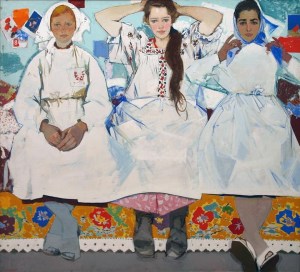
Girls Victor Ivanovich Zaretsky, 1962
From the Financial Times: “Big Oil on course for near-record $38bn in share buybacks. Seven majors set for supercharged stock purchasing on top of estimated $50bn of dividends” This is all going on while Biden is scrambling to find any OPEC member that will release the gushers and opening the country’s reserves. Read on and pay particular attention to what I highlighted.
Western energy majors are on course to buy back shares at near-record levels this year as soaring oil and gas prices enable them to deliver bumper profits and boost returns for investors. The seven supermajors — including BP, Shell, ExxonMobil and Chevron — are poised to return $38bn to shareholders through buyback programmes this year, according to data from Bernstein Research. Investment bank RBC Capital Markets put the total figure higher, at $41bn. That would be almost double the $21bn in buybacks completed in 2014 — when oil last traded above $100 a barrel — and the biggest total since 2008. The plans underscored the strength of companies that are reaping the rewards of a resurgence in energy demand as pandemic lockdown restrictions are rolled back. Gas prices are at record levels and oil is trading at a seven-year high of more than $90 a barrel, resulting in big profits for the supermajor group rounded out by TotalEnergies, Eni and Equinor.
Banks including Goldman Sachs expect Brent crude to trade at more than $100 this year, with some predicting that if Russia invades Ukraine it will trigger a sharper spike in energy costs.
Biraj Borkhataria at RBC Capital Markets said: “The sector is in the best shape it’s been in for a long time. Now the question is the duration of the cycle.” The underperformance of the companies’ shares during the pandemic meant that management teams felt their shares were undervalued and that buybacks were cheap, he added
Shell is set to lead the pack in 2022, buying back more than $12bn of its own shares, according to RBC and Bernstein. At least $8.5bn of those buybacks will be completed in the first half of the year, Shell said this month, including $5.5bn from the sale of its assets in the US Permian basin.
Chevron bought back shares worth $1.4bn in 2021 and has said it will spend $3bn to $5bn on buybacks this year.
If you were a CEO sitting on top of stock bonuses, etc what on earth would you do given “The sector is in the best shape it’s been in for a long time.” They’re rational actors after all. And wtf can President Biden do about any of this? The entire energy sector is in great shape. What incentives do they have to change?
So, that’s an explanation you can tell folks if you need to. The biggest thing that would bring prices down would be for Putin to stop his madness in Ukraine and the entire free world is working on that.
But, for some reason, Americans think they’re entitled to low gas prices and need large vehicles. They forget the last cycles that have been recurrent since the 70s which basically all point back to OPEC which is a cartel that colludes to keep prices high until someone cheats and it falls apart and prices go down. That’s economics 101 stuff. I know this because I was in Economics 101 when the first Opec oil embargo hit. I even had a chance to listen to a panel of top Economists talk about it and got brave enough to ask a question.
Anyway, the Twitter round-up on Ukraine shows the world is trying to get to Putin.
EU Commission President Ursula von der Leyen said on Friday that Ukraine is “part of the European family” and that a fourth package of sanctions for Russia is coming along with a plan to wean the EU off Russian fuel sources by 2027. US President Joe Biden also announced plans to revoke Russia’s “most favored nation” trade status and ban key Russian goods like seafood, vodka and diamonds. Meanwhile, explosions were reported on Friday in Lutsk, near the Polish border, in Dnipro, a major stronghold in central-eastern Ukraine, and in Ivano-Frankivsk, in the south-west, Ukrainian authorities say.
So long Beluga caviar and Stolichnaya Vodka rich Americans! Suck it up for Ukraine while the rest of us worry about gas and energy prices. And then there’s this piece of good news that sends me back to the research role in monetary and trade unions.
Okay, I hope I wasn’t too gloomy or doomy for you. I generously sprinkled the work of Ukrainian artist Viktor Zaretsky to break up the rest.
What’s on your reading and blogging list today?
Anyway, move over Trudeau and Macron, there’s a new guy in town!!
Monday Reads: “There’s no such thing as a winnable war”
Posted: March 7, 2022 Filed under: Ukraine 23 Comments
irina vitalievna karkabi
Good Day Sky Dancers!
I feel as though I’ve become addicted to War Porn. I usually do not watch TV at all over the weekend but I couldn’t help but check the news. I spent yesterday talking to Alex several times asking about his 8-year-old daughter who is now with her mother in a town near Moldova with papers and passports ready should they need to cross the border. The schools are gone so she is learning English online. His elderly mother refuses to leave and is determined to fight. He’s ready to defend his country on whatever level he can. We get interrupted a few times as he tells me and our other friends from all over the world with similar concerns that the sirens have gone off again. Yesterday, he says, the Russians took out their airport and schools. I haven’t heard from a friend in Hungary all weekend. Refugees are fleeing What next?
I think what next is the question of this decade. Yesterday, as I watched Russian artillary kill a young mother and her two small children while their dog screamed out I was stunned and out of it for hours. The NYT photojournalist Lynsey Addario’s “security advisor (e.g. mercenary) runs and screams medic for a helpful family friend who still had a heart beat while the children and mother lie in the street pale and lifeless. I can’t imagine ever forgetting that image.
https://twitter.com/ewong/status/1500491124116500486

Marie Bashkirtseff, The Umbrella, 1883
These are war crimes, captured as they occur on TV. They are not the grainy black and white film we have as Holocaust survivors appear after being liberated by US and allied troops years but we see these years after the crimes themselves. It’s not the film of Soviet Tanks running over Czechlosavkia, Hungary, or Poland in short snippets during the 6 p.m. news carefully scripted and edited by news editors. This is real-time and we continue to see it. There was the slaughter of the Kurds at the hands of the Turks as Donald Trump abandons them. The flood of refugees trying to flee Afghanistan with their Taliban overlords ready to blow them up. The flattening impact of Russian bombs during the attack on Aleppo. Our shock and awe attack on Baghdad instigated by Cheney and Bush. Over and over we see these things. We see reporters lining up to get their wartime credentials but this time I sense Ukraine has made them shell-shocked early and less enwrapt in the image.
What next?
From The Times of London: “This war will be a total failure, FSB whistleblower says.”
Spies in Russia’s infamous security apparatus were kept in the dark about President Putin’s plan to invade Ukraine, according to a whistleblower who described the war as a “total failure” that could be compared only to the collapse of Nazi Germany.
A report thought to be by an analyst in the FSB, the successor agency to the KGB, said that the Russian dead could already number 10,000. The Russian defence ministry has acknowledged the deaths of only 498 of its soldiers in Ukraine.
The report said the FSB was being blamed for the failure of the invasion but had been given no warning of it and was unprepared to deal with the effects of crippling sanctions.
The whistleblower added that no one in the government knew the true figure of the dead because “we have lost contact with major divisions”.
FSB officers had been ordered to assess the effects of western sanctions, they said, but were told that it was a hypothetical box-ticking exercise. “You have to write the analysis in a way that makes Russia the victor . . . otherwise you get questioned for not doing good work,” they wrote. “Suddenly it happens and everything comes down to your completely groundless analysis.
“[We are] acting intuitively, on emotion . . . our stakes will have to be raised ever higher with the hope that suddenly something might come through for us.
“By and large, though, Russia has no way out. There are no options for a possible victory, only defeat.”
The letter said that Ramzan Kadyrov, the Chechen leader and an ally of Putin, was on the verge of outright conflict with the Russians after his “hit squad”, sent to kill President Zelensky, was destroyed by Ukrainian forces.
Even if Zelensky were killed, the report said, Russia would have no hope of occupying Ukraine. “Even with minimum resistance from the Ukrainians we’d need over 500,000 people, not including supply and logistics workers.”
Well, that doesn’t sound good does it?
How can I save my little boy from Oppenheimer’s deadly toy?
There is no monopoly on common sense
On either side of the political fence
We share the same biology, regardless of ideology
Believe me when I say to you
I hope the Russians love their children too

Viktor Zaretsky, The night arrest, 1962. Ukrainian Unofficial.
From the Hill: “Blinken: NATO looking at more permanent troop deployments in Baltic region” reported by Mychael Schnell.
Secretary of State Antony Blinken on Monday said NATO is looking at more permanent troop deployments in the Baltic region as Russia continues its invasion of Ukraine.
Asked if the U.S. will send troops to the Baltic region permanently to protect NATO countries, Blinken told reporters that the alliance is “looking at questions of more permanent deployments.”
“We’re continuously reviewing within NATO our defense posture, including looking at questions of extending the deployment of forces, looking at questions of more permanent deployments,” Blinken said during a joint press conference with Lithuanian Foreign Minister Gabrielius Landsbergis in Lithuania.
“All of that is under regular review, and we’re engaged with NATO Allies in doing just that,” he added.
The secretary emphasized that “When it comes to NATO, the line is very clear,” pointing to article five of the North Atlantic Treaty.
“If there is any aggression anywhere on NATO territory, on NATO countries, we the United States, all of our allies and partners, will take action to defend every inch of NATO territory,” Blinken said. “It’s as clear and direct as that.”
It’s good they’re still trying to talk but so far the Russians can’t even deliver safe corridors for the women, children, and elderly fleeing the war zones.

Viktor Zaretsky
I had a friend here in New Orleans who now refers to looking for updates on Ukrainia as “doom-scrolling”. That seems an apt description. However, this has me thinking about little 8-year-old Vera with her mother. From The Washington Post by Chico Harlan: “After Putin’s invasion of Ukraine, Moldova worries it might be next”. Moldova maintains permanent neutrality per its constitution.
There have been no air raid sirens in Moldova, no explosions and no casualties, but already some of the turbulence and anxiety of war is starting to build.
People trade jittery messages on social media as Russian troops move through neighboring Ukraine. Some Moldovans are stockpiling foreign currency and drawing up plans to flee. Many, seeing how abruptly lives collapsed in Ukraine, say they fear the potential for catastrophe in their own country: All it takes is for Russian President Vladimir Putin to expand his ambitions.
“You never know what is in the mind of a crazy person,” said Evgheni Liuft, 32, who lives in Moldova’s capital of Chisinau.
Ten days into a conflict that is shifting alliances and upending the world order, the repercussions are hitting most directly in countries such as Moldova — post-Soviet nations that balanced for years between East and West, and are now realizing the middle ground is untenable.
In Moldova, the war has accelerated the drive to align fully with Europe. On Thursday, the country signed an application to join the European Union, in what its prime minister described as a vote for “freedom.” Moldova has also strained to accommodate more than 250,000 Ukrainian refugees who have crossed its borders, the prime minister noted. In a visit Sunday to Moldova’s capital, U.S. Secretary of State Antony Blinken called the country a “powerful” example of a democracy moving forward, not backward.

Irina Karkabi
Despite calls for a no-fly zone over Ukraine Airspace, people in the know say it’s ” War with Russia by Another Name”. This is from Crisis Group: Some current and former officials, including Ukrainian President Volodymyr Zelenskyy, call for Western powers to establish a no-fly zone over Ukraine. This Q&A explains what a no-fly zone would entail, where similar zones have been established before and the dangers of that option in Ukraine.
Those advocating for a no-fly zone over Ukraine have not clarified the precise contours of such a military operation, including whether it would be limited to excluding Russian aircraft from Ukrainian airspace or, as occurred in Libya with different actors, also entail attacks against Russian ground forces. In any event, a no-fly zone would likely require not merely the threat of the use of force, but actual U.S. and/or allied attacks on Russian forces. To be very clear, a U.S. no-fly zone over Ukraine would necessitate a direct military confrontation with Russia, and as noted above, President Putin has said he would regard this as bringing the U.S. into the conflict.
Yevgenia Albats, who serves as editor-in-chief of the independent The New Times magazine, says Russian President Vladimir Putin “wants to have the kind of international order that Stalin agreed to have with Roosevelt and Churchill,” at the end of World War II.
“That’s what he wants, he wants to think himself as a nowadays Stalin.”
Albats says she believes Putin decided to invade Ukraine months ago, “when he realised that he was unable to force the West to provide him with the kind of world – international arrangements – that he wanted, that is to say that he wanted to divide the world into spheres of influence and assign Russia all the former Soviet Republics … he decided to start the war”.
On UpFront, Yevgenia Albats, a journalist and author; Stefanie Babst, the former deputy assistant secretary-general of NATO; and Agnia Grigas, an author and Atlantic Council senior fellow, join Marc Lamont Hill for a roundtable discussion looking at Putin’s possible reasons for launching the invasion of Ukraine and the likely consequences of his war – not just for Ukrainians, but for Russian citizens as well.
Well, this is another mess you’ve gotten us into Vlad the Mad Bomber! I’m going to read something and quit doom-scrolling for a while. The artists featured are all Ukrainian.
What’s on your reading and blogging list!?
Friday Reads: A Grim update and Prognosis
Posted: March 4, 2022 Filed under: Ukraine | Tags: Refugee Crisis, Russian Invasion of Ukraine 23 Comments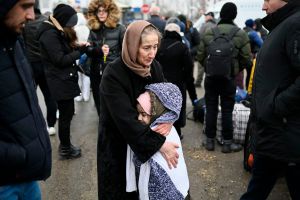 Good Day Sky Dancers!
I am so late getting started on this! Today I finally got some reprieve from the 8 days of dawn to dusk grinding, sawing, and hammering from my neighbor’s next door. They have a covered porch in the back now and I have a migraine. Then, I spent my evening in disbelief that some Russian Batallion fired on, hit, set on fire, then captured the largest Nuclear Power Plant in Europe. All that while I nurse whatever I did to my little left toe while managing to pull a heavy garbage bin onto it. I’m exhausted.
The refugee crisis from the Russian Invasion of Ukraine is worsening. This article in Vox investigates where the refugees are headed and who is helping them and how. “Where are Ukrainian refugees going? The arrival of hundreds of thousands of Ukrainian refugees is straining humanitarian resources.” has the byline.
The number of Ukrainians who have fled Russia’s war on their country surpassed 1 million on Thursday, and that number is rising hourly.
“I have worked in refugee emergencies for almost 40 years, and rarely have I seen an exodus as rapid as this one,” United Nations Commissioner for Refugees Filippo Grandi said in a statement Thursday.
European governments and humanitarian organizations have been planning for their arrival for weeks, but the number of refugees has surpassed those expectations. The UN has projected that 4 million Ukrainian refugees could arrive in neighboring countries just in the coming weeks.
Such a heavy influx would be a “huge burden for receiving states and would no doubt stress reception systems and related resources,” Grandi said during a United Nations Security Council meeting on Monday.
So far, at least 505,000 Ukrainians have gone to Poland, 139,000 to Hungary, 97,000 to Moldova, 51,000 to Romania, 72,000 to Slovakia, and 90,000 to other European countries. Nearly 48,000 have also gone to Russia and a few hundred have gone to Belarus. Most of the refugees are women and children, including a growing number of unaccompanied children. Ukraine has conscripted men between the ages of 18 and 60 to fight, prohibiting them from leaving.
 I haven’t heard from my Ukrainian friend Alex for two days now. He’s in the north but is west so he still might be out of the warzone.
The Russians are regrouping in the North where that column of vehicles is still stalled. However, they are consolidating hold over the southern parts of Ukraine capturing a city with a major port.
The U.S. and European allies scramble to find ways to stop Putin but it looks like a more severe, deadly phase of its invasion. Russia is currently hitting small villages, towns, and cities with all its got. Reporters indicate that several towns north of Kyiv have been flattened. Putin is adding to his list of war crimes. There have been failed assassination attempts on the Ukrainian President’s life. This is from Axios and written by Ivana Saric.
Ukrainian National Security and Defense Council chief Oleksiy Danilov announced during a briefing Tuesday that Ukrainian forces had foiled an assassination plot against President Volodymyr Zelensky, according to a Telegram post from Ukrainian authorities.
Why it matters: Zelensky has said since the start of Russia’s unprovoked invasion of Ukraine that he would be a prime target for assassination. Last Thursday, he warned that Russian “sabotage groups” had entered Kyiv and were hunting for him and his family.
The big picture: According to the Telegram message, Danilov said that a unit of elite Chechen special forces, known as Kadyrovites, had been behind the plot and had subsequently been “eliminated.”
- “We are well aware of the special operation that was to take place directly by the Kadyrovites to eliminate our president,” Danilov said, per the post.
- Ukrainian authorities had been tipped off about the plot by members of Russia’s Federal Security Service who do not support the war, he added.
- Danilov elaborated that the Kadyrovite group had been divided into two, with one being destroyed in Gostomel and the other “under fire.”
As I write, I’m listening to our Secretary of State talk about the situation and our relationship with our allies.
Our country and our allies are doing as much as they feel able to do. From CNN: “US officials say Biden administration is sharing intelligence with Ukraine at a ‘frenetic’ pace after Republicans criticize efforts.”
The US has multiple channels open and is sharing intelligence with Ukraine at a “frenetic” pace, US officials said Thursday, disputing criticism that the Biden administration is not sharing battlefield intelligence fast enough.
Still, the US’ secure communications with Ukrainian officials are becoming increasingly difficult to maintain as the war rages on, the sources told CNN. Officials also acknowledged that the US is now more limited in its ability to collect real-time intelligence with no one on the ground, and the apparent lack of military drones flying overhead. The CIA has not acknowledged whether it is flying its own drones to surveil the conflict.
Republican Sens. Ben Sasse and Marco Rubio, the top GOP member of the Senate Intelligence Committee, have both said publicly in recent days that they are concerned intelligence isn’t getting to the Ukrainian military quickly enough. House Republicans began amplifying those concerns this week, ramping up criticism of the Biden administration for allegedly “withholding” intelligence from the Ukrainians. The Ukrainians, though, have not complained publicly about any lack of intelligence-sharing by the US.
One Senate source familiar with GOP concerns said that lawmakers were concerned both that the intelligence was being downgraded, or made less specific, and that it wasn’t being conveyed to the Ukrainians fast enough.
Sources familiar with the intelligence said it is indeed being downgraded, but primarily to scrub sensitive sources and methods — a particular concern given the logistical challenges with establishing fully secure lines with Ukrainian officials amid the Russian onslaught.
 Many UK people and NGOs also believe the UK may not be doing enough. This is from The Guardian. The two difficult topics are a no-fly zone which could lead to a direct battle between Russian and NATO forces. The other appears to be the degree to which Russia can be cut off from the international oil markets. There are also calls for more help to get on top of the expanding refugee crisis. “Charities and opposition parties urge UK to do more for Ukrainian refugees. Lib Dems call for fully funded refugee scheme and Mark Drakeford wants Wales to be a ‘nation of sanctuary’ ”
Charities and opposition parties have urged the government to do more to help with an expected surge in refugees fleeing Ukraine after the Russian invasion, with concerns also raised about the issuing of visas now UK diplomats have left the country.
With the UN refugee agency warning that as many as 5 million Ukrainians could be forced to flee, the Liberal Democrats called for a comprehensive and fully funded refugee scheme. Mark Drakeford, the Labour Welsh first minister, said he wanted his country to be a “nation of sanctuary”.
Dozens of refugee charities have jointly called for an evacuation and resettlement plan similar to the one that housed thousands of families in the UK after the Balkans conflicts in the 1990s.
I was in London during the Balkans conflict. I sat up in the Parliament’s small balcony and watched PM Thatcher taking questions from the opposition party. I have to admit it was one of the most thrilling moments of all my travels given my heritage and my interests. I can’t imagine I’d feel the same watching Bojo.
 Foreign Policy indicates that “There Could Be 10 Million Ukrainians Fleeing Putin’s Bombs. Europe has opened its borders to the continent’s biggest exodus of refugees since 1945.” This is written by Bart M. J. Szewczyk, a nonresident senior fellow at the German Marshall Fund and an adjunct professor at Sciences Po. We better settle into watching this escalating suffering. I’m just relieved we have President Biden who knows how to build consensus.
.As Ukrainians flee in massive numbers, Europeans have opened their countries and homes with unprecedented speed and generosity. The scale and pace of the Ukrainian refugee exodus—more than 1 million within only a week—dwarfs even the worst of recent humanitarian crises and is quickly approaching the epic dislocations last seen in Europe in 1945. In Syria, it took two years before refugee flows reached a similar level. In 2015 and 2016, the European Union took in 1 million asylum-seekers each year from Syria, Afghanistan, Iraq, and elsewhere, and this so-called migration crisis quickly turned into an existential issue for the continent. Ukraine, with twice the population of Syria and three times its territory, could generate over 10 million refugees and internally displaced people in the coming months and years. Nonetheless, recent international experience and initial European responses suggest that the open-door strategy is sustainable—not to mention morally right.
We already know that most refugees seek shelter in neighboring countries. Syrians primarily fled to Turkey, Lebanon, and Jordan; Afghans to Pakistan and Iran; and South Sudanese to Uganda, Ethiopia, and Sudan. This makes sense since families fleeing conflict, often on foot or by any immediately available transport, will search for refuge in the closest area where they can find protection. In principle, staying close to home can also expedite returning home once the conflict ends. Neighboring countries are also likely to host diaspora communities that can help ease the hardship and transition for refugees.
This global rule applies fully to the crisis in Ukraine. Over the past week, a majority of refugees fled to Poland—which already had a large and well-integrated Ukrainian community of over 300,000—with the rest going primarily to the other states on Ukraine’s western border: Hungary, Moldova, Slovakia, and Romania. Some Ukrainians are moving and will move to other parts of Europe or countries with large diasporas, such as the United States and Canada, but many will stay in the front-line states of first refuge. Being uprooted is difficult every time.
None of the front-line states are as affected as Poland, which immediately mobilized for the influx. The mass deployment of Polish government officials, municipal workers, emergency services, and ordinary civilians on behalf of Ukrainian refugees is as admirable as it is unsurprising. Etched deep into Poland’s DNA is the memory of Soviet and Nazi aggression—and the experience of facing impossible odds against an occupying power. Poland’s support to Ukrainian refugees is visceral as much as rational.
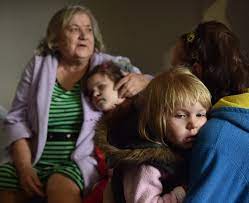 NPR explores one issue we’ve discussed here: “Race, culture and politics underpin how — or if — refugees are welcomed in Europe.” None of these three should influence the degree we commit to being our “brother’s keeper” and providing refuge to those in need but there it is.
More than a million Ukrainians have fled to neighboring countries to escape the Russian invasion — and that number could soar to more than 4 million in coming months, the United Nations refugee agency says.
More than half have entered Poland, with others going to Hungary, Moldova, Slovakia and Romania — and they have been receiving a warm welcome.
Ukrainians arriving in Hungary are coming to a “friendly place,” Hungary’s Prime Minister Viktor Orbán said.
“We will do everything to provide safe shelter in Poland for everyone who needs it,” said Polish Interior Minister Mariusz Kaminski.
At the Polish border, guards hand out sandwiches to Ukrainians in waiting rooms. Polish citizens donate piles of toys and meet migrants with hot tea and free rides to where they need to go.
The open-arm welcome for those fleeing Ukraine stands in sharp contrast to the treatment of previous waves of refugees from places like Iraq, Syria and Afghanistan. Just two months earlier, Orbán said Hungary was keeping its restrictive immigration policies: “[W]e aren’t going to let anyone in.”
Earlier this week, Bulgarian Prime Minister Kiril Petkov drew a distinction between those fleeing Ukraine and others.
“These people are Europeans,” Petkov said. “These people are intelligent, they are educated people. … This is not the refugee wave we have been used to, people we were not sure about their identity, people with unclear pasts, who could have been even terrorists …”
Some folks sure haven’t read their Jesus teachings. And this is another reason why:
An alliance of prominent civil rights lawyers from around the world on Wednesday announced it will file an appeal to the United Nations on behalf of Black refugees facing discrimination while trying to flee Ukraine.
The group includes Ben Crump, the civil rights attorney for the families of George Floyd and Ahmaud Arbery; attorney Jasmine Rand, who represented the families of Trayvon Martin and Michael Brown; Peter Herbert, one of Britain’s few nonwhite judges; Jamaican Member of Parliament G. Anthony Hylton; British solicitor Jacqueline McKenzie; and Carlos Moore, president of the National Bar Association in the U.S. They plan to file the appeal to the Office of the United Nations High Commissioner for Human Rights as well as the U.N.’s Committee on the Elimination of Racial Discrimination.
Earlier this week Filippo Grandi, the U.N. high commissioner for refugees, and Dmytro Kuleba, Ukraine’s minister of foreign affairs, acknowledged that some Africans looking to escape the Russian invasion of Ukraine had experienced discriminatory practices at the country’s borders.
“Such blatant racism cannot be tolerated,” Zita Holbourne, the chairwoman of the Black Activists Rising Against the Cuts U.K. told The Independent. “Human rights of Black and brown people, predominantly students situated in Ukraine, must be honored and safe exit facilitated for all, free of discriminatory selection processes at borders. The targeting of Black and brown people in this way is a racist human rights abuse on top of a human rights crisis impacting all people forced to flee Ukraine.”
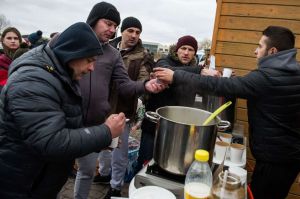 So, I’m hearing that many parts of the United States are already preparing to accept refugees. This is from KOMO news in the Puget Sound area of Washington state.
Russia’s invasion of Ukraine is sparking concerns worldwide. In Puget Sound, groups like Lutheran Community Services Northwest are gearing up to help.
The agency has helped resettle more than 2,100 Ukrainians in Washington and Oregon in the past five years. That includes placing 100 Ukrainians in the past year in Washington state.
The group is helping Ukrainian refugees even now. David Duea is CEO/President of LCS Northwest.
“We have been scheduled to resettle 55 in the next couple of weeks. We don’t know if they are coming. I don’t know if we are ready. But we have to be,” said Duea.
Months ago, there was an urgent plea for help from the community when Afghans started arriving from their war-torn country.
According to LCS Northwest, since last summer the agency helped resettle 700 Afghans in the Pacific Northwest after the Taliban took over Afghanistan.
“What the overall community can do (now) is continuing what we do with Afghans–which is donating furniture; We have welcome kits. Just being ready,” said Duea. “It is a bit of a deja vu. We know the community is already starting to rally and people are volunteering their homes to be host homes–which we are going to take them up on because of the housing crisis in our area. It’s all hands on deck.”
Yes, people of Earth. It’s all hands on decks.
What’s on your reading and blogging list today?
Monday Reads: Me thinks Putin bit off more than he could chew
Posted: February 28, 2022 Filed under: Ukraine 46 Comments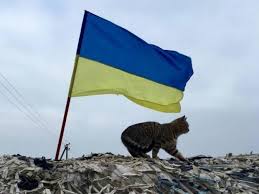
Bandera cats at war in the Donbas (photo report) has many pics and stories of ‘trench kitties”.
Well, it’s Monday Sky Dancers!
It’s hard not to be drawn into the war porn blasting endlessly on the normal cable news channels just like the last few wars that were broadcast live. This one feels different. It also looks different. There are aspects to this war that bring it home to white Europeans and Americans more than images from places like Somalia or Afghanistan. This is something we should deconstruct.
Most Ukrainians are middle class, urban, and as the Russians who are fighting them mention: “they look like us”. Maybe it’s tribal and racist, maybe it’s because most of us grew up seeing pictures and videos of both the World Wars in Europe and all the bombings of cities great and small, but this one is hitting home and it’s getting results, unlike many recent wars. My guess is that it’s a mix of all that and it damn-well could start World War 3 with possible use of Nukes at its worse. All these countries have or have had Nukes.
I did feel awful watching the result of Orange Caligula abandoning our Kurdish allies and also the results of him carelessly leaving a mess to Biden when troops left Afghanistan. But this one, this naked aggression in the birthplace of many wars is just on another level altogether. Then there’s the border and kids in cages. I really felt that I had numbed up to the absolute cruelty of men in power. The other thing that is different is that I have friends all over the region and I speak to them daily as we play games online. I can actually ask my friend in Hungary about the refugees pouring into the region or my friend in Ukraine who is in a small city with no fighting who is worried about his small daughter and elderly mother. The internet has brought me cyber neighbors in the region.
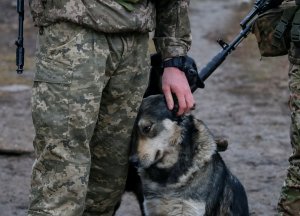
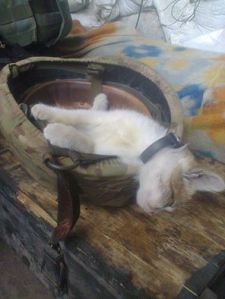 And, yes, we’re having a bonus show of Cats and Dogs at War because I can’t handle all the pictures of families scattering yet again and children of war clinging to their pets, their stuffed animals, and each other. I do have one thought though. Putin should have thought this over and looked back to history. Ukraine is the historical home of the Cossacks and when part of Russia brought the Russian army its fiercest fighters. Ukraine also has the highest number of women in its military of any country. ” Why Are Cossacks Key to Understanding the Ukrainian Nation?”
The Ukrainian Cossack has come to symbolize Ukraine’s ethnic image, much like the medieval knight of Western Europe or the Samurai of Japan. In fact, only a minority of Ukrainians belonged to this famed social group – but their influence on history, culture, and the psychology of the country was deeply profound. If you know the history of the Cossacks, you won’t be surprised to find that Ukrainians, who seem quiet and humble at first sight, can go to protest on Maidan and become courageous warriors.
You may read about this history at the link as well as watch a BBC documentary. It’s fascinating.
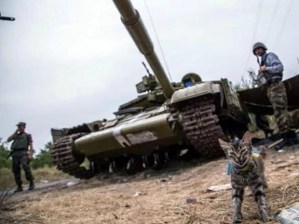 Whatever the reason, the majority of the world is behind the Ukrainian people are like siding with David over Goliath. Their young President has risen to the event and has managed to get countries to send all kinds of things to his peoples and armies. The Washington Post reports “The war in Ukraine isn’t working out the way Russia intended. Tactical blunders and fierce resistance from the Ukrainians risk ensnaring the Russians in a protracted conflict, military experts as.”
The war in Ukraine isn’t going Russia’s way.
Videos posted on social media show whole columns of tanks and armored vehicles have been wiped out. Others have been stopped in their tracks by ordinary Ukrainians standing on the street to block their advance.
Lightly armed units propelled deep into the country without support have been surrounded and their soldiers captured or killed. Warplanes have been shot out of the skies and helicopters have been downed, according to Ukrainian and U.S. military officials.
Logistics supply chains have failed, leaving troops stranded on roadsides to be captured because their vehicles ran out of fuel.
Most critically, Russia has proved unable to secure air superiority over the tiny Ukrainian air force — despite having the second-largest air force in the world, Pentagon officials say. Its troops have yet to take control of any significant city or meaningful chunk of territory, a senior U.S. defense official said Sunday.
On Sunday, a Russian attempt to seize control of the city of Kharkiv, less than 30 miles from the Russian border, was repelled. A fresh push toward the capital, Kyiv, came to a smoking end in the suburb of Irpin, where videos posted on social media showed the charred remains of Russian tanks and armored vehicles strewn around the streets while Ukrainian soldiers removed weapons from the bodies of dead Russians.
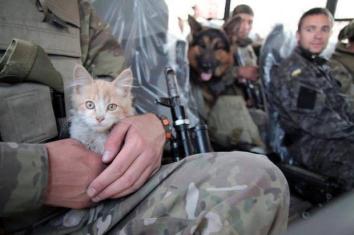 There are weapons and fighters on their way from the EU. Finland is discussing if they should join NATO. Russian access to international financial markets is declining rapidly as new sanctions are added daily. Values of Russian financial asset markets and their currency have fallen off a cliff. There have been two specific actions that have left me speechless. First, BP Oil dumped an incredibly profitable project as reported by WaPo: “BP to ‘exit’ its $14 billion stake in Russian oil giant in stark sign that Western business is breaking ties over Ukraine invasion
BP’s role in the oil company had been one of the most significant Western investments in Russia ever.” They basically walked away from billions of dollars.
British oil giant BP said Sunday that it is “exiting” its $14 billion stake in Russian oil giant Rosneft over Moscow’s invasion of Ukraine in one of the biggest signs yet that the Western business world is cutting ties over the Kremlin’s invasion of Ukraine.
BP, which reportedly came under pressure from the British government to sever the Rosneft relationship, also said its current and former chief executives — Bernard Looney and Bob Dudley — have resigned from the Russian company’s board “with immediate effect.”
The abrupt divorce is another sign of the uncertainty Russia’s invasion has created in the energy industry, which experienced wild swings in oil and gas prices last week as the attack began. BP’s 19.75 percent stake in Rosneft accounted for a third of the British company’s oil and gas production and more than half of its reserves.
“Russia’s attack on Ukraine is an act of aggression which is having tragic consequences across the region. BP has operated in Russia for over 30 years, working with brilliant Russian colleagues. However, this military action represents a fundamental change. It has led the BP board to conclude, after a thorough process, that our involvement with Rosneft, a state-owned enterprise, simply cannot continue,” BP chair Helge Lund said in a statement Sunday.
The announcement marks the end of one of the Western world’s largest investments in Russia, seen as so politically important that Russian President Vladimir Putin and then-British Prime Minister Tony Blair personally attended a signing ceremony for a key part of the deal in 2003. At that meeting, Putin called the BP-Russia deal “a reflection of the positive trends in Russia’s investment climate.”
The single most breath-taking act by a country that this financial economist with an undergraduate degree in European History was taken by the Swiss today. This is written by Nick Cumming-Bruce for the New York Times: “Switzerland says it will freeze Russian assets, setting aside a tradition of neutrality. ”
Switzerland, a favorite destination for Russian oligarchs and their money, announced on Monday that it would freeze Russian financial assets in the country, setting aside a deeply rooted tradition of neutrality to join the European Union and a growing number of nations seeking to penalize Russia for the invasion of Ukraine.
After a meeting with the Swiss Federal Council, Switzerland’s president, Ignazio Cassis, said that the country would immediately freeze the assets of Russia’s president, Vladimir V. Putin, Prime Minister Mikhail V. Mishustin and Foreign Minister Sergey V. Lavrov, as well as all 367 individuals sanctioned last week by the European Union.
Switzerland said it was departing from its usual policy of neutrality because of “the unprecedented military attack by Russia on a sovereign European state,” but expressed a willingness to help mediate in the conflict. It also joined European neighbors in closing its airspace to Russian aircraft, except for humanitarian or diplomatic purposes. But said it would evaluate whether to join in subsequent E.U. sanctions on a case-by-case basis.
Mr. Lavrov, who was scheduled to be in Geneva on Tuesday to address the United Nations Human Rights Council, will no longer make the trip because of the flight ban, Russia’s mission to the United Nations in Geneva said on Twitter.
 Obviously, lessons learned about 1938, Neville Chamberlin, and events like Kristallnacht have not been forgotten anywhere on the continent. Germany gave up access to a natural gas pipeline. Belgium is cutting access to Russia to its Financial Messaging network Swift. New sanctions fall into these areas.
Details: The commitments agreed to by the U.S., EU, France, Germany, Italy, U.K. and Canada on Saturday fall into five main categories, according to a joint statement.
-
Disconnect select Russian banks from SWIFT, a move that a senior Biden administration official referred to as the “Iran model.”
-
Undermine the Russian Central Bank’s ability to defend the ruble.
-
Limit the sale of so-called “golden passports” that allow wealthy Russians to become citizens of Western countries and exploit their financial systems.
-
Launch a trans-Atlantic task force to hunt down the assets of sanctioned Russians in order to ensure the penalties are enforced.
-
Step up coordination of against Russian disinformation and other forms of hybrid warfare.
We’ll try to keep up with the headlines this week including Biden’s SOTU speech Tuesday Night. I think I can safely say we’re all pulling for the people, animals, and democracy of Ukraine.
What’s on your reading and blogging list today?

 peej
peej Carissa
 bostonboomer
 dakinikat
 ecocatwoman
 mablue2
 Mama Lopez
 peggysue22
 quixote
 skydancingguestblogger
 Mona (aka Wonk the Vote)



 Sky Dancing
Recent Comments