
The Anti-War Movement is starting to Move Again
Posted: December 14, 2010 Filed under: Action Memo, Anti-War | Tags: anti-war, peace protest 17 CommentsMy partner and I were going to a social function last Saturday, leaving our sodden and flooded farm for a few hours and driving through the gloom of a raging downpour. On the corner outside our little town was the sign guy. This gentleman appears at odd intervals with a huge sign constructed of two by fours and signboard. The sign asks why the wars haven’t stopped.
The sign guy was standing there, holding up his sign from time to time, absolutely drenched. I said as we turned past, “Next time we see him we’ve got to stop.”
“Why?”
“So, I can find out when he’s going to be out next and go stand with him.”
“Oh, good idea!” I waved and gave a thumbs up as we passed the sign guy, and my partner honked the car horn in approval.
More people than the sign guy remember that we are still involved in two very expensive, very costly, very murderous wars. All of us here know it, and people across the country and the ‘net are starting to wake up again. Obama isn’t going to change a thing, he’s not really anti-war, and it’s time to start protesting… again.
There’s going to be an anti-war protest on Dec 16th in Lafayette park in front of the White House at 10 am. There will be military veterans and leaders of the peace movement giving speeches. I doubt the protest’ll be very big, and I don’t think it’ll get any media attention, but it’ll have happened, and, as Chris Hedges says in his Op-Ed on Truth-out this week, ‘No Act of Rebellion is Wasted‘:.
Hedges’ first paragraph got me choked up, I have to admit. He says,
I stood with hundreds of thousands of rebellious Czechoslovakians in 1989 on a cold winter night in Prague’s Wenceslas Square as the singer Marta Kubišová approached the balcony of the Melantrich building. Kubišová had been banished from the airwaves in 1968 after the Soviet invasion for her anthem of defiance, “Prayer for Marta.” Her entire catalog, including more than 200 singles, had been confiscated and destroyed by the state. She had disappeared from public view. Her voice that night suddenly flooded the square. Pressing around me were throngs of students, most of whom had not been born when she vanished. They began to sing the words of the anthem. There were tears running down their faces. It was then that I understood the power of rebellion.
He goes on to talk about the professors of languages who rebelled in 68 and who were sent to Bohemia to work on the road crews laying tar and grading road beds.
And as they worked they dedicated each day to one of the languages in which they all were fluent – Latin, Greek, Italian, French, Spanish or German. They argued and fought over their interpretations of Homer, Virgil, Dante, Goethe, Proust and Cervantes. They remained intellectually and morally alive.
For a history, language and archaeology geek like me, these words are above inspiring. But go read the rest of the article, and get ready to protest even in the smallest of ways. Because that is what has to happen.
For more information on the December 16th protest, see the website www.stopthesewars.org. I will try to find something local going on that day or at least send a few dollars their way. Maybe the sign guy will be out and I can join him.
Sky Dancing in the Garden: Here comes Dream time!
Posted: December 6, 2010 Filed under: gardening | Tags: dreaming, gardening, seed catalogs 26 CommentsNote: I’m posting this on Monday because Sunday was super busy, both personally and on the blog!
And now, for something entirely frivolous and decadent.
This year’s gardening catalogs.

Many a garden writer has said it before, and many will say it again (in fact, this one is just about to).. catalogs are for dreaming. In catalogs there are no slugs, no snails, no powdery mildew and no late blight. The plants are a glistening glossy green, with bright shiny flowers that stand out like beacons under the perpetual benevolent sunshine. Every plant is wonderful, superlative, the cream of the crop. The vegetables look, taste, and even smell better in your favorite garden catalog, or at least, so say their descriptions.
Watering? Only from this stylish classic verdigris water can on page 25 or the oh-so-environmentally conscious drip irrigation ‘system’ on page 50.
Bugs? NEVER! But if you might see a stray sign of a leaf-hopper on the poor neighbor’s fuscia, head out to page 65 for a complete list of bug preventatives.
The thing that draws me in every time, every single dang time, is the ‘NEW VARIETIES!’ I love reading about new vegetable varieties. I’ll read a bit, then my gaze’ll wander and I’ll stare out the window at the cold, grey, wet winter’s day. In my mind’s eye I see this or that great new broccoli variety, or corn, or swiss chard, or whatever, growing proudly in long rows; producing abundant, life-sustaining nutrition (and a few bucks for the poor farmer). And this or that great new variety will be innately resistant to slugs and will scoff at both heat and cold, wet and dry. It’s such a great variety, it’ll grow under your bed, or on the moon! Ok, I’m getting a bit carried away.
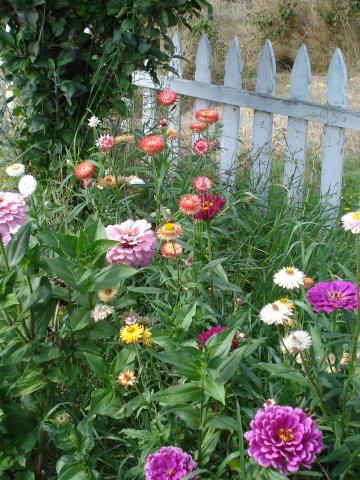
Catalog season generally starts in December. It can run into April in some areas of the country or end as early as February in others, because it ends as soon as planting begins and reality sets in. I keep all the farming and gardening related catalogs in the same pile and look through them before I go to bed, or when I have a few free moments. It’s a peaceful, dreamy time.
If you’re anything like me, you get tons of gardening catalogs from seed suppliers from all over the country. It’s hard to tell the good seed company from the bad, hard to tell what will grow in your area and what won’t. Therefore, here’s a few tips.
Do a bit of google research to explore where a seed company is getting their seed. Few actually grow seeds themselves (although some do). Many smaller seed companies still offer non-Monsanto (or other huge agri-business) controlled seed.
Beware of seed that is copyrighted or trademarked. This doesn’t mean it’s an F1 hybrid, this means it’s actually illegal to grow it yourself. If it’s that important to some business, you probably don’t need it.
To determine if a variety will grow in your area: Start with the basic hardiness zones. If the variety is within your zone, it’ll probably grow. But remember, many varieties need heat, so a zone 8 in the PacNW is not going to get as much heat as a zone 8 in northern California. This matters for things like corn and eggplant and many flower varieties. Most catalogs do not give heat requirements (known as degree days), so here’s how I figure it out. I use a catalog provided by a local (to me) seed merchant; Territorial Seeds. This is a great company, and they do a lot of their own growing and testing down in Oregon. I look at the days to maturity they give for different varieties of vegetables and flowers. Although the days to maturity are still a bit low, because they are in Oregon and I’m in Washington, I at least get in the ballpark. Then I compare these days to those in other catalogs. For each vegetable, this gives me an offset for each of the other catalogs, which I can use to get a semi-accurate guess whether something will grow for me or not.
Why do I do this? Because my favorite seed place is Johnny’s, in Maine. And in Maine you can, for instance, grow corn varieties which won’t grow in the Puget Sound area of Washington. Maine is hotter and has more days over 60 F than Washington, even though coastal Washington has a higher hardiness zone.
Another point to consider: Look at the natural habitat of the plant. Make sure your garden area is similar to that natural habitat if you want carefree gardening. For instance, rosemary is naturally a Mediterranean scrub plant. It likes cool mornings and nights, mist, wind, quickly draining soil and hot sun. It doesn’t like snow, and it doesn’t like places without that mist and wind. So around my area rosemary often dies. However, I can grow it because I live in a little valley on a peninsula with sea water within a mile or two on 3 sides. I get the winds and the mist, boy, do I get the winds! I then went further for my rosemary and grow it in raised beds to achieve the drainage it wants.
For farming, I use Johnny’s and Territorial seed mostly. I get catalogs from other seed merchants, but they don’t hit a chord with me, for some reason. I use Nichols and various other places for herbs. I love the Heirloom seed catalogs and tomato catalogs. I use onion starts, rather than the little onion bulbs or seeds. I get mine from Dixondale farms. Drip Works is a great drip irrigation site, and cheaper than the ‘system’ available in most catalogs. Green house stuff comes from Charley’s in Washington, or Greenhouse Megastore or other places across the Internet.
So let’s hear it, what are your winter gardening dreams, 2011 gardening plans and favorite catalogs and tips for seed selection?
S. 510 Passed with the Tester-Hagan Amendment
Posted: December 1, 2010 Filed under: Farming, legislation | Tags: farming, food, legislation, nais, S 510 28 CommentsAs many of you may have heard, S 510 the food safety bill, passed the Senate yesterday. I’ve discussed this bill once before. In that post I asked that people ask their Senators to vote for the Tester-Hagan amendment if they must vote for this poorly done bill. I’m happy to say the Tester-Hagan amendment passed with the bill, along with several other amendments that will make it a bit easier on small farmers. Thanks so much for writing and calling about this!
Even with bill’s passage all hope is not lost by any means. Because of Democrat foolishness, the Senate bill includes provisions about taxes, a House perogative. So the House Democrats will probably stop the Senate bill for a bit.
The bill has to be reconciled with the House version once all these mistakes are rectified, if they can be rectified. The House version of the bill is much, much harsher to small farmers. I might, therefore, be asking you all to write and call as the reconcilation process goes forward.
There are several other ways to stop the worst of this bill. One is when the UDSA/FDA/HSA (Why the heck is Homeland Security involved?) actually make up the rules. There will be hearings, committees, ‘listening’ sessions and more. Although the path to public involvement in these hearings is convoluted and arcane, it can be done.
For example, up until last year small farmers, and anyone who owned a horse, goat, sheep, cow, chicken, duck, or pig as a pet, had NAIS looming before them. NAIS, the National Animal Identification System, was to mandate an RFID for every ‘farm’ animal in this country. It was meant to facilitate disease outbreak tracing and enhance the ability for American meat producers to sell their products overseas.
NAIS mandated one RFID per ‘lot’ of animals. So a ‘lot’ of 10,000 chickens hatched, raised and slaughtered together would need one RFID tag. That’s great for a CAFO. But for a small farmer, who hatches maybe 100 chickens here, 100 there, or even less, it’s disaster. Each chicken or small lot would need a number. The system worked the same for horses, cattle, goats, etc. So I, with my 17 18 (keep forgetting the little one) goats, would pay 18 times what someone with 1,000 goats kidded at once would pay. Yea, that’s fair. The NAIS rules also meant a ton of other impositions. Farmers would be required to report any movement of animals within 24 to 48 hours. If you rode your horse down a trail, every farm you passed would have to report your movement into and off of their property. Take your pet goat to the vet in your car? Report that movement within 24 to 48 hours or face a fine. Animal die? Report it. Animal born? Report it. Animal moved to a different pasture through a common area? Report it. In order to facilitate all this reporting your property would be registered as a ‘premises’ and given a ‘premises number’. Legally, the owner of a premises has a different set of rights, lesser rights, than the owner of property.
When the particulars came out the government ignored the unrest. Then the listening sessions started, and they had to add more, and more. Comments on the Federal register grew long and loud. The listening sessions were attended by people 80% to 95% against NAIS. People dared the government to pass it, promising stubborn, non-violent resistance.
NAIS died last year, supposedly. Funding was dropped by Congress and the FDA/USDA stopped pushing it. However, elements of it are in the S 510 bills.
We can do this again with the Food Safety Act. We can make it palatable and workable for the little farmers. People power CAN fight against corporate ruled government if we are united. Unity is the key. With NAIS all sides came together to fight it. I was on mailing lists with people who became rabid tea-partiers. I didn’t agree with their solutions for everything, but I, and other liberals like me, did agree with how to fight NAIS. And so when someone made a political comment, the rest of us chastized them. ‘The list is only about NAIS, keep the rest out of it. We need everyone to fight it.’ This kind of unity is going to have to happen more and more, to fight against government take-over of our rights to privacy, freedom of speech, travel, and more. I welcome it.
Added the following to discuss the Washington Post article mentioned by BB in her great news roundup. These are my admittedly argumentative thoughts on the points in the article. I think the Food Safety bills could be good, but they need to be gone over very carefully and the wording needs reflect reality. It’s too vague right now.
Point 1: ‘ Would require farmers and food manufacturers to put in place controls to prevent bacteria and other pathogens from contaminating food.’
The bill requires ‘GAPS’ (Good Agricultural Practices) to be put in place for farmers. These are basically flow charts that are meant to identify problem areas and tell the farmer how to prevent them. They probably work ok for a farmer who grows 10000000000 acres of lettuce. However, I grow about 2 4 x 100 ft beds of lettuce, 4 4 x 100 ft beds of broccoli, 8 4 x 100 ft beds of potatoes… well you get the idea. I’d have to have a GAPS, generally designed by a food engineer ($$$$) for each vegetable and for how the growing of each vegetable impacts the other. I really resent this kind of linear, engineering thinking that is applied to everything. Learning about, and deciding to follow ‘good agricultural practices’ is something every farmer does. If they don’t, they go out of business.
Point 2: ‘Would require the Food and Drug Administration to regularly inspect all food facilities, with more frequent inspections in higher risk facilities. ‘
Who defines ‘higher risk’? Right now, it seems the FDA thinks little dairies and creameries are high risk. The factories that produced the 550 million egg recall had the equivalent of ‘GAPS’ in place. They had inspections, and got fined and written up, over and over again. Most of the HAACP (equivalent of GAPS) stuff requires them to self inspect and self report. The problems in these factories were ongoing over years. But a little cheese producer that has never tested positive for listeria is shut down because a California seized sample, held in improper conditions by the government, stripped of all the actual tracing lot numbers which are supposed to allow backtracing of food by that same government, ad nauseum, came back positive for listeria.
Point 3: ‘Would allow the FDA to order a mandatory recall of any product it suspects may harm public health. ‘
This one sounds great. Of course, the FDA basically already has this ability. Note the wording ‘suspects may harm’. This could mean that a small farm or food producer is effectively destroyed while the FDA determines with the glacial slow movement of government facilities dragging their collective feet, that the farm/food producer did nothing wrong.
Point 4: ‘Would improve disease surveillance, so that outbreaks of food poisoning can be discovered more quickly’
I like this one. But how are they actually going to do it? More testing I suppose. Who pays? The consumer and the farmer. What about testing post slaughter, post canning, post wrapping, etc?
Point 5: ‘ Would require farmers and food-makers to maintain distribution records so that the FDA can more quickly trace an outbreak to its source. ‘
This is NAIS-like. At one time the government was talking about requiring every head of lettuce or broccoli to have an RFID. Interesting concept, and it may come to that. It would provide great tracing, until the RFID is removed. And even then, what if you return to the store with an RFID tag from lettuce that you said made you sick. You neglect to mention you ate that lettuce right after you cleaned the cat box… RFID tags won’t do anything about post-slaughter contamination, which is where MOST of the contamination of meat happens. The tag is removed from the animal when it’s slaughtered, of course.
Having said that, I don’t know of a farmer or food-maker that doesn’t maintain distribution, aka sales, records. Maybe it’s different in the big ag operations.
Point 6: ‘Would require foreign food suppliers to meet the same safety standards as domestic food-makers. ‘
I love this one. Could we reverse it and make it so that our food suppliers have to label GMO products and so on? That would rock.
Point 7: ‘Would exempt small farmers and food processors.’
This is good. I’ll believe it when I see it. Tester’s amendment says that small food producers have to abide by either the state regulations or the fed regulations. In practice, the fed usually tells the state how to regulate, or withholds money. So it’s all one in the same. I’m a bit worried about the part (they might have removed this in the final bill) that sends a farmer to jail for 10 years if they ‘distribute adulterated food’. The problem is the definition of distribute, adulterated and even food. Heh. Raw yogurt can be considered adulterated by some, because it’s still got the little raw beasties in it that make it so good.
Final point: ‘Would add 17,800 new FDA inspectors by 2014.’
I’ll believe that when I see it. Paid for by what? Are they going to be like the TSA? Who’s training them?
Sunday Growing
Posted: November 21, 2010 Filed under: Farming, gardening | Tags: farming, gardening 25 CommentsI’m hoping that a regular post about gardening and farming, but mostly gardening, will be useful on the blog. I’ve picked Sundays to run the post, perhaps every other Sunday at first depending upon interest, because it’s often a slow news day.
I hope to convince a few of the commenters and writers here to write about what is happening in the garden(s) in their neck of the woods. So feel free to dive in, everyone!
Up here in the PacNW it’s been rainy. No surprise there, eh? It’s also cold; we are having a cold snap with cold winds barrelling down out of the Fraser River Valley from Canada. This often means snow, but I think it’s a bit too warm for snow as we are hovering just above freezing, but the skies are clear. The fire has been burning in the wood stove all day. Outside the goats are all puffed up, like little fur puff balls on 4 stick like legs. They are out in the pasture looking for something to eat. The pasture is green (this is Washington after all) but the grass has little nutrition. So they come in to eat hay every few hours. The cats are similarly puffed up, lounging in the warm spots in the garage. The dog is in her heaven, being a northern spitz type dog. She’s only 9 months old. I can’t wait until she first encounters snow.

Frost on the Pasture
The plants in the herb garden are curled up against the cold. But there is still viable rosemary, thyme and some oregano. The last of the chives gave up the ghost a month or so ago. Green onions are still hanging on, hoping I won’t pick them before they can flower in the spring. In the greenhouses that I got from The Tree Center and set up last season, the last of the tomatoes have ripened and need to be picked. Their mother plants are completely brown and dead. Peppers hang here and there amidst the brown leaves of their plants. I need to get those picked and processed. We chop peppers, sweet and hot, and bag them into zip-locks. We freeze them and use them in cooking all the rest of the year. Instead of canning tomatoes I chop them, skins, seeds and all, in the cuisinart and freeze them. They too are used in cooking for the rest of the year.
Out in the fields the garlic we planted in October is showing the first of its growth. Yum! If it were to get really cold we’d have to cover it with straw, but I’d rather not. That way there’s no convenient hiding place for our garden nemesis, the slug. We also have lettuce, mesclun, carrots, broccoli, kale, swiss chard, cabbage, rutabaga, beets, turnips and more growing in the fields. Some of the plants are under cover to protect them from super cold weather. Others are left to grow as they will. I expect the beets and the swiss chard will finish shortly. I should grab some and chop it and freeze it for eating later before it turns into a brown frozen mush!
I expect we’ll have our first snow, if not over Thanksgiving where it can most effectively screw up travel plans and therefore is the chosen time of the weather gods, by early December. Before then, I hope to have the paths in the herb garden weeded, and we really need to get the plowing done.
I’d like to refer everyone to a gardening blog from our own Grayslady, Gardening in the Mud. Please visit there for information about Mid-West and North-East gardening and plants. She knows her stuff! If anyone else has a garden blog they’d like linked, let us know!
So, what’s happening in the garden in your area? Go outside and then let us know!
S. 510, please call for the Tester-Hagen amendment
Posted: November 17, 2010 Filed under: Farming, Food, just because, legislation | Tags: farming, food safety, legislation, S 510 27 CommentsNote: I wanted to get this written up and posted yesterday, but family duties called me away and I spent all day at my parents’ house taking care of my sister.
Right now I am stressing about Senate Bill 510. The bill passed cloture today, and will come up for vote tomorrow or Friday, I believe. An important amendment, written by Senator Tester and Senator Hagen, would exempt small farms from many of the onerous provisions of this bill. Food experts, farm advocates, and consumer safety experts have debated the provisions of the bill over at Grist (see this article on if the bill will better provide food safety, this article on if the bill will harm small farmers, and this one on if we really have a food safety crisis), if you are interested in their arguments.
If S 510 passes without the Tester-Hagen amendment and then goes into reconciliation with the absolutely horrid (for small farms) House bill (HR 2749) which passed last year, I expect to be eventually regulated out of business. And I expect many, many other small farms to suffer the same fate. The law has no provisions in it to protect small farms; it simply urges the FDA and FEMA, yes, our food supply would come under FEMA, to consider small farms when making regulations. AHAHAHAHAHAHAHA. The Tester-Hagen amendment makes it law that they do so. The Bill is partly concerned with ‘terrorist’ scenarios, such as someone poisoning our food supply. If we were getting food from millions of small family farms, such a thing couldn’t occur. But the bill gives FEMA the power to intervene in cases of suspected terrorism, or food ‘adulteration’, however they end up defining it.
There’s some good parts in this bill. It does provide more oversight for Big Ag. I’m sure that’ll last until the regulations actually get written (cynical, cynical me). But as I see it, this bill and the House bill are just grandstanding so government people can say they ARE doing something about the supposed food safety crisis. If the USDA and the FDA had the funds to do the inspections they need and if our Senators and Representatives would seriously look into getting the lobbyists out of the regulatory mix, we’d not need these bills at all.
Anyway, I ask you to call or email your Senators and ask them, if they must vote for this bill, that they also vote for the Tester-Hagen amendment. It’s probable that every Dem Senator will vote for it, so let’s do what we can to make it more palatable to the small food producers that hope to feed us all.
More links of possible interest:
S510 may mean 10 years in prison for Farmers
Food Safety: The Worst of Both Bills
Frequently Asked Questions about S 510
I’m trying to look on the bright side. If the bill passes, is reconciled with the House bill and becomes the pile of ummhmmm I suspect it will, it can still be fought during the formation of regulations phase. Oh joy.

 peej
peej Carissa
 bostonboomer
 dakinikat
 ecocatwoman
 mablue2
 Mama Lopez
 peggysue22
 quixote
 skydancingguestblogger
 Mona (aka Wonk the Vote)



 Sky Dancing
Recent Comments