
Wednesday Reads: The Cornell Gang Rape Case
Posted: September 30, 2026 Filed under: just because | Tags: Cereese Qusba, consent laws, Cornell Daily Sun, Cornell gang rape case, Jane Doe attorney Thomas Giuffra, New York rape law, rape, sexual assault, Tompkins County District Attorney Matthew Van Houten 2 CommentsGood Afternoon!!
I’ve been reading the latest news on the Cornell gang rape case. I just want to say up front that my personal opinion is that if a person is very intoxicated, they can’t consent to sex. If they say no at any point during sexual activity, the activity should stop. If a person agrees to sex with one or even two people, that does not give permission to others to join in. People who have been raped tend to be in shock afterward and tend to feel shame about what happened; therefore, they may not report the rape immediately.
The latest reports about the case are somewhat complicated. First, the woman who reported the rape admitted that she agreed to have sex with a friend and another man before the situation escalated. She said she was “heavily intoxicated” before any of this happened. She has evidence that one of the men sent text messages to his frat bros advertising “free pussy.”
Unfortunately, New York rape laws are shockingly out of date. Basically, the law assumes that if the victim voluntarily took drugs or alcohol, unless there is physical force, unless they specifically say “no,” or if they are unconscious, they are assumed to be able to consent, and it’s just too bad if a bunch of people had sex with them against their will.
It’s a complex story. I’m going to share the latest articles about the case, and you can draw your own conclusions.
Claudia Lauer & David A. Lieb at The Independent: How an outdated New York rape loophole blocked charges in a Cornell fraternity assault case.
A Cornell University sexual assault allegation has reignited intense political backlash over a controversial New York rape law that legal experts and victim advocates argue shields abusers when victims voluntarily consume alcohol or drugs.
The outcry follows a decision by Tompkins County District Attorney Matthew Van Houten not to pursue criminal charges in a civil lawsuit involving a woman who alleges she was gang-raped at a Cornell fraternity house in 2024.
Matthew Van Houten, district attorney for Tompkins County, N.Y., said some new evidence is emerging in an allegation of rape at Cornell University.Credit…Tompkins County District Attorney’s Office
Defending his office’s choice, Van Houten pointed directly to New York’s statutory definition of rape, explaining that under state law, prosecutors must prove physical force, an explicit refusal, or that the victim was rendered “physically helpless” through unconsciousness or involuntary drugging. Because the victim voluntarily drank alcohol before the assault and was conscious, the prosecutor stated that criminal charges could not be supported.
The decision has thrust New York’s “voluntary intoxication loophole” back into the spotlight. Under current state statutes, prosecutors face massive legal hurdles when trying to convict individuals who engage in sexual acts with someone so heavily intoxicated that they cannot meaningfully give consent, provided the victim drank or took drugs voluntarily.
Anti-sexual violence organizations and state lawmakers slammed the statute as outdated and harmful. Stefan Turkheimer, vice president of public policy for RAINN, labeled the legal standard “straight-up victim blaming,” warning that it deters victims from coming forward and prevents prosecutors from pursuing cases involving severe incapacitation.
Efforts by state lawmakers to close the loophole have repeatedly stalled in the legislature, leaving New York as one of a dwindling number of states where voluntary intoxication cannot be used to prove incapacitation in rape cases.

There’s much more information at The Independent link.
New York is not alone in having outdated rape laws. From the AP: How state sexual assault laws handle voluntary intoxication:
Nineteen states have rape or sexual assault laws that consider intoxicated victims to be mentally incapacitated only if they became drunk or drugged without their knowledge or consent. In 25 other states and Washington, D.C., whether the victim became intoxicated voluntarily or involuntarily isn’t a factor. Six states do not define that in state law.
Reports of comments made by Jane Doe to Cornell University police in 2024 when she first went to school officials with allegations she was gang raped are raising new questions about what law enforcement knew at the time.
CNN affiliate WCBS and ABC News reported they have obtained documents that detail comments made by Doe to investigators regarding the night of October 19, 2024, when she was allegedly assaulted by multiple members of the school’s Chi Phi fraternity….
The attacks were alleged to have taken place at the Chi Phi fraternity house at Cornell University in Ithaca, New York
The revelations raise new questions as to why law enforcement did not file criminal charges at the time of the incident and what the district attorney’s office was aware of regarding the assault allegations, as calls grow for answers in light of Doe’s civil lawsuit filed this month….
WCBS reports it obtained a transcript of Doe’s interview with Cornell University police in November 2024, weeks after the alleged rape, and ABC News reports it obtained a six-page written statement signed by Doe to Cornell University Police at the time.
Doe described to Cornell police that she was heavily intoxicated on the night of the alleged rape, according to the WCBS and ABC reports, citing documents.
The transcripts detail how she told police she was “pretty OK” with the initial sexual activity but did not consent to what occurred later in the night, according to WCBS.
In the statement, Doe said she consented to some sexual acts but repeatedly refused some, including a foursome proposed by one of the fraternity brothers, according to ABC. She described thinking that if she passed out and the men had sex with her, they could be charged with “rape,” the only reference of rape mentioned in the document, ABC reported.
In transcripts with police, Doe also described being physically hit, according to WCBS.
She reportedly spoke to Cornell police on November 14 and 15, more than three weeks after the alleged gang rape. A campus police investigator led the questioning, with a Title IX investigator, a victim advocate, and Doe’s adviser also reportedly in the room for the first day of the interview, WCBS reported. CNN has reached out to Doe’s attorney.

On the DA’s claims:
In a statement to CNN, Van Houten said his office was not provided the transcript and “will be investigating this fully and determining the truth.”
“I will be looking into whether this is true and the specific circumstances of this allegation. I was not provided the transcript and the specific statement that has been attributed to Doe was not included in the written statement that I received from Cornell PD,” he told CNN.
When asked about Van Houten’s response to the reports, a spokesperson for Cornell said: “The Cornell University Police Department investigated the matter in 2024 and shared all investigatory information with the Tompkins County District Attorney’s Office, which is the established protocol if the department believes it is possible a crime has occurred,” repeating a statement made in an FAQs post the university released Tuesday night.
Again, there’s much more information at the link. You might need to clear your cache to get past the paywall.
Hurubie Meko at The New York Times (gift link): D.A. in Cornell Case Hopes to Speak to Accuser as He Weighs New Evidence.
A New York prosecutor said that he hoped to speak with a former Cornell University student as soon as possible “to discuss new evidence that exists” about her claims that she was sexually assaulted in 2024.
Matthew Van Houten, the Tompkins County district attorney, said in an interview that it wasn’t “even a close call” when he decided not to bring charges against members of a Cornell fraternity in 2024, when the accuser, known as Jane Doe, reported to the police that she had been sexually assaulted by several men.
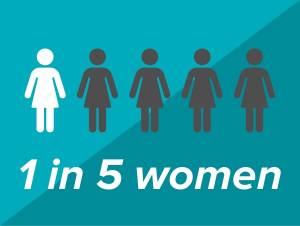
One in five women in the United States experienced completed or attempted rape during their lifetime. National Ssexual Violence Research Center
Mr. Van Houten acknowledged that the woman’s account had been credible and “very specific” and “very detailed.” But he added that even though “everybody across the world agrees that what happened was wrong, it was morally wrong, it was disgusting,” the allegations made by the woman at the time did not rise to a crime under state law.
“And my job is to evaluate the evidence based on the law, and the law alone, and not emotion, not social media,” Mr. Van Houten said. “And not public sentiment.”
He said a lawsuit that the woman filed earlier this month against Cornell University, seven men, a fraternity and her sorority still did not provide the facts that could support a criminal case under the law. But he added, “The significance of it means that she believes that crimes were committed, and we want to get to the bottom of that.”
Late on Tuesday, he said he had been provided with new evidence that his office would review to determine if her case could now be taken to a grand jury. Mr. Van Houten said he would reach out again to her lawyer on Wednesday to request a meeting with her. He did not provide any details about the nature of the evidence.
The woman’s lawsuit put a sudden, harsh spotlight on Mr. Van Houten’s small office in upstate Ithaca, N.Y. The campus newspaper, celebrities and politicians raised questions about whether the case had been handled properly in 2024, renewing the discourse around the persistent issue of sexual assaults on college campuses.
Thomas Giuffra, who represents Jane Doe, said on Tuesday that while he will cooperate with the investigation, Mr. Van Houten’s recent statements have left him skeptical.
“I’m a little concerned that his endgame is to do this halfhearted attempt to present this case at the grand jury, to just prove he believed what he thinks he was right in the first place,” he said. “Which is just frightening when you think about it.”
Richard Luscombe at The Guardian: Texts about alleged Cornell gang-rape released after investigation reopened.
Excerpts of text messages reportedly exchanged by a defendant in the Cornell University gang-rape case and the woman who claims she was assaulted were published by CBS News on Tuesday, a day after New York prosecutors said they were reopening a criminal investigation.
The texts were reportedly sent within days of the alleged October 2024 assault at a campus fraternity house in which a female student said she was drugged and repeatedly raped over the course of seven hours by multiple men who were alerted to her presence on the social media platform Snapchat….
In one of the messages, screenshots of which were obtained by CBS New York, the unnamed male defendant appears to apologize to the woman for “how things went down” – and said his memory of events two nights previously was “kinda fuzzy”.
He said he and another male who was present regretted that they were too intoxicated to “shut it down and kick people out before it got way out of hand”.
In reply, the woman, who was 20 at the time of the alleged assault, and has since left Cornell, said her memory was “super clouded too” and that they were all intoxicated.
On Monday, Matthew Van Houten, the Tompkins county, New York, district attorney – whose office’s jurisdiction includes Cornell – said he had reopened the dormant investigation into the case. He said his office did that in light of allegations that he said were “dramatically different” from those originally made by the alleged victim.
He also issued a statement defending his initial decision not to seek charges.
“Jane Doe’s sworn statement in November of 2024 did not allege that she was drugged against her will or gang raped,” Van Houten said.
“On the contrary, [her] statement described her participation in drug use and sexual conduct as voluntary, conscious, and consensual.
Jane Doe’s attorney:
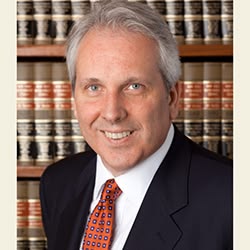
Attorney Thomas Giuffra
Attorney Thomas Giuffra, who represents the woman, confirmed to CBS that his client – named Jane Doe in court documents – exchanged text messages with one defendant after the alleged assault. But Giuffra said he could not be certain the screenshots that CBS News saw were authentic.
Giuffra, according to CBS, said Doe was in denial and traumatized afterwards, had been intoxicated to the point of incapacity that night, and was trying to find out what happened.
He said she felt as if she would not take an aggressive tone with this particular defendant if she wanted answers.
This is a very long article by Jill Filipovic at Slate: A College Rape Case Has Ignited the Country. Let’s Talk About What We’re Actually Talking About Here.
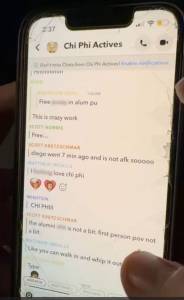
The alleged details of this case are wrenching and sickening: A young woman went to a fraternity party to meet a guy she thought was her friend. They danced and drank, and, according to her statement to police, the first man asked Jane Doe if she would have a threesome with him and another friend; she said she agreed largely because she wanted to please the first guy. But then other guys entered the room; Jane Doe reports hiding under the covers and pushing various men’s hands away as they grabbed at her. She says the men offered her ketamine, and she took it, and as the night progressed she became extremely intoxicated, and other men had sex with her. Not mentioned in the police report but highlighted in the lawsuit is that some of the men were on Snapchat, sending messages about there being “free pussy” available and inviting other men to come over and join in.
Cornell rape “free pussy” text message
It’s that last fact—the Snapchat messages—that has most infuriated much of the public. And it should. It should be at the center of the conversation about sexual violence, consent, and male entitlement to women’s bodies. And as much as the public’s understanding of sexual violence has grown more sophisticated in the wake of various waves of the feminist movement and the gains made by #MeToo, the truth is that we are still abysmal when it comes to understanding, let alone publicly discussing, the ways in which sex, power, and male violence intersect.
The Cornell case is a complex one, which makes it all the more difficult to traverse—to go beyond the legalese and actually talk about what we’re talking about. The demands for criminal prosecution have grown so loud that, in an unusual move, the district attorney published a letter explaining why he didn’t bring those charges in the first place. New York’s rape law is narrow: Sex with a person who is extremely intoxicated but conscious doesn’t count as rape if the alleged victim voluntarily drank or took drugs (as opposed to being secretly drugged or forced to drink). According to the DA, “Jane Doe’s statement described her participation in drug use and sexual conduct as voluntary, conscious, and consensual.” He then published part of the statement signed by Jane Doe.
Whether that statement truly captures an interaction that was “voluntary, conscious, and consensual” seems less clear to me than it does to prosecutors. One also wonders why Jane Doe brought herself to the police station in the first place if all she had to report was voluntary, conscious, and consensual group sex—most people don’t have great fun consensual sex and then report it to the cops. In any case, it seems clear that New York’s sexual assault law was one barrier to prosecution; the police’s interpretation of Jane Doe’s allegations was another. Perhaps a fresh set of prosecutorial eyes will come to a different conclusion; perhaps a grand jury will decide an indictment is warranted; perhaps a jury will convict, or not. All we know is that right now, prosecutors are revisiting the case, and it has sparked national outrage.
Filipovic has concerns about the student newspaper printing the names of the accused rapists:
This time, though, there is a novel element at play. Several individuals and Cornell’s student newspaper have named the seven accused men; a former South Park writer is building a website that he says will include “names, photographs, documents, messages, and other information related to the case.” In one telling, this is transparency in the service of accountability; in another, a name-and-shame campaign of dangerous vigilantism. This is fraught territory: Extralegal attempts at justice are rarely carried out fairly, let alone with due care, and they often do not end well. Our criminal justice system has rules and procedures in place to maintain the presumption of innocence and to require the kinds of factual reviews and legal deliberations that are not possible on Twitter or TikTok. But it’s also true that the criminal justice system is as imperfect as the people who created it and who sustain it, which is to say that it is vastly flawed—especially when it comes to the kinds of crimes that are overwhelmingly committed by men against women, especially when those crimes are sexual in nature, and especially when they are committed in private. The vast majority of rapists never go to jail. Women the world over have suffered through sex that is violent and forceful and been told that’s normal, and certainly not illegal. The fact that one interpretation of the laws of the state of New York suggests that a person can have sex with a woman who is profoundly incapacitated, but as long as she chose to drink and remains conscious, her body is fair game, well, that in itself demonstrates just how not neutral the law can be, and whose assumptions and preferences it tends to reflect.
The efforts to name the men and share information about the case speak to a truth felt deep in the bones of many women (and many men, too): that we can be abused and used as if we are little more than orifices for male power, bonding, and gratification, and then we are the ones who will shoulder the shame, the blame, and the consequences.
There is a great deal more discussion of the case at the Slate link.
One more article by Emma Goldberg at The New York Times (gift link): The Student Journalists Who Never Let the Cornell Assault Case Go.
Editors of The Cornell Daily Sun clustered around their computers late Monday night, getting ready to send out a letter from the editor. They looked bleary-eyed, and one reporter confessed she had skipped her class on Nietzsche that day.
These student journalists at Cornell University were pressing through a dizzying two weeks following the story of a student’s allegation that she was raped on campus in 2024.
The Cornell Daily Sun is independent of the university and has its offices off campus. Credit…Heather Ainsworth for The New York Times
The case had long had their attention; now it had burst into the national spotlight, and their high-risk decision to publish the names of the accused was being discussed not only in Cornell’s libraries and walkways but in the national media.
Back in November 2024, students at Cornell were shaken by an alert they received over email: “Crime ALERT: Sexual Assault,” the email read, referring to the case of a woman who told the Cornell police she had been assaulted at a fraternity house.

There was outrage on campus. Students threw eggs at the fraternity house, Chi Phi, that the woman named. The university convened a sexual assault task force, which compiled a series of recommendations for teaching students about consent and the processes for reporting assault. Then much of the campus attention moved on.
But Cereese Qusba, 22, a senior and reporter for The Sun, couldn’t shake her concerned curiosity about the case. She got in contact with Jane Doe, the plaintiff, and built a relationship with Ms. Doe and her lawyer. Ms. Qusba interviewed university administrators about their approach to disciplining students accused of assault.
Ms. Qusba made her obsessive dedication known to the student paper’s higher-ups. When a new editor in chief, Sophia Dasser, 20, took over the paper in early 2026, she immediately received a phone call from Ms. Qusba, who was studying abroad in Sydney, Australia.
“Sophia, I’m working on this story — I want it to be a focus of The Sun,” Ms. Dasser recalled hearing over the phone. She added, “The Sun never really let go.”
This month, when Jane Doe filed a lawsuit against the university, the fraternity and her sorority, Ms. Qusba was ready to hit publish on her investigation, which was 23 months in the making. “Cornell, Chi Phi Sued by Victim of Alleged Gang Rape, Drugging in 2024,” read the headline on her Sept. 18 story, which traced Jane Doe’s allegations in detail throughout the night that she said she was assaulted.
The Sun is the oldest continuously independent college daily paper in the country. Ms. Dasser, who speaks with a cool and quick precision, was adamant that she wanted the paper to dominate the story not just in its reporting, but in its editorial response. Why be financially independent, she wondered, if not to publish sharp-edged views of the biggest campus issues?
This was the sensibility that emboldened her, days later, when she decided to publish the names of the seven fraternity men named in the lawsuit on the paper’s front page and in a fiery editorial. It was a sensitive decision, she knew, given that the men were named in the suit but had not been criminally charged.
Use the gift link to read more if you’re interested.
I hope you’ll forgive me for using my entire post on the Cornell story. I have a bit of an obsession about violence against women in this country. It is so common that many people just accept that this is the way it has to be. Women and girls are raped and murdered in this country at an alarming rate. And, yes, men and boys are also raped and murdered. And sexual assault is rampant on college campuses. This needs to be recognized and dealt with. I hope this case will awaken some of our political leaders to act on the very real problem of violence against women in the U.S,
I welcome your comments on this and any other topic.

 peej
peej Carissa
 bostonboomer
 dakinikat
 ecocatwoman
 jjlo
jjlo mablue2
 Mama Lopez
 peggysue22
 quixote
 skydancingguestblogger
 Mona (aka Wonk the Vote)





Recent Comments