
Breaking News: DOMA Falls
Posted: June 26, 2013 Filed under: Marriage Equality, SCOTUS, social justice | Tags: DOMA, marriage equality, SCOTUS 59 Comments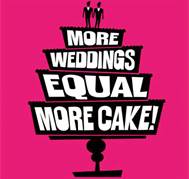 Even though SCOTUS did not rule on the broader issue of marriage equality, DOMA has fallen. The usual Klan of Religious Freaks dissented. Justice Anthony Kennedy was the swing vote.
The Supreme Court issued rulings on two highly-anticipated cases on gay marriage today. By 5-4, .
In a separate ruling, it declined to take on the broader issue of gay marriage. The court to bring the case to the court.
NPR’s Carrie Johnson explains the Prop. 8 ruling: “By a holding of 5-4 with Chief Justice John Roberts in the majority, the Supreme Court rules the petitioners lack standing so the court avoids the underlying issues, remands and wipes away the decision by 9th Circuit Court of appeals, which means for now the lower court ruling invalidating California’s Prop. 8 stands.”
That means same-sex marriages in California may resume, but the ruling does not have a broader implication across the country.
The Defense of Marriage Act case is simpler. As SCOTUSblog reports, the court struck down the federal law because it denies same-sex couples the “equal liberty” guaranteed by the Fifth Amendment.
The 1996 Defense of Marriage Act, or DOMA, was signed into law by President Bill Clinton, barring federal recognition of same-sex marriages for purposes such as Social Security survivors’ benefits, insurance benefits, immigration and tax filing.
Section 3 of the law defines marriage as “a legal union between one man and one woman as husband and wife” and a spouse as “a person of the opposite sex who is a husband or a wife.” That provision had been struck down by eight lower courts before the Supreme Court’s 5-4 ruling in United States v. Windsor settled the matter for good.
This decision means that legally married same-sex couples are now entitled to the same federal benefits as married opposite sex couples.
The majority opinion was written by Justice Anthony Kennedy and joined by Justices Ruth Bader Ginsburg, Stephen Breyer, Sonia Sotomayor and Elena Kagan. Chief Justice John Roberts and Justices Antonin Scalia, Clarence Thomas and Samuel Alito dissented.
SCOTUS Blog has some analysis here.
Cutting to the marquee issue – whether DOMA is constitutional – the Court acknowledged that Congress can pass laws that affect marriage in limited ways, but in its view DOMA goes much further than that: it applies to over a thousand federal laws and all federal regulations. (In this week’s version of “Supreme Court Justices: They’re Just Like Us,” the version of the opinion that was distributed to reporters misspells “statutes” as “statues,” suggesting that perhaps someone was up late last night finishing up the draft.) But states, rather than the federal government, have historically been responsible for regulating and defining “marriage” – establishing their own (and sometimes different) minimum ages for marriage, for example. In recent years, the Court explained, some states have decided to allow same-sex couples to marry, giving them the same protection and dignity that opposite-sex couples get from marriage. But despite the traditional role of the states in regulating marriage, the Court reasoned, DOMA discriminates against same-sex couples by preventing the federal government from recognizing their marriages, and it does so to express disapproval of state-sanctioned same-sex marriage.
As a result of today’s decision, same-sex couples who are legally married must now be treated the same under federal law as married opposite-sex couples. That conclusion (and the steps that the Court took to get there) drew the ire of the Court’s four more conservative Justices – Chief Justice John Roberts and Justices Scalia, Thomas, and Alito – who filed three separate dissenting opinions totaling nearly fifty pages.
Justice Antonin Scalia read from the bench to demonstrate his severe disagreement with the ruling. The opinion is an “instant classic” that uses Scalia-isms like “jaw-dropping” and “rootless and shifting” to describe the Court’s rationales; at one point, he indicates that “[t]he sum of all the Court’s nonspecific hand-waving is that this law is invalid (maybe on substantive-due-process grounds, and perhaps with some amorphous federalism component playing a role).” Although the four dissenters did not completely agree on everything, they were united in their belief that DOMA is constitutional.
Here, in summary, is what the Court did — and did not do — on same-sex marriage on the final day of its 2012-13 Term:
** It ruled unconstitutional the Defense of Marriage Act’s Section 3, which defines marriage for purposes of one thousand federal laws and multitudes of official regulations as the union of one man and one woman only — a definition that excludes probably millions of already-married same-sex couples from any of those benefits or opportunities. “DOMA,” the Court majority said caustically, ”writes inequality into the entire U.S. Code.”
** It decided that sponsors of California’s “Proposition 8,” adopted by the state’s voters in an election almost five years ago, did not have a legal right to be in the Supreme Court or in a federal appeals court to try to defend that measure from constitutional attack. That is likely to have the early impact of putting into final effect a San Francisco federal judge’s 2010 decision striking down Proposition 8 under the U.S. Constitution. Some 18,000 California same-sex couples already had been married when they had a brief chance to do so as the issue developed in that state, but now millions are likely to gain the right to marry when the judge’s ruling is implemented by state officials. Happening perhaps in just a few weeks, that would make California the fourteenth — and largest — state to permit such marriages (along with Washington, D.C.).
** It declared, in quite explicit terms, that it was not deciding at this point whether the Constitution guarantees gays and lesbians a right to marry or whether the Constitution forbids states’ bans on such marriages. That will leave the promoters of marriage equality to continue with their efforts, in state legislatures and in lower courts, to try to win the right one more state at a time. The Court itself has a chance to take up that basic issue, as early as tomorrow, in a pair of new cases — from Arizona and Nevada — but it may not yet be ready to do so.
** And the Court did not spell out a new constitutional test for courts to use in judging new laws or other government actions that treat homosexuals less favorably than other people in similar settings and factual contexts. Although DOMA’s benefits ban was nullified under the Fifth Amendment’s guarantee of legal equality, the majority opinion did not sort out explicitly which level of judicial review — in escalating toughness — is supposed to be used in gay rights cases. In fact, the test that was applied this time appeared to be notably indistinct.
With the demise of the Defense of Marriage Act’s benefits ban in Section 3, for legally married gays and lesbians, the Court immediately — even if inadvertently — gave rise to a situation in which couples living in states that will not allow them to marry because they are homosexuals will still be able to qualify for federal benefits, many of which are handed out or managed by state governments.
But the ruling did not do anything explicitly about another section of DOMA — Section 2, which gives the states the right to refuse to recognize gay marriages performed in other states. That thus raised the prospect that a same-sex couple married in one of the states now allowing such unions could face obstacles to their marital rights when they moved into states that still do not recognize their unions. This might be a particular problem for already-married gay couples serving in the military, who often have to move from state to state.
Although Chief Justice John G. Roberts, Jr., dissented from the ruling in the DOMA case, he went to special lengths in his opinion in that case to apply the states’ rights language that Justice Anthony M. Kennedy’s majority opinion had employed in justifying the nullification of Section 3.
Roberts wrote, borrowing words from the Kennedy opinion: “While ‘the state’s power in defining the marital relation is of central relevance’ to the majority’s decision to strike down DOMA here, that power will come into play on the other side of the board in future cases about the constitutionality of state marriage definitions. So too will be concerns for state diversity and sovereignty that weighs against DOMA’s constitutionality in this case.”
The Court, the Chief Justice added, “may in the future have to resolve challenges to state marriage definitions affecting same-sex couples.” His remarks about the majority arguments on states’ rights in this field seemed to be telegraphing his views on the basic definition of marriage — and an implied suggestion that lower courts might be interested in following.
At least in one regard, we are closer to the reality of liberty and justice for all.


 peej
peej Carissa
 bostonboomer
 ecocatwoman
 mablue2
 Mama Lopez
 peggysue22
 quixote
 skydancingguestblogger
 Mona (aka Wonk the Vote)



 Sky Dancing
“At least in one regard, we are closer to the reality of liberty and justice for all.”
Yes we are my friend. And thank you and thanks to everyone here for standing with us, elbow to elbow as this fight continues. It’s been my experience that there are far to many people in the world with the attitude “if it ain’t happening to me, then it ain’t happening”.
OT but the morning post comments are getting so long: Perry calls special session for Texas legislature – CNN Political Ticker – CNN.com Blogs
Just now on CNN…
Oh this quote is classic:’
” ‘In Texas, we value all life,’ Gov. Perry TX. Said on the eve of the state’s 500th execution.”
instant classic indeed!
Oh that is choice…
And isn’t the 500th execution a woman?
Perry doesn’t have enough marbles in his bag to even understand his own dichotomies. What a douche Perry is. We should start calling him Summer’s Eve.
omg!
Yep.
I don’t think there was much choice because, if memory serves, the dumbass legislature also didn’t pass the Education Funding bill or a Highway funding bill. I presume they planned to do them all at the last minute. Have I mentioned the republican leadership are dumbasses?
And don’t forget, they are dumbasses? 🙂
you might want to mention they are dumbasses 😛
Esquire: Wendy Davis’ Filibuster by the Numbers
My favorite number …
i might have to move to TX just to vote for her.
Thank you for writing this Dak. Not only is it 2 days before the 40th anniversary of Stonewall, today is the 10 year anniversary of Lawrence vs. Texas. What a change in 10 years!
I came out in ’76 at 21, knew to myself since 17. We were handfasted in 1992, CA domestic partner ceremony in 2001, married in 2004 during the San Francisco “winter of love” (later annulled by the courts). Married again July 18, 2008 before Prop8 passed. What a ride its been living through 5 years of litigation. It’s a truly awful feeling to gain a right than have it voted away (VRA, I’m looking at you.)
Like Edie Windsor, I wished, but couldn’t allow myself to assume we would win. I thought myself well informed about what a win would mean. But, its hours later, and I am still realizing how huge this is for me and my family. Spousal Social Security benefits means we can plan to be “genteel poor” rather than destitute : ) Joint filing status will save us several thousand dollars every year. No more indignity of being legally married and being forced to file single. Family and Medical leave act eligibility will help us care for our special needs grandson. Big savings on health insurance. Pension eligibility. It will be easier to get a mortgage and own a home. Most importantly, my wife will finally and forever be legally related to her own (our) daughter and grandchildren! At last, we have the security of being legally recognized as a family equal to any other!
I wish with all my heart that my daughter could have known that
security growing up, I believe it would have made her life immeasurably easier. But talking to her today, I know that even at 32, its still a big deal. I can see what it means in my grandchildren’s eyes. The beginning of the end of stigma. I am at once grateful, and also mourning a little bit for what a difference this could have made for us in our younger years. I find myself thinking today of all the sisters and brothers I’ve known who didn’t live to see this day, so many who died during the worst of the plague years, or became too hurt and broken to live, find love, or have a family. And, I know I am privileged to be both part of and witness to a historic struggle that must go on.
Tonight I will celebrate under the rainbow lights of city hall, and make a toast in honor of all those who came before, and in memory of my beloveds who did not live to see this momentous day.
What a wonderful story, thank you for sharing it with us…the last couple of days have been a roller-coaster here, but this is indeed a happy day.
Gorgeous post. Thank you for sharing it.
Love it
Beautiful story. Thank you!
I am so teary eyed with joy over this! Happy for you and your wonderful family!!!
Thank you for that graceful and heartfelt story.
Okay, you need to click on the picture…
Bwahahaha
😀
HAAAAha
Rand Paul, Liberal Lion, Thinks You’ll Marry A Squid
Charles pierce is having a good day. This is hilarious.
“Is this badly translated from the original Urdu, because it’s just inches from actual English.”
haha!
Wonder how Glenn Greenwald feels about that?
Is Rand Paul a former Miss South Carolina by any chance?
No, you’re thinking of Lady Lindsey Graham, who, not so coincidentally, was front and center at the Bachmann “OMG the godless gay are coming to get us” news conference today.
Glad I missed that! 😉
Just saw this:
Thanks To The Supreme Court, Wendy Davis Will Probably Lose Her Senate Seat
http://thinkprogress.org/justice/2013/06/26/2216721/thanks-to-the-supreme-court-wendy-davis-will-probably-lose-her-senate-seat/
WTH?
That map was so bad they might get an injunction without Section 5. It was just “in your face” blatant.
I have a feeling she will come out on top.
In honor of the day, I just want to remind everyone that Massachusetts was the first state to legalize marriage, in 2003. I think we deserve a round of applause. I posted this on the previous thread:
Three cheers for Massachusetts! May we all follow that lead.
Thank you. I’m proud of how liberal my state is. We have changed a great deal since I arrived here in 1967. In those days, birth control was illegal, cohabitation was illegal, we had blue laws, etc.
In TX in 1967; birth control and cohabitation were both legal and blue laws were decided by localities with the exception of hard liquor. We went so wrong since then.
I remember when Texas was blue.
We still have local control of liquor laws. I live in a dry town. A few years ago we started letting a couple of restaurants serve liquor, but no liquor stores.
You live in a great State BB, you need to send some of that liberalism SOUTH.
I wish I had the power to do that!
I know you would if you could, BB.
Sorry, BB 😦 On this thread and the last. I’d forgotten MA was the first –it was a huge step forward.
No problem, just bragging. We were so far ahead that everyone forgot about it.
Yeah! Go Mass!
Wendy Davis is going to be on Chris Hayes show at 8PM if anyone is interested.
Thanks for the head-up.
OMG, I think she’s gonna run for Governor.
She is absolutely fabulous!!! Ralph…..You have a new mission, get out the vote for Wendy
You got that right!
I saw this comment at balloon-juice and have been chuckling ever since.
LOL! More raised voices, please!
Yay for Texas women!
Some prominent Repubs think we need the VRA.
Even Eric Cantor. Maybe they will really fix it?
Wow. Reporters on Twitter caught TX legislators altering documents.
I’ve seen documentation of it on gawker and a couple of other places. Altering state records is a felony, I believe.
Issa directed Treasury inspector general to ignore IRS treatment of liberal groups
The asshats IRS witch hunt was even worse than I knew.
Issa should be investigated by the ethics committee.
Issa should still be in jail