
Are Mitt Romney’s Lies Supported by Mormon Church Leaders?
Posted: January 26, 2012 Filed under: 2012 presidential campaign, abortion rights, Barack Obama, fetus fetishists, Mitt Romney, religion, Reproductive Rights, Republican presidential politics, U.S. Politics, Women's Rights | Tags: abortion, Bain Capital, Belmont MA Mormon temple, Eliza Dushku, Judith Dushku, lies, Masschusetts Senate race 1994, Mitt Romney, Mormon church, Mormonism, Scoop NZ, Suzan Mazur, Ted Kennedy, tithing 27 Comments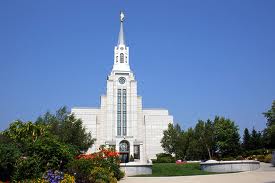
Mormon temple in Belmont, MA, completed in 2000
I realize that’s a provocative title, but please stay with me. I’ll get to the point after some background.
I’ve been reading the new biography of Mitt Romney, The Real Romney by Michael Kranish and Scott Helman. I bought the book after reading a lengthy excerpt published by Vanity Fair, which focused heavily on Romney’s treatment of women when he was a powerful leader in the Boston Mormon church. I wrote about this in a Morning news post at the time.
I was disappointed to discover that the book itself is somewhat of a fluff piece–Boston Globe reporters Kranish and Helman put as positive a spin as possible on Romney’s history and his activities as a church and business leader. However, by reading between the lines and googling names, places, and incidents from the book, I’m still getting some useful information about “the real Romney.”
One prominent Mormon woman quoted in the book is Judith Dushku, associate professor of government at Suffolk University in Boston, and incidentally the mother of actress Eliza Dushku, who played Faith in the TV shows Buffy the Vampire Slayer and Angel and has appeared in a number of popular Hollywood movies.

Judith Dushku with daughter Eliza
Judith Dushku is a self-described feminist and a long-time contributor to the Mormon feminist magazine Exponent II. It was in this magazine that an anonymous author published the story of the Bishop Romney’s cruel treatment of her over a life-saving abortion. From the Vanity Fair article:
In the fall of 1990, Exponent II published in its journal an unsigned essay by a married woman who, having already borne five children, had found herself some years earlier [the late 1970s] facing an unplanned sixth pregnancy. She couldn’t bear the thought of another child and was contemplating abortion. But the Mormon Church makes few exceptions to permit women to end a pregnancy. Church leaders have said that abortion can be justified in cases of rape or incest, when the health of the mother is seriously threatened, or when the fetus will surely not survive beyond birth. And even those circumstances “do not automatically justify an abortion,” according to church policy.
Then the woman’s doctors discovered she had a serious blood clot in her pelvis. She thought initially that would be her way out—of course she would have to get an abortion. But the doctors, she said, ultimately told her that, with some risk to her life, she might be able to deliver a full-term baby, whose chance of survival they put at 50 percent. One day in the hospital, her bishop—later identified as Romney, though she did not name him in the piece—paid her a visit. He told her about his nephew who had Down syndrome and what a blessing it had turned out to be for their family. “As your bishop,” she said he told her, “my concern is with the child.” The woman wrote, “Here I—a baptized, endowed, dedicated worker, and tithe-payer in the church—lay helpless, hurt, and frightened, trying to maintain my psychological equilibrium, and his concern was for the eight-week possibility in my uterus—not for me!”
Romney would later contend that he couldn’t recall the incident, saying, “I don’t have any memory of what she is referring to, although I certainly can’t say it could not have been me.” Romney acknowledged having counseled Mormon women not to have abortions except in exceptional cases, in accordance with church rules. The woman told Romney, she wrote, that her stake president, a doctor, had already told her, “Of course, you should have this abortion and then recover from the blood clot and take care of the healthy children you already have.” Romney, she said, fired back, “I don’t believe you. He wouldn’t say that. I’m going to call him.” And then he left. The woman said that she went on to have the abortion and never regretted it. “What I do feel bad about,” she wrote, “is that at a time when I would have appreciated nurturing and support from spiritual leaders and friends, I got judgment, criticism, prejudicial advice, and rejection.”
Judith Dushku had a number of run-ins with Mitt Romney during his years as Stake President and Bishop in the Boston Mormon community. In fact, Dushku confronted Romney over the incident described above, after which he “broke off their friendship.”
The Vanity Fair article also includes Dushku’s description of the way Romney treated her when she wanted his permission [!] to visit the Mormon temple near Washington DC.
At one point while Romney was stake president, Dushku wanted to visit the temple outside Washington to take out endowments, a sacred rite that commits Mormons to a lifetime of faithfulness to the church. She had never entered a temple before and was thrilled at the chance to affirm her dedication to a faith she’d grown up with and grown to love. Earlier in her life, temples had been off limits to Mormons who, like Dushku, were married to non-Mormons. Now that rule had changed, and she was eager to go. But first she needed permission from her bishop and stake president.
After what she described as a “lovely interview” with her bishop and after speaking with one of Romney’s counselors, she went to see Romney. She wasn’t sure what to expect. Despite Romney’s willingness to allow some changes in 1993, he and Dushku had clashed over the church’s treatment of women. “He says something like ‘I suspect, if you’ve gotten through both of the interviews, there’s nothing I can do to keep you from going to the temple,’ ” Dushku recalled. “I said, ‘Well, why would you want to keep me from going to the temple?’ ” Romney’s answer, Dushku said, was biting. “He said, ‘Well, Judy, I just don’t understand why you stay in the church.’ ” She asked him whether he wanted her to really answer that question. “And he said, ‘No, actually. I don’t understand it, but I also don’t care. I don’t care why you do. But I can tell you one thing: you’re not my kind of Mormon.’ ” With that, Dushku said, he dismissively signed her recommendation to visit the temple and let her go. Dushku was deeply hurt. Though she and Romney had had their differences, he was still her spiritual leader. She had hoped he would be excited at her yearning to visit the temple. “I’m coming to you as a member of the church, essentially expecting you to say, ‘I’m happy for you,’ ” Dushku said. Instead, “I just felt kicked in the stomach.”
In the biography I’m currently reading, Kranish and Helman provide a several anecdotes which show Romney in a different light–times when he went out of his way to help members of his Mormon community. Admittedly, I haven’t finished the book yet, but so far I have found no examples of Romney being supportive of girls or women in this way–the beneficiaries of his largess and concern have all been male, unless you count the female relatives of his kindness, who may have incidentally benefited.
I googled Judith Dusku, and found this 2007 article at Scoop, a New Zealand site. Some bloggers noted the article at the time, but I had never seen before. The piece is an interview with Dushku by Suzan Mazur, who has written a number of investigative pieces about polygamous cults in the U.S. In the interview, Dushku discusses her relationship with Mitt Romney.
And here–finally–is the point of my title: A few years after the friendship ended, Romney ran for the Senate in 1994 against Ted Kennedy. Dushku was very surprised to learn that Romney was running as a pro-choice candidate. Dushku:
I was pleased and called, asking to see him. I told him I suspected that we had our differences, but that maybe I could work with him if he’d come to a really good position on women and childbirth.
And he said – Yes, come to my office.
I went to his office and I congratulated him on taking a pro-choice position. And his response was – Well they told me in Salt Lake City I could take this position, and in fact I probably had to in order to win in a liberal state like Massachusetts.
Suzan Mazur: Who’s “THEY”?
Judy Dushku: I asked him the same question. And he said “the Brethren” in Salt Lake City.
In other words, Romney was consulting with his church elders before deciding his positions on the issues, and they told him to lie! After Romney lost the election, Dushku congratulated him on making a “respectable showing” in the race. Here is Dushku’s description of the interaction.
I did go up to Mitt after his 1994 Senatorial race to congratulate him for making a respectable showing against Ted Kennedy, whom I had actively supported.
Suzan Mazur: And what did he say?
Judy Dushku: He said I’m so angry at you. I don’t ever want to talk about this again. And I don’t want to talk to you.
And I said, I’m sorry about that Mitt because I thought we could have our political differences and remain at least cordial.
He said – No. That’s not possible.
Now we know that over the years Romney has given millions to the Mormon Church–even in excess of the 10 percent he is required to give in order to remain a member in good standing. While he was at Bain, the company turned millions over to the church. From ABC News:
Romney has always been a major donor to the Church of Jesus Christ of Latter-day Saints, which requires that members “tithe,” or give 10 percent of their income to the church. His family charity, called the Tyler Foundation, has given more than $4 million to the church in the past five years, including $1.8 million in 2008 and $600,000 in 2009. But because Romney, whose fortune has been estimated at $250 million, has never released his personal tax returns, the full extent of his giving has never been public.
Newly uncovered stock contributions made during Romney’s Bain days suggest there is another dimension to Romney’s support for the church — one that could involve millions more than has been previously disclosed.
As part of just one Bain transaction in 2008, involving its investment in Burger King Holdings, filings with the Securities and Exchange Commission reveal that an unnamed Bain partner donated 65,326 shares of Burger King stock to the Church of Jesus Christ of Latter-day Saints, holdings then worth nearly $1.9 million. And there were numerous others, giving the church a stake in other Bain properties, such as Domino’s Pizza, the electronics manufacturer DDi, the phosphates company Innophos Holdings, and Marquee Holdings, the parent to AMC Theaters.
The Republican presidential candidate’s campaign staff confirmed that some of the stock transactions were at Romney’s direction, but they would not say which ones.
Clearly, Romney’s relationship with his church is not equivalent to Jack Kennedy’s Catholicism. In 1960, when he was running for president, Kennedy famously spoke to Protestant ministers about his religion. He explained that he would be completely independent as President and that his decisions would not be influenced by the Vatican or local church leaders.
Frankly, Kennedy wasn’t a particularly devoted Catholic–he had been reared in a Catholic family just like I was, but there was little likelihood that his religion would influence his presidency. Nevertheless he had to respond to the anti-Catholic bigotry of the time.
Romney, on the other hand, has been deeply involved with his church as has his family for many generations. His great great grandfather Miles Romney was an early follower of Joseph Smith the founder of the Mormon church. (Frankly, Joseph Smith was delusional–perhaps schizophrenic, certainly certifiable–but that’s a story for another post.) Romney’s father was extremely active in the church and Mitt followed in his footsteps, taking a powerful leadership role in the Boston church.
Is he still taking “suggestions” from “the brethren” in Salt Lake City? Are they supportive of the many bald face lies he has been telling on the campaign trail about President Obama and about the economic crisis? How can we possibly be sure that any of his policies are his own and not handed to him by church leaders.
I’m sorry, I realize this may sound bigoted, but I feel the same way about robo-Catholic candidates like Rick Santorum. I don’t want political leaders who are beholden to their religious elders or who might base their decisions while in office on the basis of their religious beliefs or “suggestions” from religious leaders.


 peej
peej Carissa
 bostonboomer
 ecocatwoman
 mablue2
 peggysue22
 quixote
 skydancingguestblogger
 Mona (aka Wonk the Vote)



 Sky Dancing
Great dot connecting, bb.
Thank you!
Romney suggests that Gingrich is mentally unstable.
http://www.washingtonpost.com/blogs/plum-line/post/romney-paints-gingrich-as-mentally-unstable/2012/01/26/gIQAM2b0SQ_blog.html
Well, like scientologists who get their own planet, I wouldn’t say Romney was fully sane either. 🙂
Not if he believes the teachings of his church. I’ve been reading about it. It’s wackier than scientology.
My information may be outdated – but I don’t think they allow women in the Temple in Salt Lake City Square. I didn’t see it doing a quick check on Wikipedia. Does anyone know for sure?
I don’t know, but I wouldn’t be surprised. I’ll see if I can find out.
Marriages take place inside of the temples — I believe one must be a member of the church in order to enter the temples.
http://www.visittemplesquare.com/
No where did I find anything to say women were prohibited from entering the temple — who knows there may be areas off limits to “dirty” women.
Many fundamentalists religions don’t allow women to stand on the raised platform in the front of the church. A woman can stand in front of the church — on the same level as the congregation. Each fundamentalist religion has different rules for women — depending on the depth of hatred that the leaders have for women.
When I was a kid, women could not enter the sacristy (go inside the altar railings) except to get married to another Catholic.
In the ’90s, women couldn’t enter the temple until they got married. I don’t know if that has changed or not.
Not without a man present
Great post. And thanks for the info on Eliza Dushku (Faith, the vampire slayer – I am a crazy Buffy/Joss Whedon fan). I thought that I had read that she was raised Mormon but when Dollhouse came on TV, I checked & couldn’t find any reference to it. I concluded I must be delusional. Whew – maybe I am sane after all.
I agree fully with you on concern over any politician taking directives from church elders/leaders. I live in fear that we are headed toward a theocracy. It just seems closer each year.
Am i the only person who can’t understand how an avowed, practicing feminist can be part of any church.? To me organized religion is the bedrock of patriarchy. The “true” believers of The Big Three (Judaism, Christianity & Islam) view women as others, unclean, not even fully human – simply vessels to incubate Their (men’s) seed. I’m a big fan of Carol Adams (ecofeminist author) and married to a pastor. I’m sure there are others besides Dushku & Adams and it just is unfathomable to me.
One final thought – the author of a book about libertarianism (sorry, can’t remember his name or the book title) was interviewed last week on NPR. He said that Libertarians are not in favor of anti-abortion laws and that Paul’s anti-abortion position is not a Libertarian principle. It made perfect sense to me – less government, personal liberty certainly doesn’t encompass mandating government restrictions on a woman’s right to choose.
Ayn Rand was vehemently pro-abortion and an atheist. There is no way Paul can be considered a liberatarian. He’s a neo-confederate, as Dak is repeatedly saying.
Good job in summarizing a very difficult subject.
You weren’t bigoted at all — IMHO.
I’m half Mormon — both of my father’s parents were Mormon and his genealogy has been traced way back — one of his ancestors is a sister of Joseph Smith. But my grandfather left the church when he was a teenager. Granddad had no love for the Mormon church — although he married a Mormon and she remained faithful to her church. One of their 5 children joined the Mormon church.
Anyway my granddad held the belief that any practicing Mormon politician went to the church leadership to get their opinion or permission to vote or take positions on any legislation.
When I was researching my family tree — I stumbled on feminists Mormons — which seems like a contradiction. It turns out that Mormon women had to give up many of their rights (like voting and right to hold office) in order for Utah to gain statehood.
http://historytogo.utah.gov/utah_chapters/statehood_and_the_progressive_era/womenssuffrageinutah.html
Ironically it was the Mormon church strong opposition to the ERA which helped to torpedo the Amendment. There are many sources for the LDS opposition to the ERA — listed on google.
The US has a long tradition of the separation of church and state — I don’t know if Romney can put up that wall between his church and his duties to ALL of the citizens — regardless of their religion or lack of religion.
By the way — the Mormons are still baptizing the dead (non-Mormons) — which means a Mormon serves as a stand in and is baptized in the name of the dead person. An ex Mormon friend of mine said that when he was young and still a member of the church he was the stand in for the baptism of someone called John F. Kennedy. Mormons really believe that the only way to get to heaven is to be baptized in the Mormon church — so out of the goodness of their hearts (grin) they baptize all their ancestors and recently departed non-Mormons.
It is really hard for me to figure out how a strong Mormon like Romney — can keep his religion out of the office of Prez.
So it is really a must that we understand the LDS religion — and what demands the church might put on one of their own in the office of Prez.
BB and Pat were in Mass when Romney was Governor — and that’s what needs to be examined — was Romney able to impartial as a Gov?
Romney is now claiming that Obama is waging “an assault on religion.”
http://thinkprogress.org/lgbt/2012/01/26/412538/romney-accuses-obama-of-waging-an-assault-on-religion-undermining-religious-conscience-protections/?mobile=nc
Wonder if that’s different from Newtie’s “war on religion” from yesterday? Romney has to keep up.
We truly live in an idiocracy.
Wow, BB. That’s a revelation. And I did hear Romney state that he is ‘not’ a cafeteria Mormon; he follows the letter of the Mormon Church down to the punctuation. Until your last paragraph, my first thought was: sounds just like Santorum’s inflexibility.
I’m with northwestrain–did you or Pat ever have a sense of Romney’s religious beliefs interfering with his governance? Or spilling over in any way?
The whole thing’s sort of creepy to tell the truth.
I never paid that much attention to Romney, frankly. But after all the reading I’ve done lately I’m convinced he’s a very devout Mormon. That means he probably considers women to be inferior and it sounds like he takes instructions from the church on his campaigns.
Romney tax returns detail funds not identified in ethics forms
Chances are he was trying to hide the tax haven investments in not releasing his tax returns. Now I really want to see those from when he was at Bain!
Interesting…. What I want to see are the records of what Bain funneled to LDS.
Romney failed to disclose Swiss bank account income.
http://abcnews.go.com/Blotter/romney-failed-disclose-swiss-bank-account-income/story?id=15447680
I kind of thought this might be a weird election season but, never in my wildest dreams, did I see anything like this coming. For years, I’ve been hearing the GOP would blow itself up with all the factions but this may be the year they finally do it. Could be a good thing and leave a hulk of a party to rebuild for whoever can take it. Interesting times.
I remember hearing recently that a former political manager for a MA election (US Senate? Gubernatorial?) said that Romney told him, in response to polling information, that he had to say he was pro-choice in order to win in MA.
But, I’m not finding it.
Did I imagine this? Or just poor search terms?
He probably did, but why isn’t the info in the post sufficient? He obviously could not have been elected in MA if he said he was anti-choice. To me the scary thing is that he got permission from his church to lie about his beliefs.
I think Romney has a serious problem with empathy. He seems to fall back on power structures for his decisions. It’s disturbing that these stories aren’t out more in the public domain. Thanks for pulling this together.
what Dr. Dakinikat said… x 2!