
Is Obama’s Jobs Speech Just an Attempt to Distract Us From His Next Huge Sellout?
Posted: September 4, 2011 Filed under: Team Obama, The Media SUCKS, U.S. Economy, U.S. Politics, unemployment, We are so F'd | Tags: Barack Obama, distraction, donor base, free trade agreements, jobs speech, Robert Prasch, sellout, unemployment, voter base 8 Comments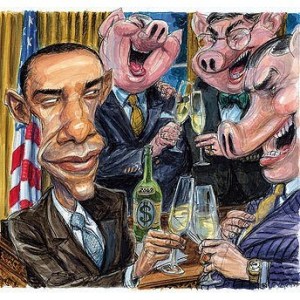
I came across a really provocative and perceptive post at HuffPo by Robert Prasch, an economics professor at Millbury college and author of the book How Markets Work: Supply, Demand, and “The Real World.” Prasch questions why Obama is giving a speech on jobs and unemployment now, since it has been clear from day one of his presidency that unemployment is a huge problem and since Obama and his closest advisers have shown no interest in doing anything about the problem other than periodically expressing “concern.” In Prasch’s words:
As a “rule of thumb,” it is a fair guess that the actual rate of unemployment is three-quarters again (1.75x) as high as the official or “headline” rate (BLS calculates a less-known data series called U-6 that validates this estimate). So, for example, with today’s official rate at 9.1%, it is reasonable to guess that 15.9% of the labor force is un- or under-employed (the U-6 number for August 2011 is 16.1%). This, then, is the context that best interprets the current “headline” rate of unemployment. It is, to put it mildly, a narrow definition that leaves out many people who we would usually consider unemployed. Contemplated alongside other numbers, it is evident that many American families are in desperate straights — and the situation is getting worse. Thirty percent of America mortgagees owe more on their home than its market value. As this percentage is continuing to rise, it is increasingly made up of “prime” borrowers. An amazing fifteen percent of all Americans are on foods stamps, including one-quarter of all children. This number is also rising. With so many families in such precarious condition, can anyone be surprised that wages are stagnating, unionization rates are declining, and the distribution of income is worsening?
This brings us to President Obama’s speech. Why now? After all, unemployment has been high since the day he took office. Actually, it rose initially and has remained high since. Early in his administration there was a half-hearted attempt to provide a “stimulus” to the economy, but the program was — even then — widely understood to be too small and too-heavily weighted toward tax cuts to be effective (For a criticism of tax cuts for the wealthy as an employment strategy see here). From the start it was evident that the administration’s core approach to the economy was to do whatever was necessary to support Wall Street’s largest and most irresponsible firms through thick and thin. The idea, if we can call it that, seems to have been that “trickle down” or the “invisible hand” would take care of the unemployed. So again, why now?
Prasch’s answer is both fascinating and maddening; and yet it makes a great deal of sense. He argues that the speech and any “jobs plan” along with any legislation that comes out of it, is designed to distract the media and the public while Obama and his real base–his donors–organize the passage of several free trade agreements that are strongly desired by the corporatocracy but despised by most Americans.
It is common knowledge that the White House plans to submit three completed “Free Trade” agreements to the Senate this September — South Korea, Colombia, and Panama. (As always, these treaties are primarily about guarantees and protections for financial and investment flows, restrictions on intellectual property, and related issues. But exploring their content will have to await another post.) With a remarkable sense of timing, the administration also plans to mark Labor Day 2011 by opening multi-party talks on a Trans-Pacific Free Trade Area. (Trade negotiators, lawyers, lobbyists, and hundreds of corporate honchos are invited to these talks — critical economists, civil society groups, and the public are not.) The President’s “voter base” is firmly opposed to these secretive and largely detrimental deals, as is the bulk of the American public. This opposition would most likely intensify if the public were fully briefed on their contents. Simultaneously, there is no question that the President’s “donor base” is highly enthusiastic about these deals — after all, they were in the room when the details were hammered out. Wall Street, the Chamber of Commerce, and the National Association of Manufacturers are beside themselves with excitement. The treaties promise extraordinary protection of financial and investment flows, innumerable exemptions from regulation, new and lucrative opportunities for off-shoring jobs, and political recognition and validation of the absence of labor protections and union rights that is a characteristic of most of these nations and regions. K-Street lobbyists can look forward to high fees and lavish banquets during and after the Senate vote. Big agricultural intermediaries look forward to crushing South Korean farmers with their heavily subsidized produce. This year, Colombia is on track to outperform its 2010 record of murdered unionists. If you’re a plutocrat or one of their paid representatives, what’s not to like?
My conjecture is that the forthcoming speech and any accompanying legislation was and is intended to provide political cover and a welcome distraction throughout the passage of these “Free Trade” treaties.
And, Prasch argues, any parts of the proposals that might actually help the unemployment problems will be stripped out by the Republicans, and Obama can claim that he really wanted to create jobs but the mean old Republicans wouldn’t allow it. The usual Obama apologists will defend the poor, put-upon president.
As I said this makes a lot of sense to me. And it makes me utterly livid. Obama is quickly becoming a laughing stock, but he doesn’t seem to care as long as he can please the ultra rich. I have to admit, I can’t understand how someone with such a huge ego can surrender his own dignity like this. But it’s happening. A child could see it at this point.


 peej
peej Carissa
 ecocatwoman
 mablue2
 peggysue22
 quixote
 skydancingguestblogger
 Mona (aka Wonk the Vote)



 Sky Dancing
Robert Prasch’s plan for dealing with unemployment:
I’m really getting tired of the Republican’s ate my policy excuse.
I don’t think it’s working anymore.
The Michigan Democrats are sending emails to people asking them if they want free tickets to his speach. So – it will be staged with a full crowd in a relatively small venue.
It will be interesting to see if the rank and file union folks show up for the recital.
If he has some programs that will leverage private money, there is some hope. However that will have to be a complete give away.
My guess is every one will be home watching the packers/saints game.
That article scared me. It scared me because there is a huge chance that it is true. BB, did you notice how little mind was paid to congressional democrats in this whole thing? Those feckless neanderthals are going to go along as usual without so much as a whimper. Are you listening Maxine?!?! Quit waiting for your constituents to ‘let you off your leash’ and go fight the power!
Asshats
Hillary 2012.
Great find BB….
Is it really still selling out or caving in?
You all saw Georgia’s answer to unemployment, Obama is keen on it…
Obama praises Georgia jobs program to train the unemployed – Aug. 29, 2011
Georgia Jobs Program, Lauded By Obama, Has Critics : NPR
This plan is beyond bad…and I cannot tell you all just how much Obama’s praise of the Georgia program scares me!
Job Training for Long-Term Unemployed Proposal Has Mixed Track Record in Georgia | FDL News Desk