
Less to be thankful about …
Posted: November 24, 2010 Filed under: Global Financial Crisis, The Bonus Class, The Great Recession, U.S. Economy | Tags: corporate profits records, FED US economic forecasts 15 Comments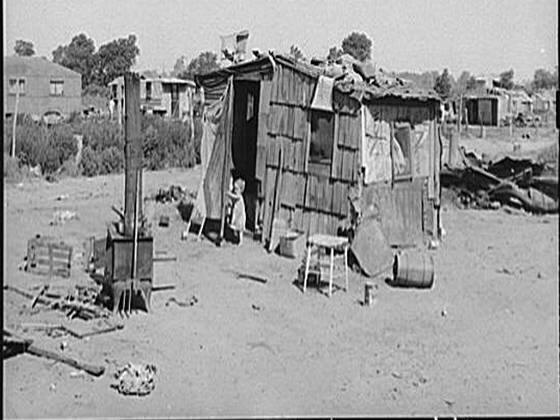 The Fed has lowered its economic expectations despite the news that corporate profits during the third quarter have rallied like it’s 1984. What does this say for our economy? More importantly, what does it say about our policy makers who steadfastly refuse to see the significance in these conflicting figures?
Top Federal Reserve officials project that the unemployment rate, now 9.6 percent, will fall only to about 9 percent at the end of 2011 and about 8 percent when the next presidential election arrives, in late 2012. The central bankers had envisioned a more rapid decline in joblessness in their previous forecasts, prepared in June.
The sober economic forecast comes despite signs that the recovery is picking up slightly. The Commerce Department said Tuesday that gross domestic product rose at a 2.5 percent annual rate in the three months ending in September, not 2 percent as earlier estimated. And there have been solid readings in recent weeks on job creation, manufacturing and retail.
The apparent contradiction reflects the brutal math that faces a nation trying claw out of a deep recession: Moderate growth, which would be fine in normal times, will do little to bring down sky-high joblessness, a reality reflected in the Fed’s forecasts.
The uneven impact of recovery is amazing and well, downright unAmerican. While corporations are now feeling the benefits of the stimulus, people are not. Tax cuts made by stimulus nearly two years ago are not reaching the jobs markets or households. The NYT analysis shows that corporate spending on payrolls are way down, while their write-offs of foolish investments is no longer the problem it once was. Additionally, U.S. firms doing business over seas are doing remarkably well. So, where are these profits going? Certainly, they are not ‘trickling down’ via job creation or anything else that would be a boon to Main Street.
The moderate growth of GDP will not be enough to curb unemployment which is why it is vital the government do something. The news today impacted the stock market so even Wall Street is aware that this is bad news.
The Fed’s top policymakers project that gross domestic product will rise 3 to 3.6 percent next year – which would represent a solid acceleration from the past two quarters but still would only be enough to bring the unemployment rate to the 8.9 to 9.1 percent range in the final months of 2011 and 7.7 to 8.2 percent at the end of 2012.
The officials also increased their estimate of how low the nation’s unemployment rate could ultimately go without stoking inflation. Several estimated that level is 6 percent or higher, not the 5 to 5.3 percent earlier thought.
Businesses cannot expand and grow without customers. The current improvement is mostly due to bookkeeping past errors. This is not the solid underpinning of a strong recovery. It is easy to see why Bernanke is considering the QE2 given these GDP forecasts and the ongoing reality revision of Okun’s rule of thumb on the relationship between GDP growth and the unemployment rate. The Fed’s statement shows that the BOG is doing QE2 because it’s necessary. There is a tone of reluctance in their accompanying statements. There is also the underlying feeling that policy at the zero-bound is not all that effective.
But most Fed officials expected the results of bond purchases “to help promote a somewhat stronger recovery in output and employment while also helping return inflation, over time, to levels consistent with the Committee’s mandate.” Some also thought the action would offer insurance against a further drop in inflation or against the “small probability” of persistent deflation.
But the document also leaves little doubt that several Fed officials remain uneasy with the action. Some anticipated that they would have only a “limited” effect on the pace of recovery, arguing the action should only be taken if the odds of deflation “increased materially.”
And several “noted concern” that the action “could put unwanted downward pressure on the dollar’s value in foreign exchange markets” or “an undesirably large increase inflation.”
I’ve said this before, but I continue to be baffled by the reluctance to aggressively pursue the fiscal policy means to buoy up the economy for the every day American. Certainly, the last two elections were the result of frustration by the voter about the continual emphasis within the Beltway of the interests of the power that be. War machines and paper profits get subsidies. Suffering people are left to their devices. Even, if they’ve been productive and paid for themselves up until now.
It is undoubtedly beyond time to move policy attention away from banks, auto manufacturers, and rich people seeking continued tax breaks. It is not time to listen to the groups that don’t read data that reflect the danger of deflation. If only Milton Friedman were alive to cut them off at the knees! I can’t imagine these self-styled ‘conservatives’ could stand up to him.
I picked this item up at Economist’s View. It’s just discouraging that no policy maker seems to read these things and feel like they’ve been making huge mistakes. I have to get on the University library website to get the paper free, but so far, just what Thoma has quoted is horrifying. It includes this.
According to our measures almost 40% of households have been affected either by unemployment, negative home equity, arrears on their mortgage payments, or foreclosure. Additionally economic preparation for retirement, which is hard to measure, has undoubtedly been affected. Many people approaching retirement suffered substantial losses in their retirement accounts: indeed in the November 2008 survey, 25% of respondents aged 50-59 reported they had lost more than 35% of their retirement savings, and some of them locked in their losses prior to the partial recovery in the stock market by selling out. Some persons retired unexpectedly early because of unemployment, leading to a reduction of economic resources in retirement which will be felt throughout their retirement years. Some younger workers who have suffered unemployment will not reach their expected level of lifetime earnings and will have reduced resources in retirement as well as during their working years.
Prudent fiscal policy requires running deficits when the economy is faltering. Not only that, there are laws–like the Humphrey Hawkins Act of 1978–that demand it!!! Long term fiscal restraint should be examined when the U.S. economy is on a secure footing. Now isn’t the time for austerity. Now is the time to conquer the real problems of people and not those imagined in the minds of Washington DC bloviates who just want more power and more money. Most Americans are worried about keeping their homes, feeding themselves, and holding on to jobs if they have one right now. How is that less important than the tax cuts of the very few or the other special interest bills that they are working on the current lame duck session?
Where is the real leadership of the Democratic Party?


 peej
peej Carissa
 ecocatwoman
 mablue2
 Mama Lopez
 peggysue22
 quixote
 skydancingguestblogger
 Mona (aka Wonk the Vote)



 Sky Dancing
via cnn breaking news:
{{clapping}}
yeah, it says something when a Texas jury convicts him, doesn’t it? I wonder how he’ll dance out of this one?
just $190,000, eh?
Wow, 40% of households affected…that is not surprising though.
Initial unemployment claims: Lowest since July 2008
http://money.cnn.com/2010/11/24/news/economy/initial_claims/
I am sure you saw this about the new unemployment claims. When my son (13 years old) heard this on the news tonight, he said “Well of course they are down, everyone has already lost their jobs, who would be filing new claims?”
If a 13 year old gets it, why don’t the smart creative people in Washington get it?
I don’t think they WANT to get it. If they do they’d have a harder time saying what they say with a straight face.
That’s a smart boy you got there, Minkoff. Send him to Washington.
Yup, he sure is…when Bush was in office and he was a lot younger he drew a picture of Bush walking with a caption that said “I’m not so dumb, I can walk on water.” And then at the top corner of a picture is a little circle, with an arrow pointing to it where he wrote the word God….and the caption from this circle says…”You’re on ice.”
impressive
Obama Style Fascism
http://www.blackagendareport.com/?q=content/freedom-rider-obama-style-fascism
She put michelle and hillary in pink guerrilla pants. grrr.
I would just like to know what we as a society are doing wrong when this happens to our kids?
Both of these kids were shot by other kids who just basically ran across a fire arm in their home. I used to not let my kids play in any one’s house who had a gun. What a nightmare!
You were right to so do.
The U.S. seems to have a love affair with guns. The country doesn’t believe in gun laws. Yes, some individuals do, but they are far outnumbered and outdone by the NRA.
They have this consitutional amendment which their supreme court has now ruled applies to individuals having every right to bear arms, almost anywhere, even church, even concealed.
I don’t understand it. I suppose it has something to do with history and wild frontier or something. But it believes itself to be a cilvilized society. What other civilized society thinks that way?
Okay, don’t shoot me, I’m quoting Justin Fox at the Harvard Business Review who is quoting the BEA.
Basically the US public is the left behind first wife and the corporate world is off wining and dine its new girlfriend, China and the world ….that’s why any social service meant for the US public is viewed by the upper crust as onus alimony paymernts they are looking to get out of….. ASAP