
The Latest Annoying Media Buzzword: Shellacking
Posted: November 5, 2010 Filed under: Team Obama, The Media SUCKS | Tags: Barack Obama, media buzzwords, rationalizations, shellacking 88 Comments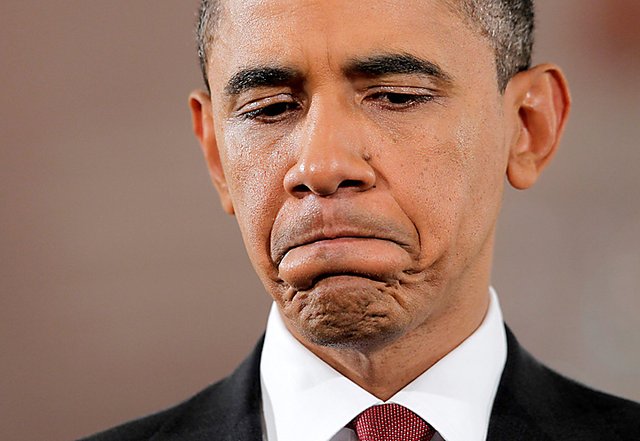
From the transcript of President Obama’s press conference, November 3, 2010:
…I’m not recommending for every future President that they take a shellacking… like I did last night. (Laughter.) I’m sure there are easier ways to learn these lessons. But I do think that this is a growth process and an evolution. And the relationship that I’ve had with the American people is one that built slowly, peaked at this incredible high, and then during the course of the last two years, as we’ve, together, gone through some very difficult times, has gotten rockier and tougher. And it’s going to, I’m sure, have some more ups and downs during the course of me being in this office.
Apparently the media just loved the word the President used to describe the results of the midterm elections, because they just can’t stop repeating it. Over and over and over again. Some examples:
Christian Science Monitor: After ‘shellacking,’ can foreign policy be a bright spot for Obama?
USA Today: Obama’s ‘shellacking’ — how badly will it bruise his agenda?
Fox News: Despite the shellacking, Obama keeping his team intact
Yesterday, on NPR’s All Things Considered, Robert Siegel and Michele Norris discussed the word “shellacking” and tried to determine how the word came to mean “a decisive defeat.”
ROBERT SIEGEL: A shellacking – that is, a decisive defeat, according to Merriam-Webster’s. The term has an old-timey feel to it, like something used by a stern father decades ago.
MICHELLE NORRIS: Maybe that’s because it has an older meaning: a finish for furniture made with lac – L-A-C – as in lacquer.
SIEGEL: You mean lac, a resinous secretion of an insect deposited on trees and used in making shellac, a varnish.
NORRIS: Thanks, Random House.
SIEGEL: So how did shellac make the linguistic leap to defeat? Jesse Sheidlower, of the Oxford English Dictionary, was half-expecting our call about this today. But he didn’t find a definitive answer. He ruled out origins in sports. And he said shellac smelled of alcohol and became slang for drunk. He says it was prison slang.
NORRIS: From crime to politics, meaning washed up or trounced – which is, in case you missed it, exactly what happened to the Democratic Party in Tuesday’s elections.
I don’t know about you, but I’m already really sick of the word “shellacking.” I do think Robert Siegel had interesting point, though, when he said the word had “an old-timey feel to it, like something used by a stern father decades ago.”
During the campaign, Obama was painted as being “cool,” but his use of language since he became President does come across as old-fashioned and very uncool–as with his frequent use of the term “folks” to refer to ordinary Americans.
It would be interesting to know where Obama gets these words. Do they come from speechwriter Jon Favreau or from the President himself? If they are Obama’s own words, where did he pick them up? Did they come from his grandfather or grandmother?
In any case, we are likely to keep reading and hearing this new buzzword for some time to come. It will even get more widespread publicity Sunday night, since Obama has taped an interview with 60 Minutes, and the “shellacking” will be discussed at length.
Unfortunately the President’s rationalization for the “shellacking” is either deliberately obtuse or utterly tone-deaf, as usual. Nevertheless, we’ll probably be hearing his ridiculous explanation repeated again and again too. He told 60 Minutes’ Steve Croft that the big problem was not his policies, but his failure to explain his policies to us.
Obama: What I didn’t effectively, I think, drive home, because we were in such a rush to get this stuff done, is that we were taking these steps not because of some theory that we wanted to expand government. It was because we had an emergency situation and we wanted to make sure the economy didn’t go off a cliff.
The president also tells Kroft that one of the reasons the electorate has become disenchanted with him was his failure to properly explain his policies and persuade people to agree with them.
It was, in effect, a breakdown in leadership: “Leadership isn’t just legislation,” he tells Kroft.
Supposedly, if the President had only explained all of his policies to us poor clueless voters, we would have understood that he knew what was best for us and would gladly have rushed to the polls to vote for Democrats. Here’s another quote from the interview:
“You know, I think that over the course of two years we were so busy and so focused on getting a bunch of stuff done that we stopped paying attention to the fact that leadership isn’t just legislation. That it’s a matter of persuading people. And giving them confidence and bringing them together. And setting a tone. And making an argument that people can understand. And I think that we haven’t always been successful at that. And I take personal responsibility for that. And it’s something that I’ve got to examine carefully as I go forward.”
See, if he had very clearly spelled out why it was so important to keep a public option out of the health care bill, and why it was vital that the bill should prevent women from getting abortions in the future, everything would have been hunky-dory. And if he had more clearly explained why we needed to stay in Iraq instead of withdrawing as he had repeatedly promised, and why we needed a “surge” in Afghanistan and lots more civilian and military deaths, then voters would have seen things completely differently.
In his press conference, Obama also argued that one message of the midterm results is that he needs to get out of the White House more often. In response to a question about his leadership style, the President said:
There is a inherent danger in being in the White House and being in the bubble. I mean, folks didn’t have any complaints about my leadership style when I was running around Iowa for a year. And they got a pretty good look at me up close and personal, and they were able to lift the hood and kick the tires, and I think they understood that my story was theirs. I might have a funny name, I might have lived in some different places, but the values of hard work and responsibility and honesty and looking out for one another that had been instilled in them by their parents, those were the same values that I took from my mom and my grandparents.
And so the track record has been that when I’m out of this place, that’s not an issue. When you’re in this place, it is hard not to seem removed. And one of the challenges that we’ve got to think about is how do I meet my responsibilities here in the White House, which require a lot of hours and a lot of work, but still have that opportunity to engage with the American people on a day-to-day basis, and know — give them confidence that I’m listening to them.
There’s another clueless rationalization! So he’s going to try to get out of Washington even more than he did in the first two years of his presidency? It’s hard for me to imagine how he could get away any more than he already has. But if Obama does actually appear at more town hall meetings, it might be helpful if he actually listened to some real Americans instead of lecturing them endlessly on how stupid they are not to see the wonderfulness of his policies.
What I haven’t seen so far is any sign that Obama intends to make any substantive changes following the “shellacking” Democrats received at the polls on Tuesday. The “core” group of White House staffers will stay on, even though many Democrats have been pushing for a real shakeup of Obama’s primary advisers.
A Democratic strategist characterized the lack of change at the White House as “willful defiance.” The strategist, who discussed the issue on condition of anonymity, said, “The political operation from top to bottom, north to south, east to west, needs to be really carefully looked at.”
Even within the White House, some aides have objected to what they see as an insular culture. Obama’s practice of grooming understudies to fill big White House jobs is also under fire.
“The president needs a broader range of views on a daily basis than he’s gotten up till now,” said William Galston, a onetime aide to President Clinton and a senior fellow at the Brookings Institution. “One reason that Ronald Reagan succeeded as president was that he got out of his comfort zone when he appointed senior people, and I think this president needs some people around him who are prepared to challenge not only his policy instincts but his political instincts. The idea of constructing the White House simply by promoting from within is simply ridiculous.”
At the Financial Times, Anna Fifield writes that even after the famous “shellacking,”
…“No Drama Obama” has maintained his generally cool demeanour – no Bill Clinton-style emoting for him – and given little indication that he intends significantly to alter his modus operandi.
Although the president said he was “doing a whole lot of reflecting” on the electoral rout, he suggested the problem was with communications, rather than his core policies.
As long as Obama claims the only problem has been his failure to communicate the wonderfulness of his policies, I guess we aren’t going to see any real changes.
Fifield also reveals that President Obama has been reading Taylor Branch’s book about the Clinton years.
“President Clinton was very aggressive – he did a series of bipartisan accords and turned things around,” said Mark Penn, the pollster who helped Mr Clinton recover from the 1994 rout.
Mr Obama revealed that he has been reading historian Taylor Branch’s book about Mr Clinton’s years in the White House, although it remains to be seen whether he will follow suit.
“The real question is whether or not the president [Obama] will learn from what the voters are saying, because two years is a long time in politics,” Mr Penn said.
Aaaak!!! Why do I think Obama will learn the wrong lessons from that book? I think he may be headed for another “shellacking” in 2012.


 peej
peej Carissa
 ecocatwoman
 mablue2
 peggysue22
 quixote
 skydancingguestblogger
 Mona (aka Wonk the Vote)



 Sky Dancing
You have no idea what a huge smile crossed my face when I got to read something new from you, BB. I am so happy you’re still blogging and humbled and awed to be part of a team that includes
you.
I’m going to sound slightly Andy Rooneyish but, have you ever noticed if some one comes up with a word that’s not been in play for awhile there’s an immediate lexicon check to ensure we’re okay with it still? Something odd about that.
Also, every time I see that picture I am reminded of Dr. Daughter at two when I would tell her that she’d spent too much time in front of the TV today and that it was time to move on to something else.
Thanks, Dak. I actually think it would be interesting to do a study of Obama’s use of old-fashioned language. I’m not quite sure how to go about it though. I guess I could do an analysis of some randomly chosen press conferences/speeches. I wonder if there are transcripts of his town hall meetings?
I’m think you’re right about being raised by grandparents. That sounds like something my heartland born and raised grandparents would have said too.
Could maybe use one of those American English analyzers that are available on the net. The ones that tell you your speech is more western than southern or northern, for example. Then someone would have to run through his speeches or pressers.
I don’t know if I could stand to listen to him long enough. But I’d volunteer to do it with transcripts!
I think his use of old-fashioned phrases would be kind of endearing if he actually were nerdy and professorial. But since he’s not, it’s incongruous and just comes off as his phony attempt to hoodwink and bamboozle us with this faux folksy persona. And it’s hilarious that his giant mea culpa just boils down to “I’m sorry I’m so brilliant and wonkish and spend so much time working away for your clueless, ungrateful best interests.” 😉 Great post.
That’s a very good point. He definitely isn’t professorial. I know, because I’m the daughter of a professor.
I knew someone from school who was working on a doctorate whose last name was Dockter. When she got the degree she was Dr. Dockter, lol. So you have a Doctor Daughterr and I know a Doctor Dockter.
Whoa, that’s an interesting combination there.
Sure is 🙂
The President’s “post-‘shellacking’ media strategy”
Guess myth busters didn’t cut it. “Gold Standard”? Maybe in it’s Exploding Pinto days.
Completely OT but noteworthy: Jill Clayburgh, Oscar-Nominated Actress, Dies at 66 – http://nyti.ms/9OE9O4
Oh no. She wasn’t very old!
I was just reading the obit, she was 66 and I guess lived with chronic leukemia for 21 years. I just remember growing up and thinking the characters she played were such kewl women.
That’s so sad. Her daughter is actually playing Portia on Broadway now with Al Pacino (who Jill actually dated). It’s cool that her daughter is following in her footsteps and taking on such an iconic role.
my exhusband’s father died this morning … oy, he was a piece of work!
Sorry to hear about your father in-law. Hope his passing was peaceful and loving.
Doctor Daughter said he’d been in hospice for awhile. He was 94. My sister in laws made it in time to say good bye but my ex didn’t make it to Hawaii in time.
Sad.
meant to nest under Jill Clayburgh’s death post.
I’m glad you didn’t mean my post.
/Just kidding
lol!
I’m going to try to learn the interface that lets me work on the indents for the nests. It resembles HTML but not quite, so it may take me a bit and I’ll probably have to run a companion hidden test site to see if I screwed up or not … hopefully, this change won’t take very long.
oh, it’s probably something I did…clicked on s/o else’s reply button, lost track kinda thing.
I think it is a little confusing … you have to get used to the design and the indents are a little small.
gosh, i should correct my avatar thingy. messed it up the other night while trying to update it and ended up with this ominous black blox. sigh
BB,
Interesting pointing out how paternalistic they are towards the voters, especially the working folks, and more interesting to see Nancy Pelosi claiming that she really wanted the Public Option!?! 😯 Also, the current meme of ‘Free Reproductive Care’, which you MAY get from YOUR very OWN insurance while never mentioning that WE had that coverage prior to the Executive Stupak Obama Presidential Order that gave us Jane Crow Laws (h/t Dak). (((the latter just about makes me want to scream)))
Now, we all know that if VIAGRA was on the chopping block, both Nancy Pelosi and Obama would have been ready to mud wrestle anyone trying to block it or reduce its coverage for the menz.
I know the insider talk says Rahm didn’t want to do health care, I wonder if an eventual Nancy tell all will say that she and Reid argued against it. I can’t believe neither of them told the White House to just stick to Jobs. They must’ve thought that weak stimulus was going to be enough.
Who did want to do health care then? Was it Obama entirely? Was it a weird ‘beat the Clintons’ kind of thing? Axelrod maybe?
I believe that Nancy P. wanted the public option. She just didn’t want to have to actually stand up and fight for it. Or stand up to Obama and tell him to fight for it.
Something inside of me tells me that Nancy likes working the process more than just about any thing else. Maybe it’s because she comes from a political family.
And MONEY!
I would have to see a first hand account that said she argued for it, but since she was in the meeting about torture and said she wasn’t briefed…hemm, don’t know if I could believe that she wanted the Public Option.
My memory might be off but I recall Nancy Pelosi wanting the public option and announcing she had the votes for it, then it suddenly faded out of the press. I think Harry Reid announced he also could get it passed with a public option and it similarly faded from view. I assumed at the time it was the WH squashing it.
Does anybody else remember it that way?
A quick search looks like over the summer of 2009 Pelosi went so far as to say she couldn’t pass HCR in the House without a public option, then by October she was tweaking the public option but definitely still appeared to want it in there.
According to The Hill on Oct 14:
“The strategy of pushing the bill to the left in order to improve the House’s bargaining position in conference is supported by liberals.
But centrists, like the leaders of the Blue Dog Democrats, call it a politically dangerous strategy that will cost Democrats seats in the 2010 elections.”
So, how’d that work out for them? *rolls eyes*
Links:
June 2009:
August 2009:
Obama had already made a deal with the hospital industry to prevent the bill from having a public option long before all that happened with Nancy and Harry. I don’t know if the WH told them about the deal or not.
I agree with BB, but still, they dangled The Medicare Buy In and even that Bone was taken away and all we got was a big premium hike.
I think the American people need to know what happened.
I don’t remember the Reid part but I remember Pelosi having the votes.
Reid said he could pass it through reconciliation, I believe.
But my point with that is there was a period when Dem leaders in both House and Senate were delivering HCR with a public option, and releasing that to the press. And that’s where my insistence, all this time, came from that HCR without a public option was the WH’s doing and not that of Congress or, specifically, Blue Dogs.
Do you think Pelosi who thought he was sent by GOD, didn’t know he was a beholding to the insurance companies and Wall Street? Someone had better start spilling the beans, ala the deposition of Dean where we learned it was Donna Brazile who was keeping Gay Civil Rights out of the platform and who said some not so nice things.
Are there no DemLeakers willing to stand up for the working folks and tell who DEOA’d the Public Option?
I don’t know what she knew, though it wouldn’t surprise me if Obama’s WH didn’t bother to make clear to her the parameters of the deals they’d made. (It’s amazing if you take a shallow look at it on paper –Obama being from the Senate and his Chief of Staff from the House– that Obama’s WH barely works with Congress.)
Looking back at the way Obama handled his promises for health care reform and nuclear reactor leak legislation as State Senator, the worthless legislation he delivered, in addition to all his “present” votes, I think he makes different kinds of promises to different people and then tries to let it play out without help from him. Other than the thrill of getting something for himself and promising powerful or cool people what they want to hear, and thereby receiving their approval, I think Obama doesn’t give a fig about the substance of any legislation he’s involved with. It can be good for vulnerable citizens or for greedy corporations or corrupt businessmen, it’s all the same to him. And that worked out okay for him until he tried to tackle big stuff as President and the whole nation was watching. He couldn’t just drop HCR or punt it to the next administration, like he did as State Senator, when his promises to different parties didn’t make a cohesive package — so it was up to Pelosi and Reid to cobble together the mess.
Although I have no evidence to back this up, I think Nancy Pelosi never liked Hillary and that’s why she backed Obama. I think she thought he was sent by God for HER convenience, believing she’d be a more important figure with Obama in the WH than if Hillary were POTUS. And I can even understand why she thought that. But what she didn’t seem to recognize is that others would be exercising power over Obama and what she wanted as House leader wouldn’t necessarily hold much weight with him or even the content of legislation. There were others, closer to Obama and men (I think he has real issues with women unless they’ve done huge favors that he feels empower him), like Emanuel and Axelrod and even Gibbs, who probably had all the sway after Obama had made those deals with the corporate health care lobby. I really think as far as those guys in the WH were concerned HCR was a PR issue, a bullet point they could print in their brochure, and none of them were at all committed to the actual issues involved in health care reform.
That’s my take.
Yes, I remember it that way too. She argued for a public option for a long time.
What did he do hypnotize her? Did he elect her or her constituents…sheesh…what a let down, throwing it all away after so many years and so many lives lost.
I remember this too, Zal. It lit a small flame of hope in me, for a short time.
Branch’s book is great and no hating in it. I loved the part where Hillary said kathleen parker would never be welcome in the whitehouse even though long time friend vernon jordan begged the clintons to invite her. I also like when Bill said hillary won because she ran on what happened in the 90’s and Gore lost because he ran away from it.
I think it is great obama is reading brach’s book and could help him.
It would probably help him if he didn’t have these defense mechanisms that allow him to believe he is perfect and anything that goes wrong is someone else’s fault.
OT but I just received a bunch of books in the mail. Food and Feast in Medieval Britain, Life in 14th C England, Medieval Christmas, A Medieval Calendar and more. I think it’s time to get out the flash-light for some reading under the covers after bedtime! Yes, I did that as a kid, who didn’t?
I am writing a small article on Christmas in Medieval England for a local newsletter and ended up buying used books that looked interesting instead of doing research.
Okay, that mean’s you’ll have to share here!!! You’ve tantalized my curiosity now!
Will do! I am to have it done right about the start of December, so it’ll be good timing.
That sounds so fascinating!
Yes, you must share…another place for you to look for original sources is here:
http://www.fordham.edu/halsall/Sbook.html
Medieval Source Book
Also, another link that is cool is:
http://gotmedieval.blogspot.com/
This Got Medieval site is so fantastic…anyway, yes please share!
BB-I agee 100%. In the book it shows nothing is perfect and feeling sorry for yourself is a waste of time and you need to fight. Also don’t worry about being loved by the Washington insiders because they will be the first to turn on you at the first sign of trouble.
I have to read that book! I’m actually considering downloading it to my Kindle right now.
Nice to see you BB, and great post. I only have to ask whether this guy is for real. but then i’m saddened by the fact that he still impresses over 41% of this country with his ‘leadership.’ I hope that the democRATs in the House finally wise up and see that this president is poison to their careers and the country at large.
Asshat.
Hillary 2012
Thanks, TheRock! Good to see you too.
Correction-hillary was not talking about parker,but sally quinn.
Here is what Hillary and Bill think of dowd,quinn and others in the great taylor branch book:
“On Monday, USA Today ran a front-page article on the soon-to-be-released book chronicling a series of secret interviews Pulitzer Prize-winning author Taylor Branch held with President Bill Clinton throughout the Clinton presidency. The piece focused on a bizarre episode in which Russian President Boris Yeltsin during a visit to Washington in 1995 ended up in his underwear and drunk on Pennsylvania Avenue, trying to hail a cab. As for the Lewinsky affair, Clinton told Branch, he “just cracked” under political and personal pressures. USA Today also noted that Clinton and Al Gore had an explosive conversation following the 2000 election. But the newspaper provided only a few details on this meeting.
I’ve obtained a copy of the book, and that encounter, as Clinton recalled it to Branch, was more than dramatic; it was also weird.
During the discussion, Clinton told his vice president that he was disappointed that Gore had not used him in the last ten days of the 2000 campaign in strategically significant state—Arkansas, Tennessee, New Hampshire, and Missouri. But Clinton said he could understand that. What was more upsetting for him, Clinton remarked to Gore, was that Gore had not crafted a more winning message during the campaign, that he had not campaigned on any grand themes. Clinton insisted to Gore that he hadn’t cared about how Gore had referred to Clinton—and his personal scandal—during the campaign. Paraphasing this portion of the conversation, Branch writes that Clinton told Gore, “To gain votes, he would let Gore cut off his ear and mail it to reporter Michael Isikoff of Newsweek, the Monica Lewinsky expert.”
At one point in the conversation, Gore told Clinton that he was still traumatized by having been caught up in the fundraising scandals of the 1996 Clinton reelection campaign, and he indicated that he blamed Clinton. Clinton could hardly believe this, and he told Branch that Gore was probably in shock from the election or unhinged, remarking, “I thought he was in Neverland.”
In this same conversation, Gore pressed Clinton for an explanation of his affair with Lewinsky, noting that Gore had stood by him throughout the ordeal without Clinton ever confiding in him. There was little to say, Clinton replied. But Clinton did say that he was sorry. Gore responded that that this was the first time Clinton had apologized to him personally. This angered Clinton, who countered that he was only repeating what he had already said publicly. Moreover, Clinton noted, Hillary had more to resent that Gore did, and she had just campaigned successfully for Senate by unabashedly citing the Clinton-Gore record—not running away from it. Gore responded with his own anger, insisting that Clinton’s character had been at the root of his failure to win the White House. Clinton acknowledged that he had not confessed to those closest to him, but that he was glad he had not talked more about the affair, for that would have made the controversy even worse.
The 707-page book, titled The Clinton Tapes: Wrestling History with the President, is a fascinating read, full of the most inside information on the policy fights, political tussles, and personal controversies of the Clinton years. I haven’t finished the book, but here are other intriguing portions that caught my attention:
* In an interview with Branch shortly after he left office, Clinton passionately defended his last-minute pardon of Marc Rich, the fugitive financier. Summing up Clinton’s outrage over the dust-up caused by the pardon, Branch describes the now ex-president’s rant: “They said Clinton had a conflict because Rich’s ex-wife was a donor to his library. Lord have mercy, he cried, Papa Bush pardoned Caspar Weinberger and others before the Iran-contra prosecutions may have targeted Bush himself. Nobody fussed.” Clinton showed no remorse to Branch about this pardon.
* In 1996, when Washington author Sally Quinn was telling people that Hillary had not written her book, It Takes a Village, Branch suggested to the First Lady that she invite Quinn and her husband Ben Bradlee to the White House. “You know,” Hillary shot back, “she has been hostile since the moment we got here. Why would we invite somebody like that into our home. How could she expect us to.” Branch writes, Hillary “said Quinn and her friends simply invented gossip for their dinner circuit. They had launched one juicy affair between Hillary and a female veterinarian attending Socks, the Clinton family cat, with tales about how somebody discovered them in flagrante on a bedroom floor in the White House.”
* After the 1998 congressional elections, Clinton bemoaned the fact that GOP Rep. Jim Bunning had narrowly won a Senate seat in Kentucky. Branch writes, “He said Bunning, a former baseball player, was so mean-spirited that he repulsed even his fellow know-nothings. ‘I tried to work with him a couple times,’ said Clinton, ‘and he just sent shivers up my spine….I know you’re a baseball fan and everything, and you don’t like to hear it, but this guy is beyond the pale.’”
* When Clinton prepared for military strikes against Iraq in 1998, he griped about former President Jimmy Carter. “[Republican Senator Bob] Dole will support me,” he told Branch. “Carter will probably criticize me. Carter always criticizes, but he doesn’t have much positive to say.”
* In 1997, when Senate Republicans were opposing Clinton’s pick for CIA chief, Anthony Lake, Clinton told Branch he considered Senator Richard Shelby, an Alabama Republican (who had once been a Democrat) and a leading Lake detractor, to be a dogged and spiteful man. Clinton added that Shelby was supported by two GOP “know-nothings” on his Senate committee, Jon Kyl of Arizona and Jim Inhofe of Oklahoma.
* In 1996, Esquire magazine was looking for a writer to contribute a pro-Clinton article to its election issue. After Clinton hit snags with Texas columnist Molly Ivins, Harvard professor Thomas Patterson, and bestselling crime author John Grisham, Branch took on the assignment.
* In 1994, after Bob Woodward’s book on the budget battles of Clinton’s first year in office, The Agenda, came out, Clinton told Branch he suspected that the major sources for Woodward were George Stephanopoulos, Paul Begala, and Alan Greenspan.
* In 1994, Hillary Clinton told Branch that a year earlier she had been at a dinner party where Henry Kissinger had whispered to her that if her health care plan became law he would never be allowed to see his personal physician again. Hillary had tried to explain to Kissinger why this was not true. But, Branch writes, “she said Kissinger merely scowled and growled behind his ‘game face’ of impregnable secret knowledge.” Hillary also disclosed to Branch that she had dreamed of being at a banquet with Kissinger and telling him that her health care reform effort was not dead and “there’s always light at the end of the tunnel.”
* In 1995, Clinton predicted to his confidantes that Colin Powell would challenge him in 1996, while Hillary and Gore contended that the retired general would not. After Powell declared he would not run, Branch writes, the president did not call Powell, fearing this would “advertise his relief.” Clinton’s “mistaken prediction about Powell,” Branch adds, “seemed to gnaw at Clinton.”
* Toward the end of 1995, when Japan was in the midst of political and economic crises, Gore urged Clinton to visit Japan. Clinton, though, nixed the dates Gore suggested, saying, “Al, I am not going to Japan and leave Chelsea by herself to take” her junior-year midterm exams. This caused a big fight between the two.
* Following his 1996 reelection victory, Clinton was mad about revelations of Democratic Party campaign finance irregularities. He feared—after Whitewater—that this could be a legitimate scandal. He was annoyed that Democratic Party officials could not provide him answers about what had gone wrong. But, Branch writes, “he thought fund-raiser Terry McAuliffe vaguely knew.” Referring to antagonism toward him within the press at this time—especially at The Washington Post and The New York Times—Clinton declared, “I am bitter about it.”
* In 1997, after New York Times columnist Maureen Dowd wrote an acerbic column about Clinton and golfer Tiger Woods—maintaining that the the two green-eyed hucksters deserved each other—Clinton told Branch, “She must live in mortal fear that there’s somebody in the world living a healthy and productive life.”
* In 1997, after New York Times columnist Maureen Dowd wrote an acerbic column about Clinton and golfer Tiger Woods—maintaining that the the two green-eyed hucksters deserved each other—Clinton told Branch, “She must live in mortal fear that there’s somebody in the world living a healthy and productive life.”
This comment is priceless! Thank you for the summary; this is one book I will definitely be buying.
Also — great post, BB. I scrolled up halfway through reading it to see who had articulated such an eloquent and elegant “rant.” It’s just an excellent analysis that provides a great reading and thinking experience.
Thank you, Jane!
Wow, thanks for all that! I have that book at home, but I haven’t read it. Now I wish I had brought it to Indiana with me. It sounds fascinating.
Highly recommend Branch’s book, they go into depth on Haiti as well and how close to Bill’s heart it is. Very good read and if Obama can learn anything from it I’d be shocked. He doesn’t seem to be able to feel or connect on any level as deeply as Bill about anything. Sigh.
okay, now it’s on MY reading list!!!
That photo is a bit weird and I can’t quite make out the expression.
I went to a talk by Glenn Greenwald on Wednesday and it really lifted my spirits – it’s rare when I agree with 98% of what a speaker has to say, and it has now been posted online:
http://www.salon.com/news/opinion/glenn_greenwald/2010/11/04/speech/index.html
I think both the talk and the subsequent Q&A are worth watching, if you have the time.
Greenwald is really good at breaking things down and showing you some of these major stories from a legal perspective.
I’ve had the “The Clinton Tapes” audiobook on my iPod for year. Dang, better get started! But I predict Obama will learn nothing positive from studying Bill Clinton’s experience. If anything, he’ll probably decide he’s about due for some Oval Office nookie. All that stress, y’know.
Remember when Karl Rove let us know that Dubya was reading “The Stranger?” That would be a better book for Mr. Self-Absorbed.
*****A
Obama can’t win 2012. Nancy Pelosi and the rest of the Democratic leadership know it. Obama is around 30 percent approval rate with whites. His support now is almost all from minorities. States that Hillary won, OH and PA have GOP governors. Florida is now very Republican.
Obama fought the public option. He had made a deal, which Dashle confirmed, with the insurance companies that the public option would not be part of the hcr bill.
BTW – I also agree with the hypothesis that Obama might have gotten some of his words and phrases from his (originally-Kansan) maternal grandparents. My own parents were unusually old when they had me, and peers similar in age to me have commented on all the old-fashioned words and idioms that I use (that I know I picked up from my mom). Also, it’s been said that Obama’s grandfather “could charm the legs off a couch”. I’d guess that Obama picked up some of his verbal facility/style/word usage from him. Also, narcissists often tend to use language in a slightly odd way (e.g. more use of idioms and pretty stock phrases, often more arabesques and ambiguity, etc.), so I would guess that explains some of Obama’s unusual verbal style.
Michelle Obama uses the word “folks”. I think that the president spent years with AA in Chicago as an organizer and representing them, and picked up the word there. I don’t think it’s from his KS background. Usually we pick up a style of speaking from the people we grow up with. Being from HI, he’s more likely to have that style than KS. If a kid grows up in the South, even if the parents are from the Bronx, the kids will speak like a Southerner.
Well that raises the other revealing aspect of Obama’s speech — his folksy southern-ish speech pattern even though he grew up in Hawaii, went to school in Boston, worked in New York City and then settled in Chicago.
Almost nobody agrees with me when I say this – and I came to believe it in 2008 – but I think Obama’s not only a narcissist, I think he’s a sociopath or psychopath (by today’s definition of those two words, Obama would be psychopath). I think he mimics pieces of people that he sees work for them in a way he wants. Applying this to whether or not he’ll “learn” from the Clinton book, as a psychopath ages, especially those who are successful, their ability to co-opt styles of others diminishes because the devices, or copied traits, that have brought them success in the past become too deeply ingrained and make them resistant to new techniques. I also thought his talking, on 60 minutes, about returning to what had worked for him during the campaign was in line with a psychopath’s way of thinking. Rather than assessing what went wrong and moving forward with a strategy dealing with the situation as it is today, his instinct is to move back to his last success and repeat behavior.
I thought his affect at that presser the day after the elections was classic psychopath, revealing no empathy, no concern for others, only looking dejected and grim about a rejection even though in truth he’s still in a position to, still has a chance to, make things happen.
Zaladonis wrote: “I think Obama’s not only a narcissist, I think he’s a sociopath or psychopath (by today’s definition of those two words, Obama would be psychopath).”
I agree with you. There are lots of psychopaths (now called antisocial personality disorder) walking around who aren’t serial killers or other extreme types of criminals.
This tendency to diagnose really bothers me. And you (generic you, not Dario particularly) only diagnose people whom you don’t like and who you believe should be ignored and otherwise not given what they need to feel happy and loved. And it’s always with a personality disorder you diagnose them.
Don’t you know that diagnosis, especially diagnosis with a personality disorder, is a weapon which the powerful, just as evil as Obama, have used against millions of innocent and powerless people? It’s a weapon and a tool of oppression and when you use it to condemn someone as bad as Obama, you also condemn the millions of powerless people on whom the powerful have actually placed these diagnoses.
Branjor, I see my name, and I can’t figure out what your comment is trying to get at. I’ve not diagnosed anyone with a “personality disorder”. I see that you said “not dario particularly”. But by simply highlighting my name, it brings me into something that I didn’t do. Let’s see: I commented about the word “folks”, which has nothing to do about a disorder, but language usage. I commented about the public option being blocked by the president. And the other, was about my view, about how Obama can’t win in 2012 due to the political map after the 2010 election. There’s nothing about disorders. I’m baffled.
Sorry, Dario, it was in reply to the exchange between zaladonis and BB, not you. It should have read “not zaladonis particularly.”
Thank you Branjor. I’m happy we’re okay.
Branjor, just want you to know I read this, am not offended or insulted at all, I understand some people are bothered by my assessing human behavior. I don’t want to offend or upset you in any way but I won’t stop assessing who people are. It’s part of who I am, what I do. I’m uncommonly good at it, by which I mean I get it right most of the time, and it’s part of what interests me in life. There are people who are uncommonly good at computer stuff, or mechanical stuff, or at singing or painting or sculpting, I’m not. I’m uncommonly good at reading people. Not always right, but usually.
I’ve been observing, studying and assessing human nature and behavior for more than three decades, so not only do I have an instinct for it, I have a lot of experience and knowledge about noticing what’s what.
I’m as sure as I can be, without actually conducting interviews with him and those closest to him, that Obama has Antisocial Personality Disorder, commonly referred to as a sociopath or psychopath (these are people who feel no remorse or guilt, are totally self-serving and appear not to have a conscience; there are two distinct types, and definitions vary among professionals – I prefer the word sociopath because “psychopath” sounds like serial murderer and that’s not what the vast majority of them are, but many professionals use psychopath to identify the kind I believe Obama is, which is organized, manipulative, charismatic, secretive, deceitful, socially confident, successful — as opposed to the other kind, who are nervous, disorganized, living on the fringe of society).
You say I only “diagnose” people I don’t like, but I have to take issue with that because it implies something misleading, which maybe you didn’t intend. I assess many people, pretty much everybody I have enough information from which to assess. But it’s true I don’t like sociopaths, they’re dangerous and destructive people. And I’m often not all that fond of narcissists, though narcissism (as opposed to Narcissistic Personality Disorder) manifests on a sort-of a sliding scale from a minor way to extreme narcissism.
In any event, you probably don’t want to hear that stuff and there I go with more of it. Sorry. I like you and respect that it bothers you when people draw these conclusions, or “diagnose” as you term it, about public people. But I want to give you a heads-up that that’s part of what I bring to the table. If that’s not welcome here, I’ll respect that as well.
It’s completely welcome here. I think differing voices and viewpoints are welcome. It’s okay to feel differently and voice those differences. I enjoy your observations. I think Branjor’s feelings are okay too and took it more as a caveat. Some things are difficult not to personalize and so elicit a different degree of response. I certainly hope people don’t ever feel ‘run off’ just because of differences in view. I think some times because of this blogging medium, things have a higher potential to create misunderstandings. We get so many cues from body language and that’s lacking here.
That makes sense too, Dario.
I am from Kansas – we use “folks” a lot.
I thought everyone did. They don’t?
I know I do …
Out here in the West, we use “people”. I think most who use “folks” are older AA and Southerners. I have a friend who was raised near Wichita KS, and he does not use “folks”, but he’s lived in CA since the 60s. We even use the word “people” for the word “person”, like “there are two people in the room”
Folks is widely used in Hawaii. At least it was back in the 80s.
I first noticed the use of that word, a lot, by Geo. W. Bush. I thought it was his laconic way of referencing ordinary people, or people in general.
It strikes me as not the most classy, but I guess it’s idiomatic usage for some.
Shorter Obama:
“I mean … my leadership … I … me … I think … my story … I might have a funny name … I … I … my … my.
I’m … I … my … I’m listening.”
In the definition of shellacking from Urban Dictionary, there’s this interesting part:
“Adding the band ‘Shellac’ to a play-list of someone who would never listen to this noise band from Chicago.” Lol!