
Zombie Negotiations
Posted: May 4, 2009 Filed under: Bailout Blues, Equity Markets, Global Financial Crisis, U.S. Economy | Tags: bank failures, Bank Stress Tests, zombie banks 3 CommentsI’m at the end of my semester which is the time when students that should’ve showed up in my office months ago suddenly feel they can negotiate a different result than the one listed in my syllabus and on my grade sheet. I’ve noticed this pattern in all my years of teaching. I get about a handful of them right after the first test that say, sheesh, I don’t think I get this what can I do? I get more than a handful the week before finals, when their grades are pretty much a given, saying, sheesh, I don’t think I can get this, what can you do for me?
There’s an implicit contract between me and my students and a good deal of it is stated in the syllabus which all of them get at the beginning of the semester. Over the years, it’s grown to being a pamphlet of sorts. Much of this has to do with either accreditation or legal requirements (like what to do if you’re disabled and need help with things). A lot of it is me trying to be absolutely, positively clear that we agree on the expectations we have in this class. I spend the entire first day going over all of these things and they all nod in agreement, don’t ask many questions, and hope they can leave early.
Why do I feel like the Fed is waving a syllabus in front of a few recalcitrant banks over the results of the so-called stress test? Are they asking why didn’t you come to us sooner when you had a problem? How much of a softie is the Fed going to be when a few of them want to renegotiate what it means to get an A,B,C, D, or F?
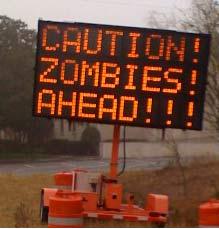 The Financial Times reports that the reason the release of the stress tests are delayed is that banks are trying to negotiate the report on the results. It’s right out there in the headline “Banks Objections Delay Stress Tests”. As some one who has been in the game of giving grades for some time, I’d just like to tell the FED, stick to your original criteria or you’ll never get any respect again from any one. All the banks know what’s expected of them in terms of capital requirements, lending criteria, and fiduciary responsibility. There are many laws. There are many reviews by the FED itself and its auditors. States and the board of directors of the banks review bank performance. Why let them change your rules this late in the game?
Francesco Guerrera and Sarah O’Connor point to the two main culprits as Bank of America and Citibank. Both banks have registered their objections to government demands that they raise billions in new capital.
Citi, one of the biggest victims of the crisis that has already been bailed out three times by the government, is believed to have been told by regulators that it needs more than $5bn in fresh capital, while BofA might need to convert $45bn in government preferred shares into common equity.
Both companies are still contesting the findings and might still persuade the government they need less, or no capital, according to people close to the situation. Citi’s own projections are believed to show the company will have hundreds of millions of dollars in excess capital.
After a week of tense talks between regulators and the banks, government sources said the Treasury and the Federal Reserve were set to unveil the outcome of the tests after the market closes on May 7 – three days later than anticipated.
The authorities’ decision to let the original timetable slip also reflects the widespread belief that, after months of speculation since the tests were first announced in February, their outcome has the potential to disturb the markets.
As one of those market participants, I’d just like you regulators to know, that since the results of the tests have been held back we all have deduced there are problems. Besides Citi and BOA, there are rumors that at least four others of the 19 banks who were given the test will need additional government help. A Mogan Stanely note identified Sun Trust, KeyCorp, and Region’s Financial Corp as three of the other flunkees. The fourth is rumored to be Wells Fargo.
Dr. Mark Thoma at Economist’s View recently blogged on Kansas City Fed president Thomas Hoenig’s for allowing large and systemically important banks to fail. He argues that any time that the subject of regulation can negotiate the outcomes of their own regulation that we have
“good evidence that banks have become too big and too politically powerful for our collective good”.
Ryan at The Bellows had this to say.
This makes no sense at all, on any level. Not long ago I wrote that the government faced a problem with the stress tests — declare everyone a winner and markets greet the test results with an eyeroll, but declare some banks losers and markets get spooked if a plan isn’t in place to address their needs. Treasury seems to have hit on some absurd middle-ground in which it declares the winners winners and the losers losers, and then allows the losers to whine until their grade is changed to winner. It’s a response perfectly crafted to weaken confidence in banks and make the administration look stupid.
The situation is particularly ridiculous since the tests supposedly show that Citi needs only $5 billion in new capital, while basically everyone out there believes the amount is actually quite a bit higher than that. In other words, the results were barely credible to begin with; having not walked out on a limb at all, Treasury is now descending the tree and slinking off to a hole.
Here’s how this actually comes across. It must be incredibly obvious to Citigroup and the government that filling Citi’s capital hole at government expense couldn’t help but give taxpayers a majority stake in the firm, and possibly a large one. Not wanting that to happen, Treasury seems content to sit around hoping Citigroup can convince them that they don’t actually need the money, thanks to creative accounting, or really optimistic assumptions, or magic, but nothing anyone else is likely to accept as reasonable. Maybe the administration has good reasons for wanting to avoid a majority stake, and maybe it doesn’t, but either way they should have seen this coming from the moment they conceived of the stress tests. Either the results would be real, in which case this would be a possibility (if not an inevitability), or the results would be fake, in which case a lot of trouble would have been gone through simply to make Treasury look, once more, like half-witted, cowardly pawns of Wall Street.
I don’t actually think that’s what they are, and so I struggle to understand this move. If Treasury continues to make things this hard for its defenders, it will soon find itself without any.
I think Hoenig’s criticism that was printed, again by the FT, of the current handling of the situation is equally succinct.
In contrast to this suggested approach, the current policy raises a host of issues:
● Certain companies have not been allowed to fail and, as a result, the moral hazard problem has substantially worsened. Capitalism is a process of failure and renewal, and a “too big to fail” policy undermines this renewal and makes the financial system and our economy less efficient.
● So-called “too big to fail” firms have been given a competitive advantage and, rather than being held accountable for their actions, they have actually been subsidised in becoming more economically and politically powerful.
● The US government has poured billions of dollars into these firms without a defined resolution process, adding to our national debt. While there will be some repayment, there also will be losses. The longer resolution is postponed, the greater the losses and the larger the debt burden.
● As these institutions are under repair, the Federal Reserve is making loans directly to specific sectors of the economy, causing the Fed to allocate credit and take on a fiscal as well as a monetary policy role. This is reflected in the fact that its balance sheet continues to swell, which may compromise the independence of the Federal Reserve and make it more difficult to contain inflation in the years to come.
● Failing effectively to resolve these non-viable firms has long-term consequences. We have entrenched these even larger, systemically important, “too big to fail” institutions into the economic system, assuring that past mistakes will be repeated.
Certainly, the approach I suggest for resolving these large firms also is not without substantial cost, but it looks to both the short and long run.
A lot of folks who know what their doing on this have their outrage meter set to high. I’m not exactly sure what is going to make the administration examine and deal realistically and systematically with these zombie banks. I am sure that some one in congress needs to rewrite banking law and stop the creation of huge, monster, banks.
There are many studies in the microeconomic literature on banking and so-called returns-to-scale. There are, in fact, some industries that must be huge to achieve their lowest average total costs. The best examples of these tend to be power companies and other big utilities. In order to support all the infrastructure, power companies need to be pretty big to be produce energy at the lowest possible cost and the highest quantity possible.
This is not true of banks. The literature shows fairly consistent economies of scale no matter what the size. Actually, having my house loan bought by Wells Fargo a few years ago, and having experienced one problem after another with them, and now being forced from a regional bank to Bank One and having experienced problems with them too, I’d actually argue that the bigger these guys get, the worse their servicing of accounts gets. But, that’s just anecdotal.
However, what I’d like to know is when is the Treasury actually going to produce a plan that systematically solves the problem? Also, why are they allowing these banks to bully their regulators?


 peej
peej Carissa
 ecocatwoman
 mablue2
 peggysue22
 quixote
 skydancingguestblogger
 Mona (aka Wonk the Vote)



 Sky Dancing
dakinikat,
With regard to economies of scale, Small is Beautiful comes to mind.
It seems that many of our financial wizards did not take the story of “The Three Bears” to heart. Somehow they lost the lesson on magnitudes and fit.
Well, guess what happens when you wonder about in a world where you don’t know as much as you think and you mess with the stuff of others while doing so. The bears have returned and they are justifiably upset with what the china-shop bulls have done to their (ecos) home. I hope the bears eat them.
S
oops wander, not wonder
dakinikat,
I don’t even agree with you about utility sizes. Where I live, we have municipal power alongside for-profit power. The big, multinational power companies charge much higher rates and have much worse maintenance. I lost power last week because of a transformer failure that had “no warning.” No warning is code for they don’t do regular maintenance and they expect nothing to ever break.