
The Endangered American Lifestyle
Posted: March 20, 2009 Filed under: Equity Markets, Global Financial Crisis, U.S. Economy | Tags: less consumerism, live smaller, lower consumer demand, recession and job less lower lifestyle in US, the new american lifestyle 9 Comments This economy has clearly shown that the lifestyle of most middle and working class Americans is precarious. Many Americans now admit they could cover their bills for at best two months if the pink slip arrived in their paycheck. More and more people are dipping into their savings and credit to pay for food, gas, and day-to-day expenses if they are fortunate to have either.
A series of recent surveys checking the health of American households have found many of our neighbors are depressed and frightened about their financial status as the recession deepens and unemployment numbers worsen. It appears Americans are downsizing their lives, their expectations, and their idea of what it means to live the American Dream.
Market Watch reported today on a number of findings about the financial health of Americans and their preparedness in light of the poor job market. As things get worse, more and more Americans will find themselves falling behind in their bills and house payments. Households are adjusting their buying habits and trying to find ways to save money “just in case”.
This is flashing so bright red,” said Paul Ballew, senior vice president of Nationwide Insurance Co. “Roughly 60% of the population was ill-prepared (financially) before the meltdown.”
A MetLife study released last week found that 50% of Americans said they have only a one-month cushion — roughly two paychecks — or less before they would be unable to fully meet their financial obligations if they were to lose their jobs. More disturbing is that 28% said they could not make ends meet for longer than two weeks without their jobs.
And it’s not just low-income earners who would find themselves financially challenged. Twenty-nine percent of those making $100,000 or more a year said they would have trouble paying the bills after more than a month of unemployment.
Meanwhile, more than four in 10 respondents told pollsters in a recent Pew Research Center study that job-related issues were the nation’s most important economic problem.
Lower-income Americans have already started belt-tightening to feed their rainy day funds. One study has shown these income levels are now planning for vacations at home and have put off any major purchases. The same study 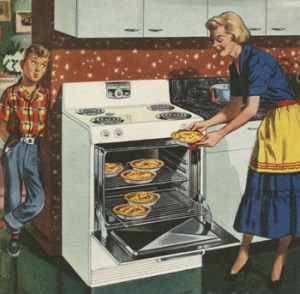 (by Pew) finds that upper middle income Americans are desperately re-arranging their retirement funds in hopes of preserving what capital remains after nearly six months of persistent market declines. Lower-income Americans have switched to plain label and generic brands while upper middle income Americans have quit dining out. American families continue to belt tighten where ever possible. What is new about this typical recession behavior is that this new found thrift appears to be a long run arrangement.
America’s Research Group found that nearly 57% of the consumers it polled said they would spend less this year while virtually no one plans to spend more.
But this is not just a one-year thing, according to consumers surveyed by BIGresearch. Nearly 91% said they see this crisis bearing down on their spending decisions — in effect, their lifestyles — over the next five years.
Fifty-five percent said they will think carefully before they make a purchase and 51% said they expect to be more price-conscious when buying clothing and food.
“American consumers are hunkered down, bracing for a depression,” said Britt Beemer, chief executive of America’s Research Group. “The dramatic drops in shopping levels have no match in our database in the last 30 years.”
Consumers are not enthusiastic about the current situation and they are avoiding America’s malls. A March 2009 report by Jean-Marc Lucus of the economic research department of PNB Paribus is aptly titled “US Households have the Blues” with one section labeled: Households in the Eye of the Storm. It shows the simultaneous deterioration of both the general economy as measured by GDP and of American families as measured by household demand. The linkage is not surprising since household demand is usually about 68% of US GDP. They note the record patterns of decline in nearly every measure relevant to the American Household. They believe that this percentage is on the decline and will not return to the same levels post-recession.
Consumer spending will likely continue to contract in the first quarter of 2009. Firstly, the monthly declines continuously recorded in the last few months of 2008 imply a negative carry-over effect for this quarter, i.e. a 0.9% fall in annualised terms. Moreover, the determinants of consumption still seem to be in the doldrums in early 2009: monthly job losses climbed to their highest level since 1974, in January home prices were still heading south, etc. Furthermore, the fact that the Conference Board consumer confidence index sank to its all-time low in February (25.0) also suggests that consumer spending is set to decline further in the first quarter.
They also outline the worsening job market which is not expected to improve anytime this year. The majority of Americans depend on a consistent wage for a living and loss of a job means loss of livelihood.
The deterioration in the labour market is directly affecting trends in incomes (job losses, decrease in the
volume of hours worked, slowdown in wage rises) and giving an incentive to cut back on spending (precautionary saving). Since September, data from the Bureau of Labor Statistics have steadily
underscored the worsening situation in the job market. The drop in payrolls, under way since early 2008, has drastically gathered pace since September, and even more so since November. Whereas they had not exceeded the 175,000 mark until August, monthly job losses topped 300,000 in September and October, before jumping to nearly 600,000 between November and January. Thus, while payrolls have shed 3.572 million jobs since early 2008, half of their contraction has been recorded in the last three months (1.771 million). At the same time, the unemployment rate rose 1.4 percentage points between September (7.2%) and January (7.6%); such a dramatic increase in such a short period had not been witnessed since 1980.
 Another stark reality for the American consumer has been the unsettling decline in their wealth. This has been due to the combined decrease in value of most American’s primary asset, their home, as well as hits to their retirement savings. This has been an historic decline in wealth which shows no sign of turn around since neither market appears functional at the time being. It is also unclear what the plan is to improve the situation.
From September 2007 to September 2008, the value of households’ assets has steadily melted, dropping from $77,800 billion to $71,100 billion in gross terms and from $63,600 billion to $56,500 billion in net terms (once their liabilities are deducted). This $7,100 billion loss, i.e. an 11.1% decline in a year, is already more pronounced than witnessed from 2000 to 2002, when household assets shed $4,200 billion between their peak and trough, i.e. fell 9.6%. Yet, the 2000-2002 period recorded a far more marked negative wealth effect than had been the case in previous recessions. In particular, household wealth had always continued to grow during recessions, even severe ones like in 1980 and 1982.
Such a relentless decrease in household wealth over twelve months had never been recorded since
1952, the first year covered by the Federal Reserve’s Flow of Fund Accounts. Furthermore, this bad run had not finished at the end of the third quarter of 2008, since the slump in stock markets gathered momentum between late September and late December, with the S&P 500 index nose-diving 23%, while the trend in real estate prices remained noticeably negative during the same period, with the S&P Case Shiller index falling 6.8% between September and December. The current recession is exerting far more downward pressure on household wealth than past ones, because it combines a real estate crisis and a financial crisis, and both crises are unusually severe or even unprecedented.
With all this bad news, it is easy to see how Americans have felt less than enthusiastic about shopping. This has been exacerbated by a general lack of credit. Household indebtedness has experienced its first contraction in more than 50 years. This entire study suggests that this recession will be tougher on American households than perhaps any one except the great depression itself. They have done several what-ifs that consider the impact of the stimulus bill. The believe that many of the measures taken to loosen up the credit markets will actually be offset by the major need for government borrowing. They feel that this will especially be true at efforts aimed at loosening the housing market. Their estimates are that consumption may increase by .4 percentage points in about a year as a result of that last huge stimulus package based on the consumer behavior shown under the 2008 stimulus steps. This is not a very significant amount at all. The only major positive impact on households discussed in this study was the decrease in oil prices which did provide consumers with some flexibility. There are many charts and graphs in this 17 page report and it is relatively easy to read. It’s major conclusion is that this recession will bring on a major decrease in the American Lifestyle and that we will see continuing diminished consumption at least for the near term.
The bottom line? We’re going to see a downsizing of the American Lifestyle. Look for ways to redefine the American Dream. Overt consumerism will no longer be the defining characteristic of living well in our near future. We will have to come to terms with living life a bit smaller. This should be an interesting challenge since the majority of folks alive today have always looked forward to ‘bigger and better things’.


 peej
peej Carissa
 ecocatwoman
 mablue2
 peggysue22
 quixote
 skydancingguestblogger
 Mona (aka Wonk the Vote)



 Sky Dancing
I do not lament the demise of the American lifestyle.
1. gross consumerism with a large percentage of purchases not being used at all or very little shortly after the initial purchase
2. waste generation embarassingly out of proportion to the rest of the world
3. lack of participation in municipal recycling programs, despite governing bodies doing almost everything except going to peoples homes and separating items for them and rolling the containers curbside (not available in all areas–I know)
4. a widespread sense of “social currency” being the latest gadget or fashion instead of being a decent person
Oh yeah, I’m ready to see it go.
Me too. And hopefully, people will also revolt against the “community-centeredness” that the political classes will try to jam down their throats.
Maybe we’ll come out of this having escaped the Scylla and Charybdis of “beggar thy neighbor” and the national busybody culture that seems to be developing under the guise of being “public-spirited.”
I downsized some time ago but unfortunately a lot of people are going to have to unhook their egos and self esteem from having a lot of stuff and junk. it’s one thing to live and eat right, it’s a completely different thing to be addicted to stuff
That’s actually a very market driven approach to consumerism. While it may bring back austerity, a depression will also put many people in danger while destroying the wealth of a generation. Obama’s plan to tax the hell out of gasoline to drive our cars and fuel to heat our houses will accelerate this effect.
I see this as a further result of toxic assets and the less toxic assets which are a sort of pig in a poke. In the bag, the balance sheet looks like a strong, vibrant pig. If you open it, it’s just a worthless feral cat.
Business is not willing to accept that their products are not worth what they say they’re worth. Some banks won’t sell houses for their real value, lose the sale then get even less for them out of desperation. A store won’t sell you that 37″ TV for $400, but if they go out of business, you could get it for $350. Until there are some bargains out there, the people who have even a little interest in buying stuff will not do so.
Well, the lesson the Great Depression taught is that folks won’t even buy stuff they need if they’re very very afraid even if it’s a bargain. That’s whey they really starting questioning the old classical economics of “Say’s Law” or supply will create it’s own demand if the price is right. Keyne’s discussion of animistic spirits is a great one to review about the breakdown of that idea. Bargains won’t bring them out if households are scared and sitting on their incomes.
How we are destroying America: http://tinyurl.com/kjkkp4
hi,
Do you remember where you obtained this image? trying to clear it for use in a film festival. thanks!!!
May i please use your photo of a 1950’s mom and child at a confection over (consumerism) with several pies in it? I am doing a humanities project that is due tonight by midnight.
Please let me know asap. thank you
It’s not mine exactly, it came from an old advertising in the Sat Evening Post.