
Mortgaged Home, Sweet Mortgaged Home
Posted: February 18, 2009 Filed under: Global Financial Crisis, Team Obama, U.S. Economy | Tags: Fannie, Freddie, home owner bailouts, obama housing plan, subprime mortages, underwater mortgages 9 Comments Obama announced more details on his bailout plan that was focused more on borrowers instead of the lenders. He released a four page fact sheet here. There are three portions and The Economist does a pretty good job of summarizing them here.
First, the administration will increase the number of homeowners able to refinance at current, low mortgage rates. Borrowers whose mortgages are owned or guaranteed by Fannie Mae or Freddie Mac will be able to refinance a loan up to 105% of the home’s value (up from 80%, previously). This is expected to help about 4 to 5 million households who owe nearly as much or more than the value of their homes. This seems like a reasonable step to take, though as Calculated Risk notes, it’s a bit of a lottery. Those whose mortgages haven’t been purchased by Fannie or Freddie are basically out of luck.
The second part is the one that’s grabbed headlines; the president has dedicated $75 billion toward efforts to prevent foreclosures. Chief among these efforts is a plan to reduce monthly payments for troubled borrowers. For those spending greater than 38% of their income on mortgage payments, up to 43%, the government will ask lenders to reduce interest rates to bring payments down to the 38% level. The government will then match lender dollars, one-for-one, in bringing down interest payments until the borrower is only spending 31% of income. Both borrower and lender will be eligible for $1000 payments when payments are reworked, and if the planned payments are made. If it’s necessary to reduce principle, then Treasury will provide assistance with this, as well.
This portion of the plan has drawn criticism, since many homeowners with too-large payments are those who took on irresponsible loan structures or who simply purchased too much house—who behaved irresponsibly, in other words. Ideally, officials would no doubt prefer not to help such borrowers (just as they’d no doubt prefer to let bankers who’d made bad decisions go under). But frankly, that’s not a top concern of mine. Rather, I’m interested in whether or not this is the best way to use $75 billion to halt foreclosures.
The Economist has two concerns. The first is that it may just delay foreclosure rather than solve it because:
… interest payments are being reduced first, and principle written down only as a last resort (such that many who take advantage of the programme will nonetheless remain underwater). Perhaps, but by trying to leave principle alone, the government is avoiding excessive transfers of wealth to borrowers. A shared-equity plan might have been better, but this will halt some foreclosures and incent homeowners to stay in their homes longer.
The second issue there are enough incentives in the bill to rework the payments. On this point, they say:
Presumably, it’s already in the interest of lenders to reduce payments rather than foreclose, so it’s unclear whether $1000 is going to alter the balance. This, I think, is a more serious point. The housing plan passed last year to help rework problem mortgages seriously underperformed—where some 400,000 borrowers were deemed to be eligible, actual applications numbered in the tens.
The third portion of the plan seeks to “strengthen” Fannie and Freddie and to keep mortgage credit available and loan terms to ensure housing affordability. The amount scheduled for this is $200 billion.
David Leonhardt of the New York Times had this to say. His blog thread concentrates on who is most likely to benefit from the plan. If you watched Obama’s speech, supposedly the plan won’t help the ‘irresponsible’ speculator. Leonhardt questions if the plan can successfully separate the homeowner is trouble by purchase motives.
But the lines aren’t quite as clear as Mr. Obama suggested. In fact, his plan will end up helping a fair number of people who bought homes that they should have known they would never be able to afford. The core of the plan gives banks a financial incentive to reduce many mortgage payments to no more than 31 percent of a borrower’s income.
Which homeowners will benefit from this reduction?
Certainly, some who took out a reasonable mortgage and later lost their job will be helped. But people who bought too much house — and banks that allowed people to do so, or even encouraged them to do so — will also benefit. As distasteful as this may be, it’s the only way to make a serious dent in foreclosures and, in the process, to help the financial system.
These same political calculations help explain the public emphasis that the White House is giving to the relatively modest steps it is taking to help underwater homeowners — those with a mortgage worth more than the value of their house — who can afford their monthly payments.
The actual details of the plan aren’t due out until March 4th when it goes into effect. Market Watch had some interesting statistics for the plan today. Here are the number of homeowners the plan itself says it will help.
The bill is supposed to help s many as 9 million households in fending off foreclosures:
- Allows 4 million–5 million homeowners to refinance via government-sponsored mortgage giants Fannie Mae and Freddie Mac.
- Establishes $75 billion fund to reduce homeowners’ monthly payments.
- Develops uniform rules for loan modifications across the mortgage industry.
- Bolsters Fannie and Freddie by buying more of their shares.
- Allows Fannie and Freddie to hold $900 billion in mortgage-backed securities — a $50 billion increase
Moral Hazard and Corporate Governance
Posted: February 18, 2009 Filed under: Equity Markets, Global Financial Crisis, president teleprompter jesus, U.S. Economy, Uncategorized, Voter Ignorance 1 CommentI usually stick with the Economics side of my degree instead of the Finance when I blog because macroeconomics is highly linked to politics and policy. Today, I’m going to switch over to the one field specialty I took in graduate school that’s not considered economics. (My economics fields are monetary and international.) My finance field is corporate finance. The two theories I spend time researching in the corporate area are two that are frequently at the middle of financial crisis.
Moral Hazard is a problem in situations where there are multiple parties, differing levels of information about the situation, and differing levels of exposure to the risk inherent in the situation. Evaluating how folks operate in different risky situations with varying amounts of information using mathematical models is basically a big old exercise in calculus that I’m not going to do here. The theory is a useful one that explains,as an example, why you drive faster if you’ve got a seatbelt on and are insured. Basically, between seatbelts and insurance, you don’t feel as ‘at risk’ so you behave in a riskier way.
Corporate Governance Laws and Executive Compensation packages are designed to overcome the moral hazard implicit in one of the most basic moral hazard models. It’s called the principal-agent problem. Basically this theory shows the problems that can occur when the owner(s) of a firm (the principal) hire managers (the agent) to run the firm. The owners (like common stock shareholders) don’t have the same level of information about firm performance that the executives do. They have to rely on the executives for information. Also, the owners can loose lots of money if the executives make bad decisions and slack off and don’t work as hard as they should. In this model, the principals have to find a contract that will force the agents to act in their interests. They must force them to work hard and return the maximum wealth to the shareholders. That’s what corporate governance laws and executive compensation packages are designed to do: align the interests of the executives and the shareholders. If designed properly, they should eliminate the moral hazard problem. Corporate Governance creates a more transparent environment where the executives can’t hide information. Property designed executive compensation packages reward the executives for doing their best by shareholders.
Where’s the Reform?
Posted: February 17, 2009 Filed under: Equity Markets, Global Financial Crisis, president teleprompter jesus, Team Obama, The Media SUCKS, U.S. Economy, Uncategorized | Tags: Credit Derivatives, FED, financial market reform, Mary Dizzard, SEC, Securities Market Comments Off on Where’s the Reform?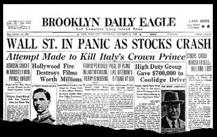 We keep hearing about the global financial collapse and how several things played into its creation. Since the credit markets are mostly dried up, loose credit to purchase overpriced assets is no longer an issue. Still hanging out there with no real substantive policy discussion is Financial Reform. Has the current administration forgotten the complete lack of oversight by the SEC in the areas of derivatives, credit default swaps, and all those fancy little arrangements that allowed imprudent lenders to pass the trash? Where also is a hard look at Moody’s and other raters that actually applied a triple A label to stuff that is still unraveled? Why aren’t we fixing what is obviously broken?
Dizard at Financial Times asks the question. What is the status of the structural reforms and laws required to fix the broken securities markets? It’s a very good question because both the SEC and the FED failed in their oversight duties of several markets. They’ve both asserted they didn’t have the legal standing to act or to provide that oversight. In that case, we have another example of oversight malpractice by the congressional committees designed to keep the financial and banking systems strong. They need to sort out responsibilities and enact laws to ensure oversight exists.
Here is one of the articles major points which is reform of rating agencies. He sees no progress on that front and believes we’re seeing some major maneuvering that ensures job security and protects fragile egos.
The financial system has a peacetime officer corps in a wartime situation. The people in positions of responsibility are principally interested in preserving their careers and avoiding public embarrassment. There are rare and important exceptions, such as Paul Volcker, who has nothing to prove about his integrity, and who is past any need to advance his career.
To identify what has to be done to put securities markets, banking and regulation on a sound basis for the future, the people at the top might have to admit to the specifics of their own past mistakes. They would also need a command of detail of the workings of the financial system that they have avoided acquiring over the years, since it was much more advantageous to spend one’s time scheming and toadying.
This is a naturally occurring aspect of human nature, but it is usually kept in check by periodic crises, which thin the herd and force the survivors to adapt. The “great moderation”, also known as periodic monetary bail-outs, in developed countries for the past couple of decades has prevented that process.
Let’s consider a specific issue, the reform of the leading US ratings agencies…So what are the federal regulators, and Congress, actually doing about ratings agency reform?
Systematic Banking Crises: Learning from the Past
Posted: February 15, 2009 Filed under: Global Financial Crisis, U.S. Economy 3 Comments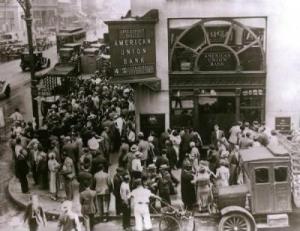 I’ve had some more questions recently about the banking situation so I’m going to try cover some of it here. People are worried that the TARP and bailout plans really won’t work and will cost a lot of money.
I covered some of this in October when the IMF came out with a working paper by Laeven and Valencia (2008 ) that looked at systemic banking crises and policy responses to them from the period 1970-2007. This was at the time the TARP was pretty new and the financial crisis was not at the center of many people’s lives.
This study is 80 pages and it uses lots of multiple regression analysis between country characteristics, banking system characteristics, and emergency measures taken by policy makers to solve these kinds of crises so be prepared to enter my world if you want to read it. It’s not as bad as it could be, but be prepared. It is beyond wonky. It’s your basic research by economists meant at shaping policy worldwide.
They even separate the ’emergency measures’ from the long-run challenge of crisis resolution. The goal in the long run is to get the credit system and legal system back to functionality as well as rebuilding balance sheets of both banks and borrowers. The short run emergency measures tend to be more focused on containing the crisis itself and stopping the contagion. That means there are two phases to the response.
The first phase, crisis resolution typically involves coordinating problems that exist between debtors and creditors and frequently resembles a bankruptcy process. A lot of this has to do with loans going bad. Two banks, for example, went into receivership this weekend. There have been a total of 13 for this year already. The FDIC and the Federal Reserve bank have procedures to handle this and are currently working on what to do for bondholders and equity owners of the bank while making sure the depositors know their deposits are safe. Restructuring will happen over the weekend so the banks can resume some kind of business over the weekend. A lot of times hasty marriages or mergers of convenience have previously been arranged with more healthy banks.
This is the typical process that goes on day in and day out. As some one who has been an active part of the Fed’s monitoring process, I can tell you, that some one looks at all banks balance sheets every day. Also, annually, Fed auditors will examine banks as well as state auditors, board of director’s auditors and even the FDIC. This process only works when there is not a systematic problem though. While the Fed usually sees a handful of these a year, 13 in about the first six weeks of the year, suggests a systemic problem.
Financial Crises, especially those that turn out to be contagious, will rapidly spread to many parts of the economy even when we don’t necessarily see vulnerabilities in banks themselves. Things that cause these kinds of problems include unsustainable macroeconomic policies (interest rates that are too low, huge government fiscal outlays, huge current account deficits, or unsustainable public debt). Emerging market countries and developing countries tend to be more vulnerable to these types of crises because they do not have very deep and wide financial institutions and frequently their laws and policy response mechanisms are quite poor. There are also some other things that can cause these types of crises like currency and maturity mismatches that tend to happen in countries with questionable currencies and exchange rate policies. Once the crisis occurs, the government must coordinate a response. The paper I’ve referenced above looks for ‘best practices’ or responses that have worked during recent crises and this includes both the emergency response as well as long-term policy changes.
So, let’s talk first about the types of responses that can be employed by Governments that face a financial crisis. Basically, the major response has to reallocate wealth towards bank and debtors and away from taxpayers. Yes, that’s what I said, it’s a reallocation of wealth. You can see right now that that sets up a very unpleasant trade-off choice. While this reallocation usually leads to a restart of ‘productive investment’ it has HUGE costs. First, taxpayer’s wealth is spent on helping banks and bankers. It is basically to help them out of what was a set of really bad decisions resulting from misallocation of capital. The economy experienced distorted incentives, the money followed it, and everything hit the fan. In our case, right here, right now, too much capital flowed into the housing market. The Fed enabled a bubble by providing extremely low interest rates. Banks, Freddie and Fannie loosened underwriting standards and came up with weird loans. They lent to every thing and every one thinking they could pass the trash on with securitization. Once demand for houses and real estate starting going up from the availability of weird loans that were backed by even weirder risk management arrangements (think swaps), all of which were poorly regulated and given very little oversight, boom! In economics and finance, we call these distortions. Distortions or bubbles don’t last because capital usually will disappear then head off in another direction. In this and many cases government actually encourages banks and firms to do stupid things through subsidies, government protections, and poor regulation. All of these things were present in the housing bubble.
If, in the case of many emerging market countries and developing countries, you have institutional weaknesses (i.e. poor legal system, currency issues, bad central banks, corruption), these can exacerbate the problem. Fortunately, for the US, we really don’t have weak institutions. But, we had huge investment distortions brought on by low interest rates, unregulated derivative markets, and lending gone wild.
So, what does history teach us? What does the current research say about policy response?
Americans Tighten their Belts
Posted: February 13, 2009 Filed under: Global Financial Crisis, U.S. Economy Comments Off on Americans Tighten their Belts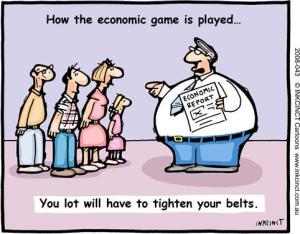 The Wall Street Journal is reporting that the American Consumer is drastically reducing their spending on food. They’re reporting that restaurant patronage is way down and that households are opting for generic products and home brewed coffee. They’ve also begun bargain shopping.
In 2008’s fourth quarter, consumer spending on food fell at an inflation-adjusted 3.7% from the third quarter, according to data from the Commerce Department’s Bureau of Economic Analysis. That is the steepest decline in the 62 years the government has compiled the figure. The report is based on receipts from a sampling of food-oriented businesses across the country.
The big drop likely comes from two things, said Joseph Carson, an economist at AllianceBernstein who worked at the Commerce Department in the 1970s. First, consumers have been trading down to lower-priced items. Second, he thinks many households dug into their pantries for staples rather than going to the store, a trend that can’t continue indefinitely. “You can’t contract at this rate for long,” he said. “It’s just shocking.”
Restaurants usually are hard hit during recessions as they are seen more as luxury goods than necessities. The first indication of a recession frequently comes from this sector. You’ll see a lot of folks eating at the upscale bistros less while places like McDonald’s with their dollar value meals will get more business. The Journal is reporting that trend.
Declining sales at established locations have forced Starbucks Corp., Ruby Tuesday Inc. and other chains to shut hundreds of outlets and put many independent restaurants out of business.
On Wednesday, P.F. Chang’s China Bistro Inc. said same-store sales fell 7.1% at its bistro locations in the fourth quarter, and the deterioration intensified as the quarter progressed. “The lights went out in December,” Robert Vivian, the company’s co-chief executive, told investors.
The shift has a silver lining for some companies. While supermarkets passed along last year’s high ingredient costs to customers, McDonald’s Corp. and other fast-food chains absorbed some of the expense and kept many items priced at $1. Now, some consumers consider a fast-food meal a bargain. On Monday, McDonald’s said same-store sales rose 7.1% in January, including a 5.4% increase in the U.S.
People will also switch to staying home and cooking their own meals. They also adjust the types of things they will buy. Right now sales on pet food, meat and poultry, sweets, cereals and alcoholic beverages are down. Sales of dairy products and vegetables are up. You’ll also see an increase in the use of coupons and consumers will focus on planning their meals around the weekly sales items.
This news also comes as Consumer Sentiment continues to fall. Market Watch reports :
Amid persistent economic turmoil, a key index of consumer sentiment fell in early February to 56.2 from 61.2 in January, according to reported results Friday of the University of Michigan and Reuters survey.
Analysts polled by MarketWatch had been looking for a February reading of 61.
Additionally, we have hit a record high for ongoing jobless claims. This is also reported by Market watch today.
For the week ending Jan. 31, the number of Americans receiving state jobless benefits rose 11,000 to a record 4.81 million. The four-week moving average of these continuing claims also reached a record, rising 73,750 to 4.75 million.
The continuing claims result is “incredibly worrisome,” wrote Dan Greenhaus of the equity strategy group at Miller Tabak.
While the pace of layoffs will eventually decline, the larger concern for the economy is how long it takes us to get the people not working back to a fulltime job,” Greenhaus wrote. “Those 4.8 million people are not spending money, not going out to eat, not traveling to other states on vacation and not buying gifts for friends’ birthdays.”
There is even a lot of worry among the candy companies that sales of chocolates for valentine’s day will be off the usual mark. I’ve been doing a lot of belt -tightening myself, but I have to tell the Godiva folks not to worry about my chocolate demand. It continues forward at its usual high level. I’m also doing my part for the California wine makers. At least until my new little grape vineyard in my “Obama Victory Garden” starts doing its thing. I’m wondering if there will be chocolate lines for me instead of bread lines since I stay on a low carb diet? So, how are you tightening your belt these days?

 peej
peej Carissa
 bostonboomer
 dakinikat
 ecocatwoman
 mablue2
 Mama Lopez
 peggysue22
 quixote
 skydancingguestblogger
 Mona (aka Wonk the Vote)



 Sky Dancing
Recent Comments