
The Mini Ice Age AND the Dust Bowl?
Posted: October 26, 2008 Filed under: U.S. Economy | Tags: credit market thaw, economy, Equity Markets, financial meltdown, recession 2 Comments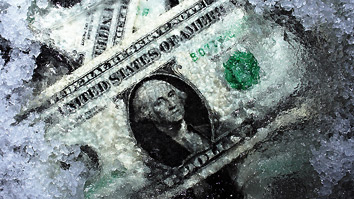 I thought I’d try to give you some information on the mixed signals coming from the markets. First, we have the credit markets where people borrow and lend things like commercial paper, loans, and bonds. All of the money thrown into this market by the world’s governments appear to be having some impact.
How do we know this? As reported by The Economist, we see signs that banks are lending to each other and that interbank lending rates are behaving more normally.
An important indicator of its health is the price that banks say they expect to pay to borrow money for three months, which is usually expressed as the London Interbank Offered Rate (LIBOR), or its European equivalent, EURIBOR. These have been ticking down slowly, often by only fractions of a percentage point a day. Yet on Tuesday October 21st the rate for borrowing euros passed an important milestone, falling to 4.96%, a level last seen before Lehman Brothers collapsed in mid-September. The LIBOR spread over three-month American Treasury bills has also narrowed sharply. The recent improvements were partly stirred by the latest lavish intervention from the Federal Reserve. It made available $540 billion to buy assets from money-market funds, to encourage them to start buying commercial paper issued by banks and companies again.
A few words of explanation here. First, the Libor Spread over three-month Treasury bills is called the Ted Spread. Since the three month treasury bills are considered extremely safe, this spread is considered a measure of risk as perceived by the market. The bigger it is, the more likely banks are to see risk or some kind of uncertainty in the market. When you have a so called flight to quality, folks and institutions buy a lot of three month treasury bills and drive the yields down. This makes the spread widen. The Libor and the Eurobor are like the Fed Funds rate. These rates are established by the market for lending between banks. Banks that require more liquidity to cover things like withdrawals, loan losses, or reserve requirements for a very short period of time will borrow from other banks rather than go to the FED or their central bank. It is a market that shows how needy banks are for cash. Like all things related to supply and demand, when supply is short and demand is high, the loan rate goes up.
When the banks book the loans, and report the loans to their regulator, the regulator sees this market established rate and based on if it wants banks lending or holding on to money, will set its own rate. This is called the Discount Rate in the U.S. It is the loans you get from the Fed which is the lender of last resort. Remember, as of this spring, all financial institutions (FI), not just member banks, can access the discount window. Also, when borrowing at the discount window, the FI is required to put up some collateral. Many things are now being accepted as collateral–including toxic assets.
If this rate and the spread are ‘ticking down’ that means more and more demand is driving the rates down. The only reason that banks would increase their demand for these funds would be to lend at higher rates. This lets us know that the credit markets are slowly unthawing. We can see this further, as The Economist reports, in the market for interbank lending. Loans are being made between banks.
American banks including JPMorgan Chase and Citigroup have, in the past week, made loans to European counterparts for up to three months. And HSBC, Europe’s biggest bank, says it is providing billions in three- and six-month funding to banks.
This is a very good sign for the credit markets.
So, why are the equity markets still volatile and the major indexes falling? Equity Markets respond to more ‘REAL’ phenomenon because the earnings of companies are based on projects that either yield income or losses. The stock markets which sell pieces of companies and their future earnings are reacting to economic news. The economic news is looking pretty dismal right now.
Last week, the UK announced that it was in a recession. Most economists (including me) think we have entered a recession now in the U.S. This is spilling over to the global economies that rely on exports (like China, India, and any of the oil-exporting countries) because if they’re not selling to their customers, their companies are not making any income. No income on projects means stock values fall.
The global credit crunch is quickly turning into an economic crisis. At least, that’s what the markets feel. Stock markets all over the world and markets for foreign currency are sinking. The pound is doing miserably. The Eurodollar is one of the better-off currencies. The dollar is showing some recovery which is a bit odd given we’re considered the source of all this mess. However, we are the world’s currency and considered a safe-haven, so it might just be that old fashioned flight to quality again. I have to say, it’s very hard to tell at this point. It looks like the world still likes us to me. But this is just my analysis.
So the fundamentals here in the U.S. economy are pointing to a recession that will look more like the one in the 1980s than the last two short downturns experienced in the 1991 and 2001. This from today’s New York Times:
When October’s job losses are announced on Nov. 7, three days after the presidential election, many economists expect the number to exceed 200,000. The current unemployment rate of 6.1 percent is likely to rise, perhaps significantly.
“My view is that it will be near 8 or 8.5 percent by the end of next year,” said Nigel Gault, chief domestic economist at Global Insight, offering a forecast others share. That would be the highest unemployment rate since the deep recession of the early 1980s.
Companies are laying off workers to cut production as consumers, struggling with their own finances, scale back spending. Employers had tried for months to cut expenses through hiring freezes and by cutting back hours. That has turned out not to be enough, and with earnings down sharply in the third quarter, corporate America has turned to layoffs.
This and the fall in housing prices as well as bank failures have lead people to wonder about another Great Depression. For the answer to this, I point you to an Economic View that also came from the New York Times by well-respected Economist Gregory Mankiw. He points out to some very important reasons why this may be a bad recession but is unlikely to become another Great Depression. Here’s perhaps his most cogent argument on why this is unlikely to happen.
Probably the most important source of recovery after 1933 was monetary expansion, eased by President Franklin D. Roosevelt’s decision to abandon the gold standard and devalue the dollar. From 1933 to 1937, the money supply rose, stopping the deflation. Production in the economy grew about 10 percent a year, three times its normal rate.
We are no longer constrained by a fixed money supply and we have a Fed that knows a lot more about what causes crises. (Mankiw is a fairly conservative economist so this is a telling comment.) Widespread deflation (decreases in prices) were a problem during the depression years. The only major deflation we’ve had to date is in house prices. We’re now experiencing decreases in oil prices but unlikely to see declines in other items, like food and clothing. Oil prices were considered way higher than the fundamentals would suggest so this decrease is likely to help the economy. It is possible that air fares could come down, for one.
Also, I’ll point to the information reviewed in The Economist, loans were nearly impossible to get during the Great Depression. The world’s Central Banks are taking huge steps to ensure this doesn’t happen, and it appears their steps are working. Oddly enough, sales of existing homes went positive last month. It’s hardly a trend, but it does show a possible break in the downturn.
So what exactly do we see here? There are plenty of signs that we’re in for a fairly sustained recession through next year. Again, hold on to your job if you have one. Markets are trying to find their bottom. The Dow Jones is hovering around 8200 which is considered a threshhold level. There is some volatility but nowhere near the volatility we saw during the Great Depression. Credit Markets are thawing which means monetary policy may have a chance at jump starting the real economy again. The mini-rally in the dollar shows that the world still has a lot of faith in the fundamentals of the U.S. economy. We’re still considered that quality that attracts money. Don’t pull money out of anything long term. You’ll probably be selling it at a low. Try not to look at your 401k statements for awhile. Look for bargains if you do have money– vacations, cars, houses, and anything else that you’ve intended to buy but only if you know your job is safe and you have a nice emergency fund. If you don’t have an emergency fund ( about six months worth of income in a bank account), start one today.
The Last Journalist Standing May Well be Tavis Smiley
Posted: October 24, 2008 Filed under: Main Stream Media, No Obama | Tags: Last Real Journalist, Obama and the Media, Tavis Smiley Comments Off on The Last Journalist Standing May Well be Tavis SmileyI’ve written in my blog about the difficulties many African Americans have had for not supporting Obama or seemingly not supporting him enough. Many black supporters of Hillary were subjected to some fairly outrageous charges during the primary and some were bullied into changing their candidate choice.
One of the folks that I mentioned in an earlier thread was Tavis Smiley. Tavis is a journalist and is 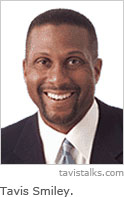 responsible for the conference entitled “The State of the Black Union” which has been held in New Orleans recently. My last blog post supporting him was due to his questioning of Barack Obama’s commitment to black American by not showing up for the conference but offering to send Michelle Obama instead. Senator Clinton was the sole candidate to show up personally at this event. Tavis said thanks but no thanks to the offer of Michelle and was roundly criticized.
An interview by Jon Friedman with Smiley showed up in Market Watch. I read his comments and more on the flak he’s been taking for trying to be objective. Objectivity is something journalists are supposed to be all about. At least I got that impression from my 3 high school journalism classes. Maybe if I’d have continued through college I would have found this to be old-fashioned.
Smiley said that to the consternation of a number of Obama supporters, he hasn’t given the Democrat a free pass during the campaign. Smiley said he has acted like an objective, probing journalist. It makes no difference to an ethical journalist — whether he works in a news room or hosts a talk show — what a candidate’s skin color is or whether or not Smiley privately supports that person’s prospects.Smiley said he had heard from some African-American viewers that “‘Tavis is a hater… a traitor…a sell-out.'”In July, Huffington Post noted: “For months (Smiley) has been the object of an Internet firestorm for his perceived negative comments about Obama…” See Huffington Post column.
“The issues I raised were affirmative action, campaign finance reform, gun control, the death penalty and wiretapping.”He said he recognized that Obama would likely be reluctant to deal with controversial topics “when everything is going his way.”
The Bailout: More Oversight or More Overlook?
Posted: October 22, 2008 Filed under: Equity Markets, Hillary Clinton: Her Campaign for All of Us, U.S. Economy | Tags: bailout, banks, executive compensation, oversight, treasury plan 1 Comment More bailout news today as the Fed pledges $540 billion to shore up mutual funds. The New York Times outlined the proposed plan to help provide short term debt that many money market mutual funds use to finance their investments. When the Treasury refused to bail out Lehman brothers, shares of its Reserve Fund fell below $1. This caused problems in many money market mutual funds as the investors realized their money may not be safe.
Since then, many funds have experienced redemption requests. This has caused fund managers to move to safer and more liquid sources to shore up their funds. Many fund managers no longer look to commercial paper and have switched strictly to Treasuries and other investments considered highly safe. This has squeezed lending to companies looking for bridge loans and working capital sources. The details have not been finalized, but the Fed is hoping to negoitiate the deal and is looking to JP Morgan Chase to carry out many of the required actions. This basically expands the lines of businees that taxpayers are now shoring up for financial companies.
While the Fed and Treasury have been forthcoming with plans and money, it is still uncertain when we will actually see them get around to solving the problems instead of doing triage. We are experiencing more and more situations where taxpayer money is being used to supplement private investments and loans to corporations (including the very financial corporations responsible for this mess). What we are not seeing is the increased oversight that must go along with the flow of funds into the financial sector. It is really time for Congress to act now before more money flows to these players who will not be held to account.
Corporate Governance is one of those things that should not be overlooked. The Treasury’s bailout seems to have more to do with a short term shore up of markets, than rooting out the bad players and ensuring these funds are not abused. It appears that some of the corporate governance and executive compensation rules originally part of the bail out plan have been watered down. Many in congress and the Treasury itself stated earlier that any of these financial institutions benefiting from government funds must adapt stricter corporate governance rules and executive compensation limits. Corporate Governance is a broad set of that basically protect shareholders from executive malfeasance.
The first concern with corporate governance discussed in the bailout was that executive pay should not encourage unnecessary and excessive risk. In other words, the pay should not INCENT the managers to go after short term profits that endanager the safety of the firm. Market Report states a very important point here.
The Treasury’s interim final rule requires that the compensation committee of a company’s board of directors review executive pay to make sure it doesn’t encourage management to take too many risks.
The committee has to meet at least once a year with the bank’s chief risk officer to check the relationship between the institution’s risk management and executive pay and incentives, according to the rule.But the Treasury isn’t replacing any of the directors on the boards of the banks it’s investing in, or adding new directors to represent taxpayer interests. That means there’s no way for the Treasury to check if executive compensation is encouraging too much risk-taking.
On the issue of the U.S. Government, I would like to make a modest proposal. First, I point out the obvious flaws, whereby legislation was repeatedly brought forth to Congress over the past eight years, which would have reigned in the predatory lending practices of now mostly defunct institutions. These institutions regularly filled the coffers of both parties in return for voting down all of this legislation designed to protect the common citizen. This is an outrage, yet no one seems to know or care about it. Since Thomas Jefferson and Adam Smith passed, I would argue that there has been a dearth of worthy philosophers in this country, at least ones focused on improving government.
In short, Congress needs to get with it and start protecting the taxpayer’s money with much more tenacity than the protected investor’s money. Write them and tell them to strengthen the oversight of the bailout plan.
So Long and Thanks for All the Fish!
Posted: October 21, 2008 Filed under: Equity Markets, U.S. Economy | Tags: Financial markets crisis, hedge funds 1 CommentI was reminded of that quote from Hitch Hiker’s Guide to the Galaxy when I read this article in the UK’s Guardian. Yes, I’m an anglophile and delight in all things British from Willy S down to Monty Python. A similar goodbye came from a 37 year old retiring hedge fund manager. If you ever needed a really good clue to the issues underlying the Financial Crisis as well as what’s really wrong with our government, Andrew Lahde’s retirement tome is a good place to start.
The boss of a successful US hedge fund has quit the industry with an extraordinary farewell letter dismissing his rivals as over-privileged “idiots” and thanking “stupid” traders for making him rich.
Well, that was succinct enough, wasn’t it? Andrew Lahde’s $80m Los Angeles-based firm Lahde Capital Management in Los Angeles made it huge by betting against subprime mortgages. One of his funds returned 866% last year by taking up the position that the US home loans industry would collapse. Lucky you if you got in on his ground floor. Not content with just going quietly into the night, Lahde added this zinger to his retirement speech.
“The low-hanging fruit, ie idiots whose parents paid for prep school, Yale and then the Harvard MBA, was there for the taking,” he wrote. “These people who were (often) truly not worthy of the education they received (or supposedly received) rose to the top of companies such as AIG, Bear Stearns and Lehman Brothers and all levels of our government,” he said.
“All of this behaviour supporting the aristocracy only ended up making it easier for me to find people stupid enough to take the other side of my trades. God bless America.”
Indeed. Do we really need yet another Harvard man at the helm?
Still not voting for Obama
Posted: October 21, 2008 Filed under: No Obama, PUMA | Tags: No Obama, PUMA PAC, Still No Obama Comments Off on Still not voting for ObamaI’d like to draw your attention to these posts from people that are still not voting for Obama. There are still plenty of us out there with unanswered questions and are not bowing to pressure to vote for him … I listed my reasons yesterday and if you go to the Confluence here, you’ll read many additions to my list. I’m a registered democrat. I’ve voted for Dukkakis, Carter, Clinton, Kerry and Gore. But I will not vote for Obama.
From Heidi Li’s Potpourri: http://tdg.typepad.com/heidi_lis_potpourri/2008/10/if-you-are-resisting-the-power-of-the-democratic-party-you-are-not-the-first—and-you-are-not-alone.html
From Oh My Valve…: http://ohmyvalve.blogspot.com/2008/10/saying-no-is-your-god-given-right-you.html
From Puma Pac: http://blog.pumapac.org/2008/10/20/im-a-democrat-and-im-not-voting-for-obama/
From The Confluence: http://riverdaughter.wordpress.com/2008/10/20/monday-we-are-not-alone/
From Patsy and Sugar: http://riverdaughter.wordpress.com/2008/10/21/tuesday-ohms-law-how-will-you-resist/

 peej
peej Carissa
 bostonboomer
 dakinikat
 ecocatwoman
 mablue2
 Mama Lopez
 peggysue22
 quixote
 skydancingguestblogger
 Mona (aka Wonk the Vote)



 Sky Dancing

Recent Comments