
Fasten your seltbelts, it’s going to be a bumpy night
Posted: July 15, 2008 Filed under: U.S. Economy | Tags: Add new tag, Bail out of Fannie Mae and Freddie Mac, bernanke, paulso 2 CommentsGet rid of your variable rate loans quickly and hold on to your jobs. The Fed’s about to raise rates. Bernanke and Paulson continue the tango to deal with the economy. Today’s news brought a record, whopping exchange rate for the Euro against the dollar and at the moment the Dow Jones Average is down triple digits. If I thought my morning coffee and blogging was going to be quiet, I was wrong. What’s going on in the financial markets right now is to economists as Hurricane Katrina was to meteorologists. This is as big as it gets. So here’s the most interesting of all my MarketWatch updates this morning.
source: http://www.marketwatch.com/ (This is site is affliated with the WSJ)
WASHINGTON (MarketWatch) – The potential for runaway price hikes is the top concern of Federal Reserve policymakers, according to testimony by Fed chairman Ben Bernanke and the accompanying report on the economic outlook of his colleagues on the central bank released Tuesday. FOMC members were more uncomfortable about the inflation outlook in June than they had been at any point in the year, according to the Fed’s monetary report to Congress. The Fed is worried that high oil prices, combined with the weak dollar, will increase business costs and prices. At the same time, it could make workers demand higher compensation because of the more expensive cost of living. As a result, most Fed members viewed the possibility that inflation could come in higher than expected in coming months.
I’ve been telling my students for months that interest rate drops were going to stop. I was rather suprised by the last one. However, problems in the housing market were trumping the higher inflation rates indicated by the CPI and the Fed’s preferred measure the CPE. Evidently, the Fed has decided that rising prices are more of a danger than a recession and have just announced in a big way there will be no more rate drops. My guess is they will quietly and slowly start pulling money out of the economy. Usually this is done with a series of open market sales of treasury bills by the fed. As the increased demand for the bonds/bills drives bond prices down, it will drive interest rates up.
So this market watch bulletin was followed by two other ones pretty quickly. One stated that GM was suspending dividends–something highly unusual for this type of stock. Also, it is cutting 20% of salary costs to boost it’s liquidity. This undoubtedly means either a hiring freeze or more layoffs. It’s possible it could be elimination of bonuses or salary cuts. Either way, it’s more bad news for the Michigan.
Then there was this next big of information. Did i mention my email box was full of MarketWatches today?
June retail sales fizzle despite stimulus
WASHINGTON (MarketWatch) – U.S. retail sales rose a disappointing 0.1% in June despite nearly $50 billion in stimulus checks for consumers, Commerce Department data released Tuesday revealed. Sales were boosted by higher prices for gasoline, food and other consumer goods. The figures are seasonally adjusted but are not adjusted for inflation. It was the weakest sales since February’s 0.2% decline. Sales in June were held back by the biggest drop in auto sales in more than two years. By contrast, sales at the malls and shopping centers were relatively healthy, stimulated by the tax rebate checks, Excluding the 3.3% drop in auto sales, sales rose 0.8%, the slowest in three months.
That didn’t surprise me at all. Rebates are usually the worst way to stimulate the economy. Most of them wind up paying off already purchased items. How many of you used the checks to pay down a credit card?
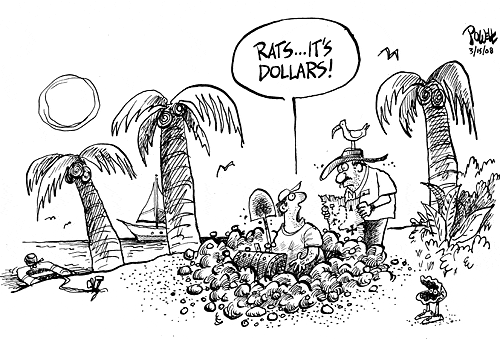
What continues to amaze me in all of this is the topics in political debate. The candidates are not getting that it’s the economy stupid! Obama is giving a ‘major’ speech on Iraq. McCain was out speaking to the Latino vote on immigration yesterday. Somebody needs to put these two through some freshmen economics courses and quick! Their lack of interest and knowledge is glaring and gives the appearance they really don’t care. Economic news of this sort is becoming a daily event. Their responses have been to send out their talking heads. Let’s face it, their economic advisers doing their thing on CNN and Fox, is not the same as the candidates showing some grasp of the problems. Frankly, I think they’re afraid of taking questions and looking ignorant. Obama is only effective on the teleprompter and McCain when he talks off the cuff. Any real dialogue would just emphasize their vacuity on the subject.


 peej
peej Carissa
 ecocatwoman
 mablue2
 peggysue22
 quixote
 skydancingguestblogger
 Mona (aka Wonk the Vote)



 Sky Dancing
Hola,
Sometimes I think economists (maybe excluding you) forget that economics is about human behaviour. Too many get wrapped up in numbers and models. People, generally, do not act the same way when they are happy and carefree as when they are scared and worried.
Another thing that happens, and I criticize the Clinton administration in the 90s for this as well, is that big-money investors insist that they should be able to invest in whatever scheme without any risk to themselves. Hence government bail-outs and demands for state resources as collateral, etc. But when it comes to small-money investors–those with IRA and SEP accounts? Well, the market isn’t a place for the faint-hearted; it’s a gamble, have to be prepared to lose a few.
Also, another point is the fundamental change in where money has been made in the economy of this century. We have gone from a manufacturing economy to a service economy to a virtual economy. What I mean is that people used to actually make things that other people wanted to buy; then they did things the other people wanted to have done for them. These economies were what I call “slow money” economies. Time, effort, study, and industry (hard work) were necessary investments in the production of goods and services. One couldn’t make a buck overnight. The rise of the virtual economy (I know there is another term for it in print, but I can’t remember it right now.) or the money-changer economy is not about producing anything. It is based on moving funds from one account to another, essentially with a push of a button or click of a mouse. It is not real.
ea, i’ve often worried about any economy that really doesn’t produce anything tangible… most of what we buy that is american made is thin air … i always thought our competitive advantage in food and agricultural products would still hold us, but we’ve even began to loose that thanks to all the price supports and set-asides…
consumer confidence is still one of the major leading indicators–for good reason, americans still react on pure emotion some time